

Pheidole kohli
- Scientific Name
- Pheidole kohli
- Tribe
- Attini
- Subfamily
- Myrmicinae
- Author
- Mayr, 1901
- Distribution
- Found in 1 countries
Pheidole kohli Overview
Pheidole kohli is an ant species of the genus Pheidole. It is primarily documented in 1 countries , including Congo, Democratic Republic of the. Detailed taxonomic data and occurrence records can be further explored via authoritative databases such as AntWeb or the Global Biodiversity Information Facility (GBIF).
Pheidole kohli
Pheidole kohli is a small African Pheidole species native to the Afrotropical region, found in the Democratic Republic of Congo, Kenya, and South Africa. Like all Pheidole species, they have distinct major and minor workers, the majors have enlarged heads for seed-crushing and colony defense. The minor workers measured in research studies are tiny, with a mesh area of just 0.951mm², indicating this is a small species overall [1]. This species has taxonomic history, it was originally described as Pheidole kohli in 1901 but later renamed to Pheidole neokohli because the name was already in use [2].
Quick Summary
- Difficulty: Unknown, likely Medium based on typical Pheidole care
- Origin & Habitat: Found across the Afrotropical region including the Democratic Republic of Congo, Kenya, and South Africa [2]. Specific habitat details are unconfirmed, but Pheidole species typically inhabit forest edges, grasslands, and disturbed areas.
- Colony Type: Colony structure is unconfirmed. Most Pheidole species are monogyne (single queen), though some can be polygyne. No specific data exists for this species.
- Size & Growth:
- Queen: Estimated 6-8mm based on typical Pheidole queen size range
- Worker: Minor workers approximately 2-3mm, majors larger with enlarged heads, the minor worker mesh area of 0.951mm² confirms very small size [1]
- Colony: Unknown, typical Pheidole colonies reach hundreds to low thousands of workers
- Growth: Unknown, estimated moderate based on genus patterns
- Development: Estimated 6-8 weeks at optimal temperature based on typical Pheidole development (Development timeline is not directly studied for this species, estimates based on genus-level data)
- Antkeeping:
- Temperature: Start around 22-26°C and observe colony activity. No specific thermal data exists for this species, but it likely tolerates typical tropical-to-subtropical temperatures given its African range.
- Humidity: Standard Pheidole preferences, aim for moderate humidity around 50-70%. Provide a moisture gradient so ants can self-regulate.
- Diapause: Unknown, southern African populations may require a mild winter rest period, while equatorial populations likely do not. Observe colony behavior as seasons change.
- Nesting: Natural nesting is unconfirmed. Most Pheidole species nest in soil, under stones, or in rotting wood. A test tube setup works well for founding colonies, larger colonies can be moved to a Y-tong or plaster nest.
- Behavior: Pheidole species are generally non-aggressive but will defend vigorously if their nest is threatened. Majors serve as defenders and seed processors. They are likely primarily granivorous (seed-eating) with some predatory behavior, typical of the tribe Attini. Escape risk is moderate, minor workers are small but not among the tiniest ants. Standard barrier precautions are sufficient.
- Common Issues: limited species-specific data means care recommendations are based on genus patterns rather than direct observation, wild-caught colonies may carry parasites, amphibians in Congo have been documented eating these ants, showing they face significant predation pressure [4], small colony size initially means slow growth requires patience, if this species has southern African populations, incorrect hibernation conditions could stress colonies
Appearance and Identification
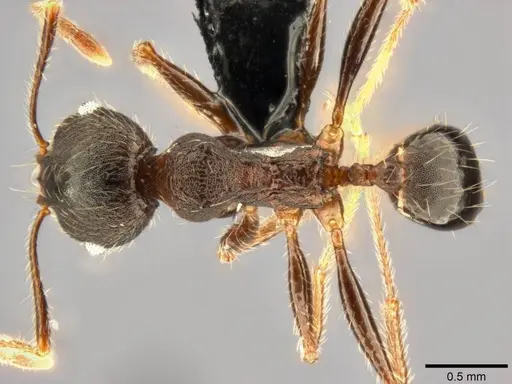
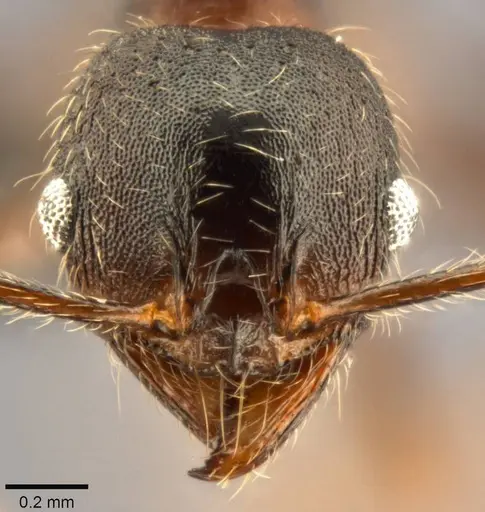
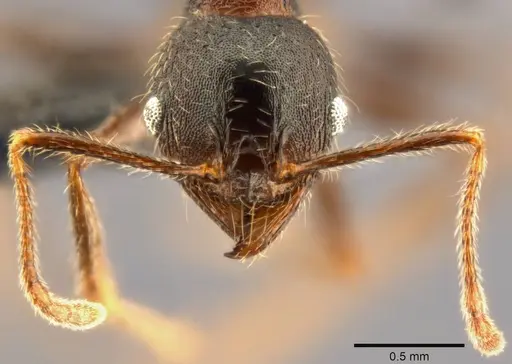
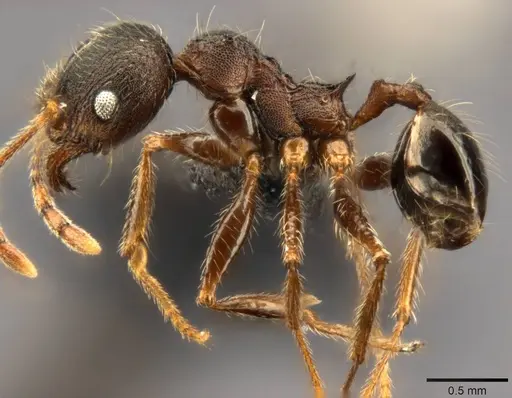
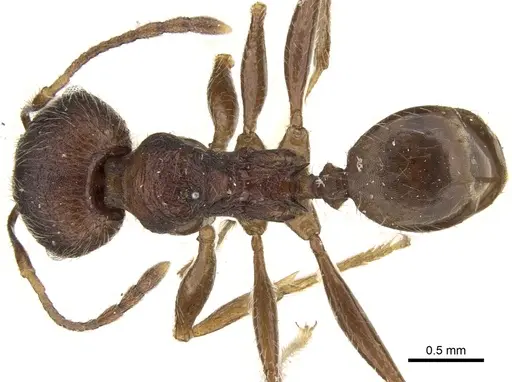
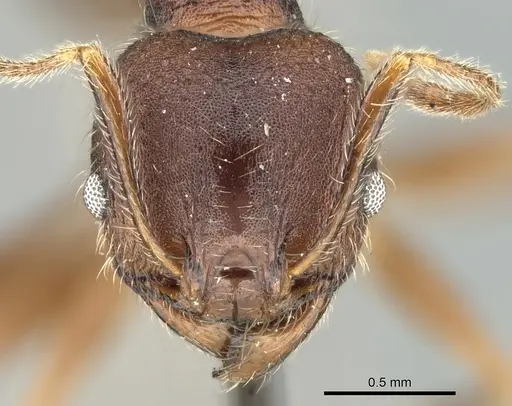
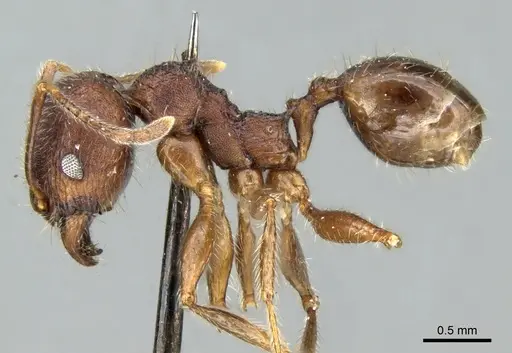
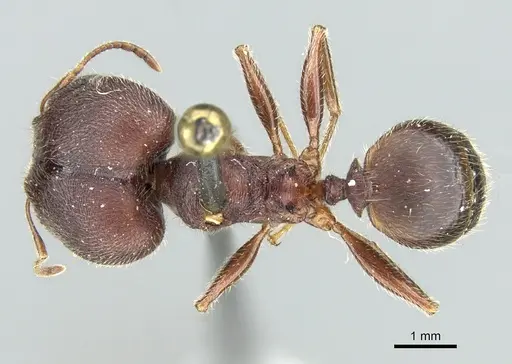
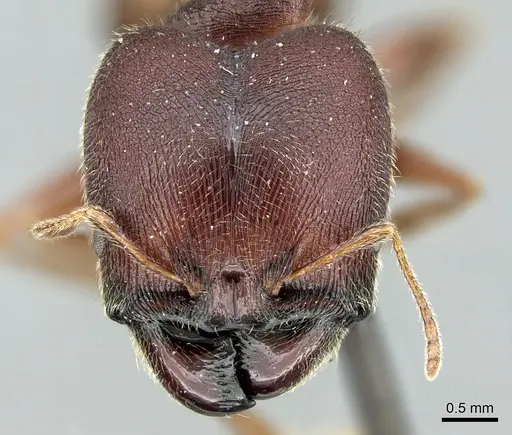
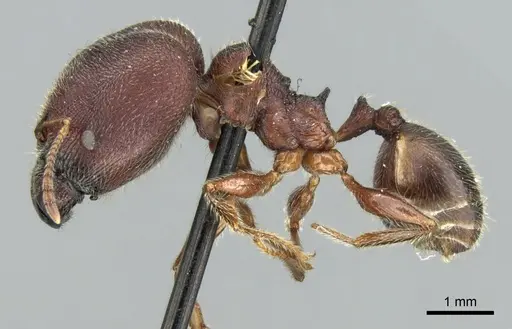
Pheidole kohli is a small ant species with the characteristic Pheidole dimorphism, distinct major and minor workers. Minor workers are tiny, with research measuring a mesh area of just 0.951mm² [1]. The majors have the enlarged, somewhat square heads typical of Pheidole seed-crushing specialists. The species was originally described from Kenya in 1901 by Mayr and was later renamed due to a naming conflict, becoming Pheidole neokohli [2]. The taxonomic history and the mechanical study data confirm this is among the smaller Pheidole species.
Natural History and Distribution
This species is found across the Afrotropical region, with confirmed records from the Democratic Republic of Congo (provinces HU and TO), Kenya, and South Africa [2][3]. Specific ecological preferences are not documented in available research. The fact that they have been found in amphibian stomachs (Bufo regularis and Rana ornatissima) in Congo shows they are small enough to be preyed upon and occupy ground-level foraging zones [4]. Their distribution spans tropical and subtropical regions, suggesting they tolerate a range of conditions.
Feeding and Diet
Feeding habits for this specific species are unconfirmed. However, Pheidole belongs to the tribe Attini, which are primarily granivorous (seed-eating) with members also scavenging protein and preying on small invertebrates. In captivity, offer a varied diet including seeds/grains, protein sources like mealworms or crickets, and sugar water or honey. Start with small prey items given their tiny minor worker size. Remove uneaten protein within 24-48 hours to prevent mold.
Temperature and Seasonal Care
No specific temperature requirements exist in the scientific literature for this species. Given its range spanning from equatorial Congo through Kenya to South Africa, there may be population-level variation in temperature tolerance. As a starting point, maintain temperatures between 22-26°C. If colonies show signs of stress (lethargy, clustering away from heat), adjust accordingly. Populations from South Africa may require a mild winter rest period, while equatorial populations likely do not, observe your colony's annual activity cycle.
Colony Establishment and Growth
Colony founding behavior is unconfirmed for this species, but Pheidole species typically exhibit claustral founding, the queen seals herself in a chamber and raises the first brood alone on stored fat reserves. Expect 6-8 weeks from egg to first nanitic workers based on typical Pheidole development, though this is not directly studied for P. kohli. Initial colony growth will be slow as the queen raises her first brood. Once majors begin appearing (typically after the colony reaches 50-100 workers), growth often accelerates as seed-processing capacity increases.
Frequently Asked Questions
How long does it take for Pheidole kohli to produce first workers?
The exact timeline is unconfirmed for this species. Based on typical Pheidole development, expect 6-8 weeks from egg to first workers at warm temperatures (around 24-26°C). The first workers (nanitics) will be smaller than mature workers.
What do Pheidole kohli ants eat?
Diet is unconfirmed for this specific species, but Pheidole are typically granivorous with protein scavenging. Offer small seeds/grains, tiny insects like fruit flies or pinhead crickets, and sugar water. Remove uneaten food promptly.
Are Pheidole kohli ants aggressive?
Pheidole species are generally not aggressive toward humans but will defend their nest. The majors can deliver a bite if threatened, though most Pheidole stings are too mild to be felt by humans.
Do Pheidole kohli queens need hibernation?
Hibernation requirements are unknown. Given the wide range from Congo to South Africa, different populations may have different seasonal needs. Start without hibernation and observe annual activity patterns, if the colony becomes less active in winter months, provide a cool period around 15-18°C for 2-3 months.
How big do Pheidole kohli colonies get?
Maximum colony size is unconfirmed. Most Pheidole species reach several hundred to a few thousand workers. The presence of major workers typically increases once colonies pass 50-100 workers.
Can I keep multiple Pheidole kohli queens together?
Colony structure is unconfirmed for this species. Most Pheidole are monogyne (single queen), but some can be polygyne. Do not combine unrelated foundress queens, even in polygynous species, introduced queens typically fight.
What size nest do Pheidole kohli need?
Start with a standard test tube setup for the founding queen. Once the colony reaches 50+ workers, they can be moved to a Y-tong, plaster nest, or naturalistic setup. They are small, so ensure chambers and passages are appropriately scaled.
Is Pheidole kohli a good species for beginners?
Difficulty level is unknown due to limited species-specific data. Based on typical Pheidole care, they are likely manageable for intermediate keepers. The main challenge is the lack of documented care information, be prepared to adapt based on colony behavior.
References

This caresheet is licensed under CC BY-SA 4.0 .
Literature
Loading...Loading products...