

Pheidole inquilina
- Scientific Name
- Pheidole inquilina
- Tribe
- Attini
- Subfamily
- Myrmicinae
- Author
- Wheeler, 1903
- Distribution
- Found in 1 countries
Pheidole inquilina Overview
Pheidole inquilina is an ant species of the genus Pheidole. It is primarily documented in 1 countries , including United States of America. Detailed taxonomic data and occurrence records can be further explored via authoritative databases such as AntWeb or the Global Biodiversity Information Facility (GBIF).
Pheidole inquilina
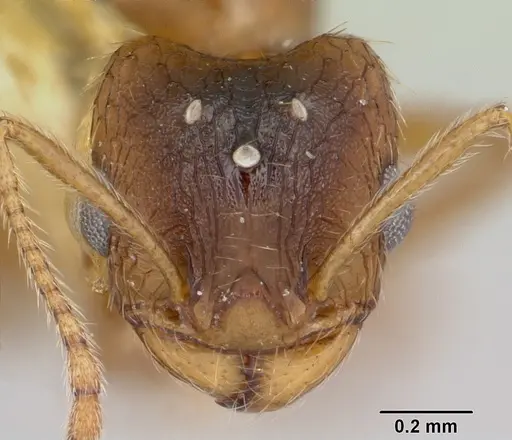
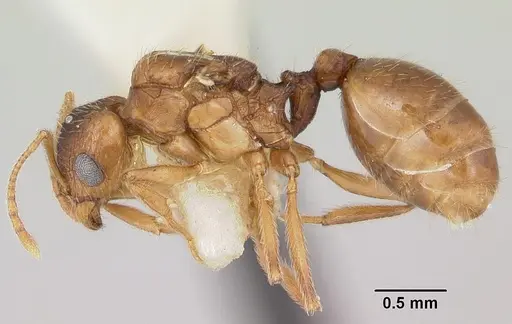
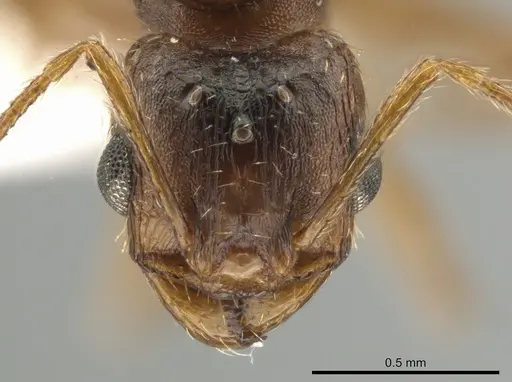
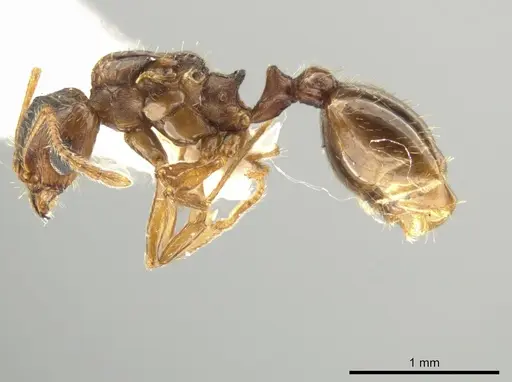
Pheidole inquilina is a tiny permanent social parasite ant native to the western United States (Colorado, Nebraska, Nevada). The queen measures just 0.70mm and has distinctive subangulate occipital corners. She is light brown in color and represents the least anatomically modified of all pheidoline social parasites, meaning she still retains many normal ant features compared to other parasitic ants. Workers of both major and minor castes have been documented but are extremely rare, they appear to be in evolutionary decline since the parasite relies on host workers to survive. The species name 'inquilina' literally means 'temporary guest' or 'lodger', perfectly describing its lifestyle of living in the nests of its host species Pheidole pilifera[1].
Quick Summary
- Difficulty: Expert
- Origin & Habitat: Western United States (Colorado, Nebraska, Nevada) at approximately 2000m elevation. Found in pinyon-cedar-oak woodland under rocks.
- Colony Type: Permanent social parasite, queen lives permanently in host colony (Pheidole pilifera) and is fed by host workers. This is NOT a species you can keep as a standalone colony.
- Queen: Socially parasitic
- Size & Growth:
- Queen: 0.70mm
- Worker: Not well documented, workers are extremely rare
- Colony: Unknown, parasitic lifestyle means no independent colony growth
- Growth: Parasitic, growth depends entirely on host colony
- Development: Unconfirmed, queen does not produce her own workers, relies on host [1] (This is a permanent social parasite. The queen cannot found her own colony, she must be introduced to an established host colony.)
- Antkeeping:
- Temperature: Follow host species requirements (Pheidole pilifera), likely room temperature or slightly warm (20-25°C)
- Humidity: Follow host species requirements, typical for North American Pheidole
- Diapause: Likely follows host species patterns, may require winter cooling
- Nesting: Cannot be kept independently, must be introduced to established Pheidole pilifera colony. Requires host nest to be present.
- Behavior: Extremely specialized parasite. The queen cannot forage, feed herself, or raise brood independently. She relies entirely on host workers for food and brood care. The host colony accepts her because she produces pheromones that trick them. This species represents an evolutionary intermediate, not as highly modified as other social parasites. Workers are rarely produced and appear to be declining evolutionarily[1].
- Common Issues: This species CANNOT be kept without its host Pheidole pilifera, you need both species, Finding Pheidole inquilina in the wild is extremely difficult, it's rare and localized, Introducing the parasite queen to a host colony carries high risk of rejection/killing by host workers, Even if accepted, the parasite queen may not thrive in captivity, This is not a species for beginners, requires advanced antkeeping skills and access to host colonies
Understanding Social Parasitism in Pheidole inquilina
Pheidole inquilina is a permanent social parasite, meaning the queen lives her entire life inside the nest of another ant species (her host) and is cared for by the host's workers. This is fundamentally different from most ant species where the queen founds her own colony. The queen cannot feed herself, forage, or care for brood, she depends entirely on host workers for sustenance. She produces chemical signals that trick the host workers into accepting her as one of their own. This species is particularly interesting because it represents the 'least modified' parasitic ant in the Pheidole genus, meaning it's evolutionarily closer to a normal ant than other parasitic species, which explains why workers (though rare) still exist[1].
The Host Species: Pheidole pilifera
Pheidole inquilina specifically parasitizes Pheidole pilifera and its subspecies coloradensis. To keep the parasite, you must first establish a healthy colony of Pheidole pilifera. This host species is also native to the same regions (Colorado, Nebraska) and nests under rocks in similar woodland habitats. Pheidole pilifera is a 'big-headed' ant (the genus Pheidole is famous for soldiers with enormous heads) and is a common North American species. You will need to locate, catch, and establish a colony of this host species before attempting to introduce the parasite. The two species must be kept together in a setup that allows interaction between them [1][2].
Why This Species Is Not for Beginners
Pheidole inquilina is one of the most challenging ants to keep in captivity for several critical reasons. First, you cannot keep it as an independent colony, it requires a host species, meaning you need to maintain two colonies simultaneously. Second, the species is extremely rare in the wild, making it nearly impossible to acquire. Third, even if you obtain both species, introducing a parasitic queen to a host colony is risky, host workers may recognize and kill her. Fourth, the parasite queen does not produce her own workers in any meaningful numbers, so the 'colony' you keep is really just one queen living among host workers. This species is best suited for advanced antkeepers with specific research goals or those studying social parasitism[3].
Legal and Ethical Considerations
Before attempting to keep Pheidole inquilina, check your local regulations regarding ant collection and keeping. This species is listed as Vulnerable (VU) on the IUCN Red List, indicating it is at risk of extinction in the wild. Its limited distribution (only known from a few US states at high elevation) and rarity mean that collecting specimens could potentially harm wild populations. Additionally, because this is a parasitic species requiring a host, captive breeding success is extremely limited. Consider whether your goals can be achieved through observation of wild colonies or whether keeping this species is truly necessary for your research or interest.
Frequently Asked Questions
Can I keep Pheidole inquilina in a test tube like other ants?
No. Unlike typical ants, Pheidole inquilina cannot establish an independent colony. The queen must live inside a host colony (Pheidole pilifera). You would need a setup that houses both species and allows the host workers to care for the parasite queen.
How do I get a Pheidole inquilina colony?
This is extremely difficult. The species is rare, found only in Colorado, Nebraska, and Nevada at about 2000m elevation. You would need to locate wild colonies of Pheidole pilifera, find one already parasitized by P. inquilina, and carefully collect both species. This is not a species available from ant vendors.
Will the host workers accept the parasite queen?
Introduction success varies. In the wild, host colonies sometimes contain the parasite and sometimes don't (only 8 of 19 nests examined by Cole in 1965 contained inquilina). In captivity, host workers may recognize and kill an introduced queen. Success depends on colony condition, queen health, and other factors.
Does Pheidole inquilina have major and minor workers?
Yes, but they are extremely rare. Both major (soldier) and minor workers have been documented, but they appear to be in evolutionary decline. Most of the time, the parasite queen is cared for by host workers, not her own.
What does the parasite queen eat?
She is fed by host workers through trophallaxis (mouth-to-mouth food sharing). She cannot forage for herself. This is why she must live within the host colony, she depends entirely on the host workers for nutrition.
Is Pheidole inquilina a good species for beginners?
No. This is an expert-level species that requires keeping two species simultaneously (host and parasite), advanced antkeeping skills, and the ability to locate rare wild colonies. Most antkeepers should choose a non-parasitic species.
How long do Pheidole inquilina queens live?
This is not well documented. As a permanent parasite, her lifespan is tied to the host colony. She likely lives for many years like typical ant queens, but cannot survive without host workers.
References

This caresheet is licensed under CC BY-SA 4.0 .
CASENT0103145
View on AntWeb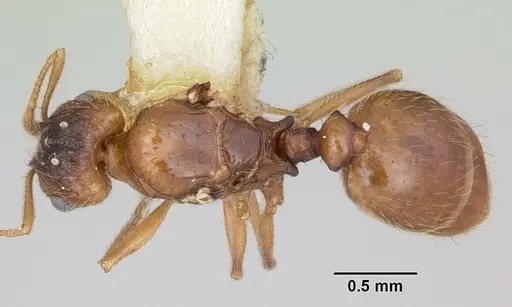
CASENT0649770
View on AntWeb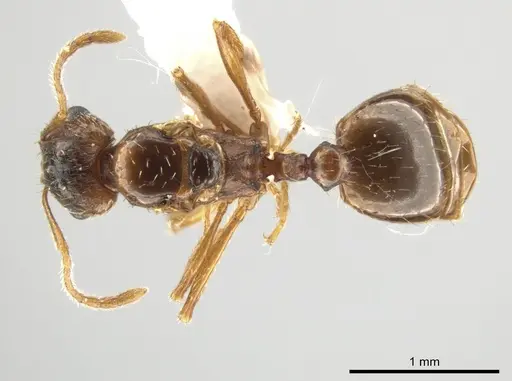
Literature
Loading...Loading products...