

Pheidole humeridens
- Scientific Name
- Pheidole humeridens
- Tribe
- Attini
- Subfamily
- Myrmicinae
- Author
- Wilson, 2003
- Distribution
- Found in 2 countries
Pheidole humeridens Overview
Pheidole humeridens is an ant species of the genus Pheidole. It is primarily documented in 2 countries , including Argentina, Brazil. Detailed taxonomic data and occurrence records can be further explored via authoritative databases such as AntWeb or the Global Biodiversity Information Facility (GBIF).
Pheidole humeridens
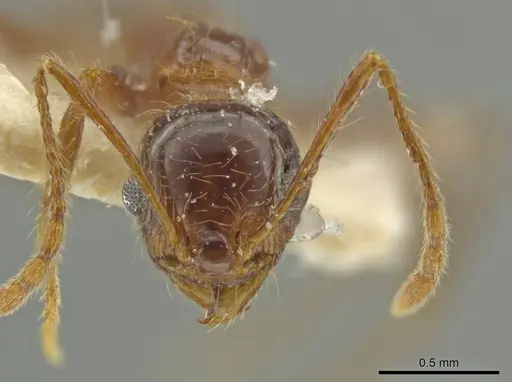
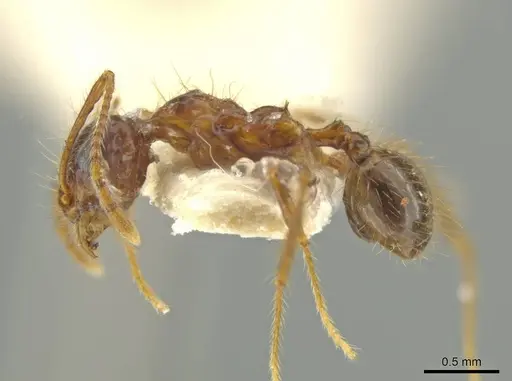
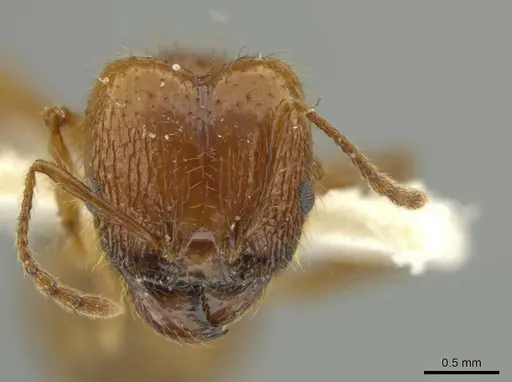
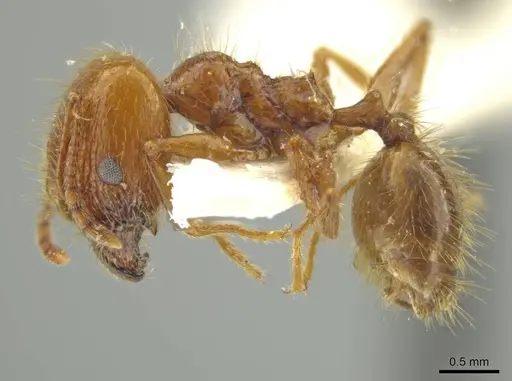
Pheidole humeridens is a small ant species native to the grasslands of Argentina. Major workers measure about 1.5mm in head width and have a distinctive brownish-yellow coloration with lighter brown on the rear of their abdomen. Minor workers are smaller at around 0.74mm head width and show a bicolored pattern, medium brown on the head, gaster, and pronotum, with brownish-yellow on the rest of the body and appendages. The species name 'humeridens' refers to the shoulder-tooth on the humerus, a distinguishing feature visible in both castes. This species belongs to the fallax group and is only known from the Buenos Aires region of Argentina, where colonies build conspicuous mound nests in open, heavily grazed pastures.
Quick Summary
- Difficulty: Unknown, insufficient data for assessment
- Origin & Habitat: Native to the Buenos Aires region of Argentina, found in heavily grazed pastures and open grassland areas. Also recorded in agricultural environments like eucalyptus plantations and soybean crops in the broader Pampean grasslands region [1][2].
- Colony Type: Colony structure is unconfirmed. No data available on whether they are single-queen (monogyne) or multi-queen (polygyne).
- Size & Growth:
- Queen: Unknown, no documented measurements [3]
- Worker: Major workers: 1.50mm head width, Minor workers: 0.74mm head width
- Colony: Unknown, no colony size data available
- Growth: Unknown, no development data available
- Development: Unknown, no direct measurements. Based on typical Pheidole patterns in similar grassland species, estimate 6-10 weeks at warm temperatures, but this is a rough guess. (Development timeline has not been studied for this species. Estimates based on genus-level patterns for Pheidole in temperate to subtropical regions.)
- Antkeeping:
- Temperature: Likely prefers warm conditions typical of subtropical grasslands. Based on the species' origin in the Buenos Aires region (temperate to warm), aim for roughly 22-27°C. Adjust based on colony activity.
- Humidity: Likely adaptable given their presence in both pasture and agricultural environments. Provide moderate humidity with a moist nest substrate, but avoid waterlogging.
- Diapause: Unknown, no data on overwintering requirements. The Buenos Aires region experiences mild winters, so they may have a reduced diapause period or none at all.
- Nesting: In the wild, they build conspicuous mound nests in open pastures. For captivity, a standard formicarium or Y-tong nest with moist substrate would be appropriate. Their small minor workers suggest they need chambers scaled to their size.
- Behavior: Behavior is not well documented. As a Pheidole species, they likely have the typical genus traits: major workers (soldiers) with enlarged heads for seed-crushing and colony defense, and active foraging patterns. The species was found across multiple farm environments and both grassland and agricultural settings, suggesting adaptability. Escape risk is moderate given the small minor worker size (0.74mm), fine mesh barriers are recommended.
- Common Issues: no documented care information makes this a challenging species to keep successfully, lack of colony size data means growth expectations are uncertain, no information on founding behavior makes it difficult to establish wild-caught queens, unknown diapause requirements could lead to seasonal colony losses if kept incorrectly, small minor worker size may require fine mesh to prevent escapes
Distribution and Natural Habitat
Pheidole humeridens is known only from the Buenos Aires region of Argentina in South America. The type locality describes colonies building conspicuous mound nests in heavily grazed pastures, indicating they prefer open grassland environments. Studies in nearby Rio Grande do Sul, Brazil, recorded this species across multiple farm environments and both grassland and agricultural settings, showing adaptability to human-modified landscapes like eucalyptus plantations and soybean crops [1][2]. This suggests the species is tolerant of some habitat disturbance but requires open ground for nesting.
Identification and Morphology
This species is a member of the Pheidole fallax group. Major workers have a head width of about 1.5mm and are brownish-yellow in color, with the rear halves of the abdominal tergites turning light brown. The most distinctive feature is the dentate (toothed) humerus, which gives the species its name 'humeridens' meaning shoulder-tooth. Minor workers are much smaller at around 0.74mm head width and display a bicolored pattern: medium brown on the head, gaster, and pronotum, with brownish-yellow coloration on the rest of the body and all appendages. Both castes have propodeal spines, though they are short. The presence of major workers with enlarged heads is typical of Pheidole, used for seed-crushing and colony defense. [3]
Keeping Notes
Pheidole humeridens is one of the least documented species in the Pheidole genus, with virtually no captive care information available. This makes it an extremely challenging species to keep, even for experienced antkeepers. There is no data on colony size, development time, queen founding behavior, or specific temperature and humidity requirements. The species has only been found in the wild in Argentina, and there are no established captive colonies in the antkeeping hobby. Before attempting to keep this species, you would need to locate a wild colony in Argentina or obtain founding queens from someone who has successfully collected them. Given the complete lack of captive care data, this species cannot be recommended to any keeper at this time, not because it is necessarily difficult, but because we simply do not know how to keep it alive.
Related Species in the Region
Pheidole humeridens belongs to the fallax group, which contains several similar species across the Neotropics. Studies in southern Brazil recorded this as one of only 13 ant species that occurred on all farms and in all environments sampled, indicating it is relatively common and widespread in the broader region despite being known only from Argentina [2]. Related species in the fallax group may share similar biology, so keepers might look to care information for other documented fallax group species for general guidance, though significant variation likely exists.
Frequently Asked Questions
How do I keep Pheidole humeridens ants?
Unfortunately, there is no available care information for this species. It is one of the least documented Pheidole species and has never been kept in captivity that we know of. We cannot provide temperature, humidity, feeding, or nesting recommendations because this data simply does not exist.
Where can I get Pheidole humeridens queens?
This species is only known from the Buenos Aires region of Argentina. Unless you are in Argentina and can legally collect from the wild, obtaining this species would be extremely difficult. There are no known captive breeding colonies.
What do Pheidole humeridens eat?
This has not been studied. As a Pheidole species, they likely eat seeds and small insects like other members of the genus, but we cannot confirm their specific dietary needs.
Are Pheidole humeridens good for beginners?
No. This species cannot be recommended for anyone, beginners or experts, due to the complete lack of captive care information. There is no data on how to keep them alive.
How big do Pheidole humeridens colonies get?
Unknown. No colony size data has been documented for this species.
What temperature do Pheidole humeridens need?
Unknown. Based on their origin in the Buenos Aires region of Argentina (temperate to subtropical), they likely prefer warm conditions around 22-27°C, but this is purely speculative.
How long does it take for Pheidole humeridens to develop from egg to worker?
Unknown. No development data exists for this species. Typical Pheidole species in similar climates take 6-10 weeks, but this is just an estimate.
Can I keep multiple Pheidole humeridens queens together?
Unknown. We have no data on their colony structure (monogyne vs polygyne), so we cannot recommend either approach.
Do Pheidole humeridens need hibernation?
Unknown. The Buenos Aires region has mild winters, so they may not require a true diapause. However, no research has been done on their seasonal requirements.
References

This caresheet is licensed under CC BY-SA 4.0 .
CASENT0645802
View on AntWeb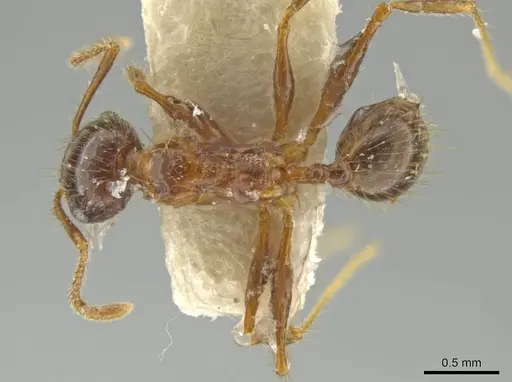
JTLC000016409
View on AntWeb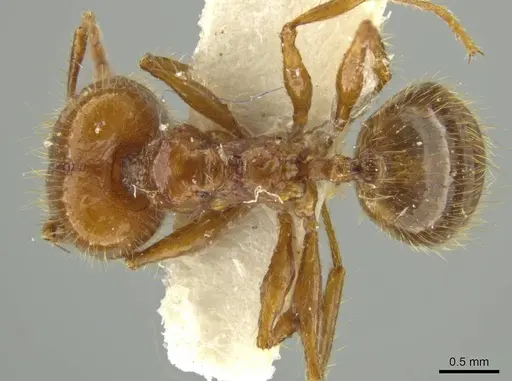
Literature
Loading...Loading products...