

Pheidole grundmanni
- Scientific Name
- Pheidole grundmanni
- Tribe
- Attini
- Subfamily
- Myrmicinae
- Author
- Smith, 1953
- Distribution
- Found in 1 countries
Pheidole grundmanni Overview
Pheidole grundmanni is an ant species of the genus Pheidole. It is primarily documented in 1 countries , including United States of America. Detailed taxonomic data and occurrence records can be further explored via authoritative databases such as AntWeb or the Global Biodiversity Information Facility (GBIF).
Pheidole grundmanni
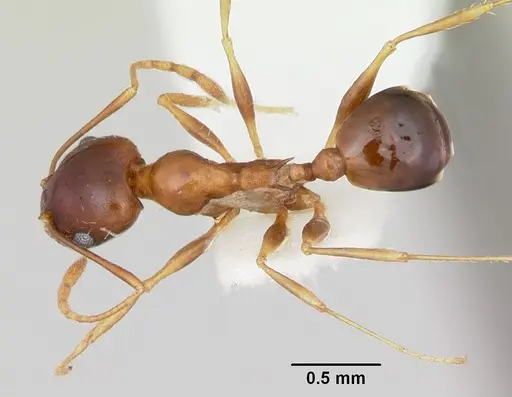
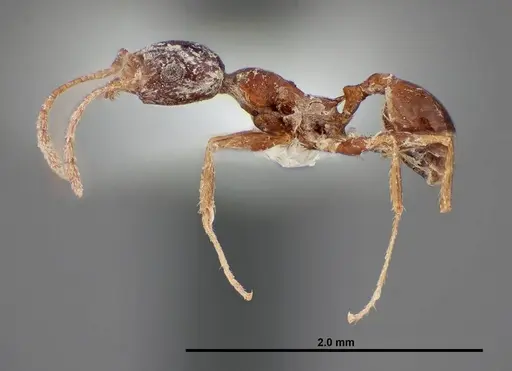
Pheidole grundmanni is a small, pale yellowish-brown ant belonging to the granulata species group, characterized by its 4-segmented antennal club. Minor workers measure approximately 0.64mm in head width with a distinctive smooth and shiny propodeum. The species was described in 1953 and is known only from its type locality in Utah, United States, making it one of the most geographically restricted Pheidole species in North America. The original collection was made beneath a stone at the foot of a narrow-leaf cottonwood tree in Ashley Canyon near Vernal, at approximately 1800m elevation. This extremely limited distribution makes the species particularly special for antkeepers interested in North American natives.
Quick Summary
- Difficulty: Unknown, insufficient data for care recommendations
- Origin & Habitat: High-elevation arid canyon habitat in northeastern Utah, United States. Type locality is Ashley Canyon near Vernal in Uintah County, at approximately 1800 meters elevation. The original collection was from beneath a stone at the base of a narrow-leaf cottonwood tree [1][2].
- Colony Type: Unconfirmed, colony structure (single-queen or multi-queen) has not been documented for this species. Most Pheidole species are monogyne (single-queen colonies), but this has not been verified for P. grundmanni specifically.
- Size & Growth:
- Queen: Undescribed in available literature, estimated 5-7mm based on typical Pheidole queen morphology
- Worker: Minor workers: 0.64mm HW,0.70mm HL. Major workers (soldiers) have not been described.
- Colony: Unknown, no colony size data available for this species
- Growth: Unknown, no development timing data available
- Development: Unconfirmed, estimated 6-10 weeks based on typical Pheidole genus patterns (Development time is inferred from related Pheidole species. Actual timing for this specific species has not been documented.)
- Antkeeping:
- Temperature: Likely prefers moderate to warm temperatures typical of high-elevation Utah. Based on related species and Utah habitat, aim for roughly 20-26°C with a gradient allowing the colony to self-regulate. Start at room temperature (20-22°C) and adjust based on colony activity.
- Humidity: Likely prefers moderate humidity, Utah canyon environments are semi-arid but provide microhabitats under stones with some moisture. Keep nest substrate lightly moist, allowing for some drying between waterings. Avoid both waterlogged conditions and complete drying.
- Diapause: Likely yes, as a Utah species at 1800m elevation, this ant almost certainly requires a winter dormancy period. Provide 3-4 months of cold storage at 5-10°C during winter, simulating the natural cold period in its high-elevation habitat.
- Nesting: In nature, colonies were found beneath stones in canyon habitats. For captive care, a test tube setup works well for founding colonies. Once established, a Y-tong (AAC) or plaster nest with narrow chambers scaled to their small size would be appropriate. Provide some dry areas within the nest for the colony to regulate humidity themselves.
- Behavior: Pheidole species are known for their polymorphic worker castes, minor workers forage while major workers (soldiers) defend the colony and process food. This species likely follows similar patterns, though major workers have not been described. Foraging style is probably typical of Pheidole, they are generalist scavengers and may tend aphids for honeydew. Escape risk is moderate due to their small size, use standard barrier methods (Fluon on test tube rims, fine mesh on outworlds). They are not known to be particularly aggressive toward keepers.
- Common Issues: extremely limited distribution in the wild, only known from one Utah canyon, so finding colonies is exceptionally difficult, no captive husbandry data exists, all care recommendations are inferred from genus patterns and related species, high-elevation origin suggests specific overwintering requirements that differ from common pet species, minor workers are very small (under 1mm) requiring fine mesh and excellent escape prevention, colony may be slow-growing, patience will be essential as no growth data exists for this species
Discovery and Taxonomy
Pheidole grundmanni was first described by M.R. Smith in 1953 from specimens collected in Utah. The species was named after its collector, A.W. Grundmann, who found the ants beneath a stone at the foot of a narrow-leaf cottonwood tree in Ashley Canyon near Vernal. The species belongs to the granulata group within the subgenus Ceratopheidole, characterized by having a 4-segmented antennal club. E.O. Wilson later provided additional description and illustration in his 2003 monograph on North American Pheidole. What makes this species remarkable is its extremely restricted distribution, it is only known from its original type locality, making it one of the rarest North American Pheidole species in cultivation if colonies can be found. [1][2]
Natural Habitat and Range
This species is known only from Ashley Canyon in northeastern Utah at approximately 1800 meters elevation. The habitat is described as a narrow canyon environment near the mouth of Ashley Canyon, several hundred meters below Merkeley Park. The original collection was from beneath a stone at the base of a cottonwood tree, suggesting they nest in the cool, shaded microhabitats found under rocks in canyon settings. Utah's high-elevation habitats experience significant seasonal temperature variation, with cold winters and warm but not extreme summers. This suggests the species is adapted to cooler conditions than many other Pheidole species and likely requires a winter dormancy period. [2]
Identification and Morphology
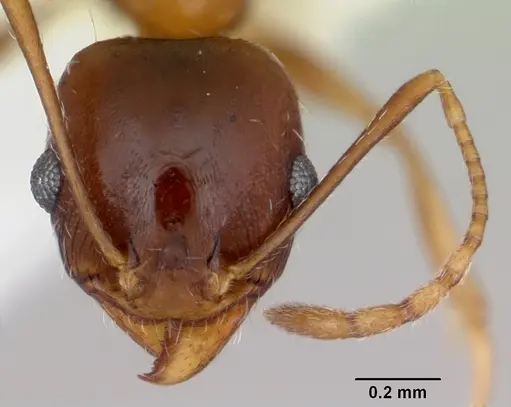
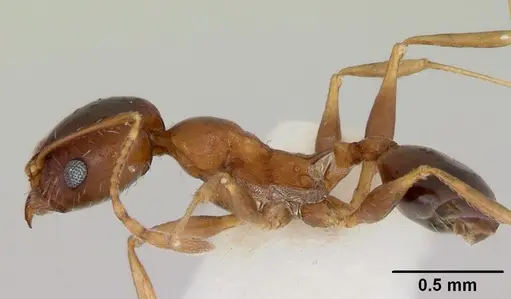
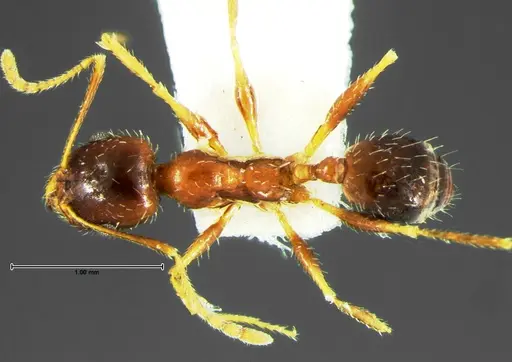
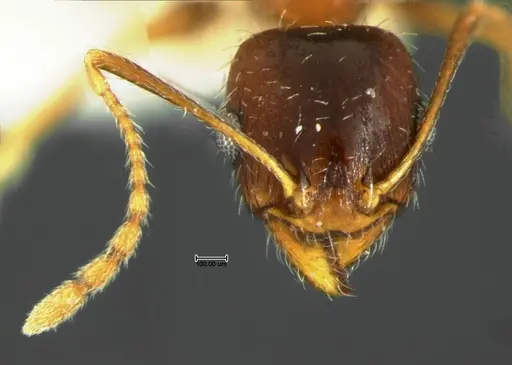
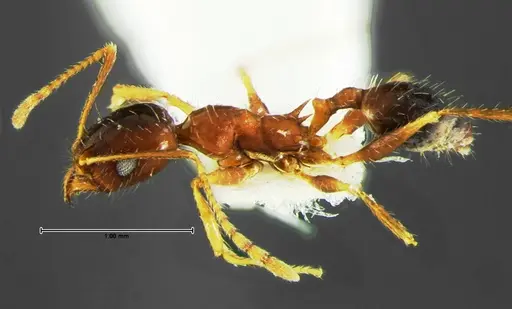
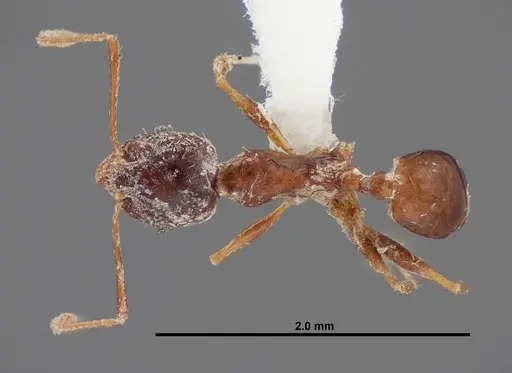
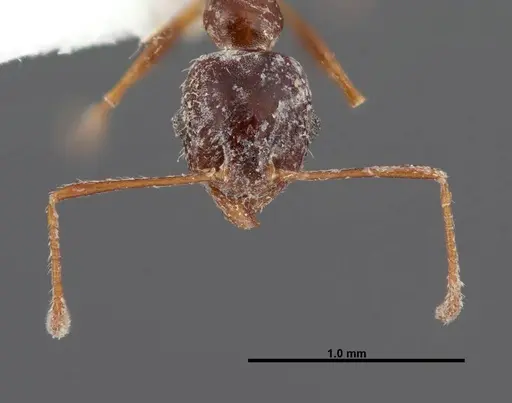
Pheidole grundmanni minor workers can be identified by several distinctive features: the propodeal spine is more than half as long as the basal face of the propodeum, the petiolar node is depressed and the petiole appears cylindrical in profile, the promesonotal profile forms a single smooth curve when viewed dorsally-obliquely, the occipital margin is broad and flat in full-face view, and carinulae (raised lines) on the head reach the eye level. The body is a uniform yellowish-brown color with medium-yellow appendages and contrasting white body hairs. The propodeum is smooth and shiny. Major workers (soldiers) have not been described in the available literature, which is unusual for Pheidole species where major workers are typically prominent. [2]
Keeping Pheidole grundmanni in Captivity
Because this species has never been documented in the antkeeping hobby and has no published captive care information, all recommendations must be considered educated estimates based on typical Pheidole husbandry. Start with a standard test tube setup for the founding queen, most Pheidole species are claustral founders. Keep the setup at room temperature (20-22°C) initially and observe colony activity. If workers appear sluggish, provide a gentle heat gradient. The high-elevation Utah origin suggests they may prefer cooler conditions than tropical Pheidole species. For the outworld, offer standard protein sources (small insects) and sugar water. Given their extremely small minor workers (under 1mm), use fine mesh and apply Fluon barriers to prevent escapes. The most significant challenge is simply obtaining a colony, this species is only known from a single Utah canyon location.
Overwintering Requirements
As a species originating from 1800m elevation in Utah, P. grundmanni almost certainly requires a winter dormancy period. In their natural habitat, temperatures would drop significantly below freezing during winter months. Provide 3-4 months of cold storage at temperatures between 5-10°C, ideally in a refrigerator or cold cellar. Reduce or eliminate feeding during this period. Do not freeze the colony, the goal is cool storage that simulates natural winter conditions, not extreme cold. Resume normal temperatures and feeding gradually in spring. This diapause period is essential for the colony's long-term health and reproductive cycles.
Frequently Asked Questions
How do I care for Pheidole grundmanni ants?
Care recommendations are largely estimated since this species has no documented captive history. Use standard Pheidole husbandry: test tube setup for founding, room temperature (20-22°C) initially, light moisture in the nest, and standard protein/sugar foods. The high-elevation Utah origin suggests they prefer cooler conditions and require winter dormancy. This is an experimental species for advanced antkeepers.
Where does Pheidole grundmanni live in the wild?
Only known from Ashley Canyon near Vernal in northeastern Utah, United States, at approximately 1800 meters elevation. This is one of the most restricted ant species in North America, found only at its original type locality.
What do Pheidole grundmanni ants eat?
Diet has not been specifically documented, but like other Pheidole species, they are likely generalist scavengers that accept protein (small insects) and sugar sources (honeydew from aphids, sugar water). Offer standard ant foods: small crickets, mealworms, fruit flies, and sugar water or honey.
How big do Pheidole grundmanni colonies get?
Colony size is unknown, no colony size data exists for this species. Most Pheidole colonies reach several hundred to a few thousand workers. Given the restricted range, wild colonies may be smaller than typical for the genus.
Do Pheidole grundmanni ants need hibernation?
Yes, as a high-elevation Utah species, they almost certainly require winter dormancy. Provide 3-4 months at 5-10°C during winter months, reducing feeding accordingly.
What temperature is best for Pheidole grundmanni?
Not specifically studied, but likely prefers moderate temperatures (20-26°C) rather than tropical heat. Start at room temperature (20-22°C) and adjust based on colony behavior. The Utah high-elevation origin suggests they are adapted to cooler conditions.
Are Pheidole grundmanni good for beginners?
No, this species is not recommended for beginners. It has no captive care history, is only known from a single wild location, and all care must be inferred from related species. Obtaining a colony is exceptionally difficult. Beginners should start with more documented species like Pheidole pallidula or common Lasius species.
How long does it take for Pheidole grundmanni to develop from egg to worker?
Not documented for this specific species. Based on typical Pheidole development, estimate 6-10 weeks from egg to first worker at optimal temperature. Actual timing may vary and requires observation.
Can I keep multiple Pheidole grundmanni queens together?
Colony structure has not been documented for this species. Most Pheidole are monogyne (single-queen), but polygyny has been observed in some species. Without specific data, combining unrelated queens is not recommended.
References

This caresheet is licensed under CC BY-SA 4.0 .
Literature
Loading...Loading products...