

Pheidole gigaflavens
- Scientific Name
- Pheidole gigaflavens
- Tribe
- Attini
- Subfamily
- Myrmicinae
- Author
- Wilson, 2003
- Distribution
- Found in 2 countries
Pheidole gigaflavens Overview
Pheidole gigaflavens is an ant species of the genus Pheidole. It is primarily documented in 2 countries , including Argentina, Paraguay. Detailed taxonomic data and occurrence records can be further explored via authoritative databases such as AntWeb or the Global Biodiversity Information Facility (GBIF).
Pheidole gigaflavens
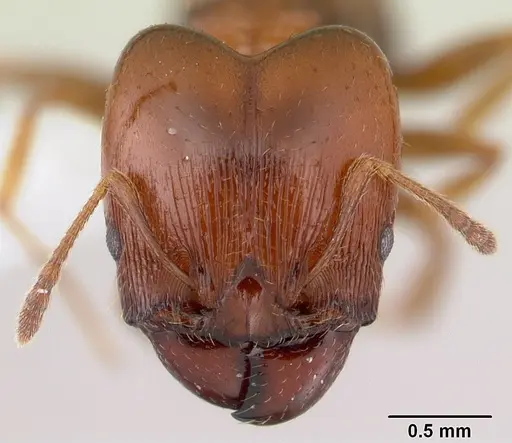
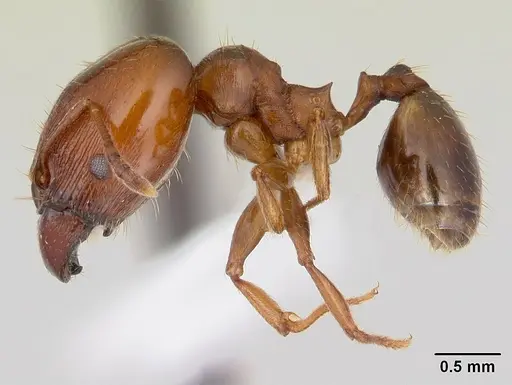
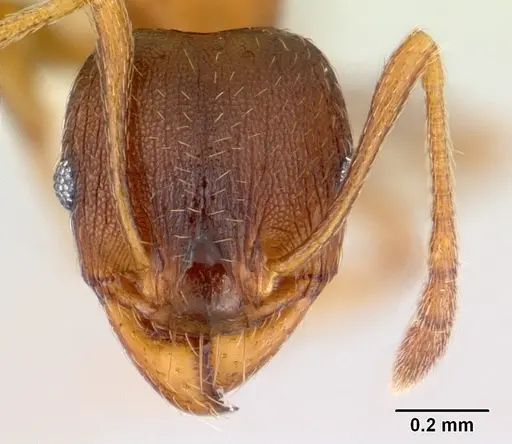
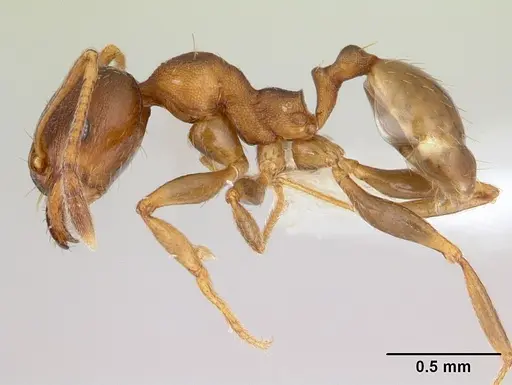
Pheidole gigaflavens is a Neotropical big-headed ant species described in 2003 from Argentina. Major workers have enlarged heads and measure 1.36mm in head width, with a medium reddish-brown coloration. Minor workers are much smaller at 0.54mm head width and display a yellowish-brown color with a darker head. This species is unusual as it combines traits from both the tristis and flavens species groups within the genus. Found across the Neotropical region including Argentina, Bolivia, and Paraguay, these ants inhabit lowland subtropical areas [1][2][3].
This species remains poorly studied in the scientific literature, with no published observations on its biology, colony structure, or captive care requirements. What makes this species interesting is its relatively large size compared to many Pheidole relatives and its intermediate classification between two species groups. Keepers should expect similar care to other Neotropical Pheidole species, though specific requirements remain unconfirmed.
Quick Summary
- Difficulty: Medium
- Origin & Habitat: Native to the Neotropical region: Argentina, Bolivia, and Paraguay. Type locality is Santiago del Estero, Argentina. Found in lowland subtropical areas and agricultural settings in Brazil's Paraná region [1][2][3].
- Colony Type: Unconfirmed, no published data on colony structure. Most Pheidole species are monogyne (single queen colonies), but this has not been verified for P. gigaflavens.
- Size & Growth:
- Queen: Undescribed in original description, estimated 5-7mm based on genus patterns
- Worker: Major: 1.36mm HW, Minor: 0.54mm HW [1]
- Colony: Unknown, no colony size data published
- Growth: Unknown, no development data available
- Development: Unknown, estimated 6-10 weeks based on typical Pheidole development patterns (No species-specific data exists. Estimates based on genus-level patterns for Neotropical species.)
- Antkeeping:
- Temperature: Estimated 22-28°C based on Neotropical distribution. Start in the mid-20s°C range and observe colony activity for adjustments.
- Humidity: Moderate to high, aim for 50-70% humidity. Provide a moist nest area with some drier areas for workers to self-regulate.
- Diapause: Unknown, Neotropical species may have reduced activity in cooler months but true hibernation is unlikely.
- Nesting: No natural nesting observations published. Likely nests in soil or rotting wood like other Pheidole species. Y-tong nests or plaster nests with moderate chambers work well for the major/minor caste system.
- Behavior: No published behavioral observations exist for this species. Based on typical Pheidole behavior, majors are likely used for seed processing and defense, while minors handle forager and brood care tasks. Escape risk is moderate, majors are relatively large but standard escape prevention measures should suffice. Temperament is likely peaceful toward conspecifics within the colony.
- Common Issues: no biological data makes captive care experimental, expect a learning curve, growth rate is unknown so patience is required during founding, humidity balance may be tricky without species-specific guidance, wild-caught colonies may carry parasites or pathogens not yet characterized, temperature too high or low can kill colonies since optimal range is unconfirmed
Nest Preferences
No published observations exist on the natural nesting habits of Pheidole gigaflavens. The type specimen was collected in Santiago del Estero, Argentina, a region characterized by subtropical climate with warm temperatures year-round. In captivity, standard Myrmicinae setups work well, Y-tong (acrylic) nests or plaster nests provide the darkness and humidity control these ants prefer. The species has two distinct worker castes (majors and minors), so chambers should be appropriately sized. Majors have notably enlarged heads (1.36mm HW) for seed processing, so provide enough space for them to move freely. A test tube setup works for founding colonies, then transition to a formicarium once the colony reaches 20-30 workers. [1]
Feeding and Diet
No dietary observations have been published for this species. Pheidole is a diverse genus, but most species are omnivorous with a preference for seeds and small insects. In captivity, offer a varied diet including: protein sources like small crickets, mealworms, or fruit flies twice weekly, seeds (grass seeds, millet) as a staple, and sugar sources like honey water or sugar water for energy. The enlarged major workers suggest seed-processing behavior, so include hard seeds they can manipulate with their mandibles. Always remove uneaten prey within 24-48 hours to prevent mold. Start with small portions and adjust based on consumption rates.
Temperature and Care
Pheidole gigaflavens originates from Neotropical regions (Argentina, Bolivia, Paraguay), suggesting they prefer warm conditions. Based on the species' distribution, aim for temperatures in the 22-28°C range. Room temperature in most homes (20-24°C) may be suitable, but you may need a heating cable on one side of the nest to reach optimal range. Use a thermometer to monitor actual nest temperature rather than guessing. Avoid temperatures above 30°C or below 18°C. Since no specific humidity data exists, provide a moisture gradient, keep part of the nest moist (but not flooded) while allowing other areas to dry slightly. This lets workers self-regulate. Observe colony behavior: if workers cluster near heat sources, increase temperature slightly, if they avoid heated areas, reduce heat. [1]
Behavior and Temperament
No specific behavioral observations have been documented for this species. However, Pheidole ants are generally peaceful colony inhabitants with a clear division of labor between major and minor workers. Major workers have significantly enlarged heads (the 'big-headed' ant characteristic) which they use for seed processing and colony defense. Minor workers handle most forager and brood care tasks. Expect the typical Pheidole behavior pattern: minors will be active throughout the nest and outworld, while majors may remain more central unless defending or processing food. This species is not known to be aggressive toward keepers, though major workers can deliver a mild sting if threatened. Standard escape prevention (Fluon barrier, tight-fitting lids) is recommended given the moderate worker size. [1]
Colony Founding
No published observations exist on the founding behavior of Pheidole gigaflavens. Based on typical Pheidole patterns, the queen likely seals herself in a chamber (claustral founding) and lives off stored fat reserves until her first workers emerge. The first brood typically develops through egg, larva, and pupa stages over several weeks. First workers (nanitics) are usually smaller than normal workers and may take longer to develop. Expect a waiting period of 6-10 weeks for first workers based on genus-level estimates, though this is unconfirmed for this species. Do not disturb the founding chamber during this time, queen and brood are sensitive to vibration and light. Only offer food after workers emerge, not before.
Growth and Development
No species-specific development data exists for Pheidole gigaflavens. The original description (Wilson 2003) only covers morphology, not biology. Based on typical Pheidole development patterns and related Neotropical species, expect 6-10 weeks from egg to first worker at optimal temperature (around 24-26°C). Development may be slower at cooler temperatures. Colony growth is likely moderate, Pheidole colonies typically grow steadily but not explosively. Major workers (with enlarged heads) appear once the colony reaches a certain size, usually when there are 30+ workers. The transition to producing majors is triggered by colony age and population density, not by a specific worker count. Be patient during founding, the first few months are the most critical and losses are common.
Frequently Asked Questions
How long does it take for Pheidole gigaflavens to produce first workers?
The egg-to-worker timeline is unconfirmed for this species. Based on typical Pheidole genus patterns, expect 6-10 weeks at optimal temperature (around 24-26°C). Plan for patience during founding, do not disturb the queen or her chamber during this critical period.
What do Pheidole gigaflavens ants eat?
No dietary observations exist for this species. Based on typical Pheidole behavior, offer a varied diet: protein (small insects like fruit flies, pinhead crickets, mealworms) twice weekly, seeds as a staple, and sugar water or honey water for energy. The enlarged major workers suggest they can process hard seeds.
Are Pheidole gigaflavens good for beginners?
This species is not ideal for complete beginners due to the complete lack of species-specific care data. Every aspect of their husbandry is experimental. However, antkeepers with some experience keeping Myrmicinae species (like Pheidole pallidula or other Pheidole species) should find this species manageable with careful attention to temperature and humidity.
What temperature should I keep Pheidole gigaflavens at?
Based on their Neotropical distribution (Argentina, Bolivia, Paraguay), aim for 22-28°C. Room temperature (20-24°C) may work, but you might need a small heating cable to reach the mid-20s°C range. Monitor actual nest temperature with a thermometer rather than guessing.
How big do Pheidole gigaflavens colonies get?
Colony size data is unpublished for this species. Most Pheidole colonies reach several hundred to a few thousand workers over several years. The presence of major workers typically begins once the colony reaches 30+ workers. Growth is likely moderate, expect 1-2 years to reach 100 workers under good conditions.
Can I keep multiple Pheidole gigaflavens queens together?
No data exists on colony structure for this species. Most Pheidole species are monogyne (single queen), but polygyny has been observed in some species. Do not attempt to combine unrelated foundress queens, this often results in fighting and colony failure. If you obtain a wild colony, observe queen number before combining with another colony.
Does Pheidole gigaflavens need hibernation?
No published data exists. As a Neotropical species from subtropical Argentina/Bolivia, true hibernation is unlikely. However, cooler winter temperatures (15-20°C) may cause reduced activity. Do not force hibernation, simply reduce feeding and expect slower growth during cooler months if your room temperature drops naturally.
Why is no information available about Pheidole gigaflavens biology?
This species was only described in 2003 (relatively recent in myrmecology) and has received no published biological study since then. The original description covers only physical characteristics (morphology), not behavior, diet, or colony dynamics. This makes them an exciting species for keepers who want to document new observations, but also means all care is based on genus-level inference rather than species-specific research.
References

This caresheet is licensed under CC BY-SA 4.0 .
CASENT0178026
View on AntWeb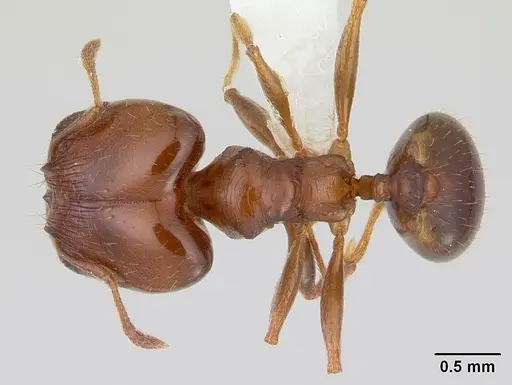
CASENT0178027
View on AntWeb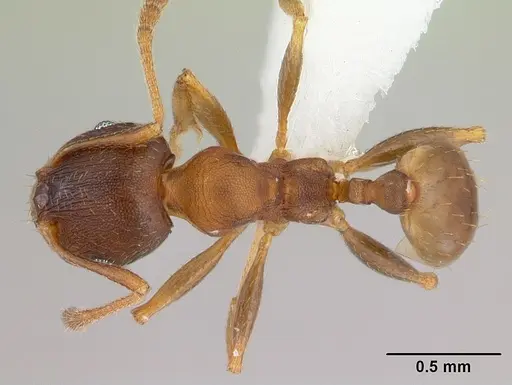
Literature
Loading...Loading products...