

Pheidole germaini
- Scientific Name
- Pheidole germaini
- Tribe
- Attini
- Subfamily
- Myrmicinae
- Author
- Emery, 1896
- Distribution
- Found in 1 countries
Pheidole germaini Overview
Pheidole germaini is an ant species of the genus Pheidole. It is primarily documented in 1 countries , including Colombia. Detailed taxonomic data and occurrence records can be further explored via authoritative databases such as AntWeb or the Global Biodiversity Information Facility (GBIF).
Pheidole germaini
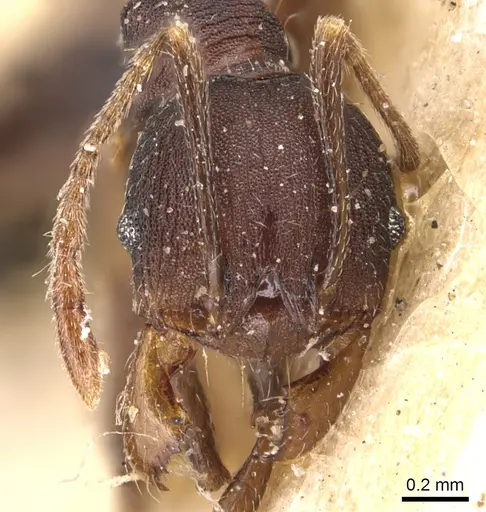
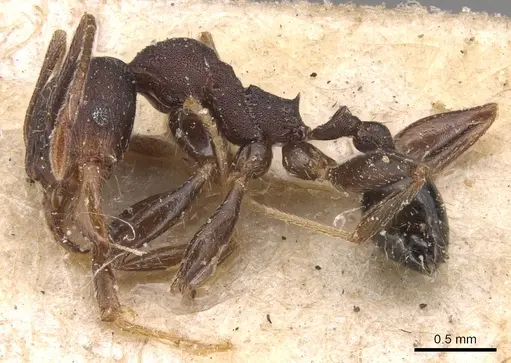
Pheidole germaini is a medium-sized ant species native to the Brazilian Neotropical region, specifically found in Mato Grosso. The major workers are reddish brown with a distinctive appearance featuring a large postpetiolar node, prominent humeri, and swollen hind femora. Minor workers are darker with contrasting lighter appendages. This species belongs to the Pheidole tristis group and was originally described as a subspecies of Pheidole tristis before being elevated to full species status by Wilson in 2003. The species is known primarily from type specimens collected in Mato Grosso, Brazil, with additional records from the same region.
Quick Summary
- Difficulty: Unknown
- Origin & Habitat: Native to the Neotropical region of Brazil, specifically Mato Grosso state. Found in Amazonian fragmented landscapes at lowland locations. The species was collected using bait in forested areas, suggesting ground-nesting or foraging behavior typical of Pheidole species [1].
- Colony Type: Unconfirmed, no published data on colony structure for this species. Based on typical Pheidole patterns, likely single-queen (monogyne) colonies.
- Size & Growth:
- Queen: Not documented for this species. Based on genus patterns, likely 7-10mm.
- Worker: Major workers: 1.56mm head width (HW),1.80mm head length (HL). Minor workers: 0.66mm HW,0.72mm HL.
- Colony: Unknown for this species. Typical Pheidole colonies can reach several thousand workers.
- Growth: Unknown, no development data available
- Development: Unconfirmed, no direct data. Based on typical Pheidole patterns in tropical regions, estimated 4-8 weeks at warm temperatures. (Development timeline is unconfirmed for this species. Estimates based on genus-level patterns.)
- Antkeeping:
- Temperature: Unconfirmed, no specific thermal data exists for this species. As a tropical Brazilian species, likely prefers warm conditions in the range of 24-28°C. Start around 26°C and observe colony activity.
- Humidity: Unconfirmed, no specific humidity data. Based on origin in Mato Grosso (tropical region with seasonal humidity), likely tolerates moderate to high humidity. Maintain nest substrate moist but not waterlogged.
- Diapause: Unlikely, as a tropical species from Brazil, probably does not require diapause. However, some seasonal slowdown may occur if temperatures drop.
- Nesting: No specific nesting data exists for this species. Based on typical Pheidole behavior and the tristis group, likely nests in soil or under stones in natural habitats. In captivity, standard test tubes or formicaria with soil substrate would be appropriate.
- Behavior: No specific behavioral studies exist for this species. Pheidole species are generally known for their polymorphic workers (major and minor castes), with majors primarily functioning as defenders and food processors. The species was collected using bait, indicating foragers will take carbohydrate and protein sources. Escape risk is moderate, major workers at 1.56mm HW are not tiny, but standard escape prevention measures should still be used.
- Common Issues: No species-specific care information exists, this is a very poorly documented ant species, Lack of availability in the antkeeping hobby, this species is not commonly kept or traded, Unknown exact temperature and humidity requirements may lead to trial-and-error care, No documented development timeline makes colony management challenging
Species Identification and Morphology
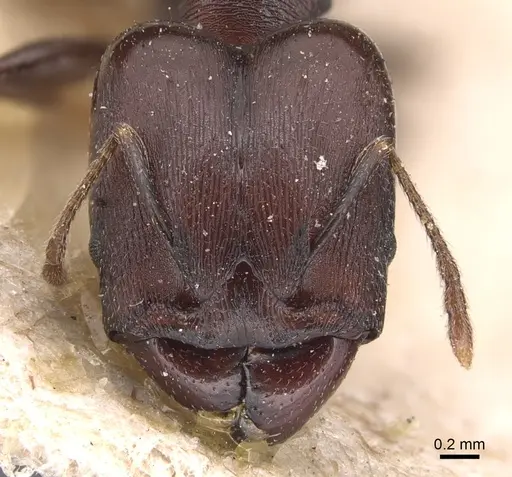
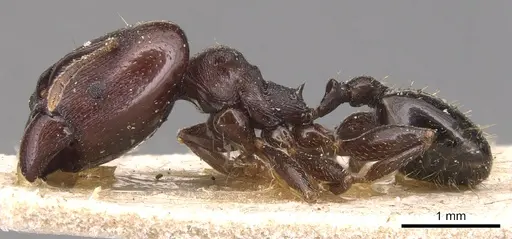
Pheidole germaini is a medium-sized ant belonging to the tristis group within the genus Pheidole. The major workers are distinctive with their large, laterally subangulate postpetiolar node, moderately protuberant and rounded subpostpetiolar process, very prominent lobose humerus, and swollen hind femora. The promesonotum displays weak transverse carinulae (ridge-like structures). Coloration is reddish brown, the head and appendages are rich medium reddish brown while the rest of the body is darker reddish brown. Minor workers are smaller at 0.66mm head width, with a very dark reddish brown body and contrasting light reddish brown appendages. They feature sparse, short dorsal hairs, some of which are clavate or spatulate, a narrow occiput with nuchal collar, and erect propodeal spines. The species was originally described as a subspecies of Pheidole tristis by Emery in 1896 before being elevated to full species status by Wilson in 2003.
Distribution and Habitat
Pheidole germaini is endemic to Brazil, specifically the Mato Grosso region in the country's central-west area. The type material was collected from Mato Grosso, and additional specimens were recorded from Cuiabá, the state capital. More recent sampling in 2015 confirmed the species' presence in the Amazonian fragmented landscape near Juara, Mato Grosso, where it was collected using bait [1]. This suggests the species forages in forested areas and will readily discover food sources. The Neotropical region of Mato Grosso features a tropical climate with distinct wet and dry seasons, which likely influences the species' annual activity patterns.
Current State of Knowledge
It must be emphasized that Pheidole germaini is one of the least documented ant species in the hobby and scientific literature. No published information exists regarding its biology, colony structure, founding behavior, development timeline, temperature preferences, humidity requirements, or nuptial flight timing. The species is known only from museum specimens and a few collection records. This presents both a challenge and an opportunity for antkeepers, there is no established care protocol, but careful observation of any kept colonies could contribute valuable knowledge to the antkeeping community. Any successful husbandry of this species would represent new information for the hobby.
General Pheidole Care Considerations
While specific data for P. germaini is lacking, care recommendations can be inferred from general Pheidole genus behavior and the species' tropical Brazilian origin. Pheidole ants are characteristically polymorphic, with distinct major and minor worker castes, majors serve as defenders and food processors while minors handle most foraging and brood care. Most Pheidole species form single-queen colonies and are claustral founders, meaning the queen seals herself in a chamber and survives on stored fat reserves until her first workers emerge. As a tropical species from Mato Grosso, this ant likely prefers warm, moderately humid conditions. In captivity, provide a nest with soil or sand substrate that can maintain moisture, and keep temperatures in the warm range (24-28°C). Feed standard ant diets including sugar sources (honey, sugar water) and protein (insects, commercial ant foods).
Frequently Asked Questions
Is Pheidole germaini available in the antkeeping hobby?
No, Pheidole germaini is not commonly available in the antkeeping hobby. This species is known primarily from scientific collections in Brazil and has not been established in captive breeding programs. Most antkeepers will not encounter this species for sale.
What does Pheidole germaini look like?
Major workers are medium-sized with a reddish brown coloration. They have distinctive features including a large postpetiolar node, prominent humeri on the shoulders, and swollen hind femora. Minor workers are smaller and darker with lighter colored legs and antennae. The species belongs to the Pheidole tristis group.
Where is Pheidole germaini found?
This species is endemic to Brazil, specifically the Mato Grosso region in the central-west part of the country. Records exist from the type locality in Mato Grosso and from near Cuiabá, with recent collections in the Amazonian landscape near Prêmio.
How do I care for Pheidole germaini?
No established care protocol exists for this species. Based on its tropical Brazilian origin and typical Pheidole genus behavior, provide warm temperatures (around 24-28°C), moderately humid nest conditions, and standard Pheidole diet (sugar sources and protein). Use escape prevention appropriate for medium-sized ants.
How long does it take for Pheidole germaini to develop from egg to worker?
The development timeline for this species is unconfirmed. Based on typical Pheidole patterns in tropical regions, estimate approximately 4-8 weeks from egg to first worker at warm temperatures. No specific data exists for this species.
What temperature should I keep Pheidole germaini at?
No specific temperature data exists for this species. As a tropical ant from Brazil, it likely prefers warm conditions in the range of 24-28°C. Start around 26°C and adjust based on colony activity and health.
Is Pheidole germaini a good species for beginners?
This species is not recommended for beginners. It is extremely poorly documented in both scientific literature and the antkeeping hobby, meaning no established care guidelines exist. Additionally, the species is not readily available in the antkeeping trade.
How big do Pheidole germaini colonies get?
Colony size for this specific species is unknown. However, typical Pheidole species can form colonies ranging from several hundred to several thousand workers. The species has polymorphic workers (majors and minors).
Does Pheidole germaini need hibernation?
As a tropical species from Brazil, hibernation is unlikely to be required. The species originates from a warm climate without cold winters. Some seasonal slowdown may occur if temperatures drop significantly, but active year-round care is likely appropriate.
References

This caresheet is licensed under CC BY-SA 4.0 .
CASENT0904339
View on AntWeb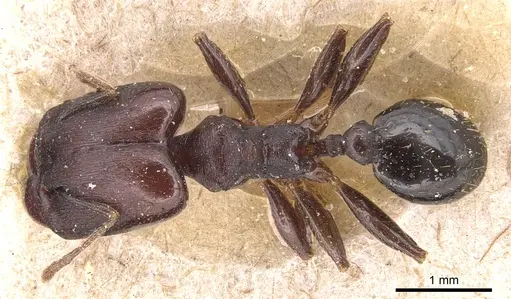
CASENT0904340
View on AntWeb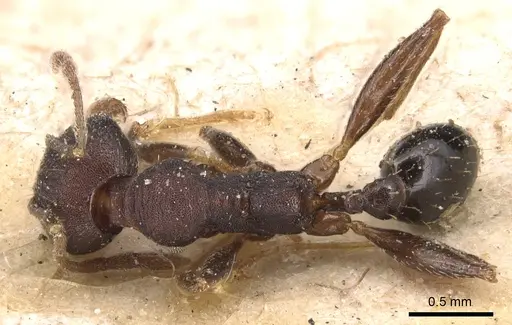
Literature
Loading...Loading products...