

Pheidole elecebra
- Scientific Name
- Pheidole elecebra
- Tribe
- Attini
- Subfamily
- Myrmicinae
- Author
- Wheeler, 1904
- Distribution
- Found in 1 countries
Pheidole elecebra Overview
Pheidole elecebra is an ant species of the genus Pheidole. It is primarily documented in 1 countries , including United States of America. Detailed taxonomic data and occurrence records can be further explored via authoritative databases such as AntWeb or the Global Biodiversity Information Facility (GBIF).
Pheidole elecebra
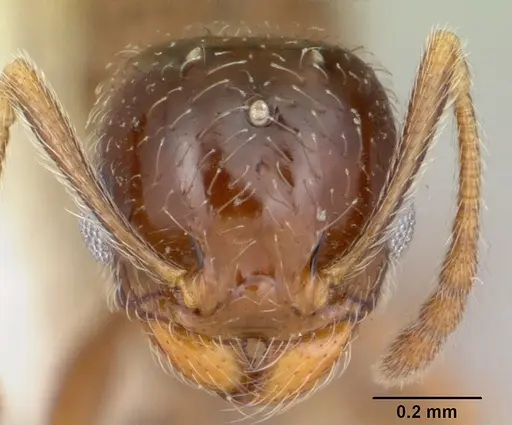
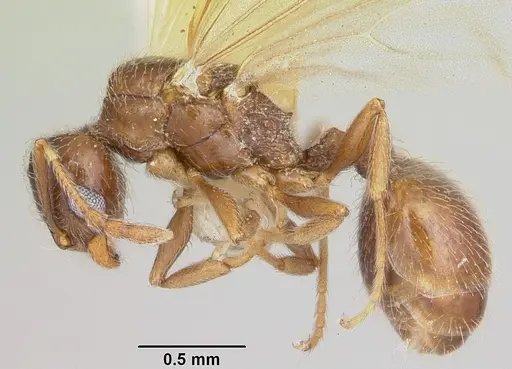
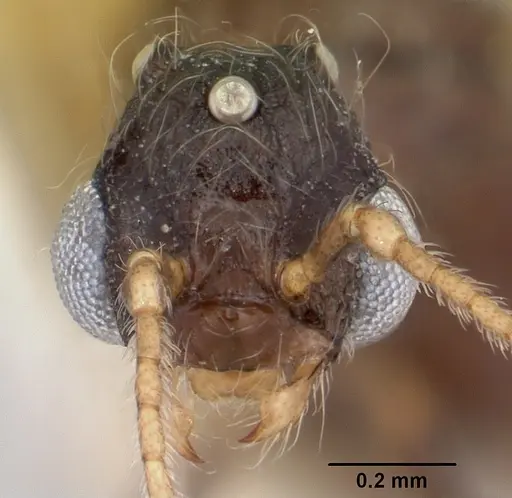
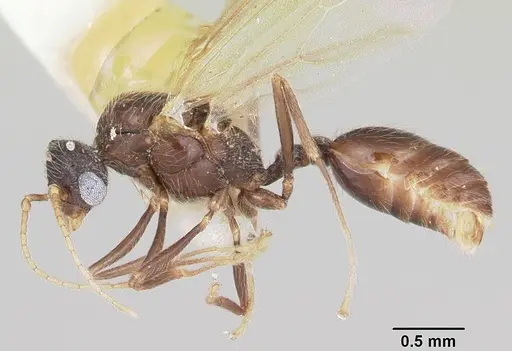
Pheidole elecebra is one of North America's most specialized ants, a workerless social parasite found only in the mountains of Colorado. Queens measure barely over half a millimeter in head length and are instantly recognizable by the enormous curved horn-like extensions on their waist segments [1]. This light brown species has lost the ability to produce workers entirely, living permanently inside the colonies of its host, Pheidole ceres, where it relies completely on host workers to raise its young [1][2]. Listed as Vulnerable by the IUCN, it inhabits pinyon-cedar-oak woodlands at elevations between 2000-2200 meters [1][3].
Unlike most ants, Pheidole elecebra forms no independent colonies. A colony consists solely of parasite queens and males living among host workers. Historical observations suggested the parasite might kill or suppress the host queen, but more recent findings show parasite queens can coexist alongside a healthy host queen producing both host and parasite brood simultaneously [1]. This makes the species an evolutionary oddity, a permanent freeloader that has become completely dependent on its host for survival.
Quick Summary
- Difficulty: Expert
- Origin & Habitat: Endemic to Colorado, USA, specifically pinyon-cedar-oak woodland at 2000-2200m elevation [1][3]
- Colony Type: Workerless inquiline (permanent social parasite) living in nests of Pheidole ceres. Colonies contain only parasite queens and males, all labor performed by host workers. Multiple parasite queens may coexist with or without host queen present [1]
- Queen: Socially parasitic
- Size & Growth:
- Queen: 0.58-0.60mm head width/length (under 2mm estimated total length) [1]
- Worker: No workers produced [1][2]
- Colony: Dependent on host, observed with 400-600 host workers [1]
- Growth: Unknown, entirely dependent on host colony health
- Development: Not applicable, species produces no workers (Development timeline for reproductives unknown and entirely dependent on host Pheidole ceres colony conditions)
- Antkeeping:
- Temperature: Unknown, follow host Pheidole ceres requirements (likely 20-25°C active season, cooler for diapause based on Colorado mountain habitat)
- Humidity: Unknown, match host Pheidole ceres needs (moderate humidity typical of woodland habitats)
- Diapause: Yes, follows seasonal cycle of host colony and Colorado mountain climate
- Nesting: Must be housed within established Pheidole ceres colonies, cannot be kept independently [1]
- Behavior: Completely parasitic and dependent on host workers for all care, foraging, and brood rearing. Queens are extremely small (under 2mm) creating high escape risk even through minute gaps [1]. Non-aggressive toward hosts but may suppress host reproduction.
- Common Issues: requires an established healthy colony of the host species Pheidole ceres to survive, cannot be kept independently., host colony may collapse if the parasite successfully suppresses the host queen's reproduction, as parasite produces no workers to replace dying host workers., extremely small queen size (under 2mm) means standard escape prevention is inadequate, requires specialized fine mesh or barriers., IUCN vulnerable status and extremely limited range (Colorado only) makes wild collection unethical and potentially restricted.
Workerless Parasite Biology
Pheidole elecebra represents an extreme evolutionary adaptation called inquilinism, a permanent parasitic lifestyle where the species has lost the worker caste entirely [1][2]. The queens possess enormous curved horn-like lateral extensions on their postpetiolar nodes that distinguish them from their hosts [1]. These parasites live exclusively within Pheidole ceres nests, where they produce only reproductive offspring (queens and males) and rely completely on host workers for food, nest maintenance, and brood care [1].
Observations of wild colonies reveal complex relationships with hosts. Wheeler originally believed the parasite prevented the host queen from producing new reproductives, effectively sterilizing the colony. However, Cover's 1994 rediscovery found one colony with abundant host brood and a reproducing host queen alongside the parasite, proving coexistence is possible [1]. Another colony contained only parasite males and no host queen, suggesting the parasite can also survive after the host queen dies or is eliminated. This flexibility may help the parasite balance host exploitation with colony survival.
Host Colony Requirements
Keeping Pheidole elecebra requires first establishing a healthy colony of its exclusive host, Pheidole ceres. This Colorado mountain species inhabits pinyon-cedar-oak woodlands and will require appropriate temperature and humidity cycling matching its natural habitat [1][3]. The host colony must be large and stable enough to support the additional burden of raising parasite brood.
Because Pheidole elecebra produces no workers, the host colony's lifespan limits how long the parasite can persist. If the parasite suppresses the host queen's egg-laying, the colony will gradually decline as host workers die of old age without replacement. Successful long-term maintenance likely requires either a very large host colony with sufficient worker reserves, or conditions that allow host queen reproduction to continue alongside the parasite.
Captive Maintenance Challenges
Successfully maintaining Pheidole elecebra in captivity has not been documented in available literature, and attempting to do so presents extreme challenges. The primary difficulty lies in successfully introducing a parasite queen to a host colony without triggering aggression or rejection. The exact chemical cues or behavioral mechanisms used by Pheidole elecebra to integrate with Pheidole ceres are unknown, making artificial introduction risky and likely to result in the queen being killed [1].
Additionally, the queens' tiny size (under 2mm) creates practical housing difficulties. They can escape through gaps that would contain much larger ants, requiring specialized housing with extremely fine mesh or complete sealing. Any maintenance attempt would require expert-level micro-ant keeping skills and a readily available supply of host colonies.
Conservation and Legal Status
Pheidole elecebra is listed as Vulnerable (VU) on the IUCN Red List and has an extremely restricted range limited to Colorado, USA [1]. The species has been recorded at only a handful of localities between 2000-2200 meters elevation in the Colorado Springs area [1][3]. This limited distribution makes any collection potentially harmful to wild populations.
Given its conservation status, endemic nature, and specialized biology, this species is not suitable for the pet trade. Any observations should be conducted in situ (in the wild) or through scientific collection permits. The difficulty of maintaining the species in captivity, combined with its rarity, means it should be left to professional entomologists and conservation biologists rather than private collectors.
Frequently Asked Questions
Can I keep Pheidole elecebra without a host colony?
No. Pheidole elecebra is a workerless parasite that cannot survive without an established colony of its host species, Pheidole ceres. The queens produce no workers and rely entirely on host workers for food, nest maintenance, and raising their young [1][2].
What host species does Pheidole elecebra need?
Pheidole elecebra is an obligate parasite of Pheidole ceres. It has only been found living within nests of this specific host species in the mountains of Colorado [1][3].
How big are Pheidole elecebra queens?
The queens are extremely small, with head widths of 0.58mm and head lengths of 0.60mm, making them under 2mm in total body length. They are recognizable by the distinctive horn-like extensions on their waist segments [1].
Do Pheidole elecebra ants have workers?
No, Pheidole elecebra is a workerless species. Only queens and males are produced. The species has evolutionarily lost the worker caste and depends completely on the host species' workers for all colony labor [1][2].
Can I collect Pheidole elecebra from the wild?
Collection is strongly discouraged. The species is listed as Vulnerable by the IUCN and is endemic to a very small area in Colorado. Their extreme rarity and specialized biology make them unsuitable for private collection [1].
How do I introduce a Pheidole elecebra queen to a host colony?
Introduction protocols are unconfirmed. The chemical integration mechanisms used by this parasite are unknown, and attempted introductions risk the parasite queen being killed by host workers. This species requires expert-level care and is not recommended for captive keeping [1].
Why are Pheidole elecebra listed as Vulnerable?
They have an extremely restricted range limited to specific elevations in Colorado, making them vulnerable to habitat loss and climate change. Their dependence on a single host species also increases extinction risk [1][3].
References

This caresheet is licensed under CC BY-SA 4.0 .
CASENT0103151
View on AntWeb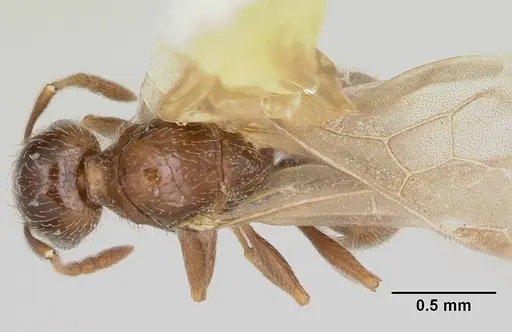
CASENT0104988
View on AntWeb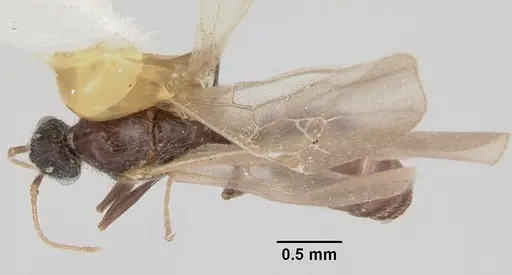
Literature
Loading...Loading products...