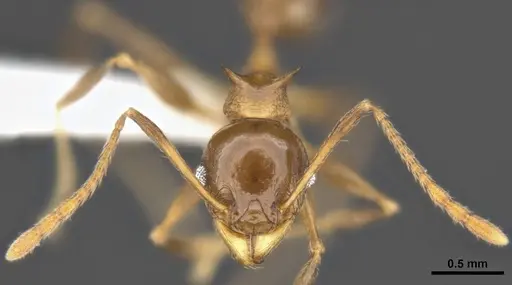
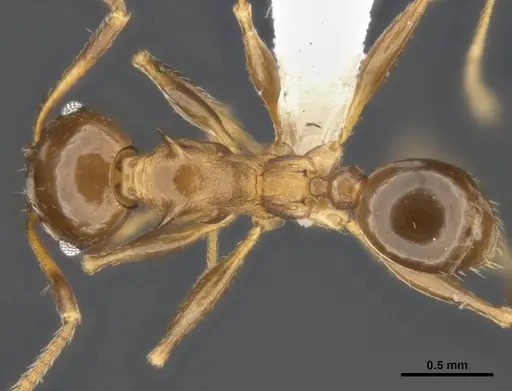
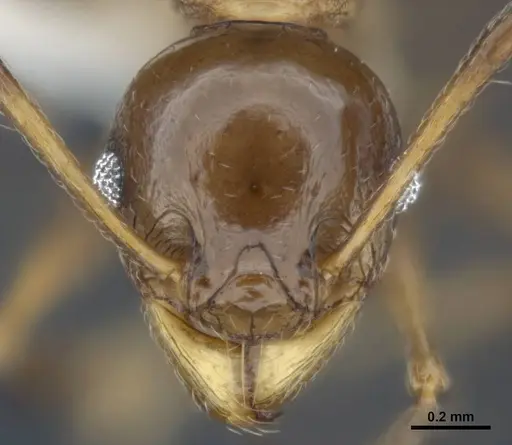
Pheidole quadricuspis - "Four-Spined Big-Headed Ant"
Pheidole quadricuspis is a fascinating ant species known for its distinctive dimorphic worker caste, a common trait in the diverse Pheidole genus. This means colonies feature two types of sterile female workers: the smaller, more numerous minor workers and the larger, specialized major workers (often called 'soldiers'). Major workers have noticeably oversized heads and powerful mandibles. The minor workers are smaller, typically 2.4-2.5 mm in total length, while the major workers are significantly larger, ranging from 4.1-5.1 mm. Their coloration is generally reddish-brown to dark reddish-brown, with the gaster often a bit darker. This species is native to well-developed lowland forests, where they construct their nests in rotting twigs and wood blocks found on the forest floor. A unique behavior of P. quadricuspis is their habit of storing tiny seeds within their nests.
- Difficulty: Medium
- Origin & Habitat: Southeast Asia (Borneo, Sumatra, Indo-Chinese Peninsula including Vietnam) in Well-developed lowland forests, nesting in rotting twigs and wood blocks on the forest floor.
- Colony Type: Monogyne (single queen), claustral (queen seals herself in) founding.
- Size & Growth:
- Queen: Not specified
- Worker: 2.4-5.1mm
- Colony: Medium (thousands). Medium growth.
- Antkeeping:
- Temperature: Aim for a steady temperature between 24-28°C (75-82°F) to ensure optimal brood development and activity. Maintaining a consistent temperature within this range is crucial for their well-being..
- Humidity: High humidity, around 70-90%, is essential, especially for their nesting area. This mimics their natural forest floor habitat and prevents desiccation of the brood and workers..
- Diapause: Not required. Not specified at Not specified.
- Nesting: Given their natural nesting in rotting wood, a nest setup that provides ample moisture and mimics natural decaying wood is ideal. Acrylic nests with a good hydration system, naturalistic setups with cork bark or decaying wood inserts, or even ytong/plaster nests with high humidity gradients would be suitable. They will also appreciate an outworld with substrate for foraging and seed storage..
- Behavior: Low (towards handler, but can be aggressive towards prey and rival ants) aggressiveness.
- Common Issues: Humidity fluctuations, Lack of varied diet (especially seeds), Stress from excessive disturbance, Mold in nest if ventilation is poor.
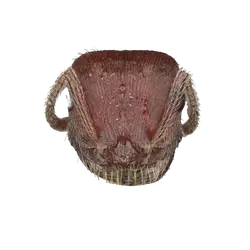
One of the standout features of Pheidole quadricuspis is their distinct dimorphism, with minor and major workers. The major workers, often called 'soldiers,' possess exceptionally large heads and powerful mandibles. While these majors might look imposing, they typically play a crucial role in colony defense and processing larger food items, including crushing seeds. It's fascinating to observe the division of labor between these two worker castes within the colony.
As a species that naturally nests in decaying wood and collects seeds, providing a diverse diet is key for Pheidole quadricuspis. Beyond insect protein, ensuring they have access to various small seeds is vital for their long-term health and growth. You might find them meticulously collecting and storing these seeds in their outworld or designated nest chambers, a unique and engaging behavior to witness.
Maintaining high humidity is paramount for Pheidole quadricuspis. Their natural habitat is the humid lowland forest floor, and replicating this environment in captivity is essential to prevent stress and dehydration. Regularly checking and replenishing the water source in their nest, whether it's a hydration sponge, water tower, or test tube, is crucial for their well-being. A dry environment can quickly lead to colony decline.
While Pheidole species are generally known for their foraging prowess, P. quadricuspis may exhibit shyness or retreat when disturbed. This can influence how they respond to handling or outworld activities. Observing their natural behaviors without excessive disturbance will help ensure a less stressed and more active colony. Patience is key when introducing new food items or performing maintenance.
Frequently Asked Questions
What kind of nest is best for Pheidole quadricuspis?
For Pheidole quadricuspis, nests that replicate their natural decaying wood habitat are ideal. Options like acrylic nests with good hydration systems, naturalistic setups incorporating cork bark or soft wood, or even ytong/plaster nests that maintain high humidity are excellent choices for these ants. They thrive in environments that mimic the humid forest floor. Consider a setup with a spacious outworld for foraging and seed storage, as they are known to gather tiny seeds.
Do Pheidole quadricuspis need a diapause?
Pheidole quadricuspis typically does not require a diapause, as they originate from tropical lowland forests where temperatures are relatively consistent year-round. Maintaining a stable warm temperature and high humidity is more important for their continuous development.
What do Pheidole quadricuspis eat?
Pheidole quadricuspis are omnivores, but they have a particular affinity for seeds. Their diet should consist of insect protein (like fruit flies, mealworms, roaches) and a variety of small seeds. They are known to store seeds in their nests, so providing them with a good selection will encourage this natural behavior and provide essential nutrients.
How big do Pheidole quadricuspis colonies get?
Pheidole quadricuspis colonies are considered medium-sized, often reaching into the thousands of individual workers. They grow at a moderate pace, steadily increasing in numbers as the queen lays more eggs and the colony matures.
Are Pheidole quadricuspis difficult to keep?
Pheidole quadricuspis are rated as 'Medium' difficulty. While not exceptionally challenging, their specific requirements for high humidity and a varied diet, including seeds, mean they aren't suitable for absolute beginners. Consistent temperature and humidity management are key to their success.
What is the difference between minor and major workers in Pheidole quadricuspis?
The most striking difference is size and head morphology. Minor workers are smaller and more agile, handling general foraging and brood care. Major workers, also known as 'soldiers,' are much larger with disproportionately huge heads and powerful mandibles. They specialize in defense, crushing seeds, and processing tougher food items for the colony.
Do Pheidole quadricuspis sting?
No, Pheidole quadricuspis are not known to sting. Their primary defense mechanisms rely on biting, especially from their powerful major workers, and a general tendency to retreat when threatened.
How often should I feed my Pheidole quadricuspis colony?
Feeding frequency depends on the colony size. For smaller colonies, a few insects and a small offering of seeds every 2-3 days might suffice. Larger, more established colonies will require more frequent feedings, perhaps every other day, with a good balance of protein and seeds. Always remove uneaten food to prevent mold.
What temperatures do Pheidole quadricuspis prefer?
Pheidole quadricuspis thrives in warm conditions, ideally between 24-28°C (75-82°F). Maintaining a stable temperature within this range is important for their metabolic rate, brood development, and overall activity levels. Avoid drastic temperature swings.
Can Pheidole quadricuspis be kept with other ant species?
No, it is highly inadvisable to keep Pheidole quadricuspis with any other ant species. In antkeeping, each colony should be housed individually to prevent conflicts, stress, disease transmission, and eventual demise of one or both colonies. Ants are territorial, and cohabitation is almost always fatal in a captive environment.
What kind of outworld setup is best for them?
A spacious outworld with a secure lid is recommended. You can add a thin layer of substrate like sand, loam, or fine gravel to mimic their natural foraging grounds. Providing small decorative elements like twigs or small stones can also enhance their environment and give them structures to explore. Ensure proper ventilation.
How long does it take for a Pheidole quadricuspis egg to become a worker?
While specific data for Pheidole quadricuspis can vary, Pheidole species generally have a relatively fast development time, with the egg to worker stage typically taking several weeks, often around 4-6 weeks under ideal conditions. This can fluctuate based on temperature and nutrition.