

Pheidole constipata
- Scientific Name
- Pheidole constipata
- Tribe
- Attini
- Subfamily
- Myrmicinae
- Author
- Wheeler, 1908
- Distribution
- Found in 2 countries
Pheidole constipata Overview
Pheidole constipata is an ant species of the genus Pheidole. It is primarily documented in 2 countries , including Mexico, United States of America. Detailed taxonomic data and occurrence records can be further explored via authoritative databases such as AntWeb or the Global Biodiversity Information Facility (GBIF).
Pheidole constipata
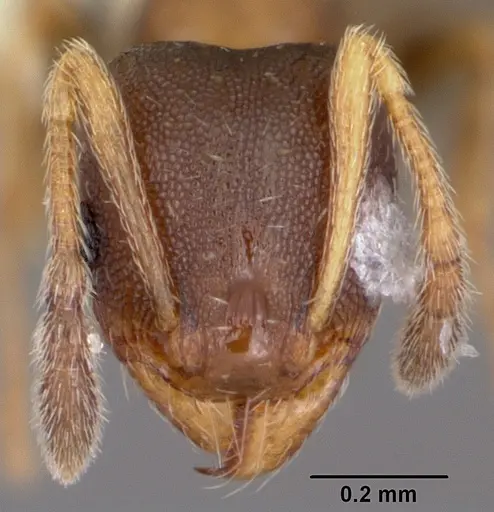
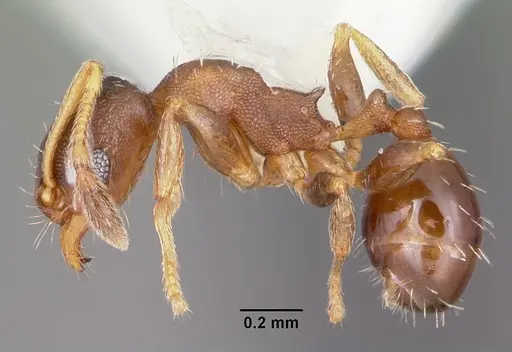
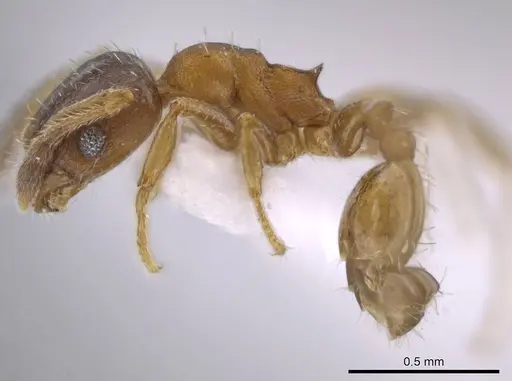
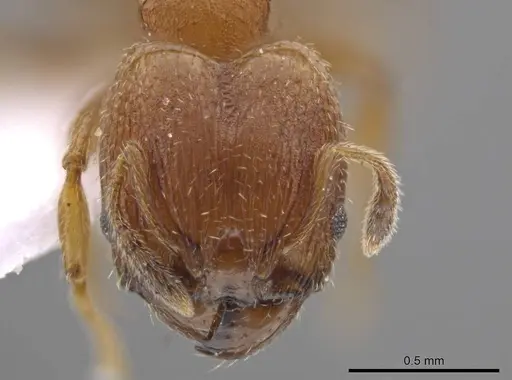
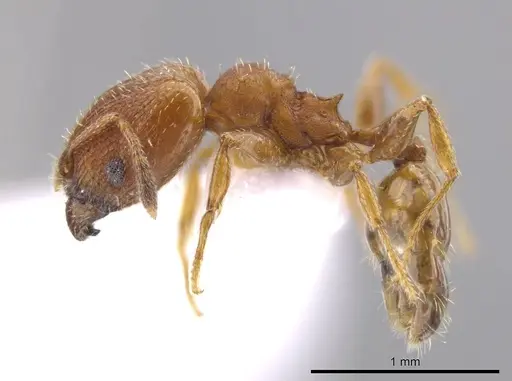
Pheidole constipata is a small, yellowish ant belonging to the genus Pheidole, which is known for having two distinct worker castes, majors (soldiers) and minors. The major workers have a head width of about 0.72mm and are reddish-yellow in color, while minor workers are slightly smaller at 0.44mm head width with a darker yellow mesosoma and yellowish-brown head and gaster. This species is part of the flavens group and is distinguished by its unusually sparse, club-shaped hairs on the mesosoma and head. The species was described by W.M. Wheeler in 1908 and is known only from central Texas, specifically the Austin and New Braunfels areas[1].
This ant faces significant conservation challenges in its limited range. It nests under stones in juniper and juniper-oak-mesquite woodland habitats, and has been found to be negatively impacted by the invasive red imported fire ant (Solenopsis invicta). In fact, researchers have only found P. constipata in areas not yet colonized by fire ants, suggesting it cannot coexist with this aggressive invasive species[2].
Quick Summary
- Difficulty: Medium
- Origin & Habitat: Central Texas, USA, specifically the Austin and New Braunfels areas. Found in juniper and juniper-oak-mesquite woodland, nesting under stones[1].
- Colony Type: Single-queen (monogyne) colonies with major and minor worker castes.
- Colony: Monogyne
- Founding: Claustral
- Size & Growth:
- Queen: Unconfirmed, no queen measurements in primary literature
- Worker: Major workers: 0.72mm HW,0.80mm HL. Minor workers: 0.44mm HW,0.48mm HL.
- Colony: Unknown, no colony size data available
- Growth: Unknown, no development data available for this species
- Development: Unconfirmed, no direct development data exists for this species. Based on typical Pheidole patterns, expect 6-10 weeks at warm temperatures. (Development timeline is unconfirmed. Pheidole species typically develop from egg to worker in 6-10 weeks under optimal conditions.)
- Antkeeping:
- Temperature: Based on central Texas habitat, aim for room temperature around 20-24°C. They likely tolerate the typical temperature range of central Texas, which includes warm summers and cooler winters.
- Humidity: Keep nest substrate moderately moist. In their natural habitat under stones in Texas woodland, they experience moderate humidity. Provide a water tube for drinking water.
- Diapause: Likely, central Texas experiences winter temperatures that would trigger a diapause period. Expect reduced activity during winter months.
- Nesting: Natural nesting is under stones in woodland areas. In captivity, a test tube setup works well for founding colonies. Once established, a formicarium with chambers scaled to their small size (minor workers are only ~4mm total length) would be appropriate. Avoid large, open spaces.
- Behavior: Pheidole constipata is a ground-nesting species that forages for food on the ground surface. Like other Pheidole species, they have major workers (soldiers) that can defend the colony and help process larger food items. They are not known to be particularly aggressive but will defend their nest. Their very small size means escape prevention is important, they can squeeze through tiny gaps. Foraging style is typical of Pheidole, they scavenge for protein and sugar sources near the nest.
- Common Issues: very limited range makes wild collection difficult and potentially harmful to native populations, tiny minor workers (0.44mm head width) require fine mesh barriers to prevent escapes, no captive breeding data exists, this is an extremely rare species in the antkeeping hobby, invasive fire ants (Solenopsis invicta) are a major threat in their native range and should be kept well away from any captive colonies, parasitized by Microselia texana scuttle flies, wild-caught colonies may have internal parasites [2]
Natural History and Distribution
Pheidole constipata is one of the rarest ant species in the United States, known only from a handful of locations in central Texas around Austin and New Braunfels. The species was first described by William Morton Wheeler in 1908 based on specimens collected from colonies found under stones. More recently, entomologist Stefan Cover documented additional colonies at Pedernales Falls State Park in Blanco County, Texas, nesting under stones in juniper and juniper-oak-mesquite woodland[1].
The species has never been documented in large numbers, and its rarity may be partly due to competition from the invasive red imported fire ant (Solenopsis invicta). Research has shown that invasive ants negatively affect native ant communities in Texas, and Cover specifically noted that he only found P. constipata in areas not yet occupied by fire ant colonies [2]. This makes the species potentially vulnerable to habitat loss as fire ants continue to spread across Texas.
Identification and Morphology
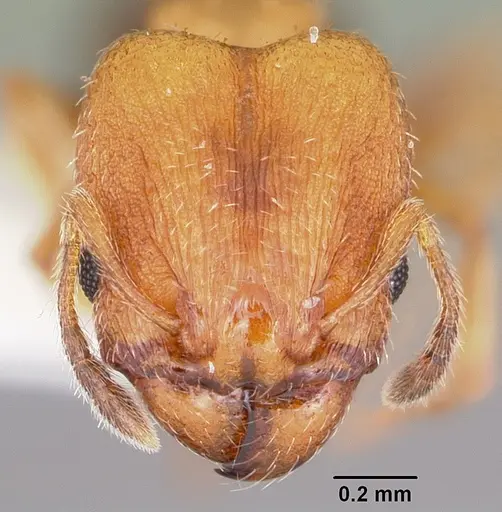
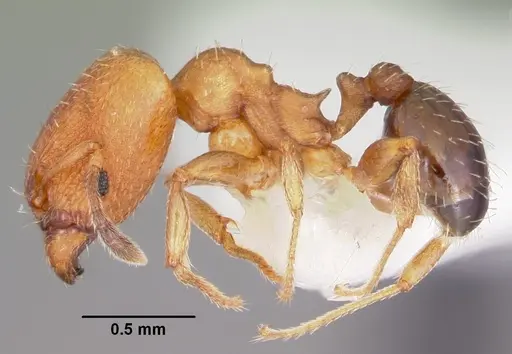
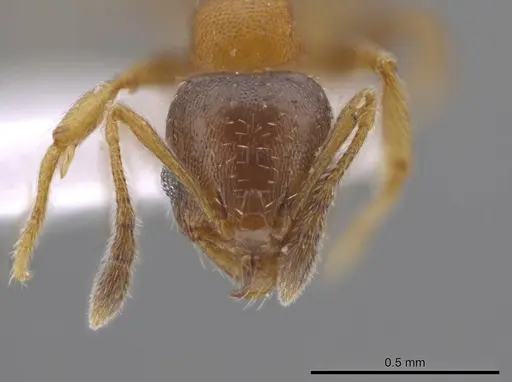
Pheidole constipata is a member of the flavens species group and can be identified by several distinctive features. The major workers have a head width of about 0.72mm and are a uniform reddish-yellow color. Their most notable characteristic is the very sparse pilosity (hair), they have only a few club-shaped hairs on the mesosoma, occiput (back of head), and waist segments. The major's humerus (shoulder area) is slightly raised and subangular, and there are rugoreticular (wrinkle-like) formations between each eye and antennal fossa.
Minor workers are smaller at 0.44mm head width, with a dark yellow mesosoma, waist, and appendages, while the head and gaster (abdomen) are yellowish-brown. Like the majors, they have sparse club-shaped hairs on the mesosoma, occiput, and waist. The postpetiole (segment between thorax and abdomen) is elliptical when viewed from above in both castes.
Housing and Nesting
In the wild, Pheidole constipata nests under stones in woodland habitats. This suggests they prefer cool, shaded locations with stable humidity. For captive care, a test tube setup works well for founding colonies, the queen can be placed in a test tube with a water reservoir (filled about 1/3 and stopped with cotton) [1].
For established colonies, a small formicarium with appropriately scaled chambers would be suitable. The minor workers are very small (around 4mm total length), so chambers should not be overly large. Naturalistic setups with a layer of soil and a flat stone on top can mimic their natural nesting conditions. Keep the nest area away from direct sunlight and maintain moderate substrate moisture, they should not be kept too wet or too dry [1].
Feeding and Diet
Like other Pheidole species, P. constipata likely has an omnivorous diet typical of most ants, they probably consume honeydew from aphids, small insects, and seeds. Pheidole ants are known for their ability to process a wide variety of food sources, and the presence of major workers helps with breaking down larger prey items [1].
For captive feeding, offer a combination of sugar water or honey as an energy source, and protein sources such as small insects (fruit flies, small mealworms, crickets). Since this species has very small minor workers, prey items should be appropriately sized. Feed protein 2-3 times per week and provide a constant sugar water source. Remove any uneaten food after 24-48 hours to prevent mold [1].
Temperature and Seasonal Care
As a species native to central Texas, Pheidole constipata experiences a range of temperatures throughout the year. The Austin area has hot summers (often above 30°C) and mild winters with occasional cold snaps. Based on their natural range, they likely tolerate temperatures in the range of 15-30°C, with an optimal target around 20-24°C for colony maintenance [1].
Central Texas does experience winter temperatures cold enough to trigger diapause (winter rest). During winter months (roughly November through February), you should reduce the temperature to around 10-15°C to allow the colony to rest. Do not feed during diapause, but ensure the colony has access to water. Reduce heating during this period and allow natural temperature cycles [1].
Conservation and Legal Considerations
Pheidole constipata is a species of conservation concern due to its extremely limited range and threats from invasive fire ants. The species has never been common in collections, and its known populations are small and localized. If you obtain this species, it should never be released in North America outside its native range, and indeed, never outside its specific central Texas range[2].
This species is not commonly kept in the antkeeping hobby, and captive breeding data is essentially nonexistent. If you do acquire a colony, it represents a significant responsibility to maintain healthy breeding stock. Never collect from the wild if populations are small, instead, seek captive-born colonies from other keepers. The biggest threat to wild populations is habitat destruction and competition from invasive fire ants.
Frequently Asked Questions
How long does it take for Pheidole constipata to develop from egg to worker?
The exact development timeline is unconfirmed for this specific species. Based on typical Pheidole patterns, expect approximately 6-10 weeks from egg to first worker at optimal temperatures (around 22-24°C). No specific research exists on the development of this rare species.
What do Pheidole constipata ants eat?
Like other Pheidole species, they are omnivorous. Offer sugar water or honey as an energy source, and small protein sources such as fruit flies, small mealworms, or tiny crickets. Feed protein 2-3 times per week with sugar available constantly.
Can I keep multiple Pheidole constipata queens together?
This species is monogyne (single-queen). Multiple unrelated queens would likely fight. Only keep one queen per colony.
What temperature do Pheidole constipata ants need?
Based on their central Texas habitat, aim for room temperature around 20-24°C. They likely tolerate 15-30°C but grow best in the moderate range. Reduce to 10-15°C during winter diapause.
How big do Pheidole constipata colonies get?
Colony size data is not available for this species. Most Pheidole colonies can reach several hundred to a few thousand workers, but the maximum size for this rare species is unknown.
Are Pheidole constipata good for beginners?
This species is not recommended for beginners. It is extremely rare in the antkeeping hobby with no captive breeding data available. Additionally, their very small size requires careful attention to escape prevention.
Do Pheidole constipata need hibernation?
Yes, likely. Central Texas experiences winter temperatures cold enough to trigger diapause. Reduce temperatures to around 10-15°C during winter months (roughly November-February) and stop feeding.
When do Pheidole constipata have nuptial flights?
Winged males have been documented on May 27 in Texas, suggesting nuptial flights occur in late spring (May-June). Exact timing is not well-documented for this rare species.
Why are my Pheidole constipata dying?
Without specific captive data, common issues likely include: improper humidity (too wet or too dry), temperature stress, escape leading to colony loss, or parasites from wild-caught colonies. This species is also threatened by invasive fire ants, ensure your colony is not exposed to Solenopsis invicta.
What is the best nest type for Pheidole constipata?
A test tube setup works well for founding colonies. For established colonies, a small formicarium with appropriately scaled, tight-fitting chambers suits their tiny size. Naturalistic setups with soil and stones also work well.
References

This caresheet is licensed under CC BY-SA 4.0 .
CASENT0104785
View on AntWeb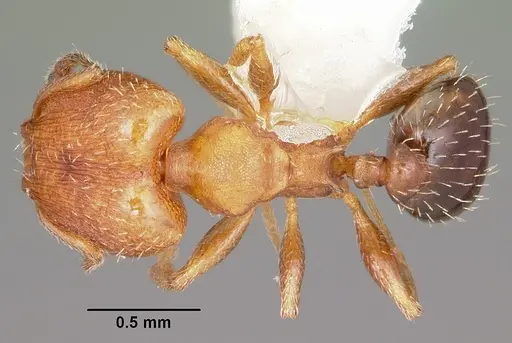
CASENT0104786
View on AntWeb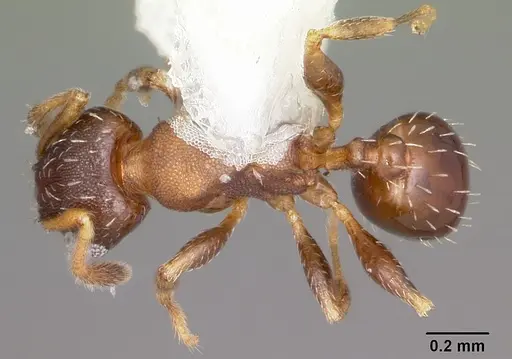
CASENT0635942
View on AntWeb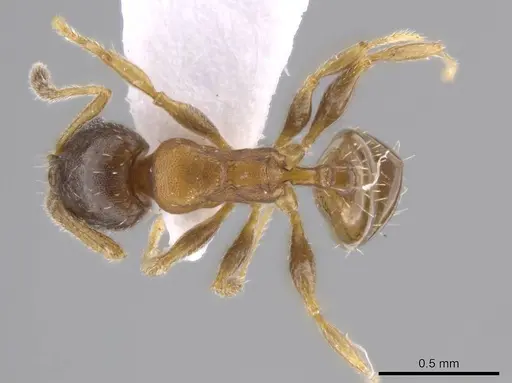
CASENT0635943
View on AntWeb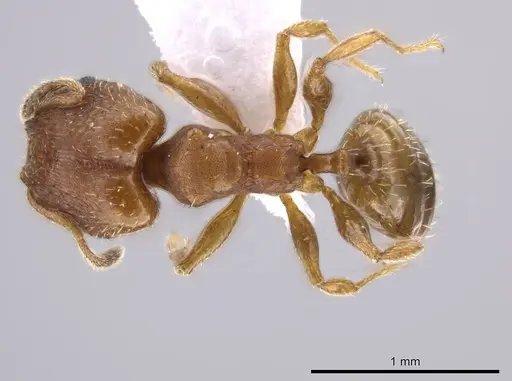
Literature
Loading...Loading products...