Pheidole branstetteri - "Branstetter's Big-Headed Ant"
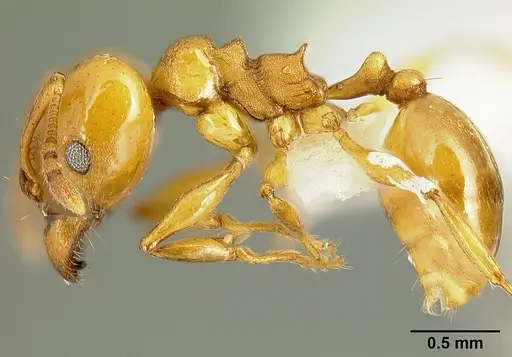
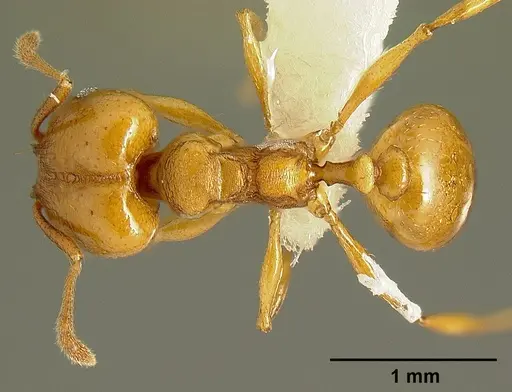
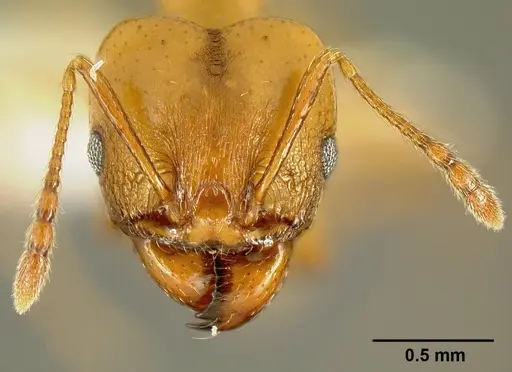
Pheidole branstetteri is a fascinating ant species belonging to the diverse genus Pheidole, often called 'big-headed ants' due to their distinctive major workers. This species exhibits dimorphism, meaning colonies feature two physically distinct worker castes: smaller minor workers and larger major workers (also known as soldiers). The minor workers are typically very agile and perform most foraging, while the major workers possess disproportionately large heads and powerful mandibles, used for tasks like breaking down larger food items or defending the nest. They are orange in color.
- Difficulty: Medium
- Origin & Habitat: Mexico (Chiapas), Belize, Guatemala, Honduras in Lowland rainforest to cloud forest, found on the forest floor, in sifted leaf litter, and under rocks/wood..
- Colony Type: Monogyne, claustral founding.
- Size & Growth:
- Queen: Not specified
- Worker: 0.56-0.7mm
- Colony: Large (tens of thousands). Fast growth.
- Antkeeping:
- Temperature: Ideally maintain a temperature range between 26°C and 30°C for optimal activity and brood development. They can tolerate room temperature, but warmer conditions will accelerate growth..
- Humidity: High humidity is preferred, with ideal levels between 60% and 80% inside the nest to support brood development. They do not tolerate dry conditions well..
- Diapause: Not required. Not specified at Not specified.
- Nesting: These ants are ground-nesting in the wild, often found under rocks and in leaf litter. In captivity, they adapt well to various nest types including acrylic, 3D printed, grout, and naturalistic setups with sand or loam. Ensure the nest has good humidity retention..
- Behavior: Medium (towards handler, food or other ants) aggressiveness.
- Common Issues: Mold in nest, Humidity fluctuations, Escape artists, Colony stalling if not heated/fed properly.
Pheidole branstetteri, like many Pheidole species, are highly dimorphic, featuring distinct minor and major worker castes. Minor workers are crucial for foraging and general colony maintenance, while the majors, with their disproportionately large heads, specialize in breaking down tough food items and defending the colony. This division of labor is a hallmark of the Pheidole genus and makes observing their colony dynamics incredibly engaging. Ensure you provide a varied diet to support both worker roles effectively.
Colony growth for Pheidole branstetteri can be quite rapid once established. While the initial founding brood might be small, numbering around ten minor workers, a well-fed and properly heated colony can quickly expand to thousands of workers within the first year. Providing consistent heating and a rich protein diet will greatly contribute to their exponential growth, allowing you to witness the impressive development of a thriving ant colony.
Due to the small size of their minor workers, Pheidole branstetteri are notorious escape artists. It is absolutely essential to implement robust escape prevention measures, such as Fluon or talcum powder barriers, on your outworld and ensure that any nest connections are completely secure. Even the tiniest gaps can be exploited, leading to swift escapes and potentially a scattered colony. Double-check your setup regularly to prevent any unwanted breakouts.
These ants thrive in warm, humid conditions, mimicking their natural rainforest habitat. Maintaining consistent humidity levels within the nest is critical for the health and development of their brood. Using a nest material that retains moisture well, such as specific types of acrylic or naturalistic setups with proper hydration systems, will be beneficial. Avoid letting the nest dry out, as this can severely stress the colony and hinder growth. A heating mat can assist in achieving optimal temperatures and accelerating their metabolism, leading to faster brood development.
While Pheidole branstetteri are generally quite active and resourceful, offering a diverse diet is key to their success. They are omnivorous and will readily accept a variety of foods, including liquid sugars like sugar water or honey, and a range of insect proteins. Many Pheidole species are also seed harvesters, so incorporating a seed mix, especially oily seeds, can be beneficial. Avoid offering the same food repeatedly, as they may become less interested; rotation of food sources will encourage them to eat more.