

Pheidole balcanica
- Scientific Name
- Pheidole balcanica
- Tribe
- Attini
- Subfamily
- Myrmicinae
- Author
- Seifert, 2016
- Distribution
- Found in 5 countries
Pheidole balcanica Overview
Pheidole balcanica is an ant species of the genus Pheidole. It is primarily documented in 5 countries , including Bulgaria, Greece, Croatia. Detailed taxonomic data and occurrence records can be further explored via authoritative databases such as AntWeb or the Global Biodiversity Information Facility (GBIF).
Pheidole balcanica
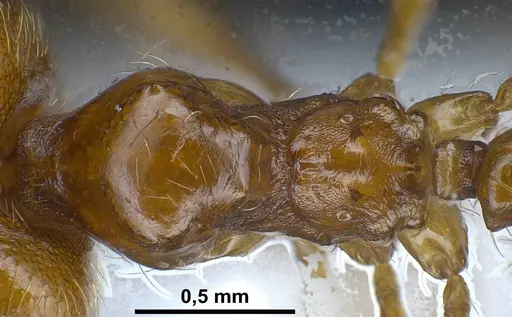
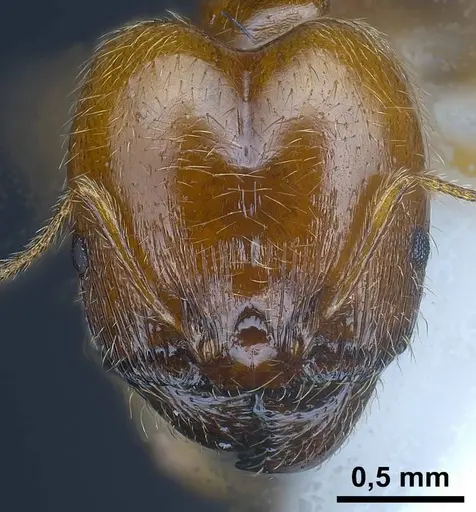
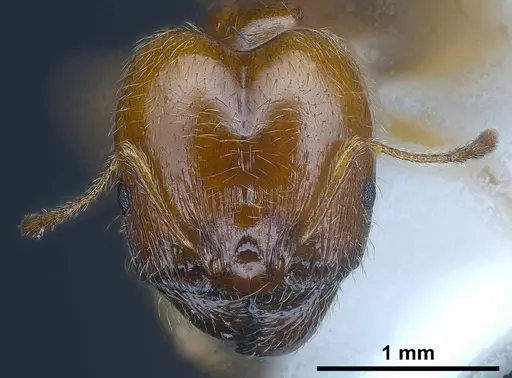
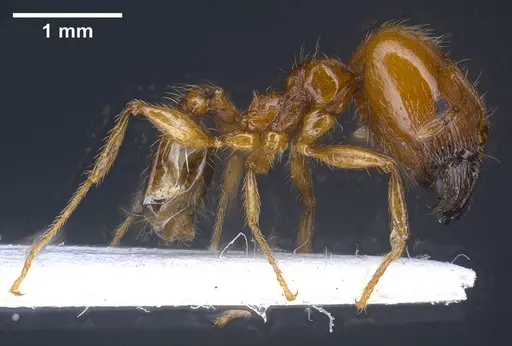
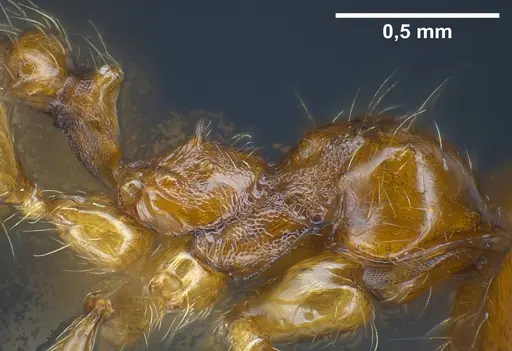
Pheidole balcanica is a medium-sized ant belonging to the Pheidole pallidula species complex, recently separated from its relatives in 2016 based on detailed morphological analysis. Major workers reach 1.1-1.5mm in head size, making them slightly larger than their close relative P. pallidula. They have a distinctive short head with a strongly concave rear margin, small eyes (the smallest in the species complex), and short antennae and hind legs. The body is covered in thin standing hairs, and the promesonotum has a strongly convex profile. This species occupies a wide geographic range spanning from northwest Croatia across the Balkans to central Turkey, covering approximately 2000km [1]. As a Mediterranean species, they likely nest in warm, dry habitats similar to other members of the pallidula complex.
This species was only recently recognized as distinct from the highly variable Pheidole pallidula, and its specific biology remains unstudied. However, being part of the Pheidole genus, it likely shares the characteristic behaviors of its relatives: colony foundation by a single queen who seals herself in, the development of distinct major and minor worker castes, and a diet based on seeds and small insects. The genus Pheidole is known for its 'big-headed' ants, the major workers have disproportionately large heads used for seed processing and colony defense.
Quick Summary
- Difficulty: Medium
- Origin & Habitat: Mediterranean and Balkan regions. Found across Bosnia and Herzegovina, Bulgaria, Croatia, Greece, Montenegro, and Turkey. The species ranges from northwest Croatia (around 45°N) to central Turkey, preferring lowland to mid-elevation warm habitats [1][2][3].
- Colony Type: Likely single-queen (monogyne) colonies based on typical Pheidole patterns, though this specific species has not been studied. Pheidole colonies typically develop distinct major and minor worker castes.
- Colony: Monogyne
- Founding: Claustral
- Size & Growth:
- Queen: Estimated 5-7mm based on genus patterns
- Worker: Minor workers: 2-3mm, Major workers: 3-4mm (major head size CS 1.106-1.457mm) [1]
- Colony: Estimated several hundred workers based on typical Pheidole colony sizes
- Growth: Moderate, typical for Mediterranean Pheidole species
- Development: Estimated 6-8 weeks at optimal Mediterranean temperatures (22-26°C), based on genus patterns (Development time inferred from related Pheidole species, specific data for P. balcanica is unavailable)
- Antkeeping:
- Temperature: Keep at 22-28°C, mimicking warm Mediterranean conditions. A temperature gradient allowing warmer and cooler areas is recommended. They naturally occur in warm lowland areas, so they tolerate higher temperatures better than cool conditions [1].
- Humidity: Moderate, prefer dry to moderately humid conditions. Provide a water tube as a moisture source but avoid overly damp nests. Mediterranean ants typically tolerate drier conditions better than excessive moisture.
- Diapause: Yes, likely requires a winter rest period of 2-3 months at 10-15°C, consistent with their Mediterranean/Balkan distribution and the genus pattern [3].
- Nesting: Will readily accept standard formicarium setups including Y-tong nests, acrylic nests, and plaster nests. They prefer warm, dry nest conditions. Test tube setups work well for founding colonies.
- Behavior: Pheidole balcanica likely exhibits typical Pheidole behavior: non-aggressive toward keepers, with major workers serving as defenders and seed processors. They are foragers who likely harvest seeds and small insects. Major workers have functional mandibles and can deliver a mild sting. Escape risk is moderate, use standard barrier methods. They are diurnal foragers active during warm daylight hours.
- Common Issues: newly described species means limited species-specific care information, keepers should follow general Pheidole guidelines, winter diapause is important for colony health but timing and duration specifics are unconfirmed for this species, major workers may be aggressive defenders if threatened, handle gently during nest maintenance, test tube flooding can drown founding queens, ensure proper water reservoir sizing
Nest Preferences and Housing
Pheidole balcanica will adapt to various captive nest setups. Y-tong (AAC) nests work excellently for this species, providing the dark, warm, dry conditions they prefer. Acrylic nests and plaster nests are also suitable options. For founding colonies, a simple test tube setup with a water reservoir works well, ensure the cotton is packed securely to prevent flooding. The nest should be kept at room temperature (22-26°C) in a warm location, reflecting their Mediterranean origin. Provide an outworld area for foraging where you can offer food. Because they are moderate-sized ants, they do not require extremely small passages, but avoid overly large chambers which can make them feel insecure. Escape prevention is important, while not among the smallest ants, they are active foragers and will explore gaps in setup connections. [1][3]
Feeding and Diet
Like other Pheidole species, P. balcanica likely has an omnivorous diet based on seeds and protein. In captivity, offer a varied diet including: protein sources like small insects (fruit flies, small crickets, mealworms), seeds (grass seeds, millet), and sugar sources (honey water, sugar water). Pheidole ants are known for their seed-harvesting behavior, major workers use their large heads to process seeds. Feed protein 2-3 times per week and provide a constant sugar water source. Remove uneaten food after 24-48 hours to prevent mold. Fresh water should always be available. Start with small prey items and observe acceptance, some Pheidole species prefer smaller prey than others.
Temperature and Seasonal Care
As a Mediterranean species from the Balkans and Turkey, Pheidole balcanica prefers warm conditions. Maintain nest temperatures between 24-28°C for optimal brood development. They can tolerate temperatures into the low 30s°C briefly but should not be exposed to sustained high heat. A heating cable or mat on one side of the nest creates a useful temperature gradient. During winter, provide a diapause period of 2-3 months at 10-15°C, this is important for colony health and mimics their natural seasonal cycle. Reduce feeding during diapause and keep the colony in a cool, dark location. Do not feed during the deepest part of hibernation. Resume normal feeding and warming gradually in spring. [1][2]
Colony Development and Castes
Pheidole balcanica exhibits the genus-typical caste system with distinct major and minor workers. Minor workers handle most day-to-day tasks including foraging, nursing brood, and nest maintenance. Major workers develop larger heads and serve as defenders and seed processors, their enlarged mandibles are effective for cracking seeds and repelling threats. Colony growth is moderate, expect the first workers (nanitics) to emerge 6-8 weeks after founding at optimal temperatures. The colony will initially grow slowly but accelerates once the first workers begin foraging. Major workers typically appear after the colony reaches several dozen workers. A mature colony may contain several hundred workers across both castes. [1]
Behavior and Temperament
Pheidole balcanica is likely a non-aggressive species that focuses on foraging and colony maintenance rather than territorial aggression. Workers are diurnal foragers, actively searching for seeds and small insects during warm daylight hours. When threatened, major workers may respond defensively using their mandibles, while not dangerous to humans, they can pinch. The species does not have a painful sting, though some Pheidole species can deliver mild stings. They are not known for escape artistry but active foragers will explore, so standard barrier methods (fluon on rim edges, secure connections) are recommended. Workers communicate through chemical trails and may recruit nestmates to rich food sources. Observe your colony's activity patterns and adjust feeding and temperature accordingly.
Frequently Asked Questions
How long does it take for Pheidole balcanica to have first workers?
Expect first workers (nanitics) to emerge 6-8 weeks after the queen lays eggs, when kept at optimal temperatures of 24-28°C. This estimate is based on typical Pheidole development patterns, as specific timing for P. balcanica has not been documented.
What do Pheidole balcanica ants eat?
They are omnivorous, likely feeding on seeds and small insects in the wild. In captivity, offer small insects (fruit flies, pinhead crickets, mealworms), seeds, and sugar water or honey. Protein should be offered 2-3 times per week with constant sugar water available.
What temperature do Pheidole balcanica need?
Keep them warm at 24-28°C. They are Mediterranean ants that tolerate heat better than cold. A temperature gradient allowing them to choose their preferred zone is ideal.
Do Pheidole balcanica need hibernation?
Yes, a winter diapause of 2-3 months at 10-15°C is recommended. This mimics their natural seasonal cycle in the Balkans and Mediterranean regions and supports colony health.
Is Pheidole balcanica good for beginners?
This species is rated as medium difficulty. While not the easiest species, Pheidole are generally forgiving of minor care mistakes. The main challenges are providing proper winter diapause and managing the major worker caste during nest maintenance. Their recently described status means less species-specific information is available.
How big do Pheidole balcanica colonies get?
Based on typical Pheidole patterns, expect colonies to reach several hundred workers at maturity. Major workers appear after the colony is established, adding to the colony's defensive and seed-processing capabilities.
Can I keep multiple Pheidole balcanica queens together?
Pheidole species are typically single-queen (monogyne) colonies. Combining unrelated queens is not recommended as they likely will fight. Only one queen should be kept per colony setup.
When should I move Pheidole balcanica to a formicarium?
Keep founding colonies in test tube setups until the colony reaches 30-50 workers. Once the test tube becomes crowded or the water reservoir needs frequent refilling, transfer to a proper formicarium. This is typically after 6-12 months.
Why was Pheidole balcanica separated from Pheidole pallidula?
Researchers used detailed morphological measurements and statistical analysis to identify consistent differences between populations. P. balcanica has smaller eyes, different head proportions, and shorter antennae and hind legs compared to P. pallidula. The separation was published by Seifert in 2016 [1].
References

This caresheet is licensed under CC BY-SA 4.0 .
ANTWEB1038022
View on AntWeb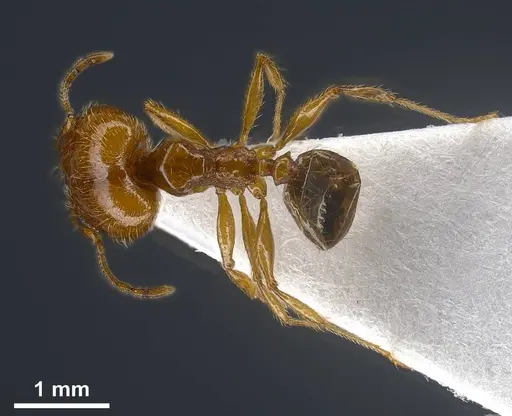
Literature
Loading...Loading products...