

Pheidole arcifera
- Scientific Name
- Pheidole arcifera
- Tribe
- Attini
- Subfamily
- Myrmicinae
- Author
- Santschi, 1925
- Distribution
- Found in 1 countries
Pheidole arcifera Overview
Pheidole arcifera is an ant species of the genus Pheidole. It is primarily documented in 1 countries , including Brazil. Detailed taxonomic data and occurrence records can be further explored via authoritative databases such as AntWeb or the Global Biodiversity Information Facility (GBIF).
Pheidole arcifera
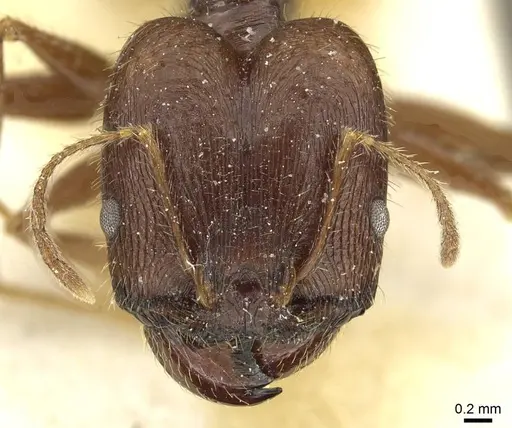
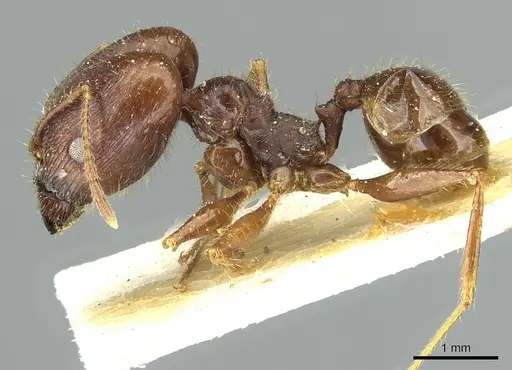
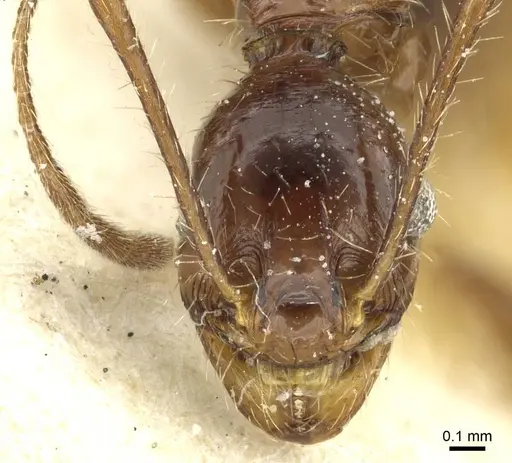
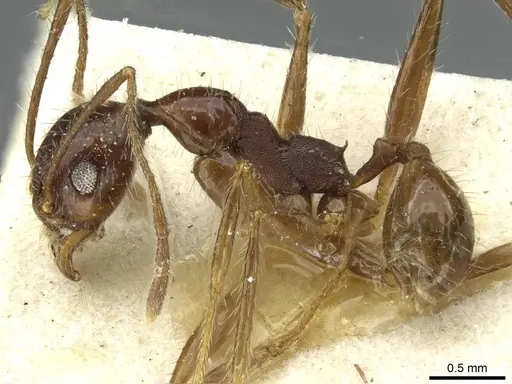
Pheidole arcifera is a large member of the fallax group, native to Brazil. These ants are easily recognized by their distinctive major workers (soldiers) which have uniquely carinulate (ridged) heads and a rich medium reddish-brown coloration. Majors measure around 2mm in head width, while minor workers are much smaller at 0.7mm. The species belongs to the Myrmicinae subfamily and is known only from its type locality in Minas Gerais, Brazil. The name 'arcifera' means 'bow-carrier' in Latin, referring to the unique arch-like carinulae pattern on their heads.
The biology of this species remains completely unstudied in the scientific literature. However, being a Pheidole species, they are soil-nesting ants that build subterranean colonies and are known for their large colony sizes and mass recruitment behavior. They are generalist omnivores and can be aggressive in defending their territory. This combination of traits makes them a fascinating species for antkeepers, though their specific care requirements must be inferred from related species [1].
Quick Summary
- Difficulty: Medium
- Origin & Habitat: Neotropical Brazil, specifically Minas Gerais, Pirapora. Found in seasonal semi-deciduous forest regions [2][1].
- Colony Type: Colony structure is unconfirmed, likely single-queen (monogyne) based on typical Pheidole patterns, but this has not been documented for this specific species.
- Colony: Monogyne
- Founding: Claustral
- Size & Growth:
- Queen: Unconfirmed for this species. Based on related Pheidole fallax group species, expect queens around 8-12mm.
- Worker: Major: 2.00mm HW (head width), Minor: 0.70mm HW.
- Colony: Likely large colonies (thousands of workers) based on typical Pheidole behavior and functional group classification [1].
- Growth: Moderate, inferred from related species
- Development: 6-8 weeks estimated based on typical Pheidole development patterns (Development time is unconfirmed for this species, estimates based on genus-level patterns)
- Antkeeping:
- Temperature: Keep around 24-28°C. Being a Brazilian species from Minas Gerais, they prefer warm conditions. A heating cable on one side of the nest creates a suitable gradient.
- Humidity: Moderate to high. Keep the nest substrate consistently moist but not waterlogged. These soil omnivores prefer conditions similar to their natural forest floor habitat.
- Diapause: Unconfirmed, Brazilian species may have reduced activity in cooler months but likely do not require true hibernation. Maintain stable temperatures year-round.
- Nesting: Soil-nesting species. A naturalistic setup with soil substrate or a Y-tong/plaster nest works well. Provide deep substrate for colony expansion as they build subterranean chambers.
- Behavior: Majors are specialized soldiers with large heads for defense and seed processing. They perform mass recruitment, when a forager finds food, it signals nestmates who form trails to the food source. They are aggressive in defending territory and can be defensive when their nest is disturbed. Escape risk is moderate, minors are small but majors are larger, standard barrier methods work well.
- Common Issues: completely unstudied biology means care is based on genus-level inference rather than species-specific data, large colony size requires significant space, plan for colony expansion, aggressive behavior means they may attack and kill other ant species if housed nearby, mass recruitment can lead to rapid colony discovery of food sources, ensure secure feeding areas, Brazilian species may be sensitive to temperature drops, avoid cold drafts
Nest Preferences
Pheidole arcifera is a soil-nesting species that builds subterranean colonies in natural habitats. In captivity, they do well in naturalistic setups with deep soil substrate that allows them to excavate chambers, or in Y-tong/plaster nests designed for soil-dwelling species. The nest should have chambers scaled to their colony size, they naturally create deeper tunnels and chambers as their colony grows. Provide a moisture reservoir or hydration source that allows the substrate to remain consistently damp without becoming waterlogged. These ants are not arboreal, so they do not need vertical spaces or plants, horizontal floor space is more important for their colony expansion. [1]
Feeding and Diet
As soil omnivores with mass recruitment behavior, Pheidole arcifera accepts a wide variety of foods. They are generalists that will collect proteins, sugars, and seeds. Offer protein sources like mealworms, crickets, or other small insects twice weekly. Sugar can be provided through honey water or sugar water, they will readily consume these and recruit many workers to sweet foods. Being a Pheidole species, they may also process seeds, so offering birdseed or grass seeds can provide enrichment. Remove uneaten food after 24-48 hours to prevent mold. Their mass recruitment means you may see large numbers of workers at feeding sites, this is normal behavior and indicates a healthy, active colony. [1]
Temperature and Care
As a Brazilian species from Minas Gerais, Pheidole arcifera prefers warm conditions around 24-28°C. This temperature range supports normal colony activity and brood development. Use a heating cable placed on top of the nest (not underneath, to prevent excessive drying) to create a gentle temperature gradient if your room temperature is below this range. Avoid temperatures below 20°C as this may slow or stop colony activity. Stable temperatures are important, avoid placing the colony near air conditioning vents, windows with drafts, or areas with temperature fluctuations. Monitor colony behavior as a guide: if workers are active and foraging, temperatures are suitable, if they cluster and become sluggish, consider warming the nest slightly.
Behavior and Temperament
Pheidole arcifera exhibits classic Pheidole behavior with distinct major and minor worker castes. Majors have specialized large heads used for defense, cracking seeds, and processing large food items. They perform mass recruitment, when a forager discovers a food source, it returns to the nest and leads other workers to the food in a coordinated trail. This species is aggressive in interspecific interactions and will defend its territory vigorously. They are not suitable for housing near other ant species as they may attack and eliminate competitors. In the nest, majors typically remain inside while minors handle most foraging and external tasks. This species is not known to sting and poses no danger to humans. [1]
Growth and Development
The complete development timeline for Pheidole arcifera has not been documented. Based on typical Pheidole patterns, expect eggs to develop into workers in approximately 6-8 weeks at optimal temperatures. The first generation (nanitics) will be smaller than normal workers, which is typical for claustrally-founding colonies. As the colony grows, subsequent generations will be larger and more robust. Pheidole colonies can grow to thousands of workers, so plan housing accordingly. Growth rate is moderate, patience is required during the founding stage when the queen is raising the first workers alone. Once the colony establishes several hundred workers, growth typically accelerates.
Frequently Asked Questions
How long does it take for Pheidole arcifera to produce first workers?
The exact timeline is unconfirmed for this species, but based on typical Pheidole development, expect first workers (nanitics) approximately 6-8 weeks after the queen lays eggs, at optimal temperatures around 24-28°C.
What do Pheidole arcifera ants eat?
They are generalist omnivores. Offer protein sources like small insects (mealworms, crickets) twice weekly, and provide constant access to sugar sources like honey water or sugar water. They may also accept seeds.
Can I keep multiple Pheidole arcifera queens together?
This has not been documented for this specific species. Based on typical Pheidole behavior, they are likely single-queen colonies. It is not recommended to house multiple unrelated queens together as they may fight.
What size colony does Pheidole arcifera reach?
Based on their functional group classification as large soil-nesting ants with mass recruitment, colonies likely reach thousands of workers at maturity.
What temperature do Pheidole arcifera need?
Keep them warm at 24-28°C. Being a Brazilian species, they prefer stable warm conditions. A heating cable on the nest can help maintain suitable temperatures.
Are Pheidole arcifera good for beginners?
They are rated as medium difficulty. While their basic care is straightforward (warm temperatures, moist soil, generalist diet), their large colony size and aggressive behavior require some experience. They are not recommended as a first ant but are manageable for intermediate keepers.
What type of nest is best for Pheidole arcifera?
A naturalistic setup with deep soil substrate or a Y-tong/plaster nest designed for soil-dwelling species works well. They need space for colony expansion as they build subterranean chambers.
Do Pheidole arcifera need hibernation?
This is unconfirmed. As a Brazilian species from a tropical-to-subtropical region, they likely do not require true hibernation. Maintain stable warm temperatures year-round.
Why are my Pheidole arcifera dying?
Common causes include: temperatures below 20°C, overly dry or waterlogged substrate, mold from uneaten food, or stress from disturbance during the founding stage. Ensure proper temperature, humidity, and remove uneaten food promptly.
References

This caresheet is licensed under CC BY-SA 4.0 .
CASENT0913266
View on AntWeb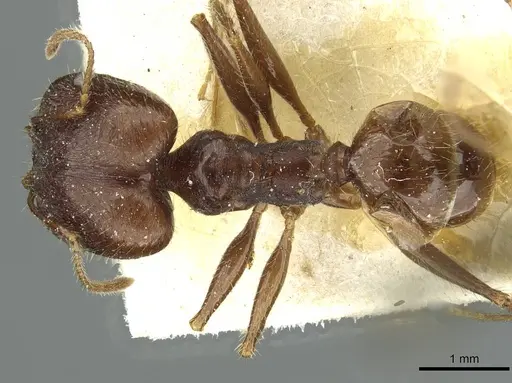
CASENT0913267
View on AntWeb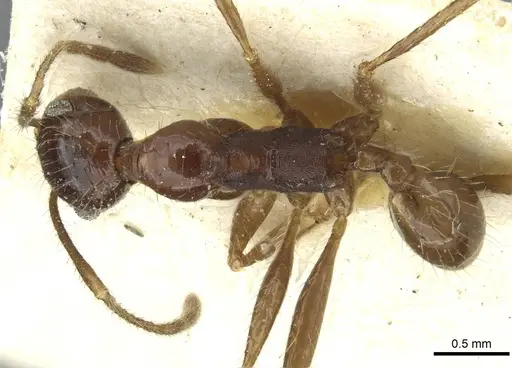
Literature
Loading...Loading products...