

Petalomyrmex phylax
- Scientific Name
- Petalomyrmex phylax
- Tribe
- Plagiolepidini
- Subfamily
- Formicinae
- Author
- Snelling, 1979
- Distribution
- Found in 2 countries
Petalomyrmex phylax Overview
Petalomyrmex phylax is an ant species of the genus Petalomyrmex. It is primarily documented in 2 countries , including Cameroon, Equatorial Guinea. Detailed taxonomic data and occurrence records can be further explored via authoritative databases such as AntWeb or the Global Biodiversity Information Facility (GBIF).
Petalomyrmex phylax
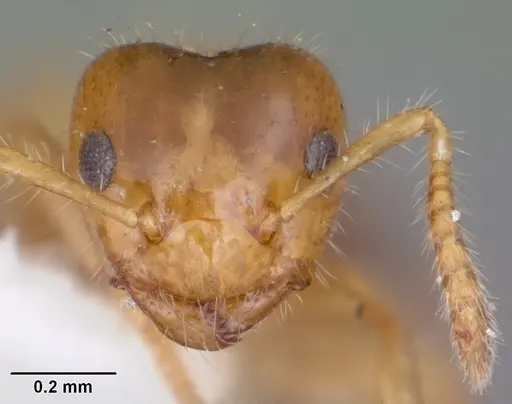
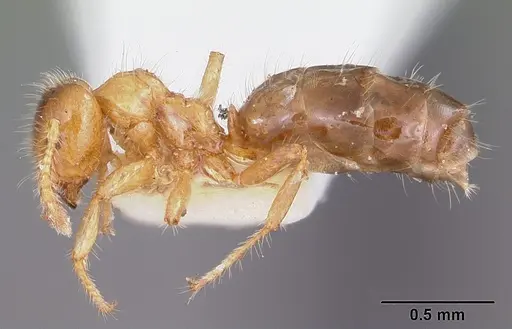
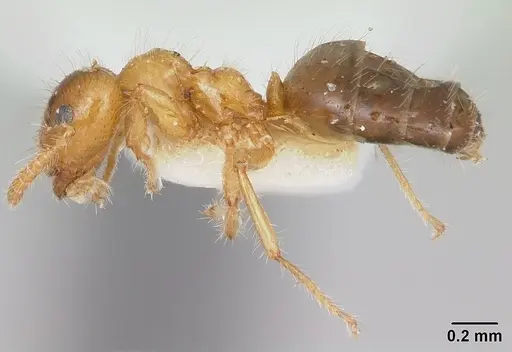
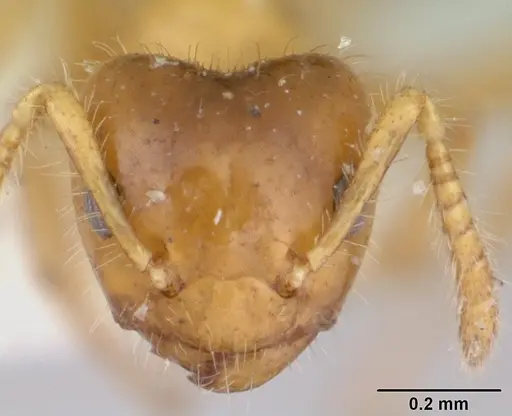
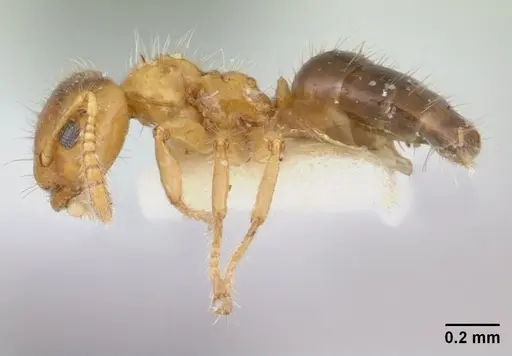
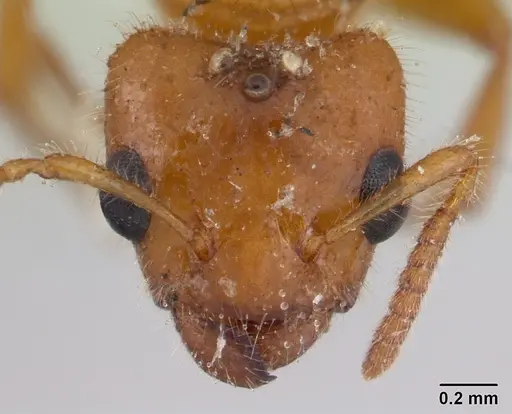
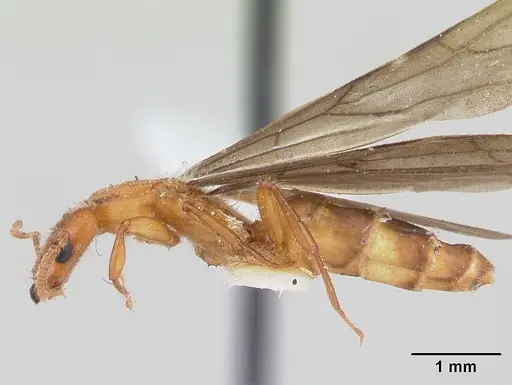
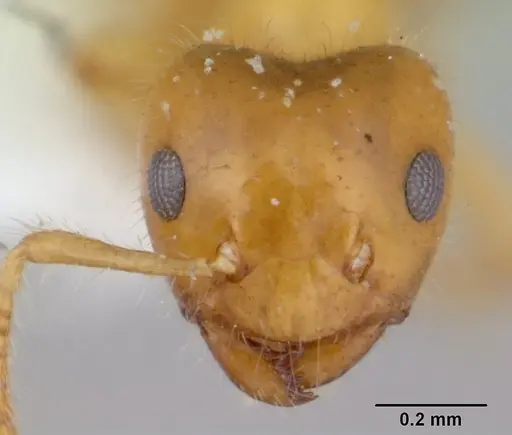
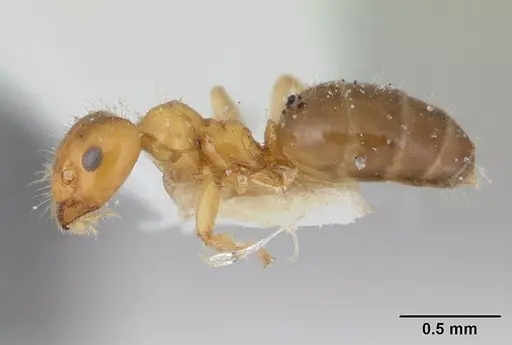
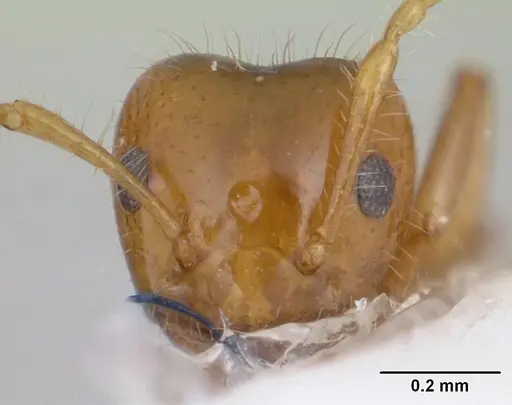
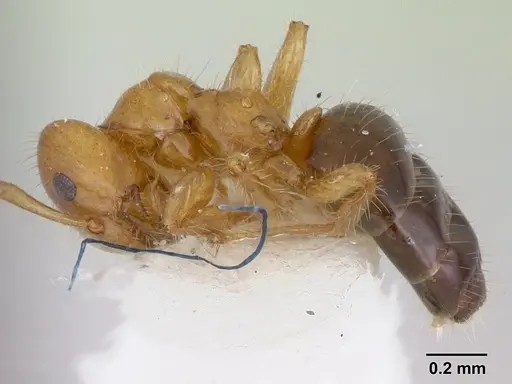
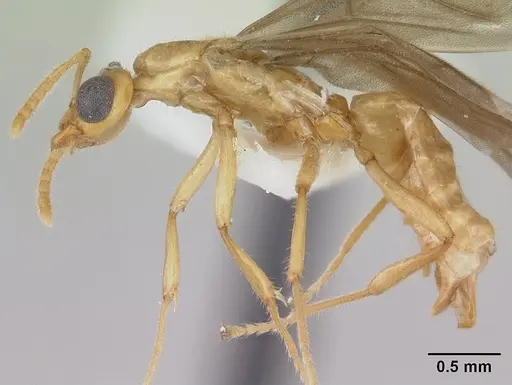
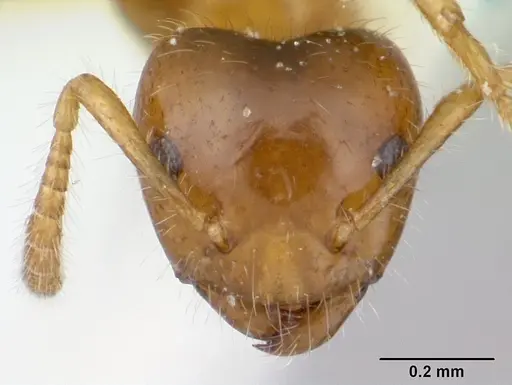
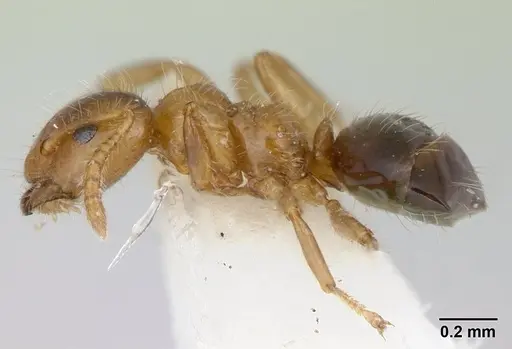
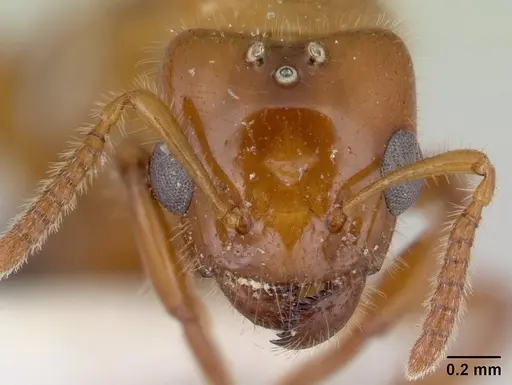
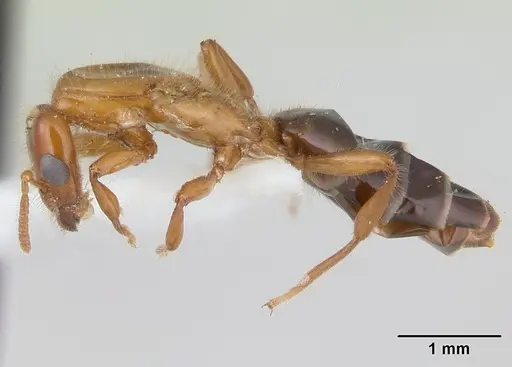
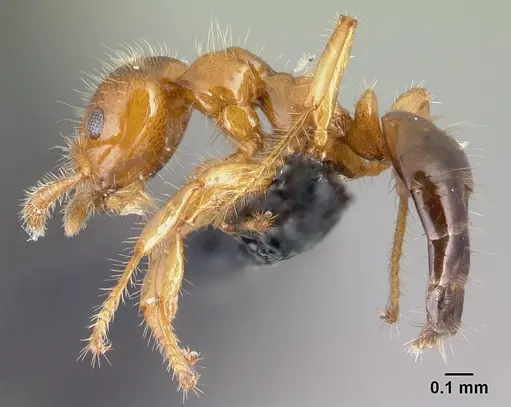
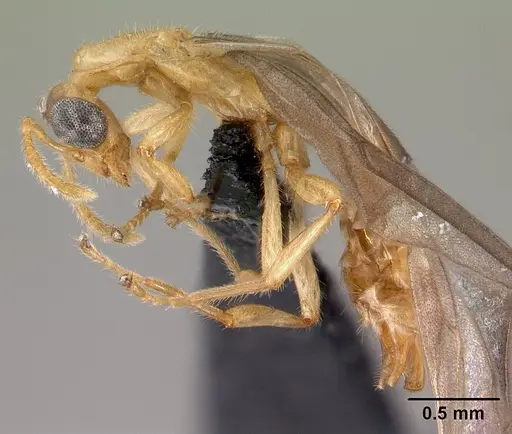
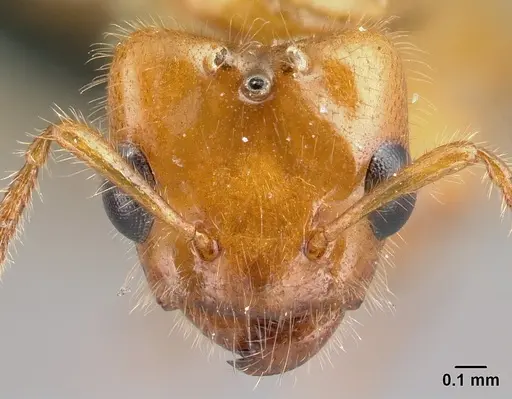
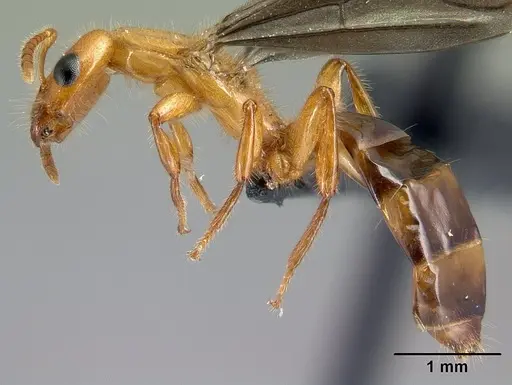
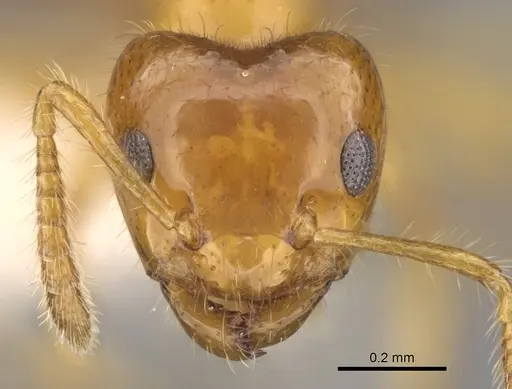
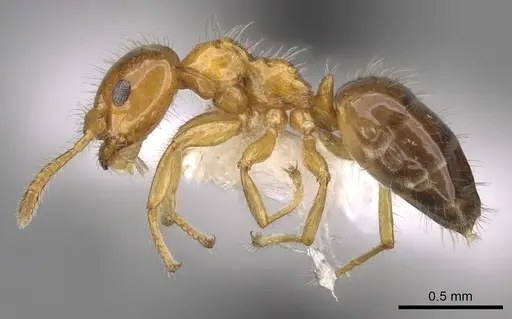
Petalomyrmex phylax is a tiny ant species (workers 2-3mm) native to the coastal rainforests of Cameroon in Africa [1]. This species is an obligate plant-ant, meaning it can only live inside a specific host tree called Leonardoxa africana subsp. africana, a myrmecophyte with swollen hollow stems called domatia that provide ready-made nesting chambers [1]. The ants protect the tree's young leaves from herbivores and in return receive shelter and extrafloral nectar from the plant [2]. What makes P. phylax truly unique is that it farms fungi inside the domatia, the ants tend, protect, and consume specialized fungi that grow on the inner walls of their nest chambers [3]. This fungus provides nitrogen to the ants through a three-way symbiosis involving the plant, ant, and fungus [4]. Workers are reddish-yellow with brownish heads and gaster, and have a distinctly cordate (heart-shaped) head that helps identify them [5].
Quick Summary
- Difficulty: Expert
- Origin & Habitat: Coastal rainforests of Cameroon, West Africa, specifically associated with the myrmecophytic tree Leonardoxa africana subsp. africana [6]. The ants live inside swollen hollow internodes (domatia) of this tree.
- Colony Type: Facultatively polygynous, some populations have single-queen colonies while others accept multiple queens (supernumerary queens) [6]. Colonies can also be polydomous, with subunits located 0.40-5.52 meters apart [1].
- Colony: Optionally polygyne
- Size & Growth:
- Antkeeping:
- Temperature: Keep warm at 24-28°C, mimicking tropical rainforest conditions. A gentle gradient is recommended.
- Humidity: High humidity (70-85%) is essential, these ants live inside tree stems in a humid rainforest understory.
- Diapause: No diapause required, this is a tropical species that remains active year-round [5].
- Nesting: This species cannot be kept in typical ant nests. They require domatia (hollow stems) from their host plant Leonardoxa africana. Without the host plant, captive colonies cannot survive. This makes them essentially impossible to keep in captivity.
- Behavior: Workers are highly active patrollers, continuously guarding young leaves of their host plant both day and night [2]. They are aggressive toward herbivores and will actively hunt insects like chrysomelid beetles and microlepidoptera that threaten the plant [8]. Workers respond within seconds to chemical alarm signals, specifically methyl salicylate emitted by damaged leaves [9]. They farm fungi by feeding, protecting, and transporting fungal material within the domatia [4]. Colonies are very populous, with up to 10,000 workers [7]. Escape risk is moderate, they are small but typically remain within the host plant structure.
- Common Issues: This species cannot be kept in captivity without its host plant Leonardoxa africana, they are obligate myrmecophytes, Fungal cultivation is essential, larvae feed on farmed fungi, not typical ant food, The specialized domatia environment cannot be replicated with standard formicaria, Wild-caught colonies will likely die without proper host plant conditions, This is not a species for typical antkeeping, consider it a specialist observation subject rather than a captive species
The Obligate Plant-Ant Relationship
Petalomyrmex phylax is one of the most specialized ant species in existence, it is an obligate symbiont of the African tree Leonardoxa africana subsp. africana. This means the ants cannot survive without their host plant, and the plant cannot receive the same level of protection from other ant species. The tree produces swollen hollow stems called domatia that serve as ready-made nesting chambers, plus extrafloral nectaries that provide a sugar source [8]. The ants actively defend young leaves against herbivorous insects, dedicating 60 times more workers to protecting new growth compared to a competing parasitic ant species (Cataulacus mckeyi) that also inhabits the tree [10]. On average,75% of available trees are occupied by P. phylax, demonstrating how successful this mutualism is [7]. The relationship is so specific that the tree produces entry holes (called prostomas) just large enough for P. phylax queens to enter but too small for larger competing ants [5].
Fungal Cultivation - The Ant-Fungus Symbiosis
Perhaps the most remarkable aspect of P. phylax is its farming relationship with fungi. The domatia of Leonardoxa africana contain a specific fungus (Chaetothyriales) that grows on the inner walls [11]. This fungus is nearly ubiquitous, found in 95% of domatia occupied by P. phylax but never in domatia occupied by the parasitic ant Cataulacus mckeyi [1]. The ants display all behaviors associated with cultivation: they feed the fungus, protect it, and even transport fungal material [4]. Workers chew fungal hyphae, chop pieces, and defecate on the fungus, behaviors recorded using endoscopic cameras [1]. Most importantly, both workers and larvae consume the fungus. Studies using calcofluor staining and nitrogen-15 labeling experiments confirmed that larvae feed on the farmed fungi [1]. The fungus provides essential nitrogen to the ants through this three-way symbiosis with the plant [4]. This makes P. phylax one of only a handful of ant species that farm fungi for food, similar to leafcutter ants but with a completely different farming system.
Defense Behavior and Chemical Communication
Petalomyrmex phylax workers are dedicated bodyguards for their host plant. They continuously patrol young leaves, which are most vulnerable to herbivore attack [12]. Workers are strictly diurnal in their leaf patrolling activity, being most active during early afternoon when older leaves produce the most nectar [2]. However, they maintain a presence at the nest 24 hours a day. When the plant is damaged, workers respond within seconds, this rapid response is mediated by methyl salicylate, a volatile compound emitted by damaged leaves [9]. Methyl salicylate serves as an induced signal in mature leaves and a constitutive signal in young shoots [12]. In experiments, ants responded just as strongly to synthetic methyl salicylate as to actually damaged leaves [9]. Workers actively hunt herbivores including chrysomelid beetles and small moths, providing effective protection that makes this ant more valuable to the plant than the parasitic Cataulacus mckeyi [8].
Why This Species Cannot Be Kept in Captivity
Petalomyrmex phylax is one of the few ant species that should not be kept in captivity under any circumstances, not because it's dangerous or difficult, but because it is biologically impossible to provide for its needs. This is an obligate myrmecophyte that requires three things that cannot be replicated: the specific host plant Leonardoxa africana with its domatia, the specific Chaetothyriales fungus that grows in those domatia, and the tropical rainforest environment of coastal Cameroon [1]. The ants do not eat typical ant food, larvae specifically consume the farmed fungus, which is their primary nitrogen source [1]. Without the host plant structure, colonies cannot form proper nest chambers. Without the fungus, larvae will starve. Even if you obtained the host plant, replicating the specific fungal symbiont would be extremely challenging. This species is best appreciated through research papers and field observation rather than as a captive ant. If you are interested in plant-ants, consider studying species that can be kept in naturalistic vivaria with appropriate host plants.
Colony Structure and Reproduction
Petalomyrmex phylax shows fascinating flexibility in its social structure. Some populations contain only single-queen (monogynous) colonies while others accept multiple queens (polygynous) [6]. This variation is tied to dispersal patterns, in northern populations, secondary polygyny occurs due to lack of queen dispersal with intra-nidal mating, while southern populations are nearly exclusively monogynous with outbred queens dispersing independently [13]. Colonies can also be polydomous, meaning they maintain multiple nest sites spread 0.40-5.52 meters apart, with an average distance of about 2.4 meters between subunits [1]. Relatedness among workers within colonies is high (r = 0.65 ± 0.14), which is typical for ants with single queens [1]. Colonies can grow quite large, reaching up to 10,000 workers [7], and worker production increases with colony size [13].
Frequently Asked Questions
Can I keep Petalomyrmex phylax in a formicarium?
No. Petalomyrmex phylax is an obligate plant-ant that requires the specific host tree Leonardoxa africana with its domatia (hollow stems). Standard formicaria cannot provide the fungal cultivation environment these ants need to survive. This species should not be kept in captivity.
What do Petalomyrmex phylax ants eat?
Unlike typical ants, P. phylax larvae feed primarily on farmed fungi that grow inside the domatia of their host plant. Workers and larvae consume the Chaetothyriales fungus that they cultivate [1]. This is not a species that accepts standard ant food like sugar water or insects.
How big do Petalomyrmex phylax colonies get?
Colonies can reach up to 10,000 workers [7]. They are populous ant-plant mutualists that maintain extensive networks within their host tree.
Is Petalomyrmex phylax a good species for beginners?
No. This is an expert-only species that is essentially impossible to keep in captivity due to its obligate dependence on a specific host plant and fungus. It is not a species for antkeeping at all, consider it a research subject rather than a captive pet.
Do Petalomyrmex phylax need hibernation?
No. As a tropical species from Cameroon's coastal rainforests, they remain active year-round and do not require any diapause or winter rest period.
Can I keep multiple Petalomyrmex phylax queens together?
Some wild populations are polygynous (multiple queens) while others are monogynous (single queen), depending on the population [6]. However, this is irrelevant for captive keeping since this species cannot be kept in captivity at all.
Where does Petalomyrmex phylax live in the wild?
This species is found only in the coastal rainforests of Cameroon, West Africa, where it lives exclusively inside the swollen stems (domatia) of the myrmecophytic tree Leonardoxa africana subsp. africana [6].
References

This caresheet is licensed under CC BY-SA 4.0 .
CASENT0101210
View on AntWeb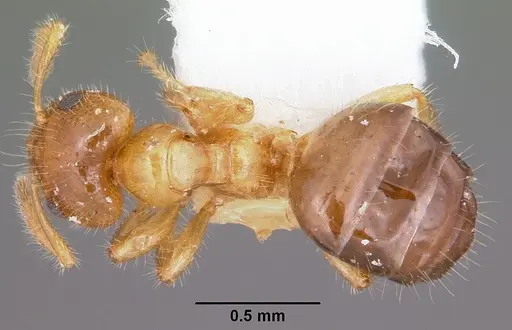
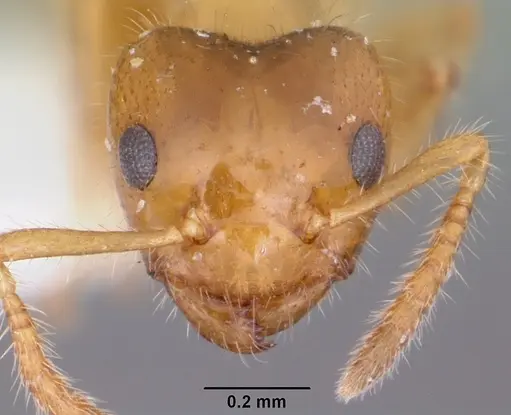
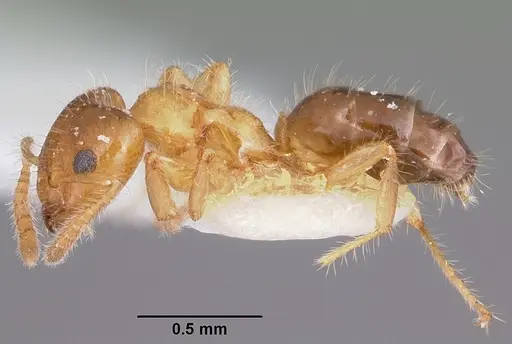
CASENT0101211
View on AntWeb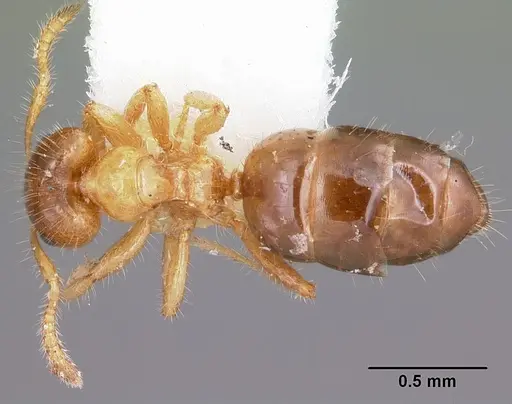
CASENT0104918
View on AntWeb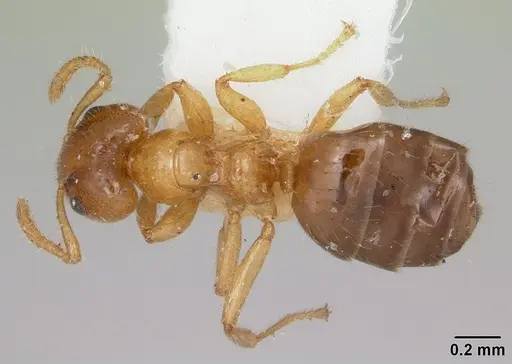
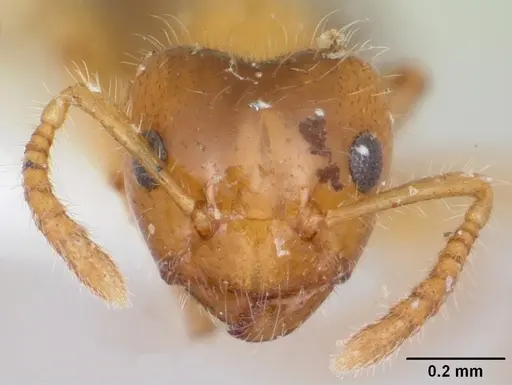
CASENT0178507
View on AntWeb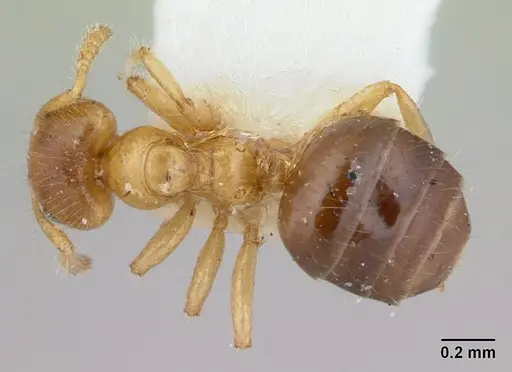
CASENT0178508
View on AntWeb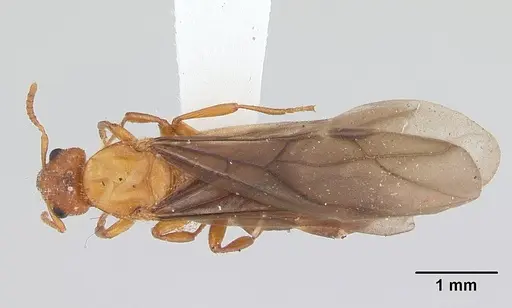
CASENT0178509
View on AntWeb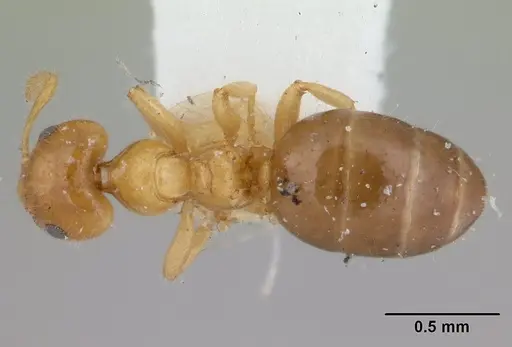
CASENT0178510
View on AntWeb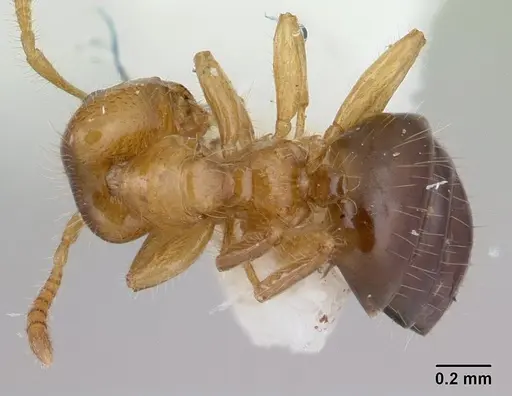
CASENT0178511
View on AntWeb
CASENT0178512
View on AntWeb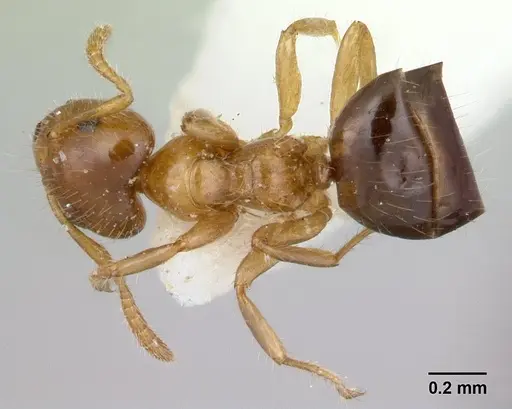
CASENT0178513
View on AntWeb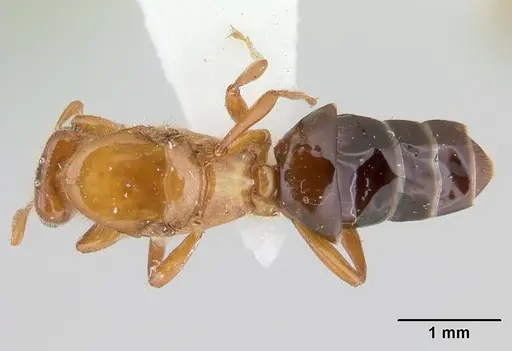
CASENT0217048
View on AntWeb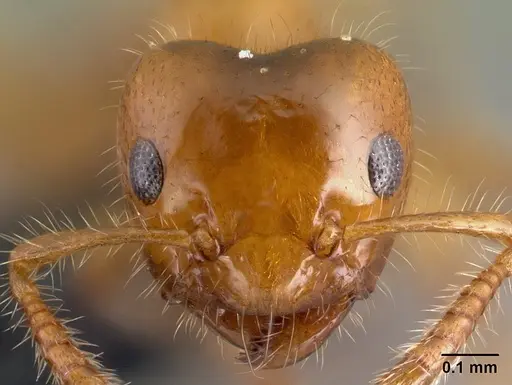
CASENT0217053
View on AntWeb
CASENT0217054
View on AntWeb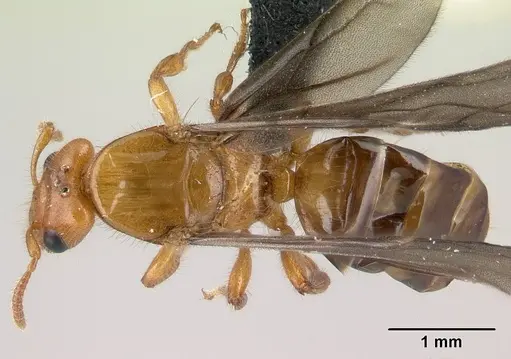
CASENT0281158
View on AntWeb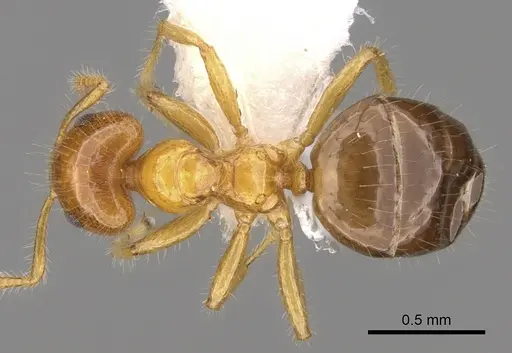
Literature
Loading...Loading products...