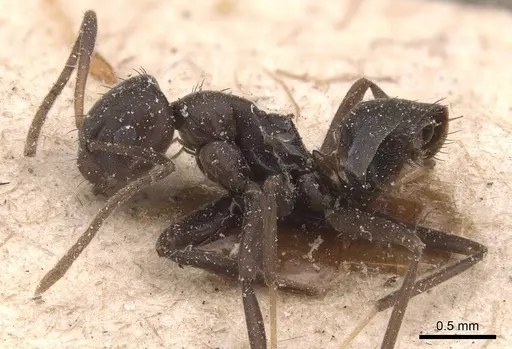
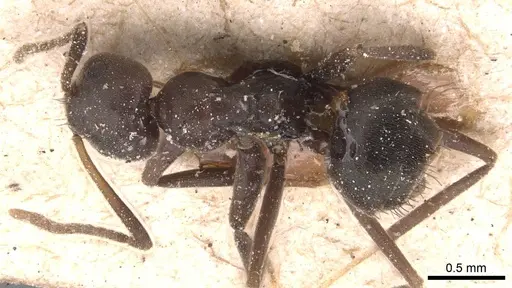
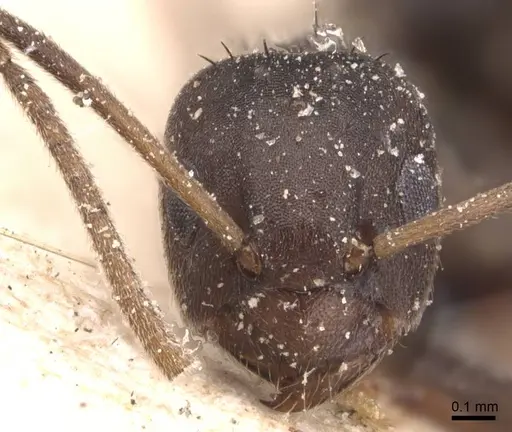
Paraparatrechina opaca - "Opaque Crazy Ant"
Paraparatrechina opaca, often called the Opaque Crazy Ant, is a small to medium-sized ant species known for its distinctive opaque appearance and incredibly swift, erratic movements. Workers typically range from 1 to 3 millimeters, while the queens are a bit larger, usually between 3 and 5 millimeters. These ants are highly adaptable omnivores and can form large colonies with multiple queens, leading to rapid population growth. Interestingly, some members of the Paraparatrechina genus can exhibit a subtle metallic sheen, adding to their unique charm. They are also identified by a specific pattern of erect setae (hairs) on their mesosoma and five mandibular teeth.
- Difficulty: Medium
- Origin & Habitat: Native to Asia, particularly widespread across the Indo-Australian region (including Borneo, Indonesia, Malaysia, New Guinea, and Singapore) and the Oriental region (like Thailand). They have also become an introduced species in other parts of the world due to human activity. in These ants are incredibly versatile, thriving in a broad spectrum of environments. You'll find them in dense forests, open grasslands, bustling urban areas, and even agricultural lands. In their natural setting, they commonly nest and forage in leaf litter, decaying logs, beneath stones, and even on tree trunks and low-lying vegetation in the canopy. They are typically found at elevations below 800 meters, showcasing their preference for warmer, lower-altitude habitats..
- Colony Type: Polygyne (multiple queens), claustral (queen seals herself in) founding.
- Size & Growth:
- Queen: 3-5mm
- Worker: 1-3mm
- Colony: Large (tens of thousands). Fast, known for rapid population expansion and can quickly reach significant numbers. growth.
- Antkeeping:
- Temperature: Ideally, maintain temperatures between 24°C and 28°C. Consistent warmth helps ensure optimal brood development and active foraging..
- Humidity: A humidity range of 60% to 80% is recommended. These ants thrive in moderately high humidity, reflecting their natural tropical and subtropical origins..
- Diapause: Not required. Not specified at Not specified.
- Nesting: Given their adaptability, they will likely do well in a variety of setups. Nests made from acrylic, Ytong, or natural setups incorporating soil and decaying wood are suitable. They are versatile foragers, utilizing both subterranean/leaf litter and arboreal spaces..
- Behavior: Medium (towards handler, mostly flighty; High towards food and other ants) aggressiveness.
- Common Issues: Escape artists due to speed and small size, Rapid population growth leading to overcrowding if not managed, Humidity fluctuations can stress the colony, Overfeeding leading to mold in the nest or outworld.
One of the most striking characteristics of Paraparatrechina opaca is their 'crazy' or erratic foraging behavior. These ants move incredibly fast and unpredictably, darting around in seemingly random patterns. This unique movement style isn't just a quirk; it's a highly effective foraging strategy that helps them locate and secure resources quickly, making them fascinating to observe in a formicarium. Be prepared for a bustling outworld with these speedy workers!
As omnivores, Paraparatrechina opaca have a remarkably diverse diet in the wild, consuming everything from sugary substances to various proteins, insects, and even small vertebrates. This adaptability translates well to antkeeping; they are not picky eaters, which simplifies their care significantly. Offering a varied diet, including both insect protein and sugar solutions, will ensure your colony thrives and grows vigorously.
Due to their rapid growth rate and polygyne nature, managing a Paraparatrechina opaca colony requires proactive space planning. What starts as a small group of queens and workers can quickly explode into a bustling colony of tens of thousands. Ensure you have ample expansion options for their formicarium, such as connecting additional modules or outworlds, to prevent overcrowding and maintain a healthy environment for your ants. Proper ventilation is also key in larger setups.
While not known for a potent sting, Paraparatrechina opaca workers are adept at handling prey and can be quite aggressive towards other ant species, often outcompeting them in nature. In a captive setting, this means they are efficient hunters of feeder insects, but also that they should never be housed near other ant colonies, even if separated by barriers, as they are highly invasive and will actively attempt to breach defenses. Their drive to expand and dominate is strong.
Frequently Asked Questions
What kind of enclosure is best for Paraparatrechina opaca?
Opaque Crazy Ants are quite adaptable when it comes to their home! You can successfully keep them in acrylic nests, Ytong setups, or even naturalistic nests with a good mix of sand and loam. Just make sure whatever you choose offers good humidity retention and plenty of space for their colony to expand, as they grow fast. An outworld with fine mesh is also crucial to prevent escapes.
How fast do Opaque Crazy Ant colonies grow?
These ants are known for their explosive colony growth! Thanks to their polygyne nature (multiple queens), a small founding colony can quickly become a bustling metropolis of tens of thousands of workers. It's truly impressive to witness their population boom, so be prepared with expansion options for your formicarium.
What do I feed my Paraparatrechina opaca ants?
Being omnivores, Paraparatrechina opaca are not picky eaters, which is fantastic for antkeepers! Offer them a varied diet of sugary liquids like sugar water, honey water, or ant nectar, alongside protein sources. They love feeder insects such as crickets, mealworms, and fruit flies, which can be offered live or pre-killed. Don't forget occasional bits of cooked chicken or egg for extra protein!
Do Paraparatrechina opaca ants sting or bite?
While they don't possess a potent sting that's medically significant to humans, these ants can certainly bite and, like many Formicinae, may spray formic acid as a defense. Their primary defense mechanism, however, is their incredible speed and erratic movement, making them difficult to catch or corner.
What's the ideal temperature and humidity for Opaque Crazy Ants?
To keep your Opaque Crazy Ant colony happy and thriving, aim for temperatures between 24°C and 28°C. Humidity levels should be maintained in the range of 60% to 80%. These conditions mimic their natural tropical habitats and are essential for optimal brood development and overall colony health.
Are Paraparatrechina opaca good for beginner antkeepers?
While Paraparatrechina opaca are robust and not overly finicky about food, their incredibly fast growth rate and potential for being escape artists make them a 'Medium' difficulty species. Beginners should be prepared for rapid expansion and have secure setups ready to manage their numbers effectively. If you're up for the challenge, they are incredibly rewarding to observe!
Do Opaque Crazy Ants need diapause?
No, Paraparatrechina opaca is a tropical species and does not require a diapause period. They will remain active year-round as long as their temperature and humidity requirements are met.
What's with their 'crazy' movement?
The 'crazy' in 'Opaque Crazy Ant' refers to their extremely fast and unpredictable foraging movements. Instead of walking in straight lines, they dart erratically in all directions. This behavior helps them efficiently cover ground, locate food sources, and evade predators, making them a captivating sight in any ant setup.
Can I keep multiple queens of Paraparatrechina opaca together?
Absolutely! Paraparatrechina opaca are polygyne, meaning colonies naturally have multiple queens. This is part of why they grow so quickly. Keeping multiple queens together from the start, or adding new ones, is perfectly normal for this species and can contribute to a larger, more robust colony.
What common issues should I watch out for when keeping these ants?
The main challenges with Opaque Crazy Ants are their tendency to escape due to their small size and speed, and managing their rapid population growth to prevent overcrowding. Ensure your setup is escape-proof, and be ready to expand their living space as the colony flourishes. Also, keep an eye on humidity levels and avoid overfeeding to prevent mold.