

Octostruma convallis
- Scientific Name
- Octostruma convallis
- Tribe
- Attini
- Subfamily
- Myrmicinae
- Author
- Longino, 2013
- Distribution
- Found in 1 countries
Octostruma convallis Overview
Octostruma convallis is an ant species of the genus Octostruma. It is primarily documented in 1 countries , including Costa Rica. Detailed taxonomic data and occurrence records can be further explored via authoritative databases such as AntWeb or the Global Biodiversity Information Facility (GBIF).
Octostruma convallis
Octostruma convallis is an extremely small, rarely encountered ant species from the cloud forests of Costa Rica. Workers measure just 0.52-0.54mm and are orange in color, while the single known queen measures 0.62mm and is red [1]. This species was only described in 2013 by John Longino and is known from a mere 8 workers and 1 queen collected over nearly 20 years of intensive sampling in Monteverde [1]. The genus Octostruma belongs to the tribe Attini, the same group as leaf-cutter ants, though these tiny ants are not leaf-cutters. They inhabit the cool, damp leaf litter layer of montane cloud forests at elevations between 1100-1600 meters [1]. The species forms an elevational replacement series with its close relative Octostruma ascrobis, with O. ascrobis occupying lowland areas and O. convallis restricted to higher montane zones [1].
Quick Summary
- Difficulty: Expert
- Origin & Habitat: Cloud forest in the Cordillera de Tilarán, Costa Rica, at 1100-1600m elevation [1]. Found in sifted leaf litter and rotting wood from the forest floor [1].
- Colony Type: Unknown, only 8 workers and 1 queen have ever been documented in scientific collections [1]. Colony structure has never been observed.
- Size & Growth:
- Queen: 0.62mm HW [1], extremely small
- Worker: 0.52-0.54mm HW [1], among the smallest ants in the world
- Colony: Unknown, only known from scattered foragers in Winkler samples
- Growth: Unknown
- Development: Unknown, no development data exists for this species (No brood has ever been documented in collections. Development timeline must be estimated from related Octostruma species, likely several months at optimal temperature.)
- Antkeeping:
- Temperature: Likely requires cool conditions matching its cloud forest origin. Based on similar montane Octostruma species, aim for 18-22°C with a gentle gradient. Do not overheat, these ants evolved in cool, stable montane conditions.
- Humidity: High humidity is essential, cloud forest ants need consistently moist conditions. Keep nest substrate damp but not waterlogged. Provide a humidity gradient so ants can self-regulate.
- Diapause: Unknown, no seasonal data exists. Cloud forest species may experience reduced activity during drier periods but true hibernation is uncertain.
- Nesting: In nature they live in leaf litter and rotting wood on the forest floor. In captivity, a small naturalistic setup with tightly packed leaf litter, small pieces of rotting wood, and high humidity would be most appropriate. Test tubes with cotton may work if kept in a humid enclosure.
- Behavior: Behavior is essentially unstudied. Based on related species, they are likely cryptic litter-dwellers that forage slowly through the substrate layer. Their tiny size makes them extremely vulnerable to predation and desiccation. Escape prevention must be excellent, they can squeeze through gaps invisible to the naked eye. No defensive behaviors have been documented, but their small size likely means they rely on hiding rather than fighting.
- Common Issues: extreme rarity makes obtaining a colony nearly impossible, no biological data exists to guide care, every aspect is experimental, tiny size means escape prevention must be perfect, high humidity requirements create mold risk in captive setups, slow growth and small colony sizes make them difficult to maintain
Discovery and Rarity
Octostruma convallis was only described as a species in 2013 by the renowned ant taxonomist John Longino [1]. What makes this species extraordinary is its extreme rarity, in nearly two decades of intensive leaf litter sampling in one of the most studied cloud forest sites in the world (Monteverde, Costa Rica), only 8 workers and a single queen have ever been collected [1]. This makes it one of the rarest ant species in captivity, if it exists in captivity at all. The single known queen was collected in July 1984,and most workers were collected between 1984 and 2003 [1]. This species represents a significant gap in antkeeping knowledge, there is quite literally no information available about its captive care, founding behavior, or colony development.
Natural Habitat and Microclimate
This species inhabits montane cloud forest in Costa Rica, specifically the Cordillera de Tilarán where Monteverde is located, at elevations between 1100-1600 meters [1]. Cloud forests are characterized by persistent mist, cool temperatures, and extremely high humidity. The ants were collected from sifted leaf litter and rotting wood on the forest floor, they are strict litter-dwelling ants that never venture into open areas [1]. The environment is cool and damp year-round, with temperatures typically ranging from 15-22°C. These conditions are critical to replicate in captivity. The closely related Octostruma ascrobis occupies lower elevations, demonstrating that O. convallis has adapted to the cooler, wetter conditions of higher elevations [1]. Any captive setup must replicate this cool, humid, stable microclimate.
Taxonomy and Identification
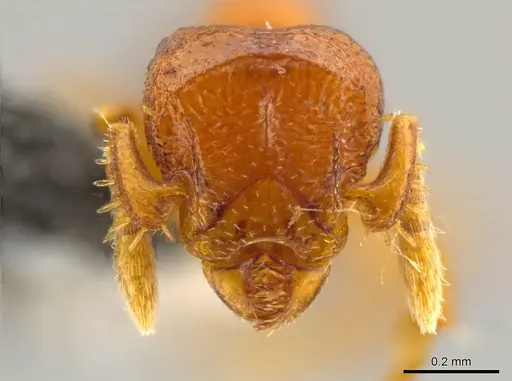
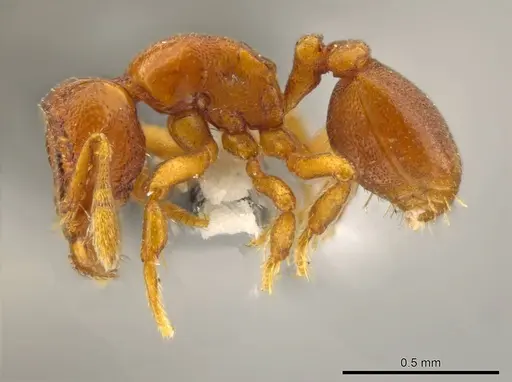
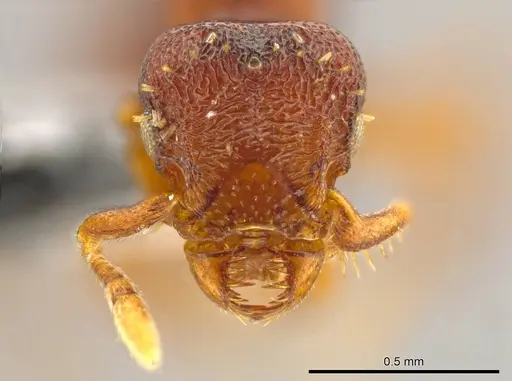
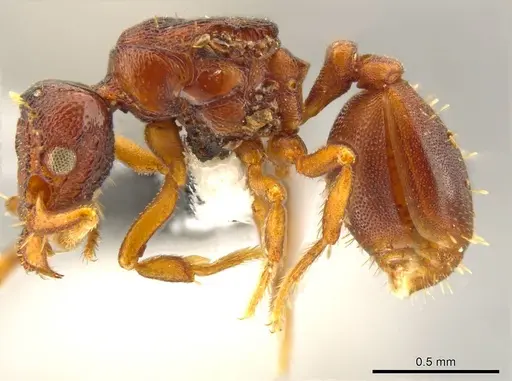
Octostruma convallis belongs to the tribe Attini within the subfamily Myrmicinae [1]. While leaf-cutter ants (Atta and Acromyrmex) are the most famous members of this tribe, Octostruma is part of a different branch, they are small, cryptic ants that do not cultivate fungus gardens. The species can be identified by its very shallow antennal scrobe (the groove where the antenna rests), a distinctive facial arc pattern, and the combination of smooth pronotum with foveolate (pitted) mesonotum [1]. Workers are a uniform orange color, while the single known queen is red [1]. Their mandibles have 10 teeth, which is unusual among Octostruma species [1]. For antkeepers, accurate identification is challenging given the species' rarity and the subtle differences between Octostruma species.
Challenges for Antkeepers
This species presents extreme challenges that place it firmly in the expert-only category. First, the species is so rare in the wild that obtaining a colony is nearly impossible, no colonies are known to exist in captivity. Second, absolutely no biological or behavioral information exists to guide care, keepers would be pioneering every aspect of husbandry. Third, their minute size (workers under 1mm) creates enormous challenges for feeding, housing, and escape prevention. Fourth, they require the specific cool, humid conditions of cloud forest, which can be difficult to maintain reliably. Fifth, their cryptic lifestyle in leaf litter means they may never become visible or interactive ants. For these reasons, Octostruma convallis is not recommended for any antkeeper except those with specific research interests who have access to expert entomological networks. [1]
Frequently Asked Questions
Is Octostruma convallis available in the antkeeping hobby?
Almost certainly not. This species is known from only 8 workers and 1 queen in scientific collections worldwide. No colonies are documented to exist in captivity, and the species was only described in 2013. It is extremely unlikely you will find this species for sale.
How big do Octostruma convallis workers get?
They are among the smallest ants in the world. Workers measure just 0.52-0.54mm in head width, making them barely visible to the naked eye. The single known queen is slightly larger at 0.62mm [1].
What temperature should I keep Octostruma convallis at?
No specific data exists, but based on their cloud forest origin at 1100-1600m elevation in Costa Rica, they likely require cool conditions. Start with a range of 18-22°C and observe colony behavior. Never overheat these ants, they evolved in the cool, stable temperatures of montane cloud forests.
What do Octostruma convallis eat?
This is completely unknown. As members of the tribe Attini, they may have dietary habits different from typical ants, but no foraging or diet observations have ever been documented. Related Octostruma species are thought to be generalist foragers or predators of small invertebrates.
Are Octostruma convallis good for beginners?
Absolutely not. This species is firmly in the expert category due to: extreme rarity (nearly impossible to obtain), complete lack of biological data to guide care, tiny size creating major housing challenges, and specific humidity/temperature requirements. There are many better species for beginners.
How do Octostruma convallis form colonies?
This is completely unknown. Founding behavior, colony structure, and reproductive biology have never been documented. The single known queen was collected dealate (already mated and wingless), providing no information about nuptial flights or colony founding.
Where does Octostruma convallis live in the wild?
They are endemic to cloud forests in the Cordillera de Tilarán, Costa Rica, specifically the Monteverde area at 1500-1600m elevation. One specimen was found at 1100m on the Barva Transect. They live in leaf litter and rotting wood on the forest floor [1].
Can I keep Octostruma convallis in a test tube?
Test tubes could theoretically work if kept in a humid enclosure to prevent drying, but their tiny size and cryptic lifestyle make test tubes impractical. A naturalistic setup with forest floor materials (leaf litter, small wood pieces) would be more appropriate if you ever obtained this species.
Do Octostruma convallis need hibernation?
Unknown. No seasonal data exists for this species. Cloud forests in Costa Rica do not experience true winters, but there may be seasonal variation in rainfall. Without more information, hibernation cannot be recommended or ruled out.
References

This caresheet is licensed under CC BY-SA 4.0 .
CASENT0627381
View on AntWeb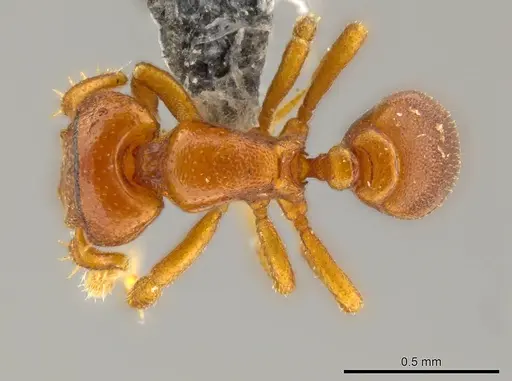
CASENT0627382
View on AntWeb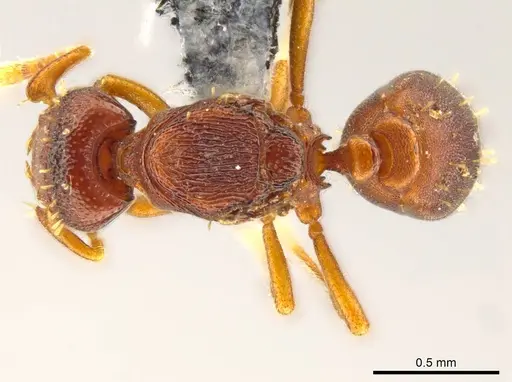
Literature
Loading...Loading products...