Pheidole allarmata - "None widely recognized (often called a 'Big-headed Ant' species)"
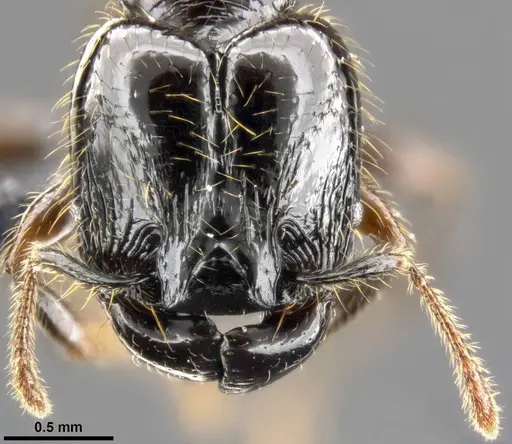
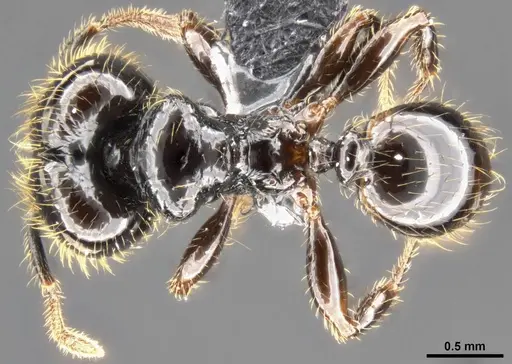
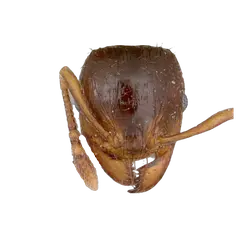
Pheidole allarmata is a fascinating, dimorphic ant species from the Amazonian rainforests. They are characterized by two distinct worker castes: smaller, agile minor workers and larger, heavily armed major workers, often called 'soldiers.' Minor workers are concolorous yellow to dark brown, with smooth, shiny heads and bodies, and a long, thin, erect propodeal spine. Major workers have striking reddish-brown heads that deepen in color anteriorly, and their mesosoma is medium reddish brown, with the waist, gaster, antennae, and legs being light reddish brown. Their unique features include an elongated, spine-like frontal lobe, strongly developed humerus, and a spinose postpetiolar node, with most of their body being smooth and shiny. These ants are known to nest in rotten sticks on the forest floor and have been observed to store seeds.
- Difficulty: Medium
- Origin & Habitat: Neotropical Region (Brazil, Colombia, Ecuador, Peru, Suriname, French Guiana) in Terra firme rainforests, typically nesting in rotten sticks on the forest floor..
- Colony Type: Monogyne (single queen), claustral founding.
- Size & Growth:
- Queen: 4.0-5.0mm
- Worker: 1.5-4.0mm
- Colony: Small (fewer than 100 workers observed in natural colonies). Slow to Medium growth.
- Antkeeping:
- Temperature: Maintain a warm environment between 24-28°C (75-82°F) for optimal activity and brood development. A slight temperature gradient is beneficial..
- Humidity: High humidity is crucial, ideally ranging from 70-90% in the nest. The outworld can be slightly drier, around 50-70%..
- Diapause: Not required. Not specified at Not specified.
- Nesting: These ants prefer nesting in decaying wood or cork. Artificial nests like acrylic, Ytong, or plaster setups with good moisture retention are suitable, especially those designed with smaller chambers for their minor workers. Providing a piece of sterile decaying hardwood in their outworld or as part of the nest could encourage natural behavior..
- Behavior: Medium (towards food and rival ants, low towards handler unless provoked) aggressiveness.
- Common Issues: Escape risks due to small minor workers, Maintaining high and stable humidity, Mold growth in humid setups, Colony stalling due to improper diet or temperature, Mites if hygiene is poor.
One of the most enthralling aspects of keeping Pheidole allarmata is witnessing their incredible dimorphism firsthand. The colony thrives on a clear division of labor: your smaller minor workers are the busy bees, handling everything from foraging expeditions to meticulously tending to the precious brood. Meanwhile, the robust major workers, with their disproportionately large heads and powerful mandibles, aren't just for show! They’re the colony's specialized processors, adept at tasks like cracking open tough seeds or dismembering larger insect prey, making it easier for the minor workers to transport and consume. This sophisticated teamwork is a hallmark of the Pheidole genus and truly brings a vibrant energy to any formicarium.
Understanding their natural nesting preferences is key to success with Pheidole allarmata. In their native Amazonian home, these ants are known to establish their colonies within decaying sticks scattered across the humid rainforest floor. To truly make them feel at home in your setup, consider incorporating elements that mimic this environment. Nests crafted from natural decaying hardwood or cork can be ideal, providing the perfect blend of structural integrity and moisture retention. If you opt for more conventional acrylic, Ytong, or plaster formicaria, pay extra attention to consistent hydration and ensure all connections are utterly escape-proof. Remember, those tiny minor workers are incredibly agile and surprisingly adept at finding the smallest gaps!
When it comes to feeding your Pheidole allarmata colony, variety is the spice of life – and vital for their health! Observations from their natural habitat reveal they maintain 'seed caches,' indicating a dietary preference that includes granivory. Therefore, beyond the usual high-protein insect offerings like freshly killed fruit flies, small mealworms, or cricket pieces, make sure to offer a selection of small seeds. Coupled with a consistent supply of sugary delights such as honey-water or specialized ant nectar, a well-rounded diet will fuel their rapid activity and ensure your colony remains robust and healthy. A balanced diet is critical for strong colony development.
Interestingly, Pheidole allarmata doesn't build the colossal supercolonies some of their Pheidole cousins are famous for. In the wild, observed colonies are typically quite modest in size, often consisting of fewer than 100 workers. This makes them a more manageable option for antkeepers who might have limited space or prefer not to oversee a massive, exponentially growing colony. While their growth rate might be described as slow to medium compared to other Pheidole species, their specific requirements for consistent high humidity and warm temperatures remain paramount for their well-being in captivity.
Frequently Asked Questions
What sets Pheidole allarmata apart from other Pheidole species?
These ants stand out due to their specific preference for nesting within rotten sticks in their rainforest home and their documented smaller colony sizes, contrasting sharply with many Pheidole known for booming populations. Plus, their major workers boast unique morphological features, like that distinctive spine-like frontal lobe!
What's the ideal formicarium for a Pheidole allarmata colony?
You'll want a nest that's a champion at retaining high humidity. Natural setups incorporating decaying hardwood or cork are fantastic for replicating their natural habitat. However, high-quality acrylic, Ytong, or plaster nests equipped with efficient hydration systems also work wonders. Just ensure the chambers are perfectly sized for their small workers, and every connection is sealed tight!
What's on the menu for Pheidole allarmata?
These omnivores appreciate a diverse diet! Offer a mix of tiny seeds, freshly killed insect feeders (think small fruit flies, roaches, or chopped mealworms), and essential sugar sources like honey-water or your preferred commercial ant nectar. A balanced diet is truly the foundation for a thriving colony.
Do they require specific temperature and humidity levels?
Absolutely! As true tropical rainforest inhabitants, Pheidole allarmata flourish in consistent warmth, ideally between 24-28°C (75-82°F). High humidity is non-negotiable within the nest, aiming for a consistent 70-90%, with the outworld a bit drier at 50-70%.
How aggressive are these ants?
Towards their prey and any competing ant species, Pheidole allarmata can certainly be quite assertive, especially when their powerful major workers get involved. However, for the antkeeper, they tend to be calm unless their nest is directly disturbed.
What's the typical growth rate for a Pheidole allarmata colony?
Compared to some of their more explosive Pheidole relatives, P. allarmata colonies typically exhibit a slow to medium growth pace. In their natural environment, colonies usually stay under 100 workers, making them a more manageable long-term project.
Do Pheidole allarmata have a sting?
Yes, like many ant species, they do possess a sting. However, for humans, the sting of Pheidole ants is generally considered very mild, often causing little to no noticeable discomfort – certainly not something to overly worry about!
Is a diapause (hibernation) period necessary for them?
No, as a species originating from tropical rainforests, Pheidole allarmata do not require a diapause or hibernation. Maintaining consistent warm temperatures year-round is ideal for their continuous activity and development.
Can you explain the 'minor' and 'major' worker castes?
In Pheidole colonies, the minors are your standard, smaller worker ants, tirelessly performing everyday tasks like foraging, tending to the queen's brood, and nest upkeep. The majors, on the other hand, are the impressive 'big-headed' soldiers, boasting noticeably larger heads and incredibly strong mandibles. Their primary roles involve defense and breaking down larger food items, like stubborn seeds, for the smaller minors to transport.
What are the average sizes for Pheidole allarmata workers and queens?
Your minor workers will typically measure around 1.5 to 2.5 mm in total length. The formidable major workers, with their signature large heads, usually reach about 3 to 4 mm. The queen, the heart of the colony, will be the largest, generally measuring between 4 to 5 mm.
Are Pheidole allarmata suitable for new antkeepers?
While incredibly rewarding, Pheidole allarmata are considered a 'Medium' difficulty species. This is primarily due to their need for consistent high humidity and warm temperatures, coupled with the challenge of preventing escapes from their very small, agile minor workers. If you're confident in maintaining precise environmental conditions and have good escape prevention strategies, they could certainly be a captivating choice!
What's the best way to prevent Pheidole allarmata escapes?
Given the tiny and nimble nature of their minor workers, top-tier escape prevention is absolutely critical! Applying a solid barrier of Fluon or a talcum powder-alcohol mixture to the top edges of your outworld is highly recommended. For modular setups, double-check that all connections are perfectly sealed. A very fine mesh lid over the outworld can also provide an extra layer of security.