

Nylanderia nodifera
- Scientific Name
- Nylanderia nodifera
- Tribe
- Lasiini
- Subfamily
- Formicinae
- Author
- Mayr, 1870
- Distribution
- Found in 1 countries
Nylanderia nodifera Overview
Nylanderia nodifera is an ant species of the genus Nylanderia. It is primarily documented in 1 countries , including Colombia. Detailed taxonomic data and occurrence records can be further explored via authoritative databases such as AntWeb or the Global Biodiversity Information Facility (GBIF).
Nylanderia nodifera
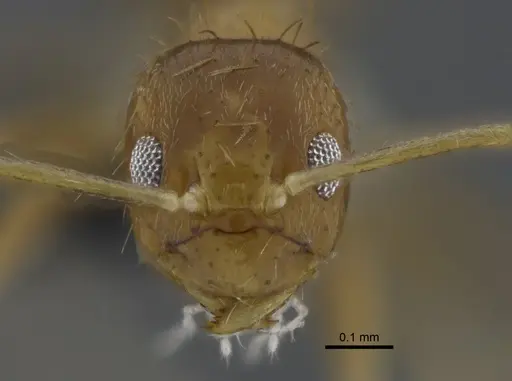
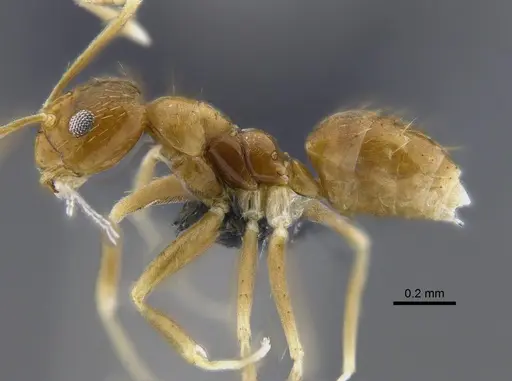
Nylanderia nodifera is a small, shiny ant species native to the Neotropical region, found primarily in Colombia, Bolivia, and Guatemala. Workers measure 2.4-2.8mm and have a distinctive appearance: the head and abdomen are brown-black, the thorax is chestnut-colored, and the mandibles, antennae, and legs are lighter testaceous. The species is very shiny with black bristle-like hairs covering its body. The thorax has a broad, strong constriction between the mesonotum and metanotum, with the metanotum strongly convex and elevated, giving them a nodiform (knot-like) appearance. In Colombia, they have been recorded at elevations around 980 meters in the Cañón del Porce region [1][2].
This species belongs to the Formicinae subfamily and Lasiini tribe. Like other Nylanderia species, they are small, fast-moving ants that are often found foraging in leaf litter and decaying wood. They are closely related to the genus Paratrechina and were previously classified under that genus. The species was originally described by Mayr in 1870 from Colombian specimens [1].
Quick Summary
- Difficulty: Medium
- Origin & Habitat: Neotropical region, Colombia, Bolivia, and Guatemala. Found in tropical dry forest and cloud forest habitats at elevations around 980m in Colombia [2][3].
- Colony Type: Colony structure is unconfirmed. Most Nylanderia species are monogyne (single queen), but this has not been directly studied for N. nodifera specifically.
- Size & Growth:
- Queen: Unconfirmed, no documented measurements found
- Worker: 2.4-2.8mm [1]
- Colony: Unknown, no colony size data available
- Growth: Unknown, no development data available
- Development: Unknown for this species. Based on typical Nylanderia patterns, expect 6-10 weeks at tropical temperatures. (No direct development studies exist for N. nodifera. Estimates based on genus-level data.)
- Antkeeping:
- Temperature: Keep at 24-28°C. This species comes from tropical regions of Central and South America, so warmth is important. A heating cable on one side of the nest creates a suitable gradient.
- Humidity: Moderate to high humidity (60-80%). Their natural habitat in Colombian cloud forests is humid. Keep the nest substrate moist but not waterlogged.
- Diapause: Unconfirmed. Tropical ants typically do not require true hibernation, but a slight cooling period during winter months may be beneficial if mimicking natural seasonal cycles.
- Nesting: In nature, they likely nest in rotting wood, under stones, and in leaf litter. For captivity, a Y-tong (AAC) nest or plaster nest works well. They prefer tight, humid chambers. Test tube setups can work for founding colonies.
- Behavior: Nylanderia ants are typically fast-moving, active foragers. Workers are small but agile and may be prone to escaping through small gaps. They are generally not aggressive but will defend their nest if threatened. They likely forage for honeydew, small insects, and nectar. Their small size (under 3mm) means escape prevention must be excellent, use fine mesh and tight-fitting lids [1].
- Common Issues: their tiny size makes escape likely without fine mesh barriers, lack of species-specific care data means trial and error may be needed, wild-caught colonies may have parasites that are not well-documented, humidity control is critical, too dry and they decline, too wet and mold becomes an issue, fast movement makes them difficult to contain during transfers
Nest Preferences and Housing
In their natural habitat across Colombia and Guatemala, N. nodifera nests in rotting wood, under stones, and in the leaf litter of tropical forests. They prefer humid, shaded microhabitats at elevations around 980m. For captive care, a Y-tong (acrylic) nest or plaster nest provides the humidity control they need. The chambers should be appropriately sized for their tiny 2.4-2.8mm workers, tight passages help them feel secure. A test tube setup works well for founding colonies, with the queen sealed in a chamber. For established colonies, you can transition to a formicarium with multiple connected chambers. Always provide a water source, a cotton wick in a test tube works for founding setups. [1][2]
Feeding and Diet
Like other Nylanderia species, N. nodifera is likely omnivorous, feeding on honeydew from aphids and scale insects, small insects, and nectar. In captivity, offer sugar water or honey as a constant energy source. For protein, provide small prey items like fruit flies, pinhead crickets, and other tiny insects. They are small ants, so prey should be appropriately sized, springtails and booklice are excellent choices. Feed protein 2-3 times per week, and keep sugar water available at all times. Remove uneaten prey within 24-48 hours to prevent mold.
Temperature and Seasonal Care
As a Neotropical species from Colombia, Bolivia, and Guatemala, N. nodifera requires warm temperatures. Keep the nest area at 24-28°C. A heating cable placed on one side of the nest creates a temperature gradient, allowing ants to regulate their own temperature by moving between warmer and cooler areas. Avoid temperatures below 20°C for extended periods. Regarding winter rest, this is less clear for tropical species. While they may not need a true diapause, reducing temperatures slightly (to around 20-22°C) during winter months may help simulate natural seasonal cycles, but this is optional and not well-documented for this species. [2][3]
Behavior and Colony Dynamics
Workers of N. nodifera are very small (2.4-2.8mm) and fast-moving. They are likely day-active foragers, searching for food along trails like other Nylanderia species. The colony will likely establish a foraging pattern that you can observe. Their small size means they can squeeze through remarkably small gaps, excellent escape prevention is essential. Use fine mesh (at least 0.5mm or smaller), seal all edges with fluon or similar barriers, and check connections between the outworld and nest regularly. Queens are not documented but are expected to be claustral (sealing themselves in to raise the first workers alone). The first workers (nanitics) will be smaller than mature workers. [1]
Acquiring and Establishing a Colony
This species is not commonly kept in the antkeeping hobby, so finding a colony may be difficult. If you obtain a wild-caught colony, quarantine and observe them carefully. Wild colonies may carry parasites or pathogens not well-documented for this species. For founding, place the queen in a test tube setup with a water reservoir. The queen should seal herself into a dark chamber. Do not disturb her during the founding period, this can cause stress and abandonment. Once the first workers (nanitics) emerge, you can begin offering small amounts of food. Wait several weeks before checking the colony, as disturbing too early can be fatal to the founding queen.
Frequently Asked Questions
How long does it take for Nylanderia nodifera to go from egg to worker?
The exact timeline is unknown for this species, no development studies exist. Based on typical Nylanderia genus patterns at tropical temperatures (24-28°C), expect approximately 6-10 weeks from egg to first worker. The first workers (nanitics) will be smaller than mature workers.
What size is a Nylanderia nodifera queen?
Queen size is not documented in the scientific literature for this species. Based on worker size (2.4-2.8mm) and typical Nylanderia proportions, the queen is likely 4-6mm. More specific measurements would require actual specimen examination.
Can I keep multiple Nylanderia nodifera queens together?
This has not been studied for N. nodifera specifically. Most Nylanderia species are monogyne (single queen), but some can be polygynous. Unless you have confirmed this species accepts multiple queens, it is not recommended to introduce unrelated foundress queens together. If you have a single queen colony, do not add additional queens.
How big do Nylanderia nodifera colonies get?
Colony size is not documented for this species. Based on related Nylanderia species, colonies likely reach several hundred to a few thousand workers. They are not among the largest ant species.
Do Nylanderia nodifera need hibernation?
True hibernation (diapause) is unlikely as they come from tropical regions. A slight temperature reduction during winter months may be beneficial but is not required. Keep them warm (24-28°C) year-round for optimal development.
Why are my Nylanderia nodifera escaping?
Their tiny 2.4-2.8mm size allows them to squeeze through remarkably small gaps. Use fine mesh (0.5mm or smaller), apply fluon or similar barriers to all edges and connections, and ensure all lids fit tightly. Check the outworld-to-nest connection points regularly.
Are Nylanderia nodifera good for beginners?
This species is rated as Medium difficulty. While not the easiest species, they are manageable if you have experience with small ants. The main challenges are their tiny size (escape risk), need for humidity control, and lack of species-specific care data. Beginners may want to start with more documented species.
What do Nylanderia nodifera eat in captivity?
Offer sugar water or honey constantly for energy. For protein, provide small insects like fruit flies, springtails, pinhead crickets, and similar appropriately-sized prey. Feed protein 2-3 times per week. Remove uneaten prey within 24-48 hours.
References

This caresheet is licensed under CC BY-SA 4.0 .
CASENT0915726
View on AntWeb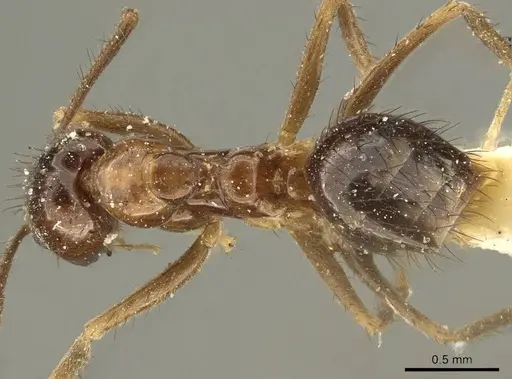
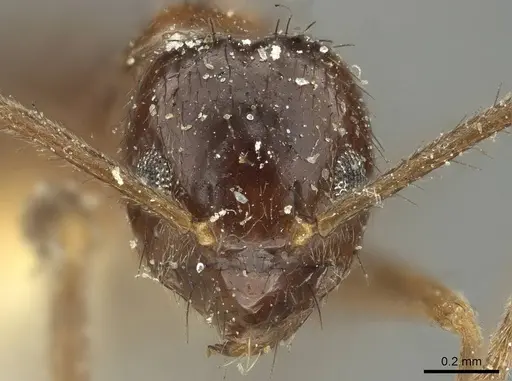
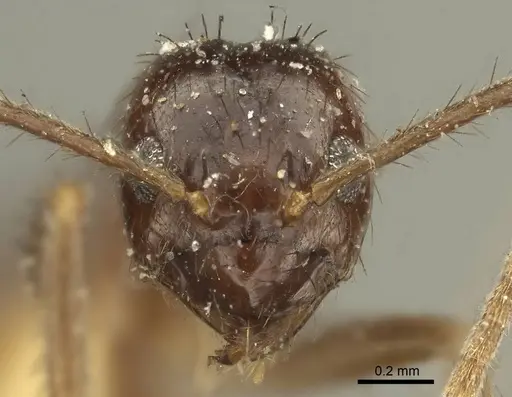
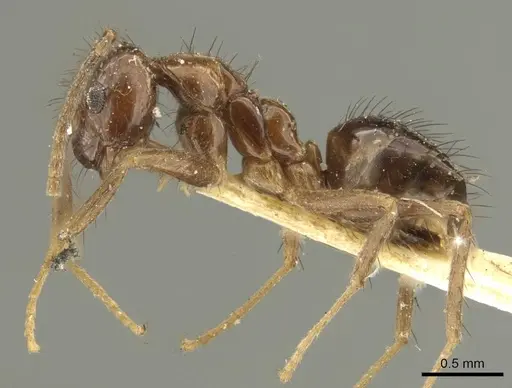
CBUMAGENT41820
View on AntWeb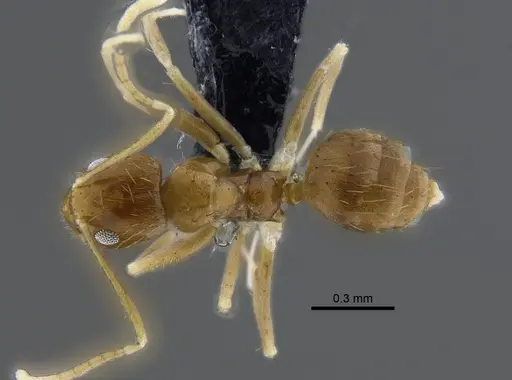
Literature
Loading...Loading products...