

Nesomyrmex longiceps
- Scientific Name
- Nesomyrmex longiceps
- Tribe
- Crematogastrini
- Subfamily
- Myrmicinae
- Author
- Csősz & Fisher, 2016
- Distribution
- Found in 1 countries
Nesomyrmex longiceps Overview
Nesomyrmex longiceps is an ant species of the genus Nesomyrmex. It is primarily documented in 1 countries , including Madagascar. Detailed taxonomic data and occurrence records can be further explored via authoritative databases such as AntWeb or the Global Biodiversity Information Facility (GBIF).
Nesomyrmex longiceps
Nesomyrmex longiceps is a tiny yellow ant species endemic to northwestern Madagascar. Workers measure approximately 2-3mm in total length, with their most distinctive feature being an elongated head that gives them their scientific name (longiceps means 'long-headed'). They belong to the brevicornis species group within the genus Nesomyrmex. These ants inhabit tropical dry forests at elevations between 100-325 meters. Their body is uniformly yellow with a smooth, shiny appearance. This species was formally described in 2016,making it a relatively newly documented ant with limited available care information.
Quick Summary
- Difficulty: Unknown, insufficient captive data
- Origin & Habitat: Northwestern Madagascar, tropical dry forests at 100-325m elevation [1]
- Colony Type: Unconfirmed, colony structure has not been documented in scientific literature
- Size & Growth:
- Queen: Undescribed, no queen measurements available
- Worker: Approximately 2-3mm total length based on cephalic measurements of 478-556µm [1]
- Colony: Unknown, no colony size data available, estimated under 100 workers based on similar small Myrmicinae
- Growth: Unknown, no development data available
- Development: Unconfirmed, no direct measurements, likely 6-10 weeks based on genus-level inference from similar small Myrmicinae (Development timeline is estimated as this species has not been studied in captivity. Expect slow growth typical of small tropical ants.)
- Antkeeping:
- Temperature: Estimated 22-26°C based on Madagascar tropical dry forest habitat, start in this range and observe colony activity
- Humidity: Low to moderate, tropical dry forest species, keep substrate moderately dry with occasional moisture zones
- Diapause: Unknown, no documented seasonal behavior, likely active year-round given tropical distribution
- Nesting: No specific nesting data available. Likely nests in small cavities in rotting wood or under stones in captivity. Small test tube setups or Y-tong nests with narrow chambers recommended for their tiny size.
- Behavior: Behavior is unstudied in captivity. Based on genus typical patterns, they are likely docile and non-aggressive. Their very small size means excellent escape prevention is critical, they can squeeze through standard formicarium gaps. Foraging style is unknown but likely involves ground-level searching for small prey and honeydew.
- Common Issues: very small size makes escape prevention challenging, use fine mesh barriers, no captive care information exists, experimental keeper learning curve expected, slow growth may frustrate beginners expecting rapid colony development, humidity balance critical, too wet causes fungal issues, too dry causes desiccation, wild-caught colonies may have parasites not yet documented in scientific literature
Appearance and Identification
Nesomyrmex longiceps workers are tiny ants measuring approximately 2-3mm in total length. Their most distinctive feature is their elongated head, which is significantly longer than it is wide, this morphological trait is what inspired their scientific name 'longiceps' (meaning long-headed). The head has a smooth, shiny surface with inconspicuous setal pits. Their body is uniformly yellow (concolorous) with a smooth and shiny appearance, particularly on the vertex and dorsal regions. The genae (cheek area) show distinctive areolate ground sculpture with costulate main sculpture. Workers have 12 antennomeres with scapes that are about 63% the length of their head. These ants are part of the Nesomyrmex brevicornis species-group and can be distinguished from related species by their relatively elongated head capsule and yellow coloration. [1]
Natural Habitat and Distribution
This species is endemic to northwestern Madagascar, where it has been documented at elevations between 100-325 meters above sea level. Their habitat consists of tropical dry forests, which experience seasonal dryness with distinct wet and dry periods. The type locality is in Parc National de Namoroka. These ants are adapted to relatively warm, seasonally dry forest conditions. In captivity, keepers should aim to replicate moderate warmth with periods of dryness rather than constantly high humidity. The dry forest environment suggests these ants can tolerate some drying out and may prefer well-ventilated setups over overly humid conditions. [1]
Housing and Nest Setup
Due to their extremely small size (approximately 2-3mm), Nesomyrmex longiceps requires careful housing considerations. Standard formicarium gaps that would contain larger ants will allow these tiny workers to escape easily. Recommended housing includes small test tube setups with cotton barriers, or Y-tong style nests with very narrow chambers and passages. The nest material should be able to hold moisture without becoming waterlogged, plaster or acrylic nests work well. Because they are from dry forest habitat, ensure good ventilation to prevent mold growth while maintaining some moisture zones. A small outworld area allows for feeding. Escape prevention is critical, use fine mesh barriers on all openings.
Feeding and Diet
Direct feeding observations do not exist for this species. Based on typical Nesomyrmex ecology and related small Myrmicinae, they likely forage for small arthropods, honeydew from aphids, and may accept sugar sources. In captivity, offer small live prey appropriate to their size such as flightless fruit flies (Drosophila), small springtails, or tiny mealworm pieces. Sugar water or honey diluted with water should be provided and acceptance observed. Start with small portions and remove uneaten food within 24-48 hours to prevent mold. Given their tiny size, even small prey items represent significant meals.
Temperature and Seasonal Care
No specific temperature requirements have been documented for this species. Based on their tropical dry forest habitat in Madagascar, aim for temperatures in the range of 22-26°C (72-79°F). They likely tolerate warmer conditions during the day but may prefer cooler nighttime temperatures. Observe your colony's behavior, if workers cluster together excessively, they may need more warmth, if they avoid the heated area, reduce temperature. Since they come from a region with seasonal rainfall patterns, they may benefit from slight humidity fluctuations rather than constant conditions. No documented diapause requirement exists, and given their tropical origin, they likely remain active year-round in captivity.
Colony Development Expectations
Nesomyrmex longiceps is a recently described species (2016) with no published captive colony data. Colony development should be expected to be slow, typical of small ants in the Myrmicinae subfamily. The first workers (nanitics) will likely be smaller than mature workers. Based on genus-level inference, expect 6-10 weeks from egg to first worker at optimal temperature. Colonies likely remain small, potentially under 100 workers even at maturity, based on similar small Myrmicinae species. Queens have not been described in scientific literature, so founding behavior (whether claustral or semi-claustral) remains unknown. Keepers should document their observations carefully as this species represents an opportunity to contribute new knowledge to antkeeping. [1]
Frequently Asked Questions
How long does it take for Nesomyrmex longiceps to produce first workers?
The egg-to-worker timeline is unconfirmed for this species. Based on inference from similar small Myrmicinae, expect approximately 6-10 weeks at optimal temperature (22-26°C). This is an estimate, actual development time may vary.
What do Nesomyrmex longiceps ants eat?
Direct feeding data does not exist for this species. Based on typical Nesomyrmex ecology, they likely accept small live prey (fruit flies, springtails), sugar water, and honey. Offer small portions and remove uneaten food promptly.
Are Nesomyrmex longiceps good for beginners?
This species cannot be recommended for beginners due to lack of captive care information. Their very small size also makes escape prevention challenging. Consider starting with better-documented species before attempting Nesomyrmex longiceps.
Do Nesomyrmex longiceps ants sting?
Stinging behavior has not been documented for this species. As Myrmicinae, they possess a stinger but due to their tiny size, it is unlikely to penetrate human skin effectively. They are considered non-threatening to humans.
What temperature should I keep Nesomyrmex longiceps at?
No specific requirements exist. Based on their Madagascar dry forest habitat, aim for 22-26°C (72-79°F) and adjust based on colony activity. Avoid temperatures below 20°C or above 30°C.
How big do Nesomyrmex longiceps colonies get?
Colony size is unconfirmed. Based on similar small Myrmicinae, colonies likely remain small, probably under 100 workers at maturity. This is an estimate as no wild colony size data exists.
Can I keep multiple Nesomyrmex longiceps queens together?
Colony structure (monogyne vs polygyne) has not been documented for this species. Combining unrelated queens is not recommended due to lack of information about their social structure.
Do Nesomyrmex longiceps need hibernation?
Diapause requirements are unknown. Given their tropical Madagascar distribution, they likely do not require a hibernation period and should remain active year-round at room temperature.
What size nest do Nesomyrmex longiceps need?
Use nests with very small chambers and narrow passages scaled to their tiny 2-3mm worker size. Standard formicarium passages are too large. Small test tubes or Y-tong nests with fine dimensions work best.
Why are my Nesomyrmex longiceps escaping?
Their extremely small size allows them to squeeze through gaps that would contain larger ants. Use fine mesh barriers, check all connections, and ensure any gaps are smaller than 1mm.
References

This caresheet is licensed under CC BY-SA 4.0 .
CASENT0488528
View on AntWeb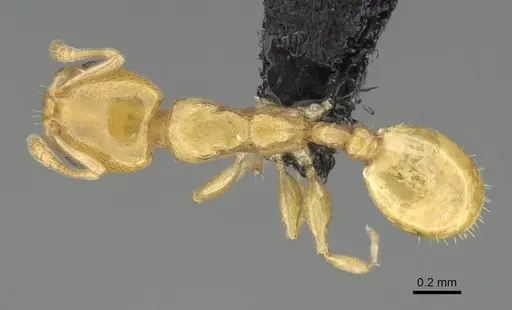
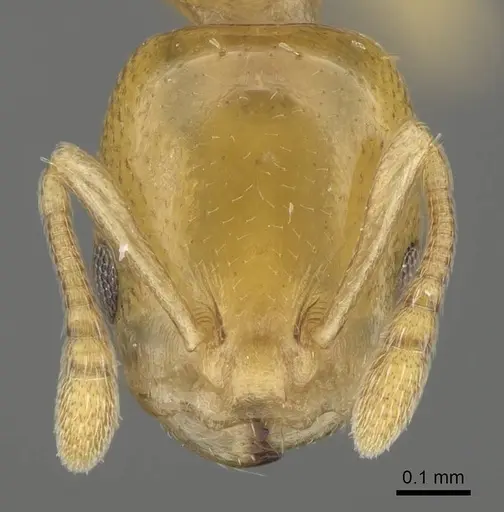
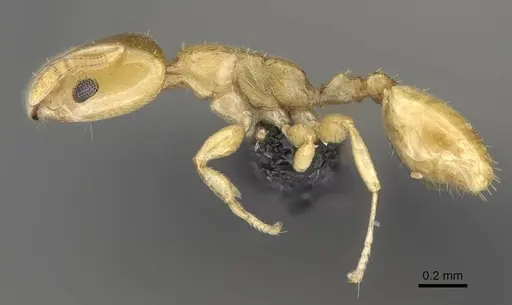
Literature
Loading...Loading products...