

Nesomyrmex hirtellus
- Scientific Name
- Nesomyrmex hirtellus
- Tribe
- Crematogastrini
- Subfamily
- Myrmicinae
- Author
- Csősz & Fisher, 2016
- Distribution
- Found in 1 countries
Nesomyrmex hirtellus Overview
Nesomyrmex hirtellus is an ant species of the genus Nesomyrmex. It is primarily documented in 1 countries , including Madagascar. Detailed taxonomic data and occurrence records can be further explored via authoritative databases such as AntWeb or the Global Biodiversity Information Facility (GBIF).
Nesomyrmex hirtellus
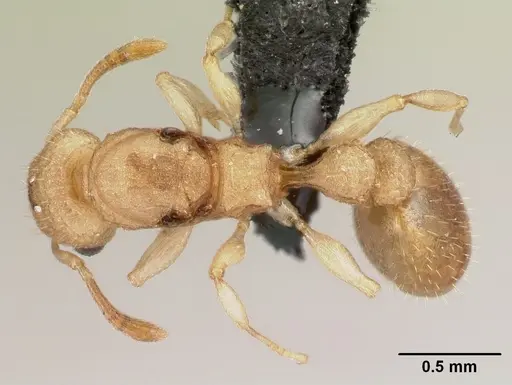
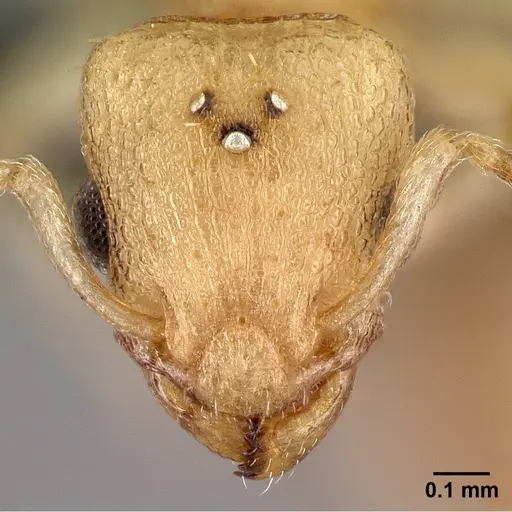
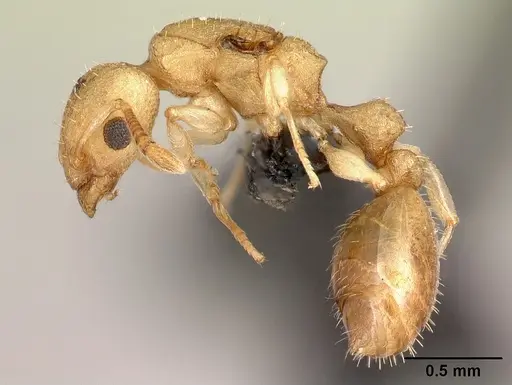
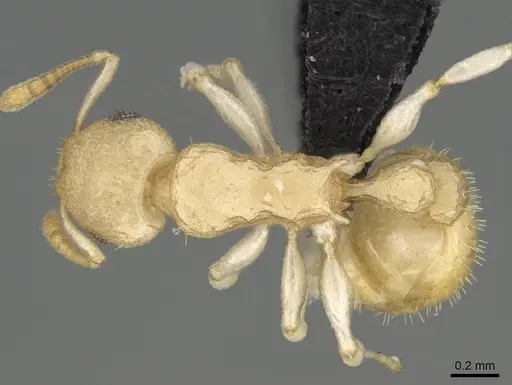
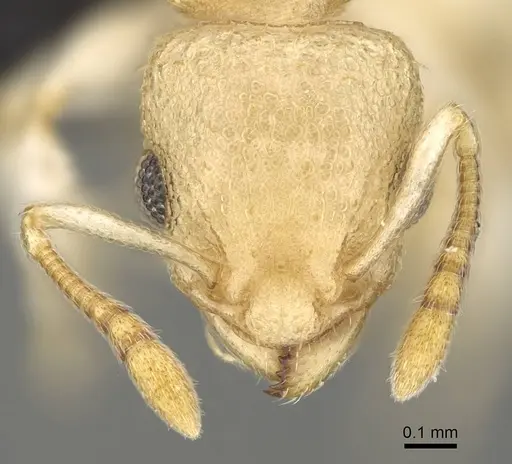
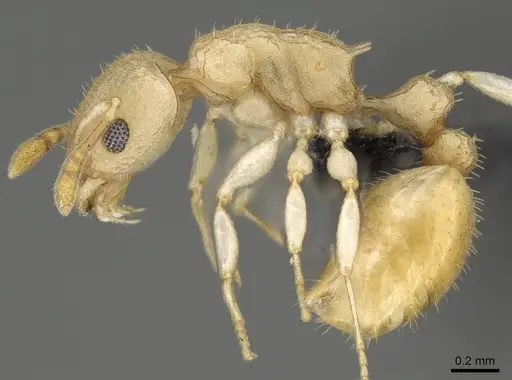
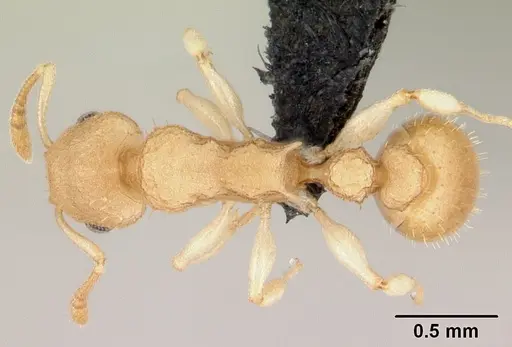
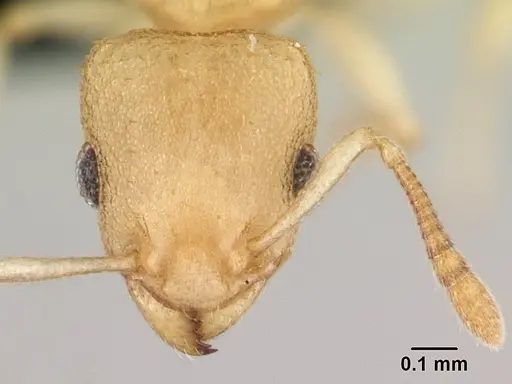
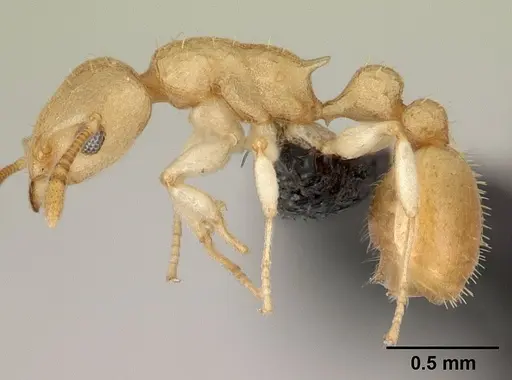
Nesomyrmex hirtellus is a tiny ant species endemic to the southwestern sub-arid regions of Madagascar. Workers measure approximately 0.5-0.6mm in head size and display a yellow to brown coloration with short hairs covering their body, the species name literally means 'little hairy one' from Latin. This species belongs to the angulatus species group and can be distinguished from related species by the absence of a median clypeal notch and lack of an anterolateral pronotal corner. Found exclusively in tropical dry forest and spiny forest habitats, they occur sympatrically with Nesomyrmex devius in southern Madagascar. This species was formally described in 2016 and serves as a model organism in morphometric studies due to its cryptic nature, it is nearly indistinguishable from N. devius without multivariate analysis.
Quick Summary
- Difficulty: Unknown, likely Expert
- Origin & Habitat: Endemic to the Malagasy region, restricted to southwestern sub-arid Madagascar. Found in tropical dry forest and spiny forest habitats [1].
- Colony Type: Unconfirmed colony structure. Based on typical Nesomyrmex genus patterns, likely single-queen colonies, but no direct research confirms this.
- Size & Growth:
- Queen: Unconfirmed, no queen measurements in available literature [1]
- Worker: Workers approximately 0.5-0.6mm head size (absolute cephalic size 525-641 µm) [1]
- Colony: Unknown, no colony size data available
- Growth: Unknown, no development data available
- Development: Unconfirmed, no direct development data exists. Based on typical Myrmicinae patterns from similar Malagasy species, estimated 6-10 weeks at warm temperatures. (This is entirely an estimate based on genus-level patterns. No species-specific development research has been conducted.)
- Antkeeping:
- Temperature: Inferred: Based on their native habitat in southern Madagascar's dry and spiny forest, they likely prefer warm conditions. Start around 24-28°C and observe colony activity. Provide a temperature gradient allowing workers to self-regulate.
- Humidity: Inferred: Dry forest and spiny forest habitats suggest moderate to low humidity preferences. Keep nest substrate moderately moist but allow some drying between waterings. Avoid overly damp conditions.
- Diapause: Unknown, no research on seasonal behavior. Madagascar has mild winters in the south, so they may have reduced activity periods rather than true diapause.
- Nesting: Inferred: Likely nests in soil or small cavities in rotting wood, based on typical Nesomyrmex nesting preferences. A Y-tong or plaster nest with small chambers scaled to their tiny size would be appropriate. Provide some干燥 areas within the nest.
- Behavior: Behavior is unstudied in captivity. Based on genus-level knowledge, these are small, generally non-aggressive ants that likely forage for small prey and honeydew. Their tiny size means excellent escape prevention is critical, they can squeeze through remarkably small gaps. No documented sting capability, though their small size likely makes any sting imperceptible to humans.
- Common Issues: no biological data exists, all care recommendations are inferred from habitat and genus patterns, tiny size makes escape prevention challenging, use fine mesh and tight-fitting barriers, colony growth rate is unknown, making it difficult to plan feeding and space needs, no confirmed temperature or humidity requirements, keepers must experiment and observe, this species has never been kept in captivity before, no established husbandry protocols exist
Species Identification and Background
Nesomyrmex hirtellus was formally described in 2016 by Csösz and Fisher as part of a taxonomic revision of Malagasy Nesomyrmex species. The species name comes from Latin 'hirtus' meaning hairy, with the diminutive suffix '-ellus', referring to the short hairs covering the workers. This species is part of the angulatus species group and is morphologically cryptic with Nesomyrmex devius, the two species can only be distinguished through multivariate statistical analysis of multiple measurements. This makes them a model organism for studying morphometric reproducibility in insects. The species is known only from the southwestern sub-arid region of Madagascar, specifically from tropical dry forest and spiny forest habitats. [1]
Natural History and Habitat
In the wild, Nesomyrmex hirtellus occurs in some of the driest regions of Madagascar. The island's southwestern coast features a semi-arid climate with distinct wet and dry seasons. The spiny forest ecosystem is characterized by drought-adapted plants like Alluaudia procera and various euphorbia species. This environment suggests the ants are adapted to warm, relatively dry conditions with seasonal rainfall patterns. They occur sympatrically with Nesomyrmex devius, meaning both species can be found in the same geographic area. No specific information exists about their nesting biology, foraging behavior, or diet in the wild, this represents a significant gap in our knowledge of this species. [1]
Housing and Nest Setup
Since no captive husbandry history exists for this species, recommendations must be inferred from related species and their natural habitat. Use a small nest with chambers appropriately sized for these tiny ants, their workers measure only about 0.5-0.6mm in head width. A Y-tong (acrylic) nest or plaster nest with small passages works well. The nest should have a water reservoir to maintain slight moisture without flooding. Given their likely dry forest origin, provide both a moderately moist area and a drier area within the nest so workers can self-regulate. Escape prevention is critical due to their minute size, use fine mesh barriers and ensure all connections are sealed. An outworld with a small foraging area allows for feeding and observation.
Feeding and Nutrition
The specific diet of Nesomyrmex hirtellus is unknown. Based on typical Myrmicinae and Nesomyrmex genus patterns, they likely are omnivorous with a preference for small arthropod prey and honeydew from sap-sucking insects. In captivity, offer small live prey appropriate to their size, such as springtails, fruit flies, or other tiny arthropods. Sugar sources like honey water or sugar water may be accepted, though this is unconfirmed. Start with tiny live prey and observe acceptance. Remove uneaten prey after 24-48 hours to prevent mold. Feed small amounts several times per week rather than large meals less frequently.
Temperature and Seasonal Care
No specific temperature requirements have been documented for this species. Their native habitat in southwestern Madagascar experiences warm temperatures year-round, with average highs around 28-32°C and cooler nights. In captivity, maintain temperatures in the range of 24-28°C, which is typical for many tropical ant species. Use a heating cable on one side of the nest to create a gentle gradient, allowing workers to move between warmer and cooler areas. No information exists about diapause or winter requirements. Given Madagascar's mild southern climate, they may not require a true hibernation period but might show reduced activity during cooler months. Monitor colony behavior and adjust temperatures accordingly.
Challenges and Considerations
This is one of the least-studied ant species in the antkeeping hobby. No established care protocols exist, and all recommendations are based on inference from habitat data and related species. This makes Nesomyrmex hirtellus an expert-level species suitable only for experienced antkeepers who can experiment with conditions and document their observations. The primary challenge is the complete lack of biological data, everything from colony size to development time to social structure remains unknown. Keepers should be prepared to maintain detailed records of their observations and be willing to try different approaches. Additionally, their tiny size creates practical challenges in feeding, escape prevention, and observation. Obtaining this species may also be difficult as it is not commonly available in the ant trade.
Frequently Asked Questions
How do I keep Nesomyrmex hirtellus ants?
No established care protocol exists for this species. Based on their native habitat in Madagascar's dry spiny forest, use a small nest with moderate warmth (24-28°C) and moderately moist substrate. Provide both moist and dry areas within the nest. Feed tiny live prey like springtails and offer sugar water. This is an expert-level species due to the complete lack of captive husbandry data.
What do Nesomyrmex hirtellus eat?
Their specific diet is unknown. Based on typical Nesomyrmex and Myrmicinae behavior, they likely accept small live arthropods and honeydew. Offer tiny live prey (springtails, fruit flies) and sugar water. Start with small amounts and observe what gets consumed.
How big do Nesomyrmex hirtellus colonies get?
Colony size is unknown, no research has documented maximum colony sizes for this species. Based on their tiny worker size and typical Nesomyrmex patterns, colonies likely reach several hundred workers at most.
Do Nesomyrmex hirtellus ants sting?
As Myrmicinae ants, they possess a stinger, but their tiny size (workers approximately 0.5-0.6mm head width) means any sting would likely be imperceptible to humans. No documented sting records exist for this species.
What temperature do Nesomyrmex hirtellus need?
Temperature requirements are unconfirmed. Based on their Madagascar spiny forest habitat, aim for 24-28°C. Provide a temperature gradient so workers can self-regulate. This is an estimate based on habitat inference, not species-specific research.
How long does it take for Nesomyrmex hirtellus to develop from egg to worker?
Development time is completely unstudied. Based on typical Myrmicinae patterns from similar Malagasy species, estimated 6-10 weeks at warm temperatures. This is a rough guess, actual development could be faster or slower.
Is Nesomyrmex hirtellus good for beginners?
No. This species is not recommended for beginners. No captive husbandry history exists, all care is inferred rather than documented, and their tiny size creates practical challenges. This is an expert-level species only suitable for experienced antkeepers willing to experiment and document their observations.
Can I keep multiple Nesomyrmex hirtellus queens together?
Colony structure is unconfirmed. No research exists on whether this species is monogyne (single queen) or polygyne (multiple queens). Do not attempt combining unrelated queens until more is known about their social structure.
Where is Nesomyrmex hirtellus found?
This species is endemic to the southwestern sub-arid region of Madagascar. It is found only in tropical dry forest and spiny forest habitats in the Toliara province region.
Why is Nesomyrmex hirtellus difficult to identify?
Nesomyrmex hirtellus is a cryptic species, it is nearly indistinguishable from the related species Nesomyrmex devius using standard morphological measurements. Every observed trait shows overlapping ranges between the two species. Classification requires multivariate statistical analysis of multiple measurements. This made them useful as a model organism for testing morphometric study reproducibility.
References

This caresheet is licensed under CC BY-SA 4.0 .
Literature
Loading...Loading products...