

Nesomyrmex flavus
- Scientific Name
- Nesomyrmex flavus
- Tribe
- Crematogastrini
- Subfamily
- Myrmicinae
- Author
- Csősz & Fisher, 2016
- Distribution
- Found in 1 countries
Nesomyrmex flavus Overview
Nesomyrmex flavus is an ant species of the genus Nesomyrmex. It is primarily documented in 1 countries , including Madagascar. Detailed taxonomic data and occurrence records can be further explored via authoritative databases such as AntWeb or the Global Biodiversity Information Facility (GBIF).
Nesomyrmex flavus
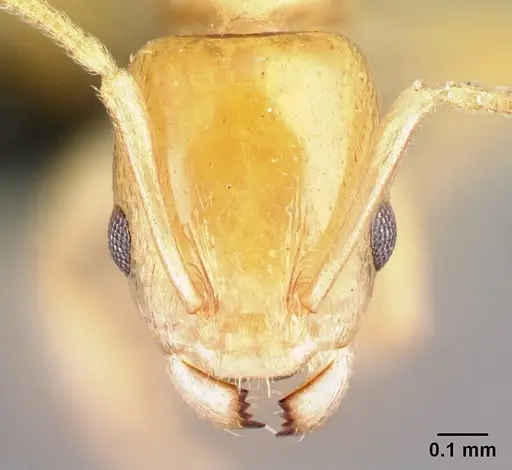
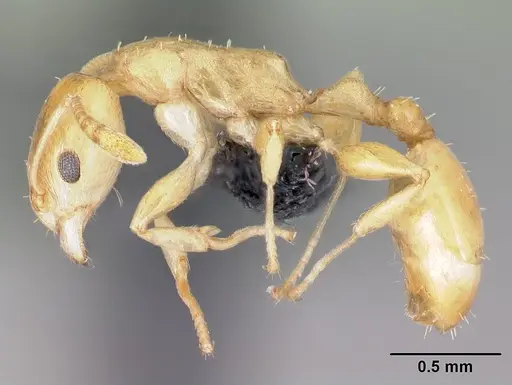
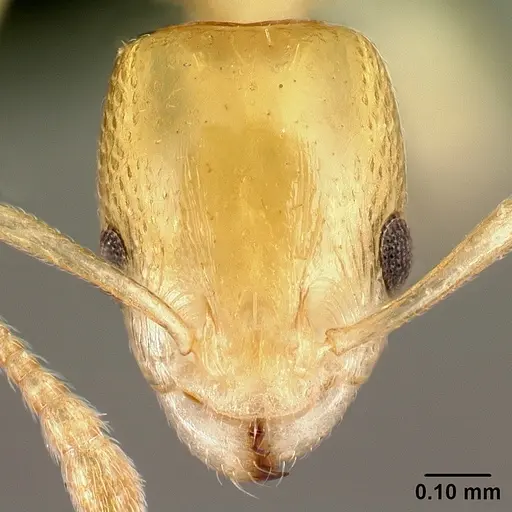
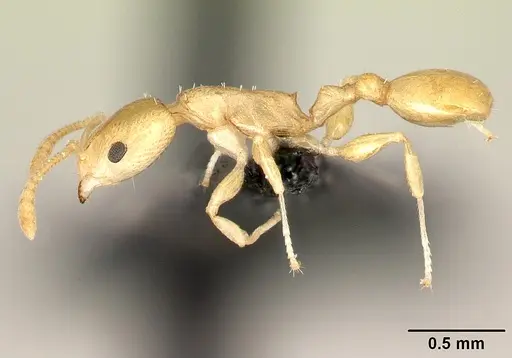
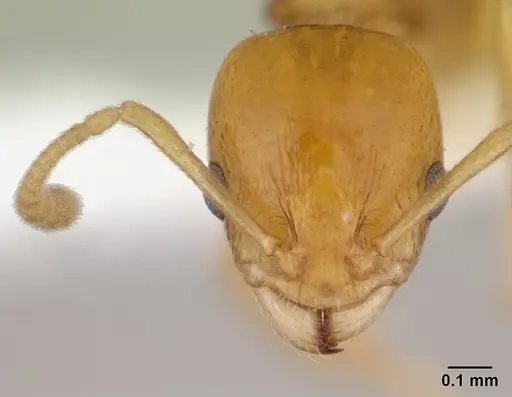
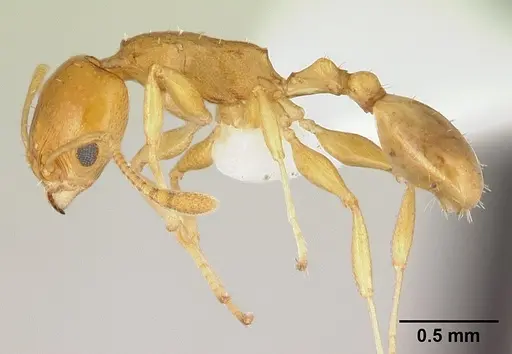
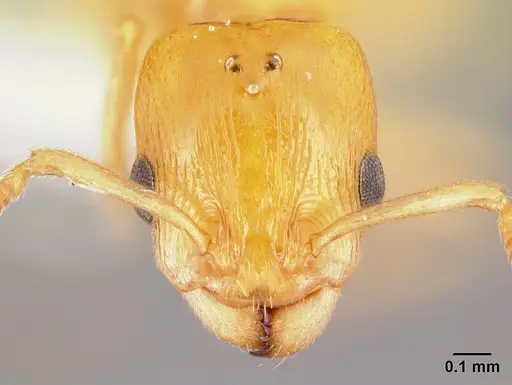
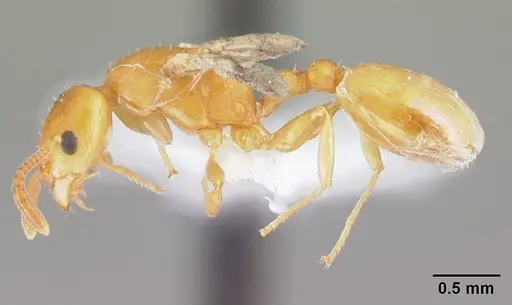
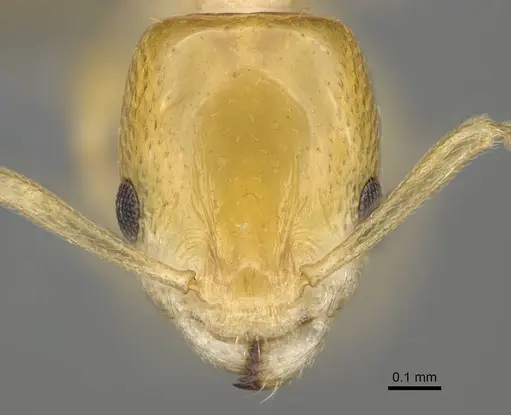
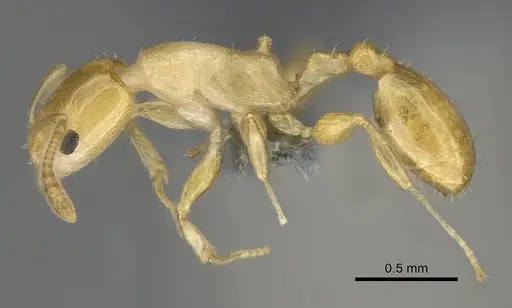
Nesomyrmex flavus is a tiny yellow ant species endemic to Madagascar's high-altitude rainforests. Workers are uniformly pale yellow and measure only about 2-3mm in total length, making them one of the smaller ant species kept in captivity [1]. This species nests in dead twigs and forages in low vegetation, often found at elevations between 200-1755 meters with an average of 1190m [1]. They are a true cryptic species, nearly identical in morphology to Nesomyrmex nitidus but distinguished by subtle morphometric differences and their lighter yellow coloration compared to darker brown phenotypes of related species [1]. The genus Nesomyrmex belongs to the Myrmicinae subfamily and is part of the madecassus species group.
Quick Summary
- Difficulty: Medium
- Origin & Habitat: Native to Madagascar's rainforests at high altitudes (200-1755m, mean 1190m). Found in dead twigs, leaf litter, rotten wood, and tree stumps [1][2].
- Colony Type: Colony structure is unconfirmed. Based on typical Nesomyrmex patterns and small colony size likely single-queen, but this has not been directly studied.
- Size & Growth:
- Queen: Undescribed in primary literature, estimated 4-5mm based on genus patterns
- Worker: 2-3mm total length (absolute cephalic size 602 μm, range 533-699 μm) [1]
- Colony: Likely small, under 100 workers based on nesting in dead twigs
- Growth: Unknown, likely moderate based on small colony size
- Development: Estimated 6-10 weeks based on related small Myrmicinae species (Direct development data unavailable, estimate based on genus patterns for small twig-nesting ants)
- Antkeeping:
- Temperature: Keep at 18-24°C. As a high-elevation Madagascar species, they prefer cooler conditions than lowland tropical ants. Room temperature (around 20-22°C) is typically suitable [1].
- Humidity: High humidity required, rainforest species. Keep nest substrate consistently moist but not waterlogged. Aim for 70-80% relative humidity with good ventilation to prevent mold [1].
- Diapause: Unknown, Madagascar highland species may have reduced activity during cooler months but true diapause not documented.
- Nesting: Use small-scale setups, they naturally nest in dead twigs. Y-tong (AAC) nests with narrow chambers or small test tube setups work well. Provide small passages scaled to their tiny size. Avoid large open spaces.
- Behavior: Generally peaceful and non-aggressive. Forages in low vegetation so may be more active on plants than ground. Workers are small and can escape through very tiny gaps, escape prevention is critical. No significant sting threat to humans due to their minute size.
- Common Issues: escape prevention is critical due to their very small size, they can squeeze through gaps that larger ants cannot, high humidity requirements can lead to mold problems if ventilation is inadequate, slow colony growth may cause keepers to overfeed, leading to mold and colony stress, small colony size means they are sensitive to disturbance, minimize nest inspections, wild-caught colonies may carry parasites that can decimate small colonies
Housing and Nest Setup
Nesomyrmex flavus requires small-scale housing due to their tiny size and natural nesting in dead twigs. Y-tong (AAC) nests with narrow chambers work exceptionally well, as do small test tube setups. The chambers should be appropriately sized, tight passages that these small ants can easily navigate. Avoid large, open formicaria designed for bigger ants. Provide a small outworld for foraging. Since they naturally nest in twigs, you can also offer natural twigs or small pieces of rotting wood as nest options in a naturalistic setup. Escape prevention is absolutely critical, even standard ant keeping setups may have gaps these tiny ants can squeeze through. Use fine mesh barriers and check all connection points regularly. [1]
Feeding and Diet
As a small twig-nesting ant, Nesomyrmex flavus likely accepts small protein sources like fruit flies, pinhead crickets, and other tiny arthropods. They probably also collect honeydew from aphids and will accept sugar water or honey. Feed small amounts of protein 2-3 times per week, and provide a constant sugar source. Remove uneaten prey within 24-48 hours to prevent mold. Due to their small size, prey items should be appropriately sized, no larger than their own body length. Observe feeding behavior to adjust quantities to your colony size. [1]
Temperature and Humidity
This species comes from Madagascar's high-altitude rainforests, meaning they prefer cooler temperatures than typical tropical ants. Aim for 18-24°C, with 20-22°C being ideal. They can likely tolerate brief temperature fluctuations but avoid prolonged exposure to temperatures above 28°C or below 15°C. High humidity is essential, target 70-80% relative humidity. Keep the nest substrate consistently moist but not waterlogged. Use a water reservoir or regular misting to maintain humidity, but ensure adequate ventilation to prevent stagnant air and mold growth. A small water tube in the outworld helps maintain humidity. [1]
Colony Development and Growth
Nesomyrmex flavus colonies likely remain small throughout their lifecycle, probably maxing out under 100 workers based on their natural nesting in dead twigs. This means growth will be slower and less dramatic than larger ant species. The founding stage likely takes 1-2 months before the first workers (nanitics) emerge. After that, expect gradual growth over several months to a year to reach maturity. Be patient, small colony size means slower development. Avoid the temptation to expand their housing too quickly, as too much space can stress small colonies. Only upgrade nest size when the colony clearly needs more room. [1]
Behavior and Temperament
These ants are generally peaceful and non-aggressive. Workers are small and forage in low vegetation rather than on the ground, so they may explore plant material in their outworld more than typical ground-foraging ants. They do not pose any sting threat to keepers due to their minute size. The most significant behavioral consideration is their escape ability, their small size means they can exploit even microscopic gaps in setup. Always use excellent escape prevention and check connections frequently. Colonies are sensitive to disturbance, so minimize nest inspections during the founding stage and early growth. [1]
Frequently Asked Questions
How long does it take for Nesomyrmex flavus to produce first workers?
Expect first workers (nanitics) to emerge 6-10 weeks after founding, though this is an estimate based on related species since direct development data is unavailable. The exact timeline depends on temperature, warmer conditions within their acceptable range may speed development slightly.
Can I keep multiple Nesomyrmex flavus queens together?
Not recommended, combining unrelated queens of this species has not been documented. Based on typical Nesomyrmex patterns, they likely form single-queen colonies. If you acquire multiple foundress queens, house them separately to avoid fighting.
What do Nesomyrmex flavus ants eat?
They likely accept small protein sources like fruit flies, pinhead crickets, and other tiny arthropods, plus sugar sources like honey water or honeydew. Feed small protein items 2-3 times per week and provide constant sugar water. Remove uneaten prey within 24-48 hours.
Do Nesomyrmex flavus ants sting?
No significant sting threat, they are too small to penetrate human skin. These ants are completely harmless to keepers.
What temperature do Nesomyrmex flavus need?
Keep them at 18-24°C, ideally around 20-22°C. As a high-altitude Madagascar species, they prefer cooler conditions than typical tropical ants. Room temperature is often suitable.
Are Nesomyrmex flavus good for beginners?
They are rated Medium difficulty. While not the hardest species, their small size and specific humidity requirements make them better suited for keepers who already have some experience with small Myrmicinae species. Their escape risk is higher than larger ants.
How big do Nesomyrmex flavus colonies get?
Colonies likely remain small, probably under 100 workers at maturity based on their natural nesting in dead twigs. This is a compact, small-colony species.
Do Nesomyrmex flavus need hibernation?
True diapause has not been documented. As a high-elevation Madagascar species, they may have reduced activity during cooler months but likely do not require a formal hibernation period. Simply maintain stable temperatures year-round.
Why are my Nesomyrmex flavus escaping?
Their tiny size allows them to squeeze through gaps that larger ants cannot. Use fine mesh barriers, check all lid seals and tube connections, and consider using fluon on rim edges. Even standard test tube setups may need additional barrier protection.
When should I move Nesomyrmex flavus to a formicarium?
Wait until the colony has at least 20-30 workers and the test tube setup is becoming crowded. For this small species, a Y-tong nest with appropriately scaled chambers is often the best transition. Move gradually and ensure the new nest is properly set up before introducing the colony.
References

This caresheet is licensed under CC BY-SA 4.0 .
CASENT0119576
View on AntWeb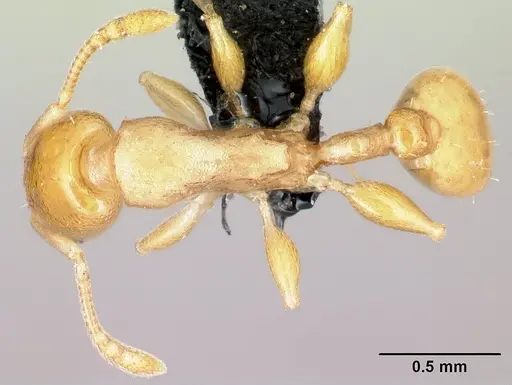
CASENT0121813
View on AntWeb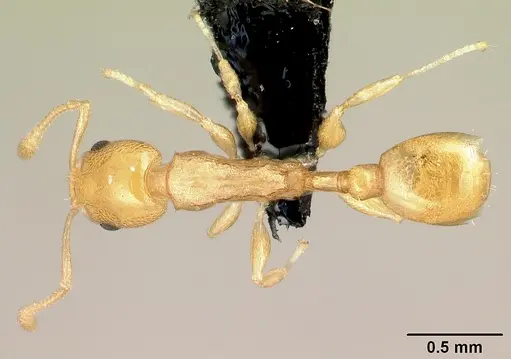
CASENT0189276
View on AntWeb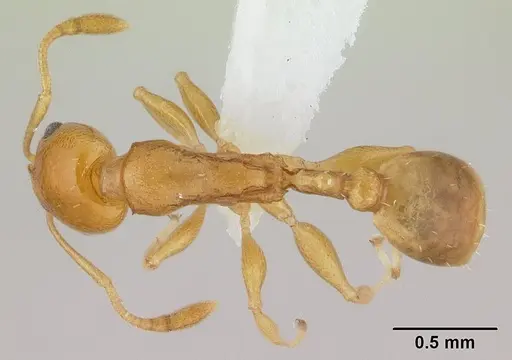
CASENT0217338
View on AntWeb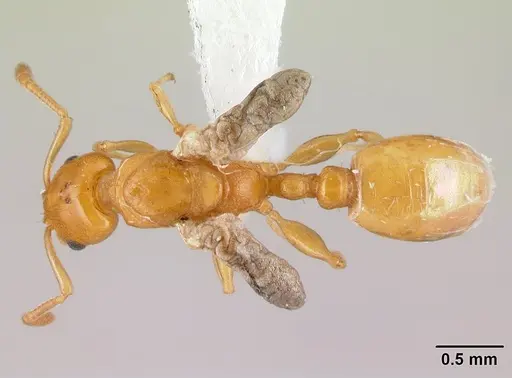
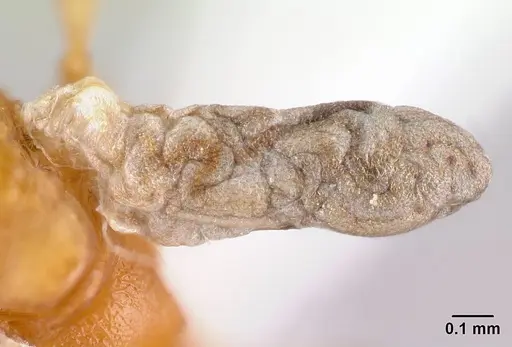
CASENT0227040
View on AntWeb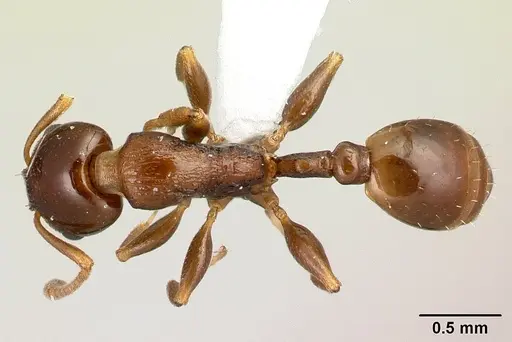
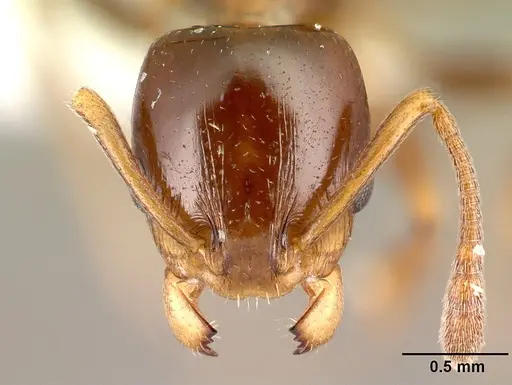
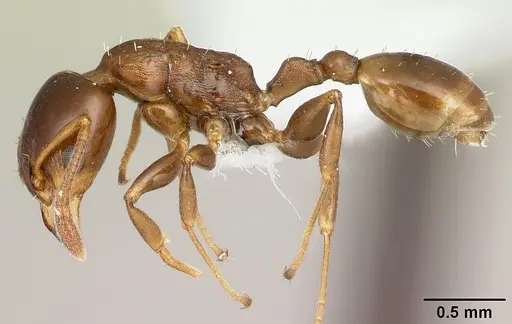
CASENT0393113
View on AntWeb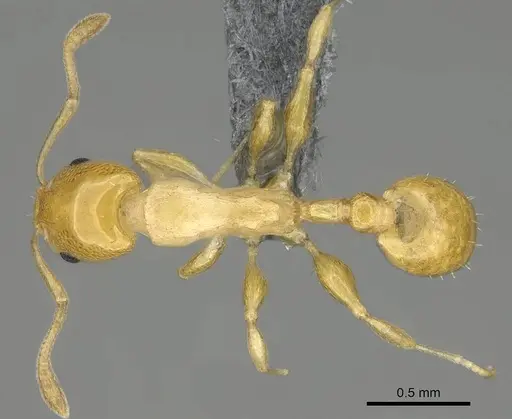
Literature
Loading...Loading products...