

Nesomyrmex nitidus
- Scientific Name
- Nesomyrmex nitidus
- Tribe
- Crematogastrini
- Subfamily
- Myrmicinae
- Author
- Csősz & Fisher, 2016
- Distribution
- Found in 2 countries
Nesomyrmex nitidus Overview
Nesomyrmex nitidus is an ant species of the genus Nesomyrmex. It is primarily documented in 2 countries , including Madagascar, Mayotte. Detailed taxonomic data and occurrence records can be further explored via authoritative databases such as AntWeb or the Global Biodiversity Information Facility (GBIF).
Nesomyrmex nitidus
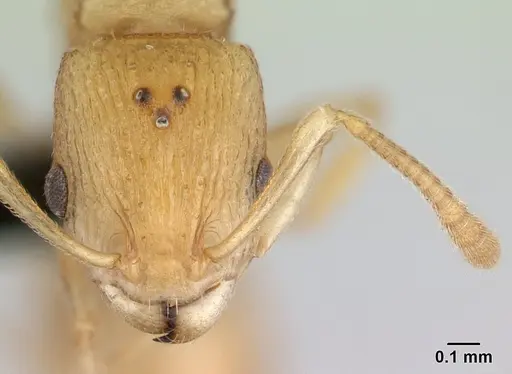
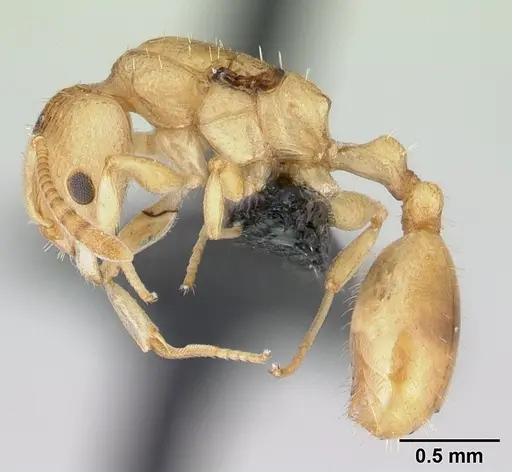
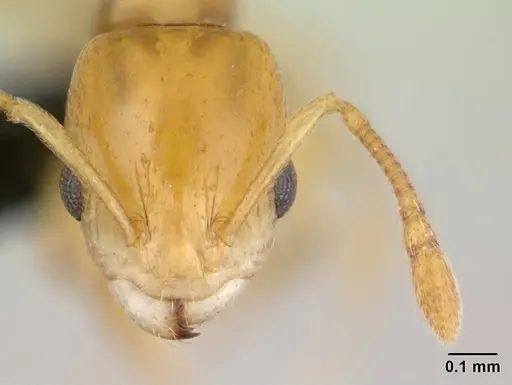
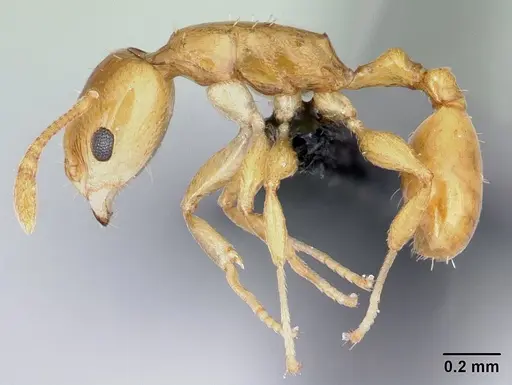
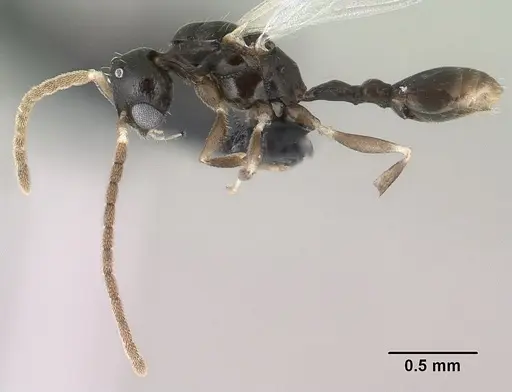
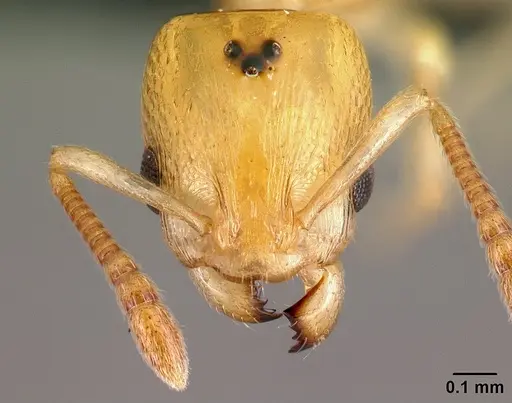
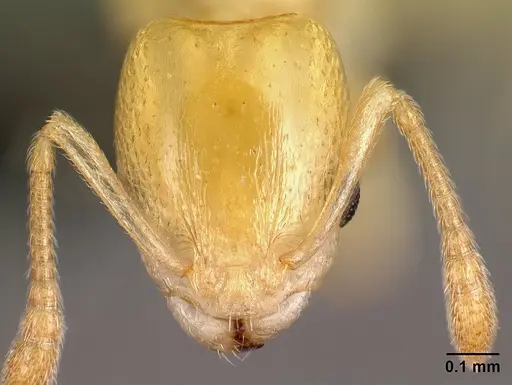
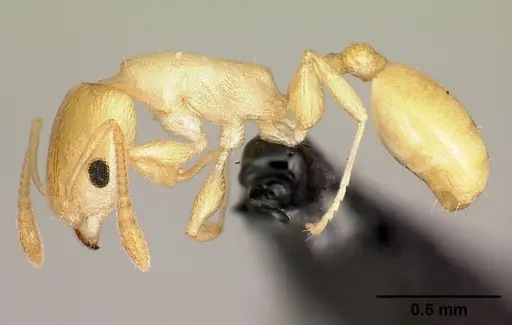
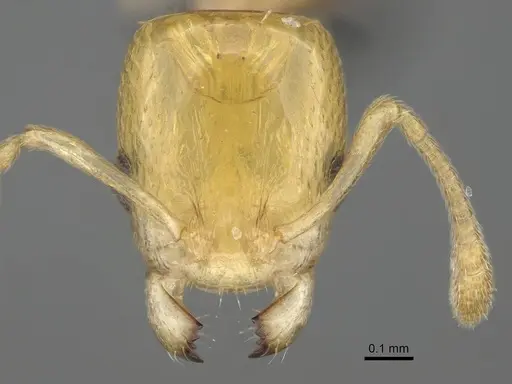
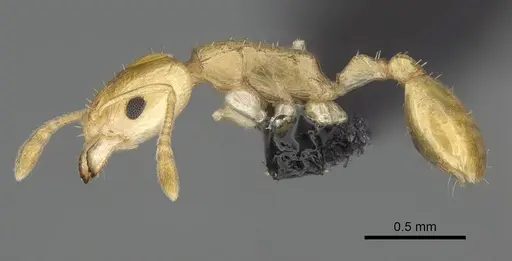
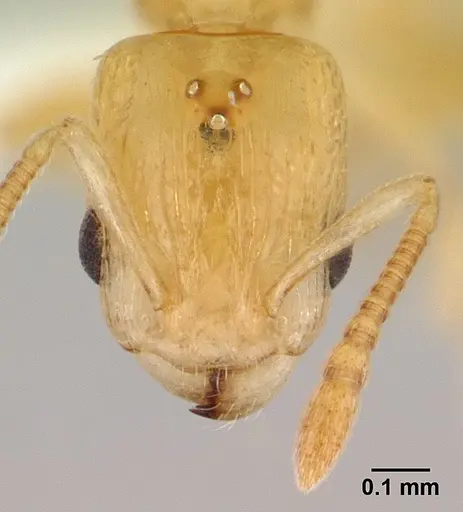
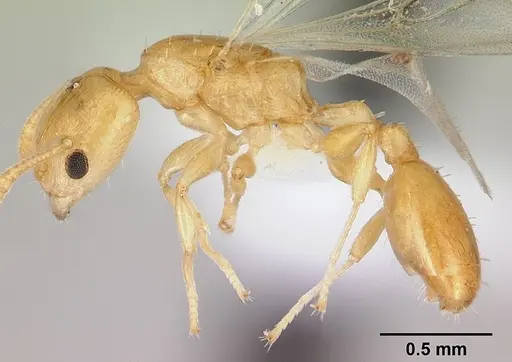
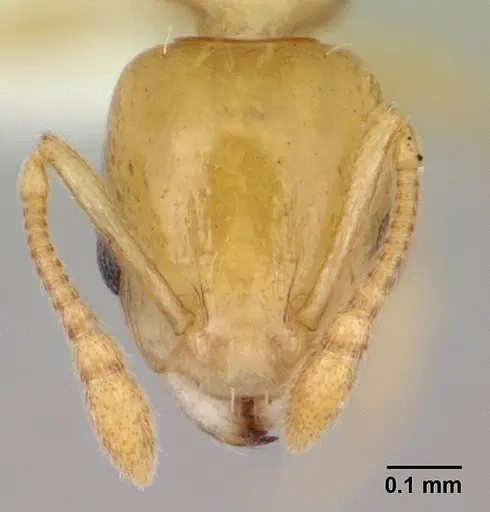
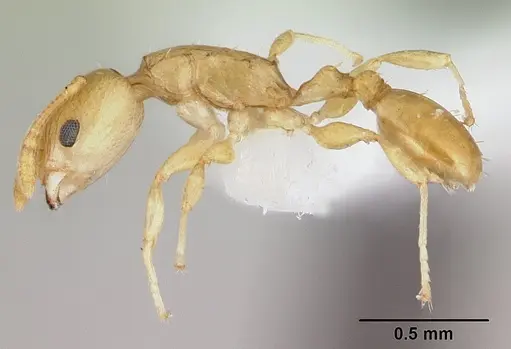
Nesomyrmex nitidus is a tiny yellow ant endemic to Madagascar's rainforests. Workers are a uniform light yellow color throughout their body, making them easily distinguishable from similar species like N. madecassus (which can be dark brown) and N. gibber (which has a distinctive mesothoracic hump). This species is part of the madecassus species group and is most similar in appearance to N. flavus, requiring careful morphometric analysis to separate the two [1]. Workers are very small, with an absolute cephalic size of around 0.5mm, and they forage in low vegetation rather than on the ground [1][2].
What makes this species interesting is its arboreal nesting behavior, in the wild, colonies nest in dead twigs and stems above ground, rarely in rotten logs at higher elevations. This is a cryptic species that lives in Madagascar's lowland to mid-elevation rainforests, typically found between 10 and 1550 meters elevation with an average of around 383 meters [1]. For antkeepers, this is a rare and unusual species that represents the Malagasy ant fauna.
Quick Summary
- Difficulty: Medium
- Origin & Habitat: Madagascar rainforests, elevation 10-1550m (mean 383m). Nests in dead twigs and stems above ground, forages in low vegetation [1][2].
- Colony Type: Colony structure is unconfirmed. Based on genus patterns, likely single-queen colonies. No documented ergatoid replacement reproductives for this species.
- Size & Growth:
- Queen: Estimated 4-5mm based on genus patterns and related species [1]
- Worker: Approximately 2-3mm total length (cephalic size ~0.5mm) [1]
- Colony: Likely small colonies under 500 workers based on nesting in small twigs
- Growth: Unknown, likely moderate based on small colony size
- Development: Estimated 6-10 weeks based on typical Myrmicinae development at warm temperatures (Direct development data unavailable, estimate based on genus-level patterns for small tropical Myrmicines)
- Antkeeping:
- Temperature: Keep at 22-26°C. They come from warm Madagascar rainforests, so a temperature gradient in the mid-20s°C range is appropriate.
- Humidity: Moderate to high humidity (60-80%). Their natural habitat is rainforest, so they prefer moist conditions but not saturated substrate.
- Diapause: Unlikely required. As a tropical species from Madagascar, they probably do not enter true diapause. However, a slight reduction in temperature during winter months may be beneficial.
- Nesting: Arboreal specialists. Provide nests that mimic their natural twig-nesting behavior, small chambers, narrow passages. Y-tong nests or small acrylic/formicarium setups with appropriately scaled chambers work well. Avoid large open spaces.
- Behavior: This is a small, docile ant that forages in low vegetation. They are not aggressive and unlikely to sting. Their tiny size means excellent escape prevention is essential, they can squeeze through remarkably small gaps. Workers are yellow and quite small, making them difficult to see. They are cryptic foragers, often moving slowly through their territory.
- Common Issues: escape prevention is critical due to their very small size, use fine mesh and tight-fitting lids, small colony size means slow population growth, patience is required, humidity control is important, too dry and they desiccate, too wet and mold becomes a problem, wild-caught colonies may be stressed from collection and transport, their arboreal nature means they need appropriately scaled nest chambers, too large and they may not use them
Housing and Nest Setup
Nesomyrmex nitidus is an arboreal species that naturally nests in dead twigs and stems above ground. In captivity, you'll want to replicate this by providing small, appropriately scaled nest chambers. Y-tong (AAC) nests work well, as do small acrylic formicaria with narrow tunnels and chambers sized to the tiny workers. Avoid large, open spaces, these ants feel most secure in tight quarters that mimic their natural twig nests. A small outworld connected to the nest allows for foraging space. Because they foraged in low vegetation in the wild, they may not travel far from the nest to forage, keep food sources close to the nest entrance. [1][2]
Temperature and Humidity
As a Madagascar rainforest species, N. nitidus prefers warm, moderately humid conditions. Aim for temperatures in the 22-26°C range, this is typical for tropical ants and matches their natural elevation range. A slight temperature gradient allows the colony to self-regulate. For humidity, target 60-80%, damp but not waterlogged. These ants are sensitive to drying out, so monitor substrate moisture regularly. A small water reservoir in the nest setup helps maintain humidity. Avoid placing the nest near air conditioning or heating vents that could cause rapid drying. [1][2]
Feeding and Diet
Like most small Myrmicines, N. nitidus likely accepts a varied diet of small insects and sugar sources. Offer small prey items like fruit flies, pinhead crickets, or small mealworms, appropriately sized to the tiny workers. Sugar water, honey, or ant jelly can provide carbohydrates. Because they foraged in low vegetation in the wild, they may be used to hunting small soft-bodied arthropods. Feed small amounts every 2-3 days and remove uneaten prey to prevent mold. A constant sugar source is recommended. [1][2]
Escape Prevention
This is absolutely critical for this species. Workers are extremely small, around 2-3mm total length, and can squeeze through gaps that would seem impossible. Use fine mesh (at least 0.5mm or smaller) on all ventilation holes. Ensure all lids fit tightly, and consider using fluon or other barriers on nest edges. Check connections between the nest and outworld frequently. Even a tiny crack will result in escapes. This is not a species where you can be casual about escape prevention. [1]
Growth and Development
Expect relatively slow colony growth compared to larger ant species. The first workers (nanitics) will be very small and may take several months to appear after the queen lays eggs. Based on typical Myrmicinae development, you might expect 6-10 weeks from egg to worker at optimal temperatures, but this is an estimate for this species. Colonies likely remain small, probably under 500 workers even at maturity, given their natural nesting in small twigs. Patience is essential with this species. Do not overfeed thinking it will speed growth, excess food leads to mold which is deadly to small colonies. [1]
Frequently Asked Questions
How long does it take for Nesomyrmex nitidus to produce first workers?
The exact timeline is unconfirmed, but based on typical Myrmicinae development, expect 6-10 weeks from egg to worker at optimal temperatures (22-26°C). This is an estimate, the actual time may vary. Nanitics will be very small.
Can I keep Nesomyrmex nitidus in a test tube?
Test tubes can work for founding colonies, but because they are arboreal twig-nesters, you may need to modify the setup. A small acrylic nest or Y-tong with appropriately sized chambers is often better long-term. If using test tubes, ensure excellent escape prevention as they are tiny.
Do Nesomyrmex nitidus ants sting?
They are unlikely to sting humans. These are very small, docile ants. Their stingers are too small to penetrate human skin effectively, and they show no aggressive defense behavior.
What do Nesomyrmex nitidus eat?
They likely accept small insects (fruit flies, pinhead crickets, small mealworms) and sugar sources (honey water, sugar water, ant jelly). Feed small prey items appropriately sized to their tiny workers every 2-3 days with a constant sugar source available.
Are Nesomyrmex nitidus good for beginners?
This is not an ideal beginner species. Their tiny size makes escape prevention challenging, and they require specific humidity and temperature conditions. They also have slow colony growth. Experienced antkeepers interested in rare Malagasy species would enjoy this challenge.
How big do Nesomyrmex nitidus colonies get?
Based on their natural twig-nesting behavior, colonies likely remain small, probably under 500 workers even at maturity. They are not a large, rapidly expanding species.
Do Nesomyrmex nitidus need hibernation?
Unlikely. As a tropical Madagascar species, they probably do not require true diapause. A slight temperature reduction in winter (a few degrees) may be appropriate, but full hibernation is not necessary.
Why are my Nesomyrmex nitidus escaping?
Their tiny size allows them to escape through remarkably small gaps. Review all escape prevention measures: use fine mesh (0.5mm or smaller), ensure tight-fitting lids, apply fluon to edges, and check all connections. Even a tiny crack is an escape route for these ants.
References

This caresheet is licensed under CC BY-SA 4.0 .
CASENT0050380
View on AntWeb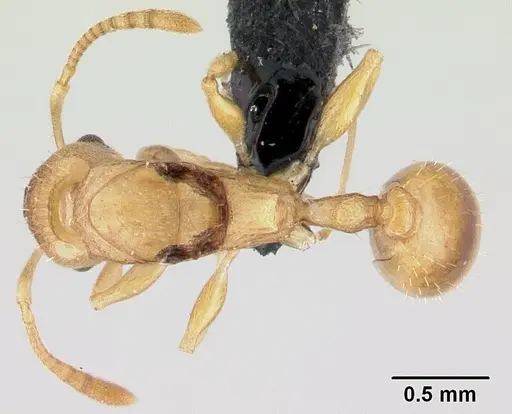
CASENT0132521
View on AntWeb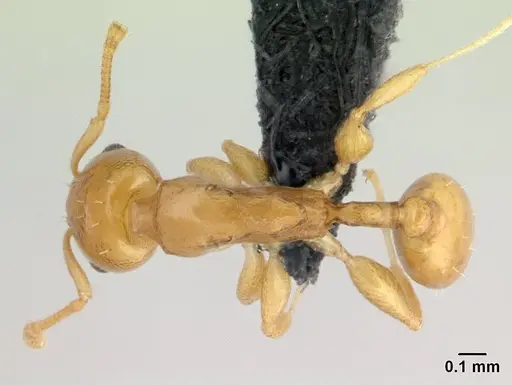
CASENT0148204
View on AntWeb
CASENT0151898
View on AntWeb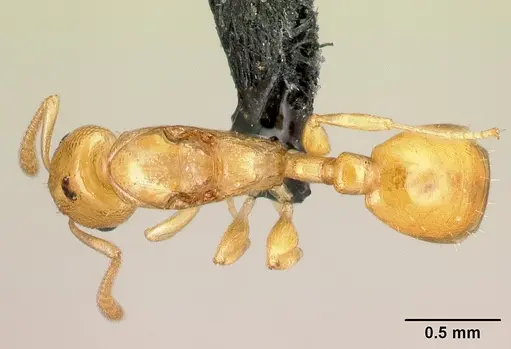
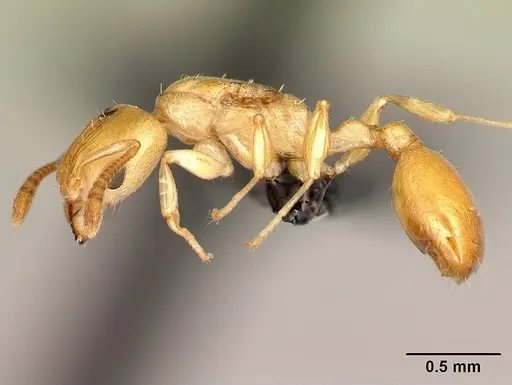
CASENT0151914
View on AntWeb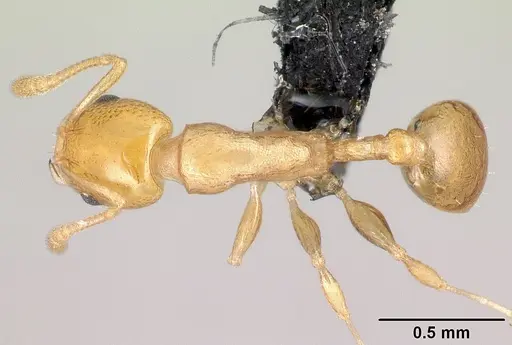
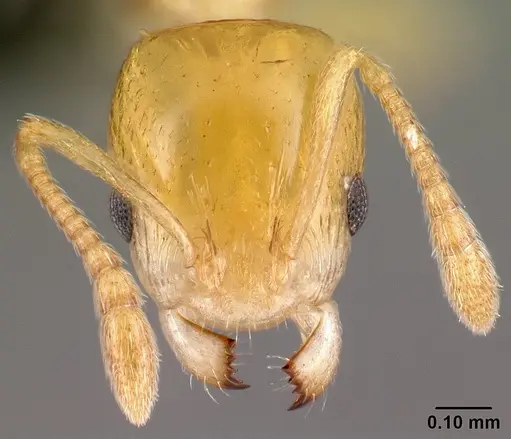
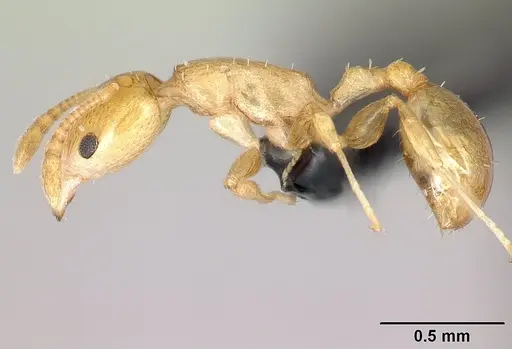
CASENT0152470
View on AntWeb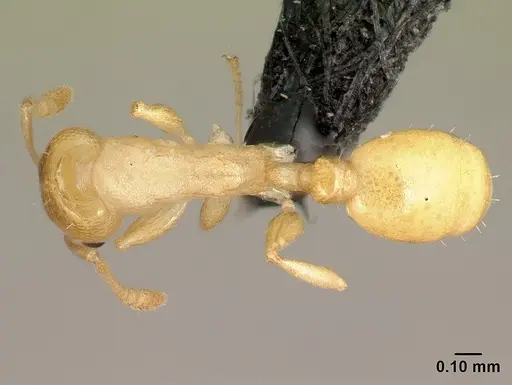
CASENT0163151
View on AntWeb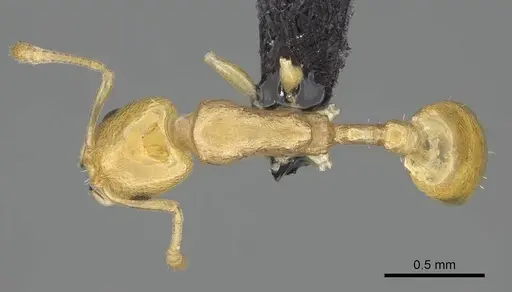
CASENT0421406
View on AntWeb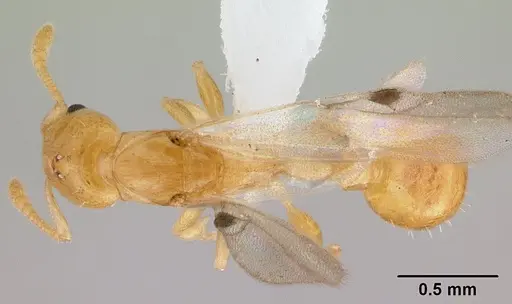
CASENT0422630
View on AntWeb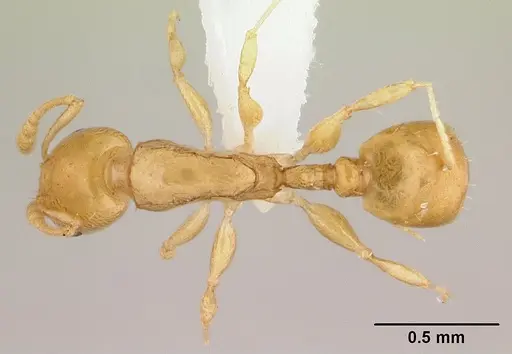
Literature
Loading...Loading products...