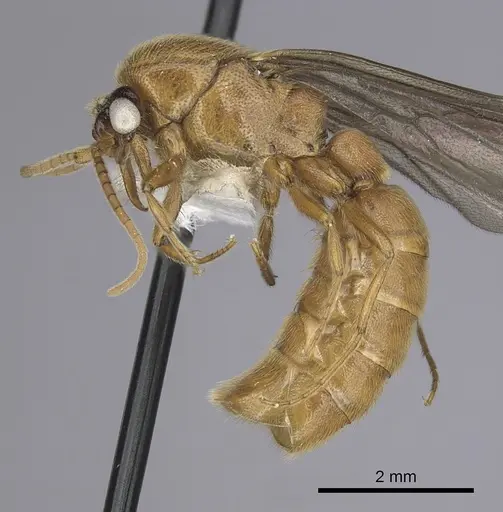
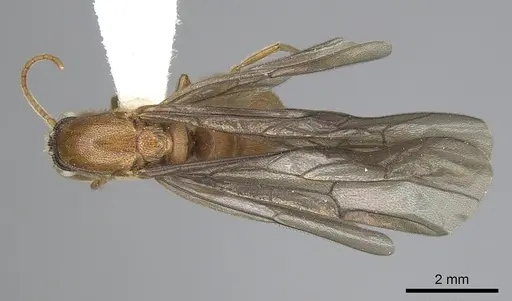
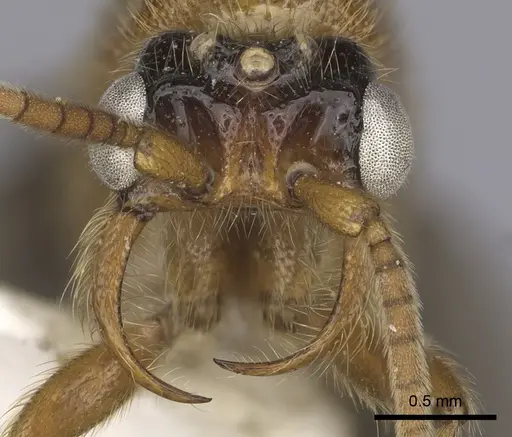
Neivamyrmex spoliator - "No common name widely recognized (Army Ant)"
Neivamyrmex spoliator is a fascinating species of army ant within the Dorylinae subfamily. This species is currently only known from its winged males (alates), with no associated queens or workers having been formally described. This makes direct observation of their full colony behavior in the wild exceptionally rare. As a member of the Neivamyrmex genus, it is inferred to share characteristics with other army ants, such as a nomadic lifestyle, a diet primarily consisting of other ant species' brood, and the formation of temporary bivouacs rather than permanent nests. Males of this genus are typically winged and are sometimes attracted to lights.
- Difficulty: Expert
- Origin & Habitat: Neotropical Region (Colombia, Costa Rica, El Salvador, Guatemala, Honduras, Mexico, Panama) in Likely subterranean and possibly found in various environments, given the broad habitat range of the genus, from tropical forests to grasslands..
- Colony Type: Data currently unavailable for Neivamyrmex spoliator, but other Neivamyrmex species are known to be monogynous or polygynous., unknown for this specific species; other neivamyrmex queens found new colonies by leaving their natal colonies with a large number of workers. founding.
- Size & Growth:
- Queen: Not specified
- Worker: Not specified
- Colony: Unknown for this specific species, but other Neivamyrmex species can range from tens of thousands to over a hundred thousand workers.. Unknown for this specific species, but army ants generally have fast growth rates due to their predatory nature. growth.
- Antkeeping:
- Temperature: Specific temperature requirements for Neivamyrmex spoliator are unknown. However, other Neivamyrmex species are found in habitats with typical temperatures between 20-30°C..
- Humidity: Specific humidity requirements for Neivamyrmex spoliator are unknown. Other Neivamyrmex species generally prefer habitats with high humidity levels..
- Diapause: Not required. Not specified at Not specified.
- Nesting: As an army ant, Neivamyrmex spoliator is not expected to build permanent nests. Instead, it would likely form temporary bivouacs, primarily subterranean..
- Behavior: Unknown for this species, but army ants in general can be aggressive in their predatory activities. aggressiveness.
- Common Issues: Lack of knowledge on basic biology and colony structure, Difficulty in acquiring a colony (queens/workers are unknown), Impossibility of mimicking nomadic lifestyle in captivity, Highly specialized dietary needs (other ant brood), Maintaining appropriate subterranean conditions.
Keeping Neivamyrmex spoliator in captivity presents an unprecedented challenge, primarily because only the male alates of this species have ever been formally identified. This means we currently lack any scientific descriptions of their queens or workers, making it impossible to establish a colony with our current knowledge. Any attempt to keep them would be purely experimental and focused on biological discovery, potentially requiring specialized research permits and deep entomological expertise.
The genus Neivamyrmex as a whole is composed of army ants, a group renowned for their nomadic lifestyle and specialized predatory habits. They do not construct permanent nests like many other ant species; instead, they form temporary living masses called bivouacs, which move frequently as the colony depletes local prey resources. Their diet typically consists almost exclusively of the brood (larvae and pupae) of other ant species, which they raid from subterranean nests.
Due to their highly specialized nomadic behavior and diet, maintaining a Neivamyrmex colony in a typical antkeeping setup is incredibly difficult, even for species where queens and workers are known. An 'outworld' would need to be very large and regularly stocked with live brood from other ant species, mimicking their natural foraging and raiding cycles. Providing adequate space and a continuous, diverse food supply would be a significant logistical hurdle for any ant hobbyist.
Furthermore, the subterranean nature of most Neivamyrmex species adds another layer of complexity. Observing their natural behavior, let alone mimicking their environment, would require highly specialized formicarium designs that allow for deep substrate exploration and migration. This contrasts sharply with the typical clear acrylic or Ytong nests commonly used for more sedentary ant species, highlighting the unique challenges associated with Neivamyrmex care.
Frequently Asked Questions
Can I keep *Neivamyrmex spoliator* as a pet ant colony?
Currently, keeping Neivamyrmex spoliator in captivity is not feasible. The queen and worker castes of this species have not yet been discovered or described by science, meaning we don't know what they look like or how they behave. Therefore, acquiring a functioning colony for antkeeping is simply impossible at this time.
What kind of nest does *Neivamyrmex spoliator* use?
Neivamyrmex spoliator is an army ant, and like others in its genus, it doesn't build a permanent nest. Instead, these ants form temporary living masses known as bivouacs, often underground, and move frequently as they deplete prey in an area.
What do *Neivamyrmex spoliator* ants eat?
While the specific diet of Neivamyrmex spoliator hasn't been observed, its relatives in the Neivamyrmex genus are specialized predators. They primarily feed on the brood (larvae and pupae) of other ant species, which they obtain through organized raids.
Are *Neivamyrmex spoliator* ants dangerous?
Since only the male alates of Neivamyrmex spoliator are known, there's no information on their defensive capabilities. However, army ants in general are not typically aggressive towards humans unless provoked, and their primary focus is on hunting other insects. Their nomadic and subterranean nature means direct encounters are rare.
How large do *Neivamyrmex spoliator* colonies get?
The estimated colony size for Neivamyrmex spoliator is unknown because the queen and worker castes have not been found. However, for other Neivamyrmex species where the colony is known, they can range from tens of thousands to over a hundred thousand workers.
Where does *Neivamyrmex spoliator* live in the wild?
Neivamyrmex spoliator is found in the Neotropical region, specifically recorded in countries like Colombia, Costa Rica, El Salvador, Guatemala, Honduras, Mexico, and Panama.
Is *Neivamyrmex spoliator* a queen-right species?
This is a great question! For Neivamyrmex spoliator, we currently only know the male alates. This means we haven't identified the queen or workers, so whether they are queen-right in the traditional sense, or if they have ergatoid queens like some other army ants, is still a mystery.
Do *Neivamyrmex spoliator* ants have a sting?
Given that only the male alates are known for Neivamyrmex spoliator, information on a sting is unavailable. However, army ants are typically well-equipped for predation, and some species within the broader army ant group may possess stings.
How long does it take for *Neivamyrmex spoliator* to develop from egg to worker?
Unfortunately, the full life cycle duration from egg to worker for Neivamyrmex spoliator is unknown. This is because the worker and queen castes have not yet been discovered.
What is unique about *Neivamyrmex spoliator*?
The most unique aspect of Neivamyrmex spoliator is that it's an ant species scientifically known only from its winged males (alates). The workers and queens, which form the bulk of an ant colony, have yet to be discovered and described, making it a true enigma in the ant world.
Are *Neivamyrmex spoliator* nomadic?
While Neivamyrmex spoliator specifically hasn't been observed, the genus Neivamyrmex is well-known for its nomadic behavior. Colonies constantly move, establishing temporary bivouacs rather than fixed nests. It's highly probable that Neivamyrmex spoliator shares this characteristic.
What are the common challenges in keeping *Neivamyrmex* species?
Keeping Neivamyrmex species, even those with known castes, is extremely challenging. Key issues include mimicking their nomadic lifestyle, providing their highly specialized diet of other ant brood, and creating suitable large-scale subterranean habitats. For N. spoliator, the fundamental challenge is the lack of knowledge about its queen and worker castes.