

Neivamyrmex mojave
- Scientific Name
- Neivamyrmex mojave
- Subfamily
- Dorylinae
- Author
- Smith, 1943
- Distribution
- Found in 1 countries
Neivamyrmex mojave Overview
Neivamyrmex mojave is an ant species of the genus Neivamyrmex. It is primarily documented in 1 countries , including United States of America. Detailed taxonomic data and occurrence records can be further explored via authoritative databases such as AntWeb or the Global Biodiversity Information Facility (GBIF).
Neivamyrmex mojave
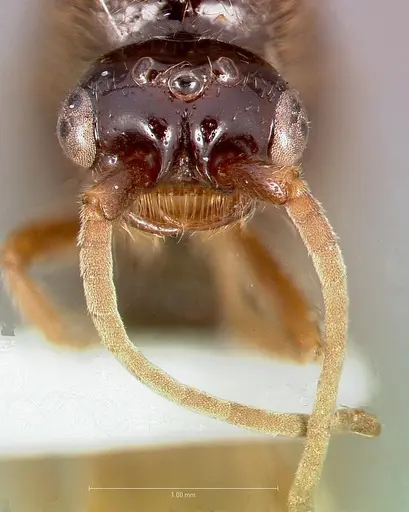
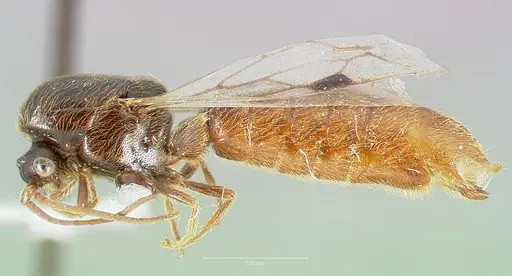
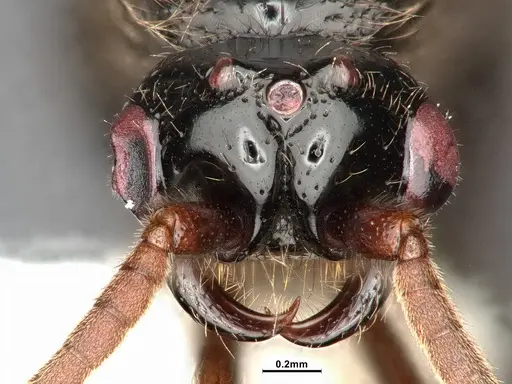
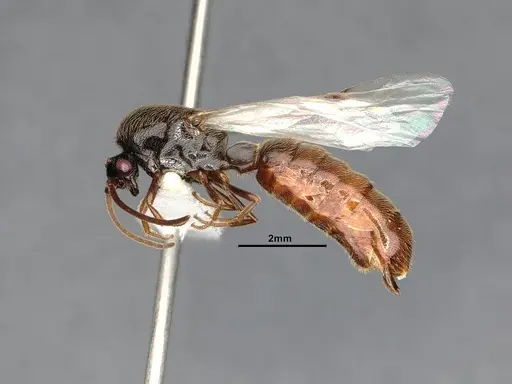
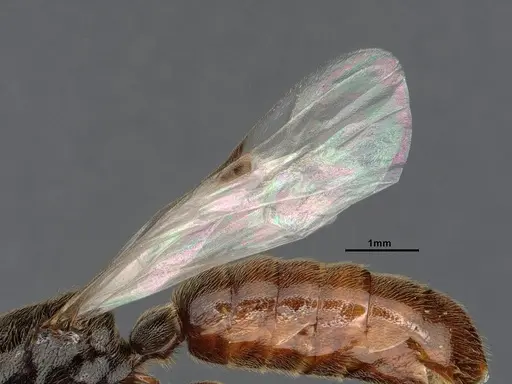
Neivamyrmex mojave is one of the most poorly documented ant species in North America. Males measure approximately 8.25mm and are dark brown to black with a distinctly lighter brown gaster [1]. This species is known only from male specimens collected in the Mojave Desert of Southern California and Baja California Sur, Mexico [2][3]. The worker caste has never been described, researchers speculate that Neivamyrmex nyensis may actually be the worker form of this species [3][4]. It closely resembles Neivamyrmex microps but can be distinguished by its non-toothed volsella and smaller ocelli [3].
This species represents a significant knowledge gap in ant biology. With only males ever documented and no captive colonies ever established, keeping Neivamyrmex mojave would be entirely experimental and would require significant expertise in army ant husbandry.
Quick Summary
- Difficulty: Expert
- Origin & Habitat: Mojave Desert in Southern California and Baja California Sur, Mexico, arid desert environment [4][3]. Found at elevations around 2900 feet near Adelanto, San Bernardino County [4].
- Colony Type: Unknown, only male specimens have been collected. The species may be monogyne like other Neivamyrmex, but colony structure is unconfirmed. Neivamyrmex nyensis may represent the worker caste [3][4].
- Size & Growth:
- Queen: Unknown, queen has never been described [2][3]
- Worker: Unknown, worker caste has not been identified. If N. nyensis is the worker, workers would likely be 3-5mm based on genus patterns.
- Colony: Unknown for this species. Related Neivamyrmex species can form colonies of several thousand workers.
- Growth: Unknown, no captive colonies have been documented
- Development: Unknown, development has never been studied in this species (No data exists on development. Related army ant species typically develop from egg to worker in 4-8 weeks at tropical temperatures.)
- Antkeeping:
- Temperature: Unconfirmed, must be inferred from desert habitat. Likely tolerates wide temperature ranges from cool nights to hot days. Related species kept at 24-30°C. Start around 26°C and observe colony activity.
- Humidity: Unconfirmed, Mojave Desert is arid but some Neivamyrmex species prefer moderate humidity. Start with low humidity (30-50%) and adjust based on colony behavior. Provide a moisture gradient.
- Diapause: Likely, desert species in Southern California probably experience winter dormancy. Related species in temperate regions require 3-4 months of reduced temperatures (10-15°C) during winter.
- Nesting: Unknown for this species. In captivity, related Neivamyrmex typically need spacious outworlds for raiding with a dark, secure nest area. A naturalistic setup with substrate for tunneling would likely work best.
- Behavior: Behavior is unconfirmed for this species. As an army ant (Dorylinae), Neivamyrmex species are typically nomadic predators that conduct raids on other ant colonies and arthropods. They are highly active and form raiding columns. Escape prevention is critical, they are agile and will exploit any gap. Related species are not aggressive toward humans but will defend their colony vigorously. Workers (if N. nyensis is correct) would likely be small, making fine mesh essential.
- Common Issues: No captive husbandry information exists, this would be entirely experimental, Worker caste is unknown, making proper identification of any colony uncertain, Only known from 3 male specimens collected between 1925-1978, extremely rare in the wild, Cannot verify species identity without males present, Related army ants require large outworlds and frequent feeding, No information on acceptable foods or founding behavior
Species Identification and Taxonomic Uncertainty
Neivamyrmex mojave presents a unique challenge in antkeeping because the worker caste has never been positively identified. Males are approximately 8.25mm with dark brown to black body coloration and a distinctly lighter brown gaster that contrasts sharply with the rest of the body [1]. The species can be distinguished from similar species like N. microps by its non-toothed volsella (a part of the male genitalia) and from N. minor by its much smaller ocelli [3][4].
Researchers have speculated that Neivamyrmex nyensis, described from Nevada, may actually represent the worker form of this species [3][4]. This means if you collect what appears to be N. mojave workers, they would likely be identified as N. nyensis. This taxonomic uncertainty makes verified captive breeding of true N. mojave essentially impossible with current knowledge.
Distribution and Rarity
This species is known from an extremely limited range in the Mojave Desert of Southern California and Baja California Sur, Mexico [5][3]. The original type specimens were collected from an unknown locality in the Mojave Desert on October 15,1925 [1]. The only additional confirmed specimen was found dead on the ground 4 miles northwest of Adelanto, San Bernardino County, California at 2900 feet elevation on September 18,1978 [4].
This is one of the rarest ant species in the United States, with only a handful of male specimens ever documented. The species has never been observed in an active colony in the wild. Any attempt to locate this species would require extensive field work in remote desert areas and would likely yield no results given its extreme rarity.
Army Ant Biology and Husbandry Challenges
As a member of the Dorylinae subfamily, Neivamyrmex mojave belongs to the army ant group, a lineage known for their nomadic lifestyle and predatory raiding behavior. Unlike most ants that establish permanent nests, army ants periodically move their entire colony to new hunting grounds. They organize massive raids that overwhelm other ant colonies and arthropod prey.
Keeping any Neivamyrmex species requires specialized husbandry: large outworlds for raiding columns, constant access to prey items (other insects), and the ability to accommodate colony movements. They are not suitable for traditional formicarium setups. However, since N. mojave has never been kept in captivity and its worker caste is unconfirmed, standard army ant husbandry may or may not apply. [1]
Legal and Ethical Considerations
Given the extreme rarity of this species and the complete absence of any captive populations, attempting to keep Neivamyrmex mojave would be both legally and ethically complex. The species has only been documented a few times over nearly a century of collecting. Removing any potential colonies from the wild would be highly irresponsible given how little we know about its population status.
Additionally, without the worker caste being positively identified, any 'collection' of this species would be speculative at best. If Neivamyrmex nyensis is indeed the worker form, those workers would represent a different species with its own conservation considerations. This species is best appreciated through scientific literature rather than attempted captivity.
Frequently Asked Questions
Can I keep Neivamyrmex mojave ants in captivity?
No. This species has never been kept in captivity and the worker caste has never been positively identified. There is no husbandry information available, and the species is known from only a handful of male specimens collected over nearly a century. Attempting to keep this species would be entirely experimental with no guidance available.
What do Neivamyrmex mojave ants eat?
Unknown for this specific species. As army ants (Dorylinae), they would likely be predatory on other insects and arthropods, but no feeding observations have ever been documented for this species.
Where does Neivamyrmex mojave live?
This species is known only from the Mojave Desert in Southern California and Baja California Sur, Mexico. It has been found at around 2900 feet elevation near Adelanto, San Bernardino County, California. The original type locality is unknown [4][3].
How big do Neivamyrmex mojave colonies get?
Unknown. No colony has ever been documented. Only three male specimens have ever been collected. Related Neivamyrmex species can form colonies of several thousand workers, but this species may be much rarer.
What is the queen size of Neivamyrmex mojave?
Unknown. The queen has never been described. Only male specimens have been collected. Researchers speculate that Neivamyrmex nyensis may be the worker form, but even that connection is unconfirmed [3][4].
Are Neivamyrmex mojave good for beginners?
Absolutely not. This species is not suitable for any antkeeper, including experts. There is no captive husbandry information, the species identity cannot be verified without males, and no colony has ever been documented. The extreme rarity and scientific importance of this species also makes collection inappropriate.
How long does it take for Neivamyrmex mojave to develop from egg to worker?
Unknown. No eggs, larvae, or pupae have ever been documented for this species. Development times for related army ant species typically range from 4-8 weeks at tropical temperatures, but this cannot be confirmed for N. mojave.
Can I find Neivamyrmex mojave in the wild?
Extremely unlikely. This is one of the rarest ant species in North America, known from only 3 male specimens collected between 1925 and 1978. The worker caste is unknown, so positive identification would be impossible even if you found something similar. The species is best appreciated through scientific literature.
Do Neivamyrmex mojave need hibernation?
Likely yes, given its Mojave Desert distribution in Southern California. Desert ants in this region experience cool winters and likely have a dormant period. However, no specific diapause requirements have been documented for this species.
References

This caresheet is licensed under CC BY-SA 4.0 .
CASENT0005928
View on AntWeb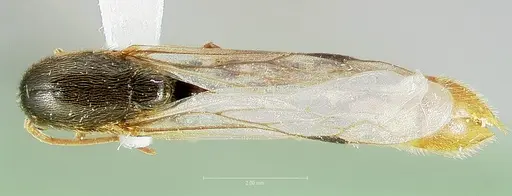
CASENT4031339
View on AntWeb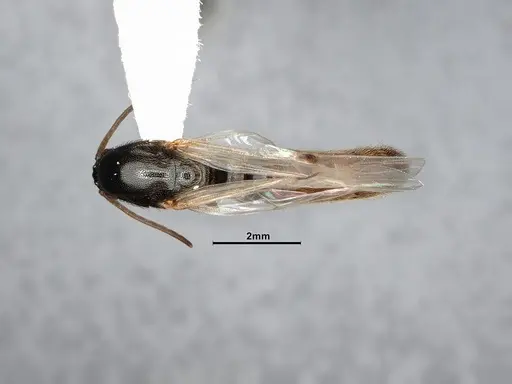
Literature
Loading...Loading products...