

Neivamyrmex microps
- Scientific Name
- Neivamyrmex microps
- Subfamily
- Dorylinae
- Author
- Borgmeier, 1955
- Distribution
- Found in 2 countries
Neivamyrmex microps Overview
Neivamyrmex microps is an ant species of the genus Neivamyrmex. It is primarily documented in 2 countries , including Mexico, United States of America. Detailed taxonomic data and occurrence records can be further explored via authoritative databases such as AntWeb or the Global Biodiversity Information Facility (GBIF).
Neivamyrmex microps
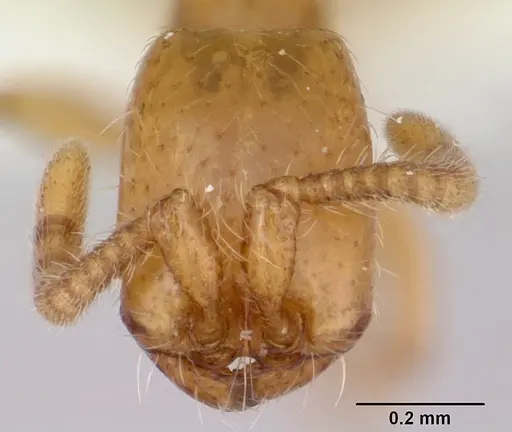
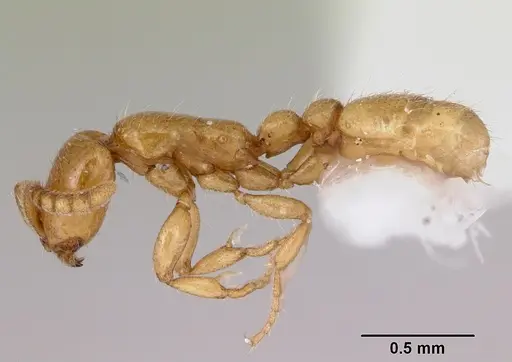
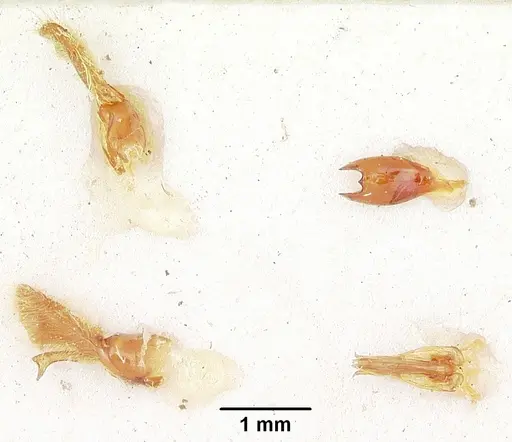
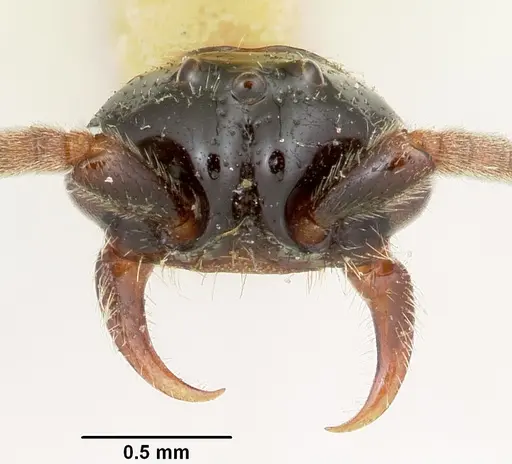
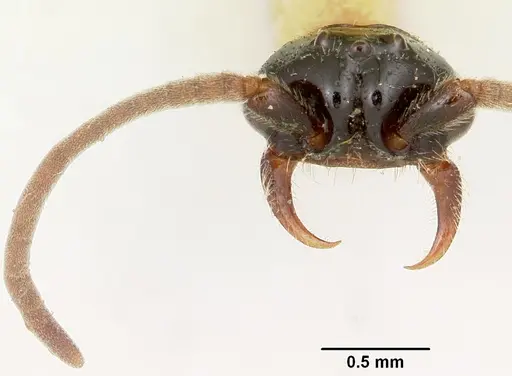
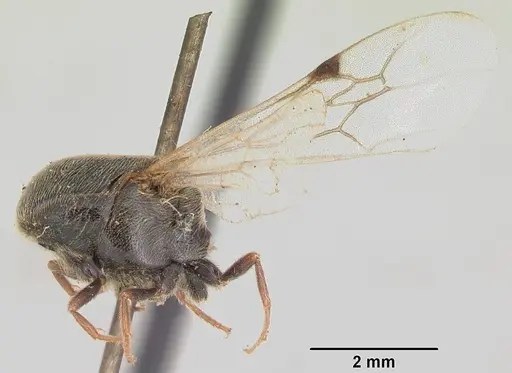
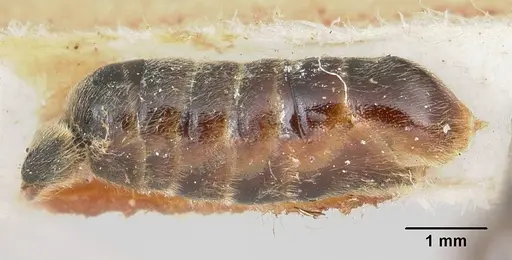
Neivamyrmex microps is one of the smallest army ants in the United States, with workers measuring just 0.59mm in head width [1]. These tiny ants are completely blind, they have no eyes at all, which is typical for army ants that forage underground through soil and leaf litter [1]. Workers have a smooth, shiny body with distinctive features including a long narrow head and a propodeum (the section behind the thorax) that is distinctly longer than its downward-facing side [1]. The species is known only from Arizona, where it inhabits areas ranging from desert Creosote scrub up to Oak woodland at elevations between 1000 and 4000 feet [1]. This is a rarely collected species whose biology remains completely unknown, workers were only first described in 2007,and almost nothing has been documented about their colony structure, diet, or behavior [1][2].
Quick Summary
- Difficulty: Expert
- Origin & Habitat: Arizona, USA, likely extends into adjacent eastern California and Mexico. Found in habitats ranging from desert Creosote scrub to Oak woodland, at elevations between 1000 and 4000 feet [1].
- Colony Type: Unknown, colony structure (single queen vs multiple queens) has not been documented. As a Dorylinae army ant, they likely form colonies with a single queen, but this is unconfirmed.
- Size & Growth:
- Queen: Unknown, queens have not been described in scientific literature
- Worker: 0.59mm head width,0.73mm head length [1]
- Colony: Unknown, no colony size data exists
- Growth: Unknown, no development data available
- Development: Unknown, no development studies exist for this species (This is one of the least studied ant species in the United States. Development timeline must be estimated from related Neivamyrmex species, which typically show moderate growth rates.)
- Antkeeping:
- Temperature: Unknown, no thermal studies exist. Based on Arizona habitat range (1000-4000 feet elevation in desert to woodland), they likely tolerate a wide range from roughly 18-32°C. Start around 22-26°C and observe colony activity.
- Humidity: Unknown, no humidity data exists. Arizona habitats experience dry conditions with monsoon moisture. Keep nest substrate moderately moist with some dry areas for workers to self-regulate.
- Diapause: Likely, activity closely coincides with summer/fall monsoon season in Arizona, suggesting seasonal cycles [1]. Probably requires a cool period during winter months.
- Nesting: Unknown in captivity. In nature, likely nests in soil or under stones like other Neivamyrmex species. A naturalistic setup with soil substrate or a Y-tong/plaster nest with moisture-retaining substrate would be appropriate starting points.
- Behavior: No behavioral studies exist for this species. As army ants, they likely exhibit typical Dorylinae behaviors including group foraging and possible nocturnal activity patterns. Their tiny size and lack of eyes suggest they probably forage through soil and leaf litter rather than on open surfaces. Escape risk is significant given their minute size, they can likely squeeze through extremely small gaps. Aggression levels are unknown but army ants are typically defensive when threatened.
- Common Issues: almost no biological data exists, keepers are essentially pioneering captive husbandry, colony failure is likely without proper species-specific knowledge, tiny size makes escape prevention critical, use fine mesh barriers, no information on diet acceptance, experimental feeding required, hibernation requirements unclear, may die if kept too warm or too cold year-round
Why This Species Is So Challenging
Neivamyrmex microps represents one of the most poorly documented ant species in North America. Workers were only first described in 2007,and the species was known from only a handful of specimens for decades [1]. This means there is essentially zero scientific data on almost every aspect of their biology that antkeepers need to know: colony structure, founding behavior, diet preferences, temperature requirements, humidity needs, development time, and even basic activity patterns. You will be essentially pioneering captive husbandry for this species, making educated guesses based on related army ants and observing your colony carefully for clues about what they need. This is not a species for beginners, you should have experience with other difficult species before attempting N. microps.
Natural History What We Know
What little we know comes from specimen collection data. These ants are active during the summer and fall monsoon season in Arizona, when seasonal rains transform the desert landscape [1]. They have been found in dramatically different habitats, from hot desert Creosote scrub at lower elevations to cooler Oak woodland at higher elevations, suggesting they are ecologically flexible or perhaps that multiple populations exist across this range [1]. Workers have been collected in March, suggesting some winter activity or early-season foraging. The complete absence of eyes confirms they are adapted for underground life, likely navigating through soil and leaf litter using chemical cues rather than vision, similar to other army ants [1]. The species likely ranges into adjacent eastern California and Mexico, though documented records come only from Arizona [1].
Housing and Escape Prevention
Given their minute size (under 1mm), escape prevention is absolutely critical. Standard test tube setups may work for founding colonies, but you must use multiple barrier layers, fluon on rims, fine mesh covering any ventilation, and careful attention to any seams or gaps. A naturalistic setup with a soil-filled container would better mimic their likely natural environment of underground nests. The nest chamber should be small and enclosed, these tiny ants can squeeze through gaps that would hold back larger species. Consider using plaster or acrylic nests with very narrow tunnels and chambers scaled to their tiny size. Any gaps larger than 0.5mm should be considered potential escape routes.
Feeding Experimental Approach
Since nothing is known about what N. microps eats in captivity, you will need an experimental approach. Start with small live prey items appropriate to their tiny size, pinhead crickets, fruit flies, booklice, and small mealworms are reasonable starting points. Army ants are typically predatory, so protein should be the primary food source. You might also try offering sugar water or honey diluted with water, though many army ants do not readily accept sugar sources. Remove uneaten food within 24-48 hours to prevent mold. Watch carefully for any signs of acceptance or rejection, and adjust your offerings accordingly. Keep detailed notes on what they accept and reject, this information will be valuable for the antkeeping community.
Temperature and Seasonal Care
No specific temperature data exists, but their Arizona habitat provides clues. The 1000-4000 foot elevation range spans from hot desert floors to cooler mountain foothills. During summer monsoon season (roughly July-October), temperatures likely range from 25-38°C in the low deserts to cooler temperatures at higher elevations. A temperature gradient of roughly 22-28°C would be a reasonable starting point, allowing the colony to choose their preferred zone. Given their likely seasonal activity tied to monsoons, they probably benefit from a winter rest period at cooler temperatures (perhaps 15-18°C) for several months, mimicking the dry winter season in Arizona when surface activity would be minimal. [1]
The Pioneer Keeper Challenge
If you successfully obtain a colony of Neivamyrmex microps, you are embarking on genuine pioneering work in antkeeping. Every observation you make adds to our knowledge base. Document everything: when workers accept food, what temperatures they prefer (observe where they cluster), humidity preferences (do they stay near moist areas or drier parts of the nest), activity patterns (nocturnal vs diurnal), and any defensive behaviors. Share your findings with the antkeeping community, this species represents a genuine opportunity to contribute new knowledge to both scientific literature and hobby husbandry. The lack of documented care information means your experience could become the foundation for future keepers of this fascinating species.
Frequently Asked Questions
Is Neivamyrmex microps a good species for beginners?
No. This is an expert-level species that should only be attempted by experienced antkeepers. There is essentially no documented care information, workers were only first described in 2007 and their biology remains completely unknown. You will be pioneering captive husbandry with no established guidelines to follow.
What do Neivamyrmex microps eat?
This is unknown. As army ants (Dorylinae), they are likely predatory on other small invertebrates. Start with tiny live prey like fruit flies, booklice, or small mealworms. They may accept sugar sources experimentally, but this is unconfirmed. Remove uneaten food promptly to prevent mold.
How big do Neivamyrmex microps colonies get?
Unknown, no colony size data exists for this species. Related Neivamyrmex species can form colonies ranging from hundreds to thousands of workers, but this is purely speculative for N. microps.
What temperature should I keep Neivamyrmex microps at?
No specific data exists. Based on their Arizona habitat range, start around 22-26°C with a gradient allowing the colony to choose their preferred zone. They likely benefit from a winter cool period (15-18°C) given their activity ties to the monsoon season.
Do Neivamyrmex microps need hibernation?
Likely yes, based on their activity period closely coinciding with the summer/fall monsoon season in Arizona [1]. A winter rest period at cooler temperatures (around 15-18°C) for several months is probably appropriate, mimicking Arizona's dry winter season.
Can I keep multiple Neivamyrmex microps queens together?
Unknown, colony structure has never been documented for this species. As army ants, they typically form single-queen colonies, but this is unconfirmed for N. microps. Do not attempt combining unrelated foundress queens without documented evidence that this species tolerates polygyny.
How long does it take for Neivamyrmex microps to develop from egg to worker?
Unknown, no development studies exist for this species. Related Neivamyrmex species suggest a timeline of several months, but this is purely estimated. Expect 3-6 months at optimal temperature for egg-to-worker development based on genus-level patterns.
Where is Neivamyrmex microps found in the wild?
Currently documented only from Arizona, USA, though the species likely extends into adjacent eastern California and Mexico [1]. They inhabit areas ranging from desert Creosote scrub to Oak woodland at elevations between 1000 and 4000 feet.
Why do Neivamyrmex microps have no eyes?
This is an adaptation to their likely underground or subterranean foraging lifestyle. Like other army ants, they navigate primarily through chemical cues and tactile sensations rather than vision. The complete absence of eyes (anophthalmic condition) is common in army ant species that forage through soil and leaf litter.
References

This caresheet is licensed under CC BY-SA 4.0 .
CASENT0103464
View on AntWeb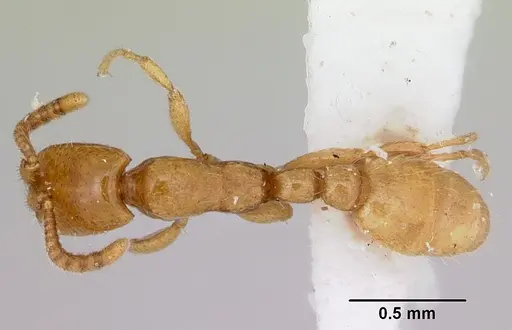
CASENT0105788
View on AntWeb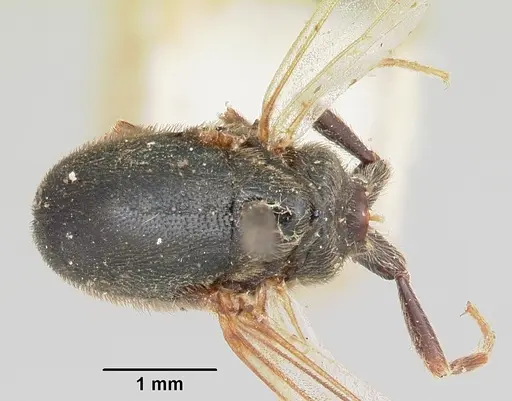
Literature
Loading...Loading products...