

Neivamyrmex melshaemeri
- Scientific Name
- Neivamyrmex melshaemeri
- Subfamily
- Dorylinae
- Author
- Haldeman, 1852
- Distribution
- Found in 2 countries
Neivamyrmex melshaemeri Overview
Neivamyrmex melshaemeri is an ant species of the genus Neivamyrmex. It is primarily documented in 2 countries , including Mexico, United States of America. Detailed taxonomic data and occurrence records can be further explored via authoritative databases such as AntWeb or the Global Biodiversity Information Facility (GBIF).
Neivamyrmex melshaemeri
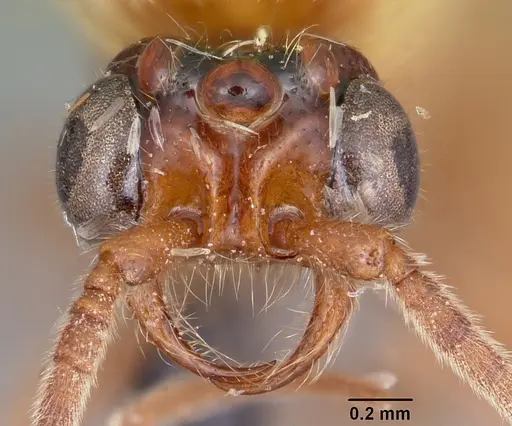
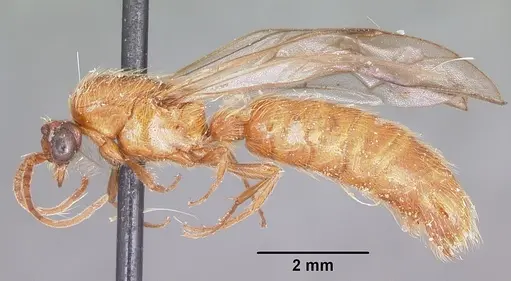
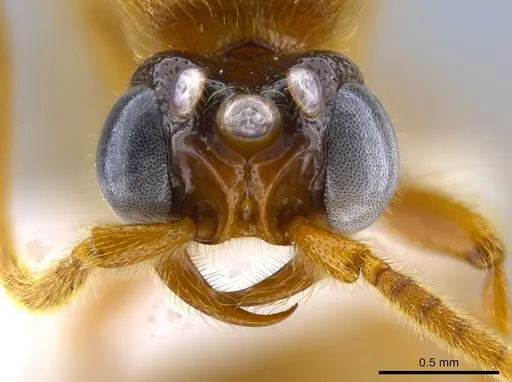
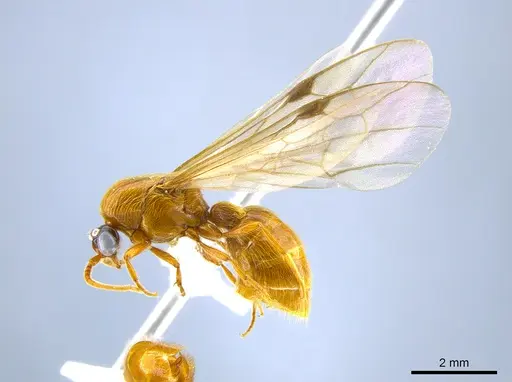
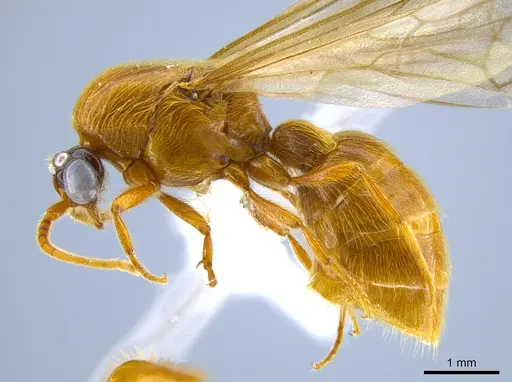
Neivamyrmex melshaemeri is a species of army ant in the subfamily Dorylinae, found throughout the southern United States, Mexico, and into Central America. This species is remarkable, and uniquely problematic for antkeepers, because only male specimens have ever been collected and described. The males are small at about 7mm, with distinctive long flexuous yellowish hairs covering their body that readily distinguish them from other Neivamyrmex species in the United States [1]. The head is darker brown, and the wings are dusky grayish or yellowish with light-brown veins [2].
This species represents one of the most significant gaps in ant taxonomy, we simply do not know what the queen or worker castes look like, how the colony is structured, or how these ants live. Males are most commonly collected in June, appearing around electric lights in the evening during spring and summer months [2].
Quick Summary
- Difficulty: Expert
- Origin & Habitat: Southern United States (Texas, Louisiana, Oklahoma) through Mexico (Tamaulipas, San Luis Potosí, Chiapas, Yucatán) to Costa Rica. Found in tropical and subtropical regions [1][3].
- Colony Type: Unknown, only males have ever been collected. The complete colony structure (queen, workers, brood) has never been documented.
- Size & Growth:
- Antkeeping:
- Temperature: Unknown, no captive colonies exist to establish care parameters.
- Humidity: Unknown, no captive colonies exist to establish care parameters.
- Diapause: Unknown, no captive colonies exist to study seasonal behavior.
- Nesting: Unknown, we have no information about natural nesting preferences. Army ants in the genus Neivamyrmex are typically nomadic, but this species' specific habits are completely unstudied.
- Behavior: Nothing is known about the behavior of established colonies. Males are attracted to electric lights in June and have been collected from April through August, making them among the earliest Neivamyrmex males to appear each year [1]. Army ants are typically predatory and nomadic, but N. melshaemeri's specific behaviors remain entirely unknown due to the lack of worker specimens.
- Common Issues: This species cannot be kept, only males have ever been collected, meaning no queen or workers exist in captivity., No information exists on founding behavior, so there is no way to establish a colony., The complete absence of worker descriptions means we cannot identify them if found., Males collected at lights cannot be used to start colonies, they are reproductive alates only.
Why This Species Cannot Be Kept
This is not a case of limited research or gaps in knowledge, Neivamyrmex melshaemeri is one of the very few ant species where only the male caste has ever been documented. This means we have no description of the queen, no description of workers, and no observation of a functioning colony. The entire worker caste and queen remain unknown to science [4]. For antkeepers, this fundamentally means you cannot establish a colony. Even if you catch males at lights (they are occasionally collected around electric lights in Texas during June), these are reproductive alates only and cannot found a colony. Without workers, there is no colony to keep.
Distribution and Range
This species has one of the widest ranges of any Neivamyrmex in North America. In the United States, it is found from Louisiana and Oklahoma west to Texas. In Mexico, it occurs from Tamaulipas and San Luis Potosí south through Chiapas and Yucatán. It also extends into Central America, with records from Costa Rica and Guatemala [1][3][5]. Within Mexico, it has been recorded in at least nine states: Campeche, Chiapas, Puebla, Quintana Roo, San Luis Potosí, Tamaulipas, Hidalgo, Veracruz, and Yucatán [5]. The species is morphologically quite uniform throughout this extensive range [1].
Identification and Distinguishing Features
Among United States Neivamyrmex species, N. melshaemeri is readily distinguished by its long flexuous yellowish hairs that cover the body, this feature readily separates it from all other North American army ant species [1]. Males measure approximately 7mm in length. The head is approximately one and six-tenths times as broad as long, with prominent convex eyes and large ocelli. The body is rather shining despite the long hairs covering it. Coloration is yellowish brown to darker brown, with the head usually being darker than the rest of the body. Wings are dusky grayish or yellowish with light-brown veins and a distinct dark stigma [2]. The long hairs are less appressed on the head, thorax, petiole, and ventral surface of gaster, and are unusually long near the apex of the gaster.
What We Don't Know
The biology of this species represents a major gap in ant taxonomy. We do not know: what the queen looks like or how large she is, what the workers look like or how large they are, how the colony is structured (monogyne, polygyne, etc.), what the founding behavior is (claustral or semi-claustral), what the ants eat (though related army ants are predatory), where or how they nest, or when nuptial flights occur (though males are collected April-August with peaks in June). This species has been collected since the 1850s, yet only males have ever been found. This could indicate the queen and workers nest in very hidden locations, or that this species has an unusual life cycle that rarely produces workers. Without this fundamental information, captive keeping is impossible. [4][1]
Related Species and Army Ant Biology
Neivamyrmex is a genus of army ants in the subfamily Dorylinae. Related army ants (Eciton) are famous for their nomadic lifestyle, with colonies constantly on the move and raiding other ant colonies for brood to raise as slaves. However, N. melshaemeri's specific behaviors are unknown, we cannot assume it shares these traits. Other Neivamyrmex species in the United States do have documented workers and colonies, so this gap is unusual to this specific species. If you are interested in keeping army ants, consider Neivamyrmex nigrescens or other species where the complete colony is known.
Frequently Asked Questions
Can I keep Neivamyrmex melshaemeri in captivity?
No. This species cannot be kept because only males have ever been collected. We do not know what the queen or workers look like, and no colony has ever been documented. Even if you catch males at lights, they are reproductive alates only and cannot found a colony.
Where can I find Neivamyrmex melshaemeri?
Males have been collected at electric lights in Texas during June, and occasionally from April through August. The species ranges from the southern United States (Texas, Louisiana, Oklahoma) through Mexico to Costa Rica. However, finding workers or queens would be extremely unlikely since they have never been documented by scientists.
What do Neivamyrmex melshaemeri workers look like?
We don't know. Workers of this species have never been described or collected. This is one of the few ant species where the worker caste remains completely unknown to science.
Are there other army ants I can keep instead?
Yes. Other Neivamyrmex species in the United States, such as Neivamyrmex nigrescens, have documented workers and colonies and can be kept by experienced antkeepers. Army ants require specialized care due to their nomadic nature and predatory diet.
Why have only males been found?
This remains a mystery. It could be that queens and workers nest in very hidden or inaccessible locations, or that this species has an unusual life cycle. The males are attracted to electric lights, which is how most specimens have been collected, but the reproductive queens and workers have simply never been located despite collection efforts spanning over 150 years.
What is the size of Neivamyrmex melshaemeri?
The only known caste is the male, which measures approximately 7mm in length. The sizes of workers and queens are completely unknown.
What is the difficulty level for keeping Neivamyrmex melshaemeri?
This species is effectively impossible to keep, it is not a matter of difficulty. No colony has ever been established because only males are known to science. For antkeepers interested in army ants, other species with documented colonies are recommended.
References

This caresheet is licensed under CC BY-SA 4.0 .
CASENT0104810
View on AntWeb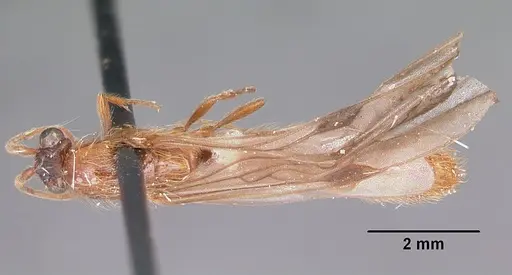
CASENT0631870
View on AntWeb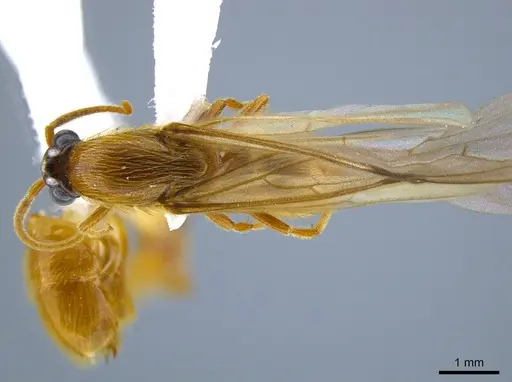
Literature
Loading...Loading products...