

Neivamyrmex kiowapache
- Scientific Name
- Neivamyrmex kiowapache
- Subfamily
- Dorylinae
- Author
- Snelling & Snelling, 2007
- Distribution
- Found in 1 countries
Neivamyrmex kiowapache Overview
Neivamyrmex kiowapache is an ant species of the genus Neivamyrmex. It is primarily documented in 1 countries , including United States of America. Detailed taxonomic data and occurrence records can be further explored via authoritative databases such as AntWeb or the Global Biodiversity Information Facility (GBIF).
Neivamyrmex kiowapache
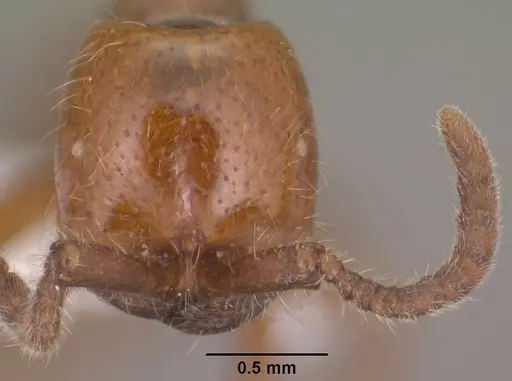
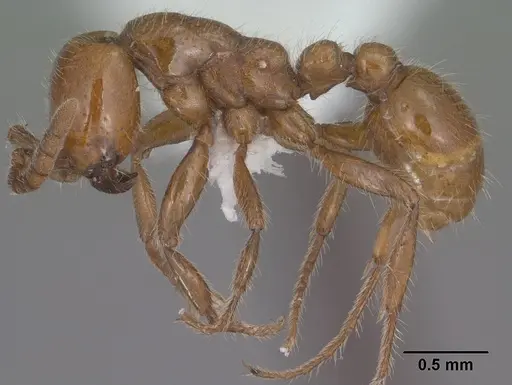
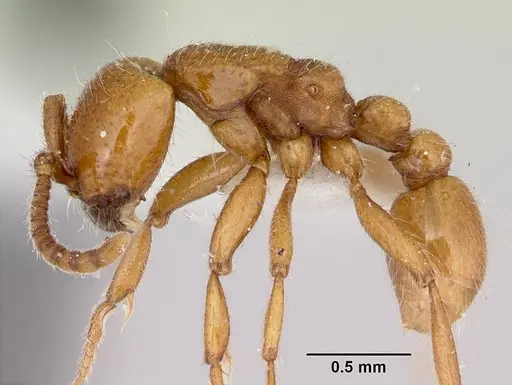
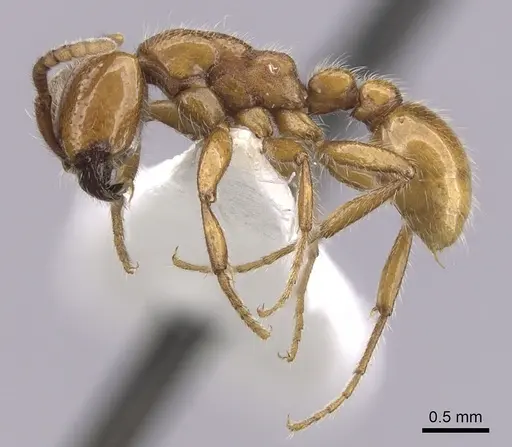
Neivamyrmex kiowapache is a small army ant species native to the western United States and northern Mexico. Workers are tiny at 0.45-0.81mm, with a dark body and a distinctive yellow eye spot. Queens are pale yellow and significantly larger at 1.21-1.26mm, while males reach 1.1-1.3mm with a black head and mesosoma and reddish-brown abdomen. This species was only formally described in 2007,having previously been confused with the related Neivamyrmex carolinensis. The name honors both the Kiowa and Apache Native American nations, reflecting its broad southwestern distribution from Kansas and Colorado south to Texas and Arizona, with populations extending into Chihuahua, Mexico [1].
Unlike many ants, army ants like N. kiowapache are nomadic predators that don't maintain permanent nests. Instead, they form temporary bivouacs and constantly raid to supply their colonies with prey. A Kansas colony was documented with multiple queens, suggesting this species may form polygyne colonies [1]. These ants are rarely kept in captivity due to their specialized predatory requirements and nomadic nature.
Quick Summary
- Difficulty: Expert
- Origin & Habitat: Western United States (Kansas, Colorado, Texas, Arizona, New Mexico) and northern Mexico (Chihuahua). Inhabits semiarid to arid grassland and scrubland habitats [1][2].
- Colony Type: Polygyne, multiple queens have been documented in a single colony from Kansas. This differs from some army ants that have single-queen colonies [1].
- Colony: Polygyne
- Size & Growth:
- Queen: 1.21-1.26mm [1]
- Worker: 0.45-0.81mm [1]
- Colony: Unknown for this species, army ant colonies can reach thousands of workers
- Growth: Unknown, likely fast like other army ants
- Development: Unknown, estimated 4-8 weeks based on typical army ant development (No direct data exists for this species. Army ant brood development is typically rapid, but exact timelines require study.)
- Antkeeping:
- Temperature: Likely 22-28°C based on habitat, western US and Mexico experience warm to hot conditions. Provide a thermal gradient
- Humidity: Moderate, semiarid to arid habitat suggests they tolerate drier conditions than tropical army ants. Avoid excessive moisture
- Diapause: Likely, temperate species probably requires winter dormancy. Further study needed
- Nesting: Army ants don't build permanent nests. In captivity, they form bivouacs in dark, enclosed spaces. Provide a dark chamber or formicarium with retreat areas. They will not dig in substrate like nesting ants
- Behavior: Army ants are aggressive predators that raid in swarms. Workers are small but numerous, and they hunt insects and other arthropods. They are not aggressive toward humans but may bite if handled. Escape prevention is important due to their small worker size, they can squeeze through tiny gaps. Unlike many ants, army ants are nomadic and regularly move their entire colony.
- Common Issues: no published captive care information exists, this species has never been documented in captivity, specialized diet requirements, army ants need constant live prey access, which is difficult to maintain, nomadic behavior makes housing challenging, they don't settle in traditional nests, small worker size creates escape risk through standard barriers, multiple-queen colonies may be difficult to establish from wild-caught queens
Species Identification and History
Neivamyrmex kiowapache was formally described in 2007 by Snelling and Snelling, having previously been misidentified as Neivamyrmex carolinensis. The two species are very similar in worker appearance but differ consistently in size, with N. kiowapache being distinctly smaller in all castes. The species name combines 'Kiowa' and 'Apache', honoring the Native American nations whose historic territories overlap with this ant's distribution. The type locality is Red Rock Park in Jefferson County, Colorado, collected on May 5,1999 [1].
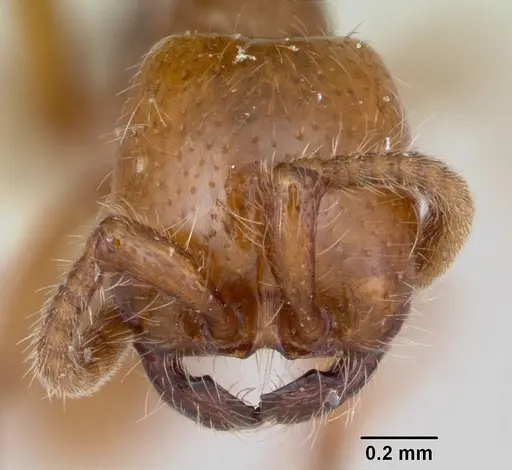
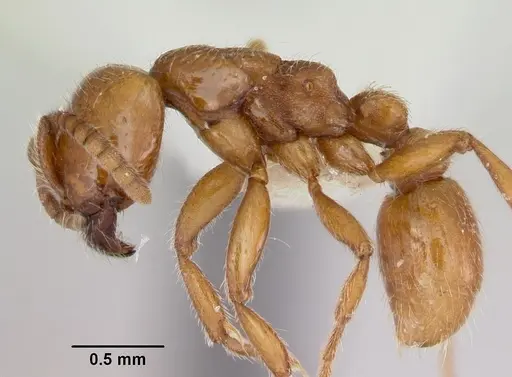
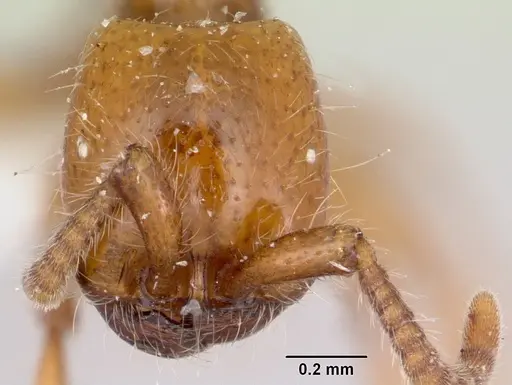
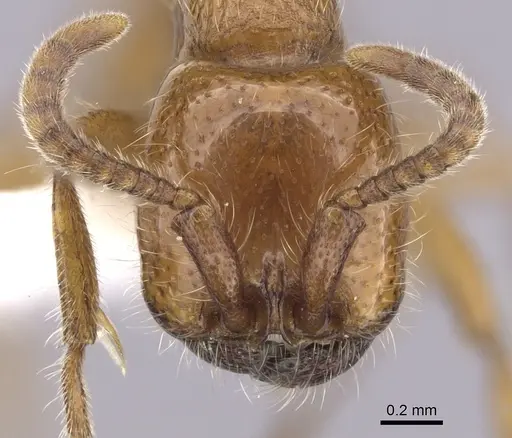
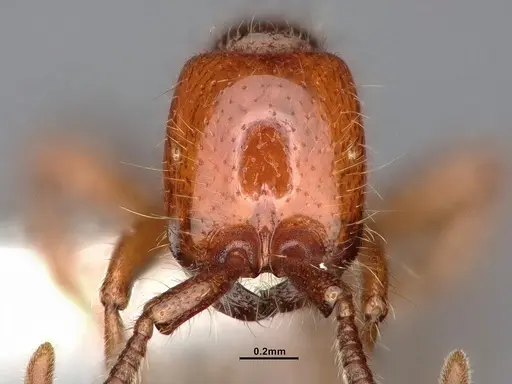
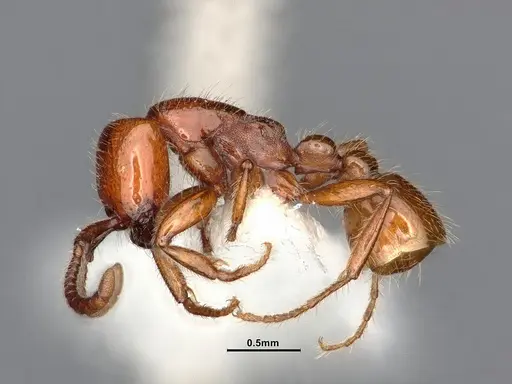
Workers of N. kiowapache can be identified by their small size (0.45-0.81mm head width), the presence of a yellow eye spot, and a slightly longer than broad head. The mesosomal dorsum is subopaque to opaque, and the petiole is slightly longer than broad in dorsal view. Queens are pale yellow with a distinct yellow eye spot and a well-developed triangular subpetiolar process. Males have a black head and mesosoma with a reddish-brown gaster [1].
Distribution and Habitat
This species ranges across the western United States from Kansas and Colorado south to Texas and west to Arizona. In Mexico, it is found in Chihuahua state. The westernmost records of the formerly combined species N. carolinensis (from Mississippi and Arkansas) and the easternmost records of N. kiowapache (from Kansas and eastern Texas) show no intergradation, confirming they are distinct species [1].
The habitat consists of semiarid to arid grassland and scrubland. This is a warmer, drier environment than the tropical rainforests where many army ant species live. The species has been recorded in multiple counties across its range, with the type series coming from Colorado and additional specimens from New Mexico, Texas, Arizona, and Mexico [1][2].
Colony Structure
A colony from Kansas documented by Rettenmeyer and Watkins (1978) contained multiple queens, confirming that N. kiowapache forms polygyne colonies with several reproductive queens. This is significant because some army ant species maintain single-queen colonies, while others like this one have multiple queens working together [1].
The colony structure of army ants differs dramatically from most ant species. Rather than maintaining a permanent nest, army ants form temporary bivouacs and are continuously on the move, raiding for prey and establishing new camps. The multiple-queen system in this species suggests the colony can support several egg-laying queens simultaneously, which may contribute to the large colony sizes typical of army ants [1].
Captive Care Considerations
No published information exists on the captive care of Neivamyrmex kiowapache, and this species has never been documented in the antkeeping hobby. Based on what is known about army ant biology and the species' distribution, any captive attempt would be highly experimental.
Army ants require constant access to live prey, typically insects and other arthropods that the workers can overwhelm. Their nomadic nature means they don't settle in traditional formicariums but form bivouacs in enclosed dark spaces. The small worker size (under 1mm) means escape prevention must be excellent. Temperature should likely be warm (22-28°C) based on their southwestern US/Mexican distribution. Humidity requirements are unclear but likely moderate given their semiarid habitat.
Given the complete lack of captive care documentation and the specialized requirements of army ants, this species is not recommended for antkeepers. Those interested in army ant keeping should consider more commonly kept species like New World Eciton or Old World Dorylus species where husbandry information exists.
Relation to Neivamyrmex carolinensis
Before 2007,specimens of N. kiowapache were identified as N. carolinensis. While the workers of both species are very similar, the sexual forms (queens and males) differ consistently in size, with N. kiowapache being distinctly smaller. Males of N. kiowapache also have a relatively shorter and broader, more strongly pyriform antennal scape compared to N. carolinensis [1].
Since N. carolinensis biology has been studied more extensively, it may provide some inference for N. kiowapache behavior. However, the Snelling and Snelling paper notes that the differences between these species, while not great, are consistent and non-overlapping, supporting their recognition as separate species. The distribution gap between the easternmost N. kiowapache (Kansas, eastern Texas) and westernmost true N. carolinensis (Mississippi, Arkansas) further confirms they are distinct [1].
Frequently Asked Questions
Is Neivamyrmex kiowapache a good beginner ant species?
No. This species is not recommended for antkeepers at any experience level. No captive care information exists for this species, and army ants in general have highly specialized requirements that make them extremely difficult to keep successfully.
What do Neivamyrmex kiowapache ants eat?
Like all army ants, they are predators that hunt insects and other arthropods. Their small workers raid in swarms to capture prey. In captivity, they would require constant access to live prey, which is difficult to provide. Sugar sources are likely not accepted.
How big do Neivamyrmex kiowapache colonies get?
The maximum colony size is unknown for this species specifically. However, army ant colonies typically reach thousands of workers. The presence of multiple queens in documented colonies supports the potential for large colony development.
Can I keep Neivamyrmex kiowapache in a formicarium?
This is not recommended. Army ants do not build permanent nests in substrate like typical ants. They form bivouacs in enclosed dark spaces and are continuously nomadic. Standard formicarium setups are not suitable for their lifestyle. No one has documented successful captive maintenance of this species.
Where is Neivamyrmex kiowapache found?
This species lives in the western United States (Kansas, Colorado, Texas, Arizona, New Mexico) and northern Mexico (Chihuahua). It prefers semiarid to arid grassland and scrubland habitats.
How many queens does Neivamyrmex kiowapache have?
This species is polygyne, meaning colonies can have multiple queens. A colony from Kansas was documented with multiple reproductive queens working together. This differs from some army ant species that have single-queen colonies.
Does Neivamyrmex kiowapache need hibernation?
Likely yes, given its temperate distribution across the western US. However, no specific hibernation data exists for this species. Army ants in temperate regions typically reduce activity during winter months.
How long does it take for Neivamyrmex kiowapache to develop from egg to worker?
This is unknown, no research has documented the development timeline for this species. Based on typical army ant development, it may take 4-8 weeks, but this is purely an estimate.
Is Neivamyrmex kiowapache invasive anywhere?
No. This species is native only to the western United States and northern Mexico. It has not been documented as an invasive species in any region.
References

This caresheet is licensed under CC BY-SA 4.0 .
CASENT0102762
View on AntWeb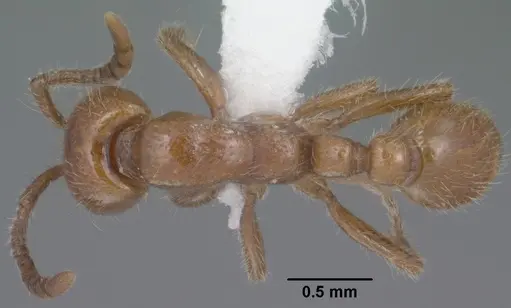
CASENT0103462
View on AntWeb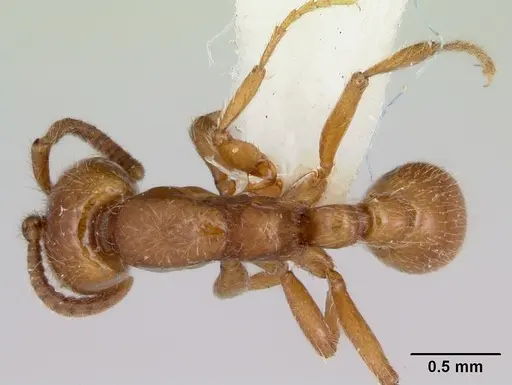
CASENT0103463
View on AntWeb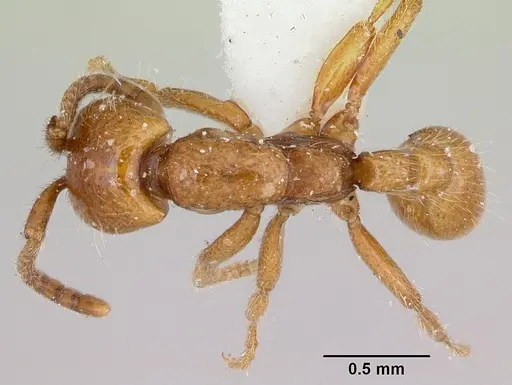
CASENT0249476
View on AntWeb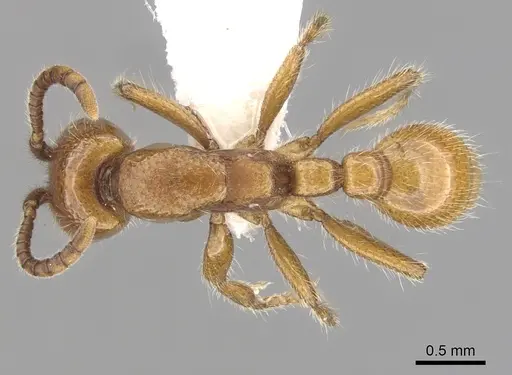
CASENT4031332
View on AntWeb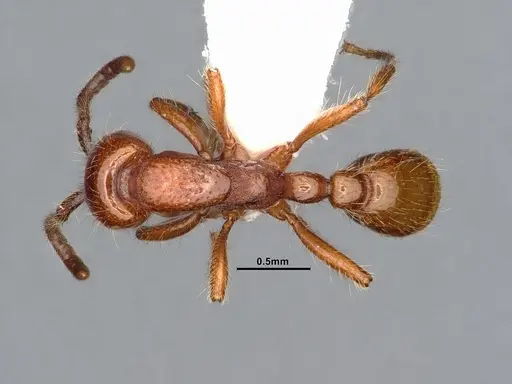
Literature
Loading...Loading products...