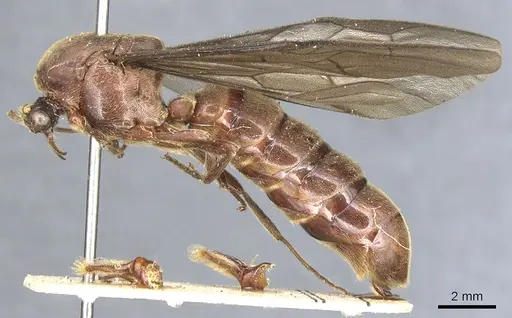
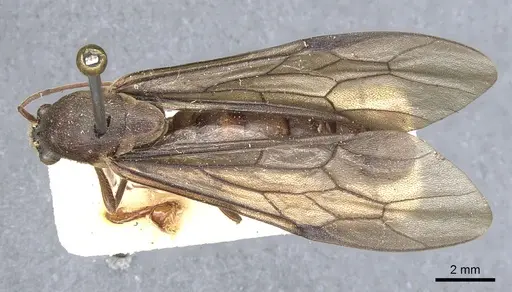
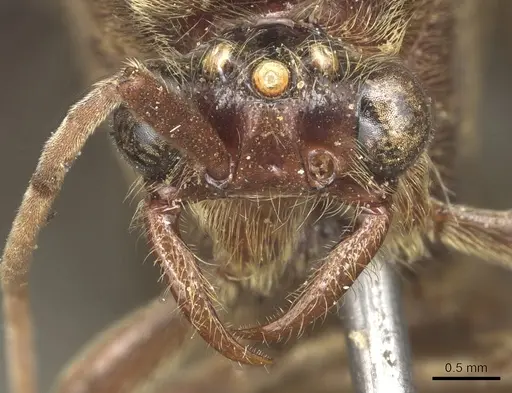
Neivamyrmex falcifer - "Army Ant"
Neivamyrmex falcifer is a fascinating species of army ant belonging to the Dorylinae subfamily. These ants are well-known for their nomadic lifestyle, constantly on the move and establishing temporary bivouacs rather than permanent nests. While most species in the Neivamyrmex genus prefer to remain subterranean, they are sometimes observed foraging above ground, especially during nighttime or on cloudy days. The workers are typically small, and their queens are ergatoid (wingless and worker-like in appearance, though larger). A defining characteristic of this genus, and likely for N. falcifer, is their highly specialized diet, primarily consisting of the brood (larvae and pupae) of other ant species.
- Difficulty: Expert
- Origin & Habitat: Neotropical Region (Bolivia, Brazil, Colombia, Ecuador, French Guiana, Guyana, Peru, Suriname) in Predominantly subterranean environments in forests and grasslands, favoring areas with warm temperatures and high humidity..
- Colony Type: Monogyne, semi-claustral founding.
- Size & Growth:
- Queen: 8-12mm
- Worker: 2-5mm
- Colony: Large (tens of thousands to over a hundred thousand). Fast, driven by a constant supply of prey and the nomadic cycle of the colony. growth.
- Antkeeping:
- Temperature: Maintain a warm environment, ideally between 24-30°C (75-86°F). Consistent temperatures are crucial for their well-being..
- Humidity: High humidity levels are essential, ranging from 70-90%. This can be achieved through regular misting or by using a substrate that retains moisture effectively..
- Diapause: Not required. Not specified at Not specified.
- Nesting: Neivamyrmex falcifer are nomadic and do not build permanent nests. In captivity, they require a dynamic setup that allows for periodic emigrations and the formation of temporary bivouacs. A large, escape-proof outworld with a deep substrate layer and multiple potential 'nesting' areas is necessary..
- Behavior: High (towards handler if provoked, and extremely high towards prey ants) aggressiveness.
- Common Issues: Maintaining nomadic cycles, Providing sufficient and consistent live ant brood for food, Managing waste and maintaining hygiene in a large, mobile colony, Humidity and temperature fluctuations in dynamic setups, Colony stress from confinement and lack of adequate prey.
Keeping Neivamyrmex falcifer is an undertaking for the most experienced antkeepers due to their unique nomadic behavior. Unlike typical ant species that establish a fixed nest, these army ants are constantly on the move, forming temporary 'bivouacs' each night from their own bodies. This means any captive setup must accommodate regular colony emigrations, making traditional formicaria unsuitable. Replicating this constant movement and providing appropriate temporary resting places is one of the most significant challenges.
Their dietary requirements are highly specialized and demanding. Neivamyrmex falcifer are obligate predators, feeding almost exclusively on the brood (larvae and pupae) of other ant species. This necessitates a continuous and substantial supply of live ant colonies, specifically their developing brood. Sourcing and maintaining feeder colonies of various sizes can be a monumental task, and insufficient prey will quickly lead to colony decline. Providing a diverse range of prey species, such as Pheidole, Solenopsis, or Formica brood, is ideal.
The queens of Neivamyrmex falcifer are ergatoid, meaning they are wingless and resemble large workers. Colony founding in this species, and generally within the genus, occurs via 'fission' or 'budding' – a new queen leaves the natal colony accompanied by a large contingent of workers. This means you won't be finding lone queens after a nuptial flight to start a colony. Instead, an entire piece of an existing colony, including the queen and workers, must be acquired, which is incredibly rare and ethically complex.
Most Neivamyrmex species, including falcifer, are predominantly subterranean, conducting their massive foraging raids mostly underground or at night. This cryptic lifestyle makes observing them in captivity challenging unless very specific setups with viewing panels are designed. While they do forage above ground occasionally, their natural inclination is to remain hidden. Creating an environment that allows for this subterranean activity while also permitting observation is a delicate balance.
Given their predatory nature and large colony sizes, managing waste and maintaining hygiene within a captive environment can be difficult. These ants are highly aggressive towards other ant species during their raids, efficiently dispatching prey. Any setup must be entirely escape-proof, as a large, active army ant colony on the loose would be a significant issue. Thorough research and preparation are paramount before considering this advanced species.
Frequently Asked Questions
Are *Neivamyrmex falcifer* suitable for beginners in antkeeping?
Absolutely not. Neivamyrmex falcifer are an 'Expert' level species, primarily due to their nomadic behavior, specialized diet of live ant brood, and the sheer scale of their colonies. They require very specific and dynamic setups that are beyond the scope of typical antkeeping. Only seasoned keepers with extensive experience should consider them.
What do *Neivamyrmex falcifer* eat?
These army ants are highly specialized predators. Their diet consists almost exclusively of the larvae and pupae (brood) of other ant species. Providing a consistent and ample supply of various feeder ant colonies is crucial for their survival in captivity.
How do *Neivamyrmex falcifer* colonies reproduce and grow?
Neivamyrmex falcifer queens are wingless (ergatoid) and cannot found colonies on their own after a nuptial flight. Instead, new colonies are formed through a process called 'colony fission' or 'budding,' where a queen leaves the parent colony with a large contingent of workers to establish a new one. This makes wild queen collection impossible for founding a colony from scratch.
Do *Neivamyrmex falcifer* build permanent nests?
No, they are famous for not building permanent nests. Instead, they lead a nomadic life, forming temporary 'bivouacs' using their own bodies as a living structure each time they stop moving. These bivouacs can be subterranean or occasionally surface-level.
Are these ants aggressive?
Yes, Neivamyrmex falcifer are highly aggressive towards other ant species, which are their primary food source. During their predatory raids, they will overwhelm and consume other ant colonies. While they aren't inherently aggressive towards a human handler unless provoked, their raiding instincts are formidable.
Can I keep *Neivamyrmex falcifer* in a standard formicarium or ant farm?
A standard formicarium or ant farm is completely unsuitable for Neivamyrmex falcifer. Their nomadic nature demands a large, dynamic setup that allows for constant movement and the formation of temporary bivouacs. Static nests cannot accommodate their behavioral requirements, leading to stress and colony collapse.
What kind of special setup do *Neivamyrmex falcifer* require in captivity?
A highly specialized setup is needed, often referred to as an 'arena-style' or 'moving nest' system. This typically involves a very large outworld with deep, moist substrate, allowing them to dig temporary chambers and migrate. Some advanced keepers attempt automated systems to facilitate their nomadic phases, but it's incredibly complex.
Are *Neivamyrmex falcifer* queens winged?
No, the queens of Neivamyrmex falcifer are ergatoid, meaning they are wingless and have a worker-like appearance, although they are significantly larger than the regular workers. Only the males (alates) possess wings for their nuptial flights.
Where are *Neivamyrmex falcifer* found in the wild?
Neivamyrmex falcifer are native to the Neotropical region, with reported distributions across various South American countries including Bolivia, Brazil, Colombia, Ecuador, French Guiana, Guyana, Peru, and Suriname.
What is a bivouac in army ant keeping?
A bivouac is the temporary living structure formed by army ants like Neivamyrmex falcifer. Instead of building a fixed nest, the ants link their bodies together to create a protective, living shelter for the queen, brood, and other colony members during their statary (non-moving) phases.
How often do *Neivamyrmex falcifer* colonies move?
During their nomadic phase, Neivamyrmex falcifer colonies are in constant motion, often emigrating daily. They alternate between nomadic phases, where they actively forage and move, and statary phases, where they settle in a bivouac to raise brood.
What challenges are common when keeping *Neivamyrmex falcifer*?
Common challenges include consistently providing enough live ant brood, managing their nomadic cycles in a confined space, maintaining the high humidity and temperature they require, dealing with the waste produced by such large predatory colonies, and preventing escapes. Their complex social structure and specific needs make them very prone to stress and failure in captivity.