

Myrmica pelops
- Scientific Name
- Myrmica pelops
- Tribe
- Myrmicini
- Subfamily
- Myrmicinae
- Author
- Seifert, 2003
- Distribution
- Found in 1 countries
Myrmica pelops Overview
Myrmica pelops is an ant species of the genus Myrmica. It is primarily documented in 1 countries , including Greece. Detailed taxonomic data and occurrence records can be further explored via authoritative databases such as AntWeb or the Global Biodiversity Information Facility (GBIF).
Myrmica pelops
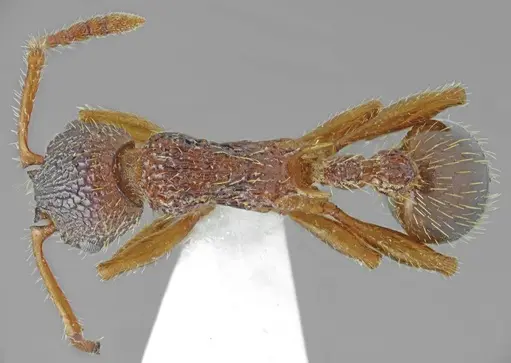
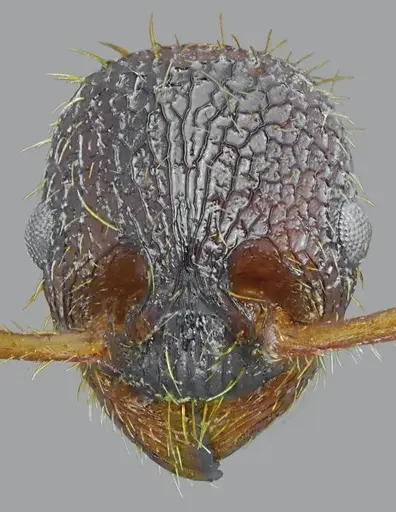
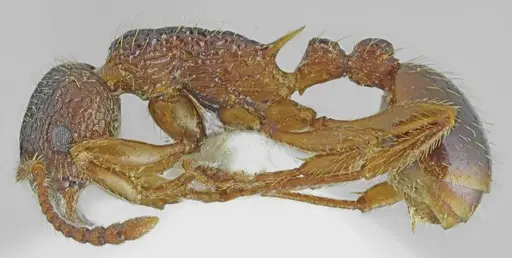
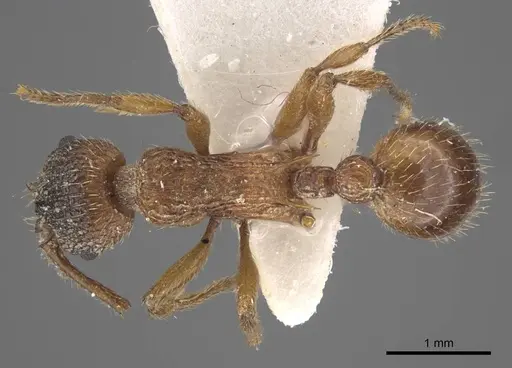
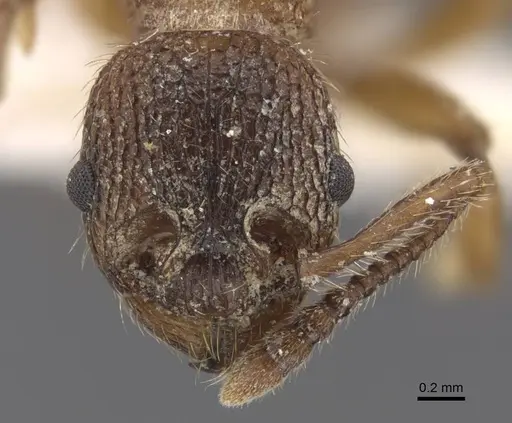
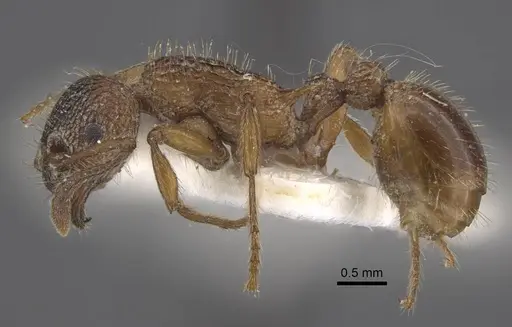
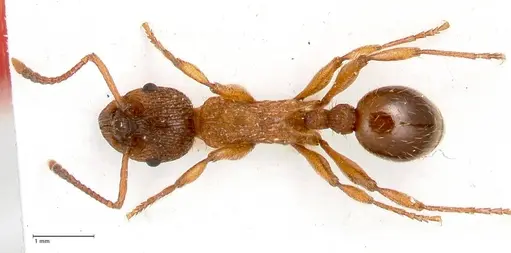
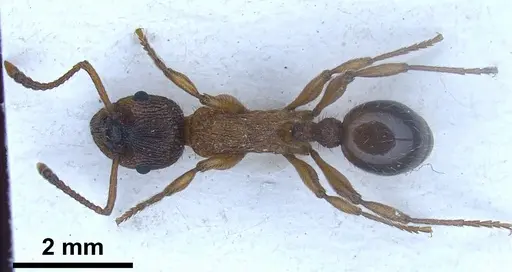
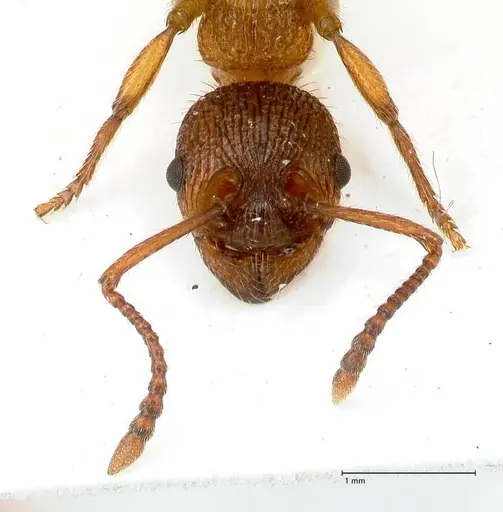
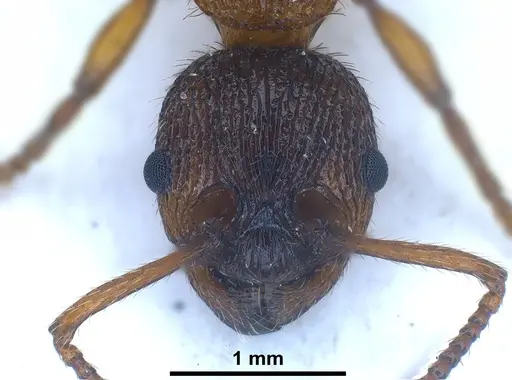
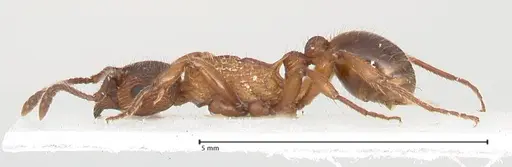
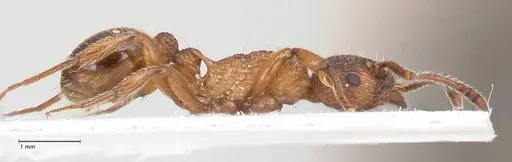
Myrmica pelops is a small, robust ant species endemic to the mountains of the Peloponnese region in Greece. Workers are characterized by their strong sculptural features, including pronounced longitudinal rugae on the head and mesosoma, and distinctive block-shaped petioles with short anterior peduncles. They have relatively long, acute spines and a uniquely structured scape that differs from related species like Myrmica schencki and Myrmica ravasinii. This species belongs to the Myrmica schencki group and was only described in 2003,making it one of the more recently documented European ants.
What makes M. pelops particularly interesting is its extreme rarity and specialized habitat preferences. All known specimens have been collected from very light, devastated coniferous forests in mountainous areas at elevations between 1100-2200 meters. This suggests it is a xerophilous (dry-loving) species that has adapted to specific microhabitats in the Greek mountains. The fact that queens and males remain undescribed in scientific literature adds an air of mystery to this species, making it a truly unique find for antkeepers interested in rare European species [1][2].
Quick Summary
- Difficulty: Medium
- Origin & Habitat: Endemic to the Peloponnese region of Greece, specifically found in mountainous coniferous forests at 1100-2200m elevation in the Taygetos (Mt. Profitis Ilias), Chelmos, and Kyllini mountain ranges [1][3]. The species prefers very light, devastated coniferous forest habitats, indicating it thrives in dry, relatively open forest conditions.
- Colony Type: Unknown, queens and males have not been described in scientific literature. Based on typical Myrmica patterns, likely single-queen (monogyne) colonies, but this remains unconfirmed.
- Size & Growth:
- Queen: Unknown, queens have not been described
- Worker: Workers measure approximately 4.5-5.5mm based on the schencki group morphology
- Colony: Unknown, no colony size data available. Based on related Myrmica species, likely reaches several hundred workers.
- Growth: Unknown, estimated as moderate based on genus patterns
- Development: 6-10 weeks estimated based on typical Myrmica development at optimal temperature (Direct development data unavailable for this species. Related Myrmica schencki-group species typically develop in 6-10 weeks at room temperature.)
- Antkeeping:
- Temperature: Keep at room temperature (18-24°C) with a slight warm side. Based on its mountain habitat in Greece, it likely tolerates cooler temperatures than tropical species. Provide a gentle thermal gradient allowing workers to choose their preferred temperature zone.
- Humidity: Keep relatively dry, this is a xerophilous species from dry coniferous forests. The nest substrate should be lightly moist but allow drying between waterings. Avoid the constantly damp conditions preferred by many Myrmica species.
- Diapause: Yes, as a Greek mountain species, it likely requires a winter dormancy period. Provide 2-3 months of reduced temperatures (5-10°C) during winter, simulating the cold mountain winters of the Peloponnese.
- Nesting: Y-tong (acrylic) nests or plaster nests work well for this species. The nest chambers should be appropriately sized for workers of approximately 5mm. Given their xerophilous nature, ensure good ventilation to prevent excessive moisture buildup. Naturalistic setups with stones or rotting wood can also mimic their natural coniferous forest habitat.
- Behavior: Myrmica ants are generally non-aggressive but will defend their nest if threatened. Workers are active foragers that will search for protein sources and sugar. They possess a sting, though the pain level is mild to moderate for most Myrmica species. Escape risk is moderate, standard test tube setups with cotton barriers are adequate, but ensure connections between outworld and nest are secure. The species is not known for being particularly escape-prone.
- Common Issues: queen unavailability, this species is extremely rare in the antkeeping hobby and queens have never been described scientifically, lack of specific care data, all recommendations are inferred from related species and habitat, potential humidity sensitivity, being xerophilous, they may be more sensitive to over-moisture than typical Myrmica, hibernation failure, improper winter dormancy may prevent colony establishment or cause colony decline, difficulty establishing wild-caught colonies, the species is very rare and potentially has specific habitat requirements
Discovery and Distribution
Myrmica pelops was only described in 2003 by Bernhard Seifert from specimens collected in the Peloponnese mountains of Greece. The type locality is Mount Taygetos (Taigetos), specifically the Lagkada Pass located about 20km east of Kalamata, at an elevation of 1100-1400 meters. Additional paratypes were collected from Mount Kyllini, Mount Chelmos, and the trail to Profitis Ilias, all in the Peloponnese region at elevations between 1100-2200 meters [3][1].
This species is considered endemic to Greece, meaning it is found nowhere else in the world. It has been recorded from several locations across the Peloponnese peninsula, making it a true Greek mountain endemic. More recent surveys have also found it on the island of Euboea in central Greece, expanding its known range slightly, though it remains one of the rarest ant species in Europe [2]. The species is named after Pelops, the mythical Greek hero who gave his name to the Peloponnesus peninsula where it was discovered.
Identification and Morphology
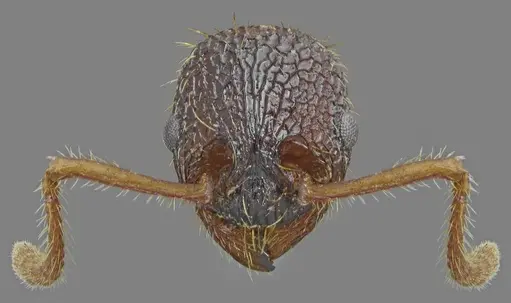
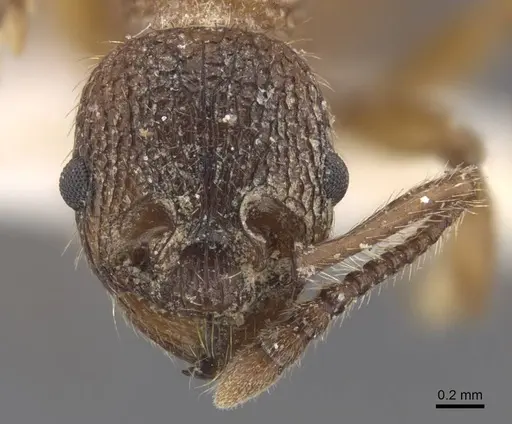
Myrmica pelops workers can be identified by several distinctive features that set them apart from other Myrmica species in the schencki group. The most notable characteristic is their very wide frons (FR/CS ratio of 0.207-0.237), which is significantly broader than the closely related Myrmica ravasinii (0.119-0.158). The scape shows a unique structure with strong excavation below the flange, more pronounced than in M. schencki but less developed than in M. ravasinii.
Workers have a head that is slightly shorter than broad (CL/CW 0.987), strong longitudinal rugae on the vertex that become semi-reticulate at the posterior, and rather long and acute spines that deviate 33-40° from the longitudinal mesosomal axis. The petiole is block-shaped and strongly rugulose-carinulate with a short anterior peduncle (PEH/PEL 0.741). The strongest rugae on the pronotum are 30-40μm high, giving this species a distinctly roughened appearance compared to smoother related species like M. schencki.
Habitat and Ecology
All specimens of Myrmica pelops have been collected from very light, devastated coniferous forests in Greek mountain regions. This habitat preference indicates the species is xerophilous (dry-loving) and adapted to open, relatively dry forest conditions rather than the dense, humid undergrowth preferred by many other Myrmica species. The elevations of 1100-2200 meters where these ants are found experience Mediterranean mountain climate with hot, dry summers and cold, wet winters [1][4].
The coniferous forest habitat suggests this species may be associated with pine or fir forests typical of Greek mountains. The "devastated" description in the original collection notes likely refers to disturbed or open-canopy forest areas. This ecological specialization may make M. pelops more sensitive to habitat changes than generalist Myrmica species, which could explain its rarity in both the wild and the antkeeping hobby.
Housing and Nesting
For antkeepers lucky enough to obtain this species, housing should reflect its xerophilous nature and natural coniferous forest habitat. Y-tong (acrylic) nests or plaster nests work well, providing chambers appropriately sized for workers around 5mm. The key is maintaining drier conditions than typical for most Myrmica, the nest substrate should be lightly moist but allow periods of drying between waterings [5].
Good ventilation is essential to prevent the constantly damp conditions that could harm this dry-adapted species. A naturalistic setup using a soil-sand mixture with small stones or pieces of rotting wood can mimic their natural habitat. If using a test tube setup for founding colonies, ensure the water reservoir is not oversized and allow the setup to dry somewhat between rehydration. Provide a temperature gradient from room temperature (18-22°C) to slightly warmer (24°C) on one side, allowing workers to regulate their own temperature.
Feeding and Diet
Like other Myrmica species, Myrmica pelops is omnivorous and will accept both protein and sugar sources. Feed protein foods such as small insects (fruit flies, small crickets, mealworms), and provide sugar water, honey, or sugar syrup as an energy source. In the wild, Myrmica ants typically forage for honeydew from aphids and small invertebrates in their forest habitat.
For a newly established colony, offer small live or freshly killed insects 2-3 times per week. Once the colony reaches 20+ workers, you can reduce feeding frequency while ensuring a constant sugar source is available. Remove uneaten prey after 24-48 hours to prevent mold. Given the species' rarity and the unknown status of queens, extra attention to nutrition may help encourage colony establishment and growth. [5]
Seasonal Care and Hibernation
As a mountain species from the Peloponnese region of Greece, Myrmica pelops requires a winter dormancy period to thrive in captivity. The Greek mountains experience significant cold during winter months, with temperatures dropping near or below freezing at higher elevations where this species lives. Provide 2-3 months of hibernation at temperatures between 5-10°C, ideally in a refrigerator or cool basement.
Reduce feeding significantly during the pre-hibernation period (October-November) and stop feeding entirely once temperatures are lowered for dormancy. Ensure the nest remains slightly moist during hibernation, a small water tube or damp substrate works, but avoid the wet conditions used during active season. Gradually warm the colony in spring (March-April) over a period of 1-2 weeks to simulate natural seasonal warming. Resume normal feeding once workers become active and the colony shows signs of increased movement.
Challenges and Rarity
Myrmica pelops presents significant challenges for antkeepers beyond basic care requirements. The most fundamental issue is that this species is extremely rare in the antkeeping hobby, queens have never been described scientifically and are essentially unavailable from commercial suppliers. Only a handful of wild-caught workers have been documented, making established colonies virtually nonexistent outside of research institutions[2].
Even if workers are obtained, the lack of specific biological data means keepers must rely heavily on inference from related Myrmica species. The xerophilous nature of this species may also make it more sensitive to husbandry errors than more adaptable Myrmica. For these reasons, M. pelops is best suited for experienced antkeepers with the resources to maintain stable conditions and potentially experiment with care parameters. The species serves more as a fascinating subject for those interested in rare European ants rather than a practical species for general antkeeping.
Frequently Asked Questions
Is Myrmica pelops available for purchase in the antkeeping hobby?
No, this species is essentially unavailable in the antkeeping hobby. Queens have never been described scientifically, and only a handful of worker specimens have ever been collected. It remains one of the rarest European ant species and is not commercially available.
What makes Myrmica pelops different from other Myrmica species?
M. pelops is distinguished by its very wide frons (the front part of the head), strong sculptural features including pronounced rugae on the head and mesosoma, and its unique scape structure with strong excavation below the flange. It belongs to the schencki group and is closely related to Myrmica ravasinii but can be identified by these morphological differences.
Where does Myrmica pelops live in the wild?
This species is endemic to the Peloponnese region of Greece, found only in mountainous coniferous forests at elevations between 1100-2200 meters in the Taygetos, Chelmos, and Kyllini mountain ranges. It has also been recently recorded on Euboea Island.
Do Myrmica pelops ants sting?
Yes, like all Myrmica species, M. pelops possesses a sting. However, Myrmica stings are generally mild to moderately painful for humans, causing a burning sensation that fades within minutes. The sting is primarily a defense mechanism rather than a hunting tool.
What temperature and humidity conditions does Myrmica pelops need?
Based on its xerophilous nature and mountain habitat, keep this species in drier conditions than typical Myrmica. Room temperature (18-24°C) with a slight warm side works well. The nest should be lightly moist but allow drying between waterings, avoid constantly damp conditions. Provide good ventilation.
Does Myrmica pelops need hibernation?
Yes, as a Greek mountain species, it requires a winter dormancy period. Provide 2-3 months at 5-10°C during winter (typically November-February in the Northern Hemisphere). This mimics the cold mountain winters of its natural habitat in the Peloponnese.
How long does it take for Myrmica pelops to develop from egg to worker?
The exact development timeline has not been documented for this species. Based on typical Myrmica development, estimate 6-10 weeks from egg to worker at optimal room temperature. This is an inference from related species, not direct observation.
Is Myrmica pelops suitable for beginners?
No, this species is not suitable for beginners. It is extremely rare with no commercially available queens, requires specific xerophilous conditions that differ from typical Myrmica care, and lacks documented care guidelines. Even experienced antkeepers face significant challenges obtaining and maintaining this species.
What does Myrmica pelops eat?
Like other Myrmica species, it is omnivorous. Offer small insects (fruit flies, small crickets, mealworms) as protein sources and sugar water, honey, or sugar syrup as an energy source. Remove uneaten prey after 24-48 hours to prevent mold.
How big do Myrmica pelops colonies get?
Colony size data is not available for this species. Based on related Myrmica species in the schencki group, colonies likely reach several hundred workers at maturity. The maximum colony size remains unknown as this species has rarely been observed in the wild.
Can I keep multiple Myrmica pelops queens together?
This is unknown. The colony structure (monogyne vs polygyne) has not been documented for this species, and queens have never been described. Without this fundamental biological information, combining queens is not recommended.
Why is Myrmica pelops so rare?
This species has an extremely limited distribution being endemic only to the mountains of the Peloponnese region in Greece. It appears to have very specific habitat requirements (dry coniferous forests at high elevation) and has only been collected a handful of times since its description in 2003.
References

This caresheet is licensed under CC BY-SA 4.0 .
Literature
Loading...Loading products...