

Myrmica jennyae
- Scientific Name
- Myrmica jennyae
- Tribe
- Myrmicini
- Subfamily
- Myrmicinae
- Author
- Elmes <i>et al.</i>, 2002
- Distribution
- Found in 1 countries
Myrmica jennyae Overview
Myrmica jennyae is an ant species of the genus Myrmica. It is primarily documented in 1 countries , including Türkiye. Detailed taxonomic data and occurrence records can be further explored via authoritative databases such as AntWeb or the Global Biodiversity Information Facility (GBIF).
Myrmica jennyae
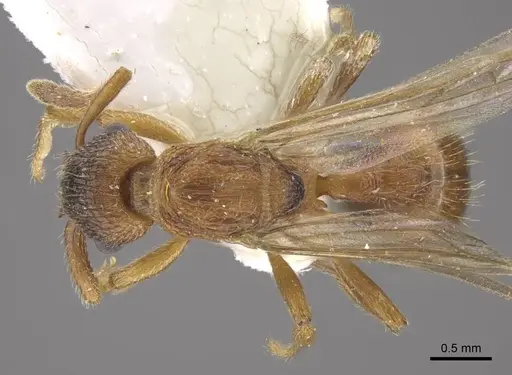
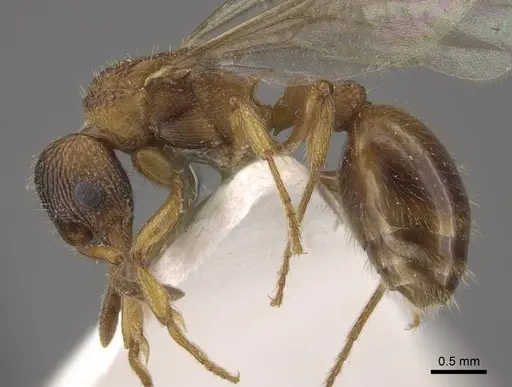
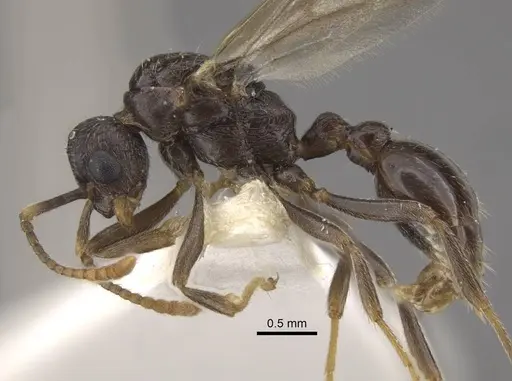
Myrmica jennyae is a small mountain-dwelling ant found in the high-altitude regions of northeastern Turkey and Dagestan, Russia [1][2][3]. Workers are brownish-red to yellowish-brown with an extremely wide space between their antennae bases, the widest of any Myrmica species, which gives them a distinctive broad-headed appearance [1]. They nest in soil, sometimes under flat stones, in high mountain meadows and forest edges at elevations ranging from around 1570 meters to 2600 meters [1].
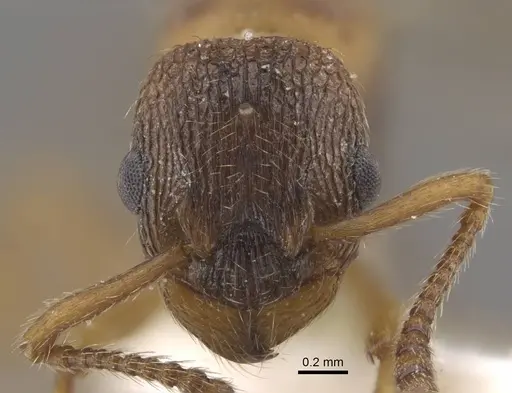
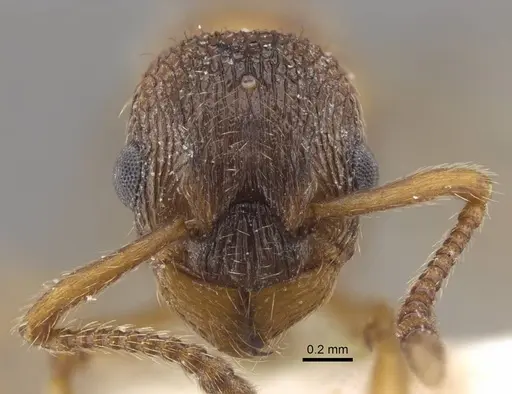
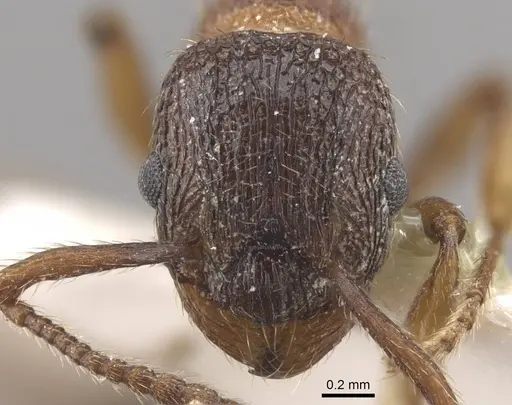
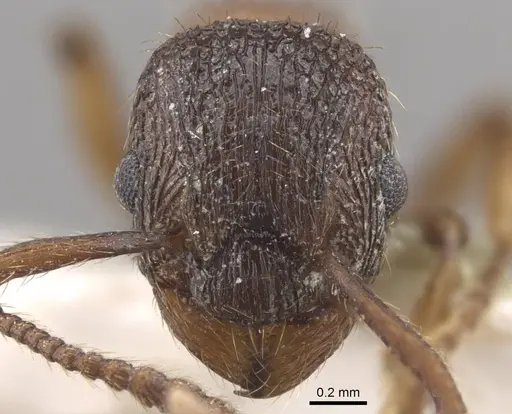
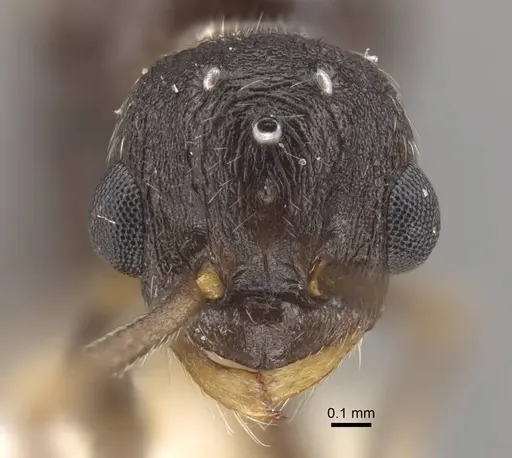
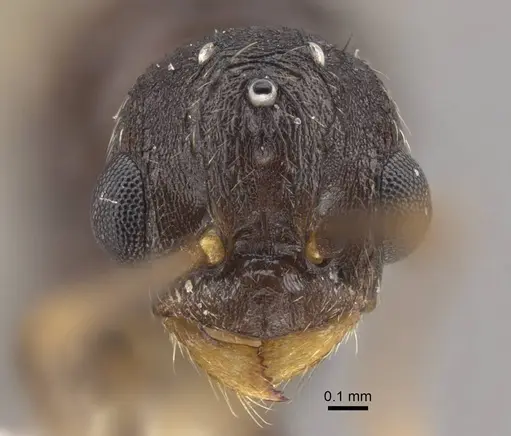
What sets this species apart is its unique head structure. While most Myrmica ants have narrower heads, M. jennyae workers and queens show an exceptionally wide frons (the front part of the head between the antennae), making them easy to identify once you know what to look for [1]. They forage slowly and stay close to the ground surface, making them somewhat hard to spot in the wild [1]. The nest entrance is just a small 3-4 millimeter hole with no visible mound above ground [1].
Quick Summary
- Difficulty: Medium
- Origin & Habitat: Northeastern Turkey (Trabzon, Artvin, Rize regions) and Dagestan, Russia, high mountain meadows, cleared fir forests, and forest edges at 1570-2600m elevation [1][2][3]
- Colony Type: Likely single-queen colonies based on typical Myrmica patterns, though unconfirmed for this species
- Size & Growth:
- Queen: Approximately 4-6 mm (estimated from typical Myrmica morphology) [1]
- Worker: Approximately 3-5 mm (estimated from typical Myrmica morphology) [1]
- Colony: Unknown, likely several hundred workers based on related species
- Growth: Moderate (estimated)
- Development: 8-12 weeks (estimated based on typical temperate Myrmica development at 20-22°C) (Timeline is unconfirmed for this species. High-altitude origin suggests development may be slower at cooler temperatures.)
- Antkeeping:
- Temperature: Cool to moderate, approximately 15-22°C. Based on their high mountain habitat, they likely prefer cooler conditions than lowland ants [1].
- Humidity: Moderate to high humidity. Keep nest substrate damp but not waterlogged, matching mountain meadow conditions [1].
- Diapause: Likely yes. As a high-altitude temperate species, they probably need a winter rest period with temperatures around 5-10°C for 3-4 months, though this is unconfirmed.
- Nesting: Soil nests with small entrances. In captivity, use small plaster or Y-tong nests with narrow passages, or naturalistic setups with soil and flat stones [1].
- Behavior: Slow-moving, cryptic foragers that stay close to the ground surface [1]. They possess a functional stinger (typical for Myrmica) but are not aggressive and pose little threat to humans. Their small size means escape prevention requires fine mesh barriers.
- Common Issues: overheating is a major risk because they come from cool high-altitude habitats and may not tolerate room temperature above 25°C., small nest entrance size (3-4mm) means they need tight-fitting nest designs, large open spaces may stress them., limited husbandry data means exact care requirements are uncertain, making them risky for beginners despite their manageable size., wild-caught colonies from high altitudes may carry parasites or fail to adapt to captive conditions.
Nest Preferences and Setup
In nature, Myrmica jennyae builds nests in soil, sometimes under flat stones, with entrances just 3-4 millimeters wide and no visible above-ground structure [1]. This means you should provide small, enclosed spaces rather than open areas.
For captive housing, use a small plaster nest or Y-tong (autoclaved aerated concrete) nest with narrow chambers and passages scaled to their size. A naturalistic setup with a soil-filled container and flat stones works well too. Avoid tall, open spaces that might stress these cryptic ants. The outworld should have a soil or sand substrate since they forage close to the ground surface and move slowly [1].
Because of their small size and slow movement, they are not escape artists in the traditional sense, but their tiny bodies can fit through surprisingly small gaps. Use fine mesh (under 1mm) for ventilation and ensure lids fit tightly.
Temperature and Seasonal Care
Myrmica jennyae lives at high elevations (1570-2600 meters) in the mountains of Turkey and Dagestan [1]. At these altitudes, temperatures stay relatively cool even in summer. You should keep them at 15-22°C, avoiding temperatures above 25°C which may cause stress or death.
As a temperate high-altitude species, they likely require a winter rest period (diapause). Cool them to around 5-10°C for 3-4 months during winter, though the exact timing is unconfirmed. Watch for reduced activity as a sign they are ready for dormancy.
Use a heating cable on one side of the nest only if your room is particularly cold (below 15°C), and always provide a temperature gradient so they can choose their preferred spot. Keep the heating element on top of the nest rather than underneath to prevent condensation issues.
Feeding and Diet
While specific diet studies are lacking for M. jennyae, Myrmica ants are generally opportunistic predators and scavengers. Offer small live prey such as fruit flies, springtails, or tiny cricket nymphs. They will also accept dead insects.
Provide sugar sources such as honey water or sugar water in small drops. Place liquid food on cotton or wax paper to prevent drowning. Because they forage slowly and close to the ground, place food directly on the substrate rather than in elevated dishes.
Feed small amounts twice weekly, removing uneaten food to prevent mold. During the founding stage (if keeping a single queen), she likely will not need food until her first workers hatch if she is claustral, though this is unconfirmed for this species.
Identification and Similar Species
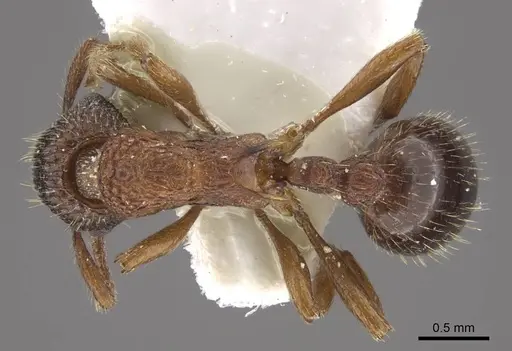
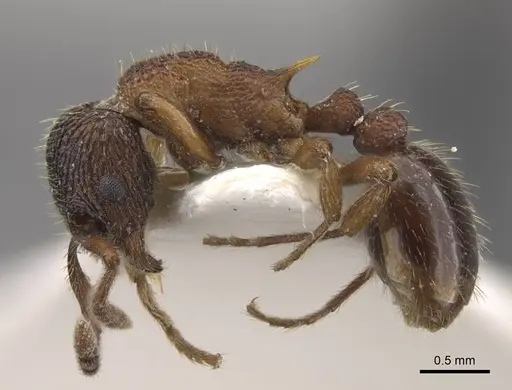
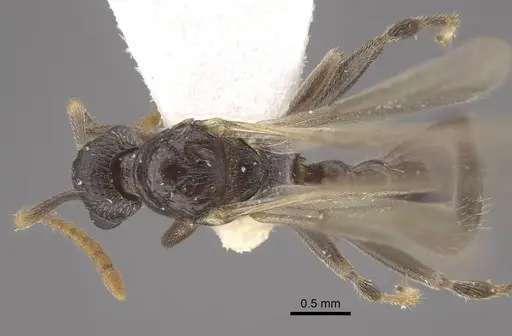
Myrmica jennyae is instantly recognizable by its extremely wide frons, the space between the antennae bases is the widest of any Myrmica species (frons index greater than 0.50) [1]. Workers are brownish-red to yellowish-brown, while queens and males are darker, appearing blackish-brown to black [1].
They resemble species in the scabrinodis group (like Myrmica rugulosa or Myrmica gallienii) due to their wide heads, but the extreme width of the frons separates them clearly [1]. The antennae are strongly curved at the base but lack any angle, lobe, or tooth [1].
If you collect these in the field from their known range (NE Turkey or Dagestan) at high altitude, and notice the unusually broad head on small reddish workers, you likely have M. jennyae.
Behavior and Temperament
These ants move relatively slowly and forage close to the ground surface, making them less noticeable than faster-moving species [1]. They are not aggressive and will likely flee rather than fight when disturbed.
Like other Myrmica, they possess a functional stinger (they are in the stinging ant tribe Myrmicini), but they are small and not dangerous to humans. Stings may cause minor irritation similar to a mosquito bite.
Their slow movement means they are easy to observe, but also means they take time to find food. Do not mistake their sluggishness for illness, this is their normal behavior.
Frequently Asked Questions
Can I keep Myrmica jennyae in a test tube?
Yes, a standard test tube setup works well for founding colonies. Use a small test tube (10-12mm diameter) with a water reservoir blocked by cotton. The queen will likely seal herself in (claustral founding) and raise her first workers on stored body fat, though founding behavior is unconfirmed for this species. Move them to a small formicarium once you have 10-20 workers.
Do Myrmica jennyae need hibernation?
Likely yes. As a high-altitude species from cool mountain regions of Turkey and Dagestan, they probably require a winter rest period (diapause) at 5-10°C for 3-4 months [1]. Watch for reduced activity in autumn as a cue to begin cooling them gradually.
How long until Myrmica jennyae get their first workers?
The egg-to-worker timeline is unconfirmed for this species. Based on typical Myrmica development patterns at 20-22°C, expect approximately 8-12 weeks. Development may be slower at the cooler temperatures (15-18°C) these high-altitude ants may prefer.
Can I keep multiple Myrmica jennyae queens together?
Not recommended. While the exact colony structure is unconfirmed, most Myrmica species are monogyne (single-queen). Combining multiple unrelated queens usually leads to fighting and death. If you want a larger colony, start with one queen and let the colony grow naturally.
Do Myrmica jennyae ants sting?
Yes, they can sting. Myrmica jennyae belongs to the tribe Myrmicini, which possesses functional stingers. However, they are small ants and not aggressive. Stings are minor and comparable to a mosquito bite, posing little danger to humans.
What do Myrmica jennyae eat?
They are likely generalist predators and scavengers like other Myrmica. Feed them small live prey such as fruit flies, springtails, or tiny cricket pieces, plus sugar water or honey water. Place food directly on the substrate since they forage close to the ground [1].
Are Myrmica jennyae good for beginners?
Probably not ideal for complete beginners. While they are small and manageable, they come from cool high-altitude habitats and likely require careful temperature management and winter hibernation [1]. The limited available husbandry data also makes them challenging for first-time keepers.
Why are my Myrmica jennyae dying?
The most likely cause is overheating. These ants come from cool mountain meadows at 1500-2600 meters elevation and may not survive temperatures above 25°C [1]. Other common issues include too-dry conditions (they need moderate humidity) or disturbance during the founding stage. If workers are dying outside the nest, this is normal behavior for sick ants leaving to protect the colony.
References

This caresheet is licensed under CC BY-SA 4.0 .
Literature
Loading...Loading products...