

Myrmica caucasicola
- Scientific Name
- Myrmica caucasicola
- Tribe
- Myrmicini
- Subfamily
- Myrmicinae
- Author
- Arnol'di, 1934
- Distribution
- Found in 1 countries
Myrmica caucasicola Overview
Myrmica caucasicola is an ant species of the genus Myrmica. It is primarily documented in 1 countries , including Türkiye. Detailed taxonomic data and occurrence records can be further explored via authoritative databases such as AntWeb or the Global Biodiversity Information Facility (GBIF).
Myrmica caucasicola
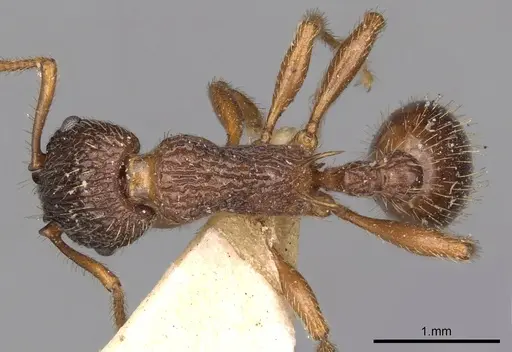
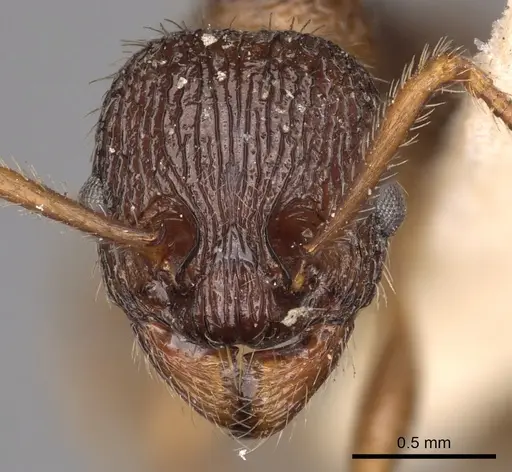
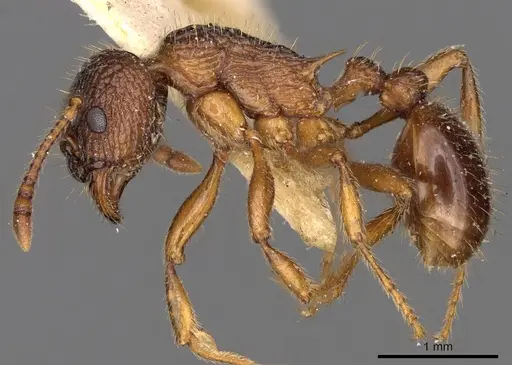
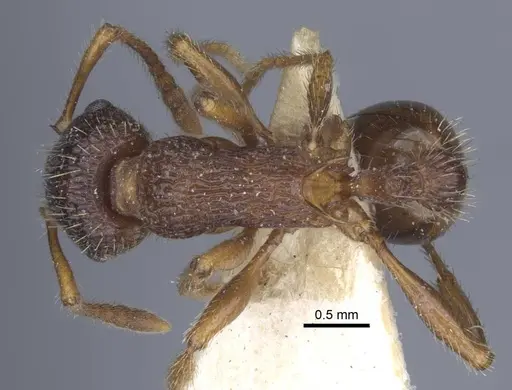
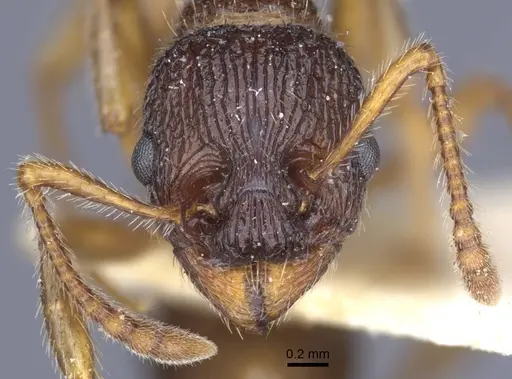
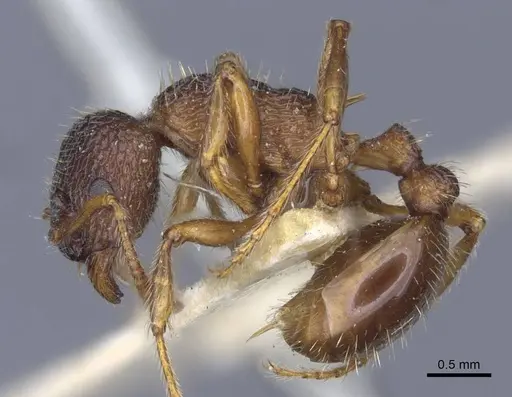
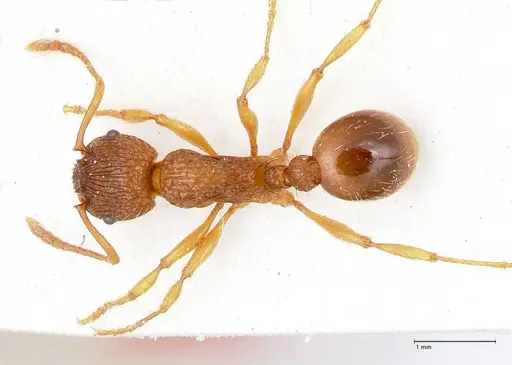
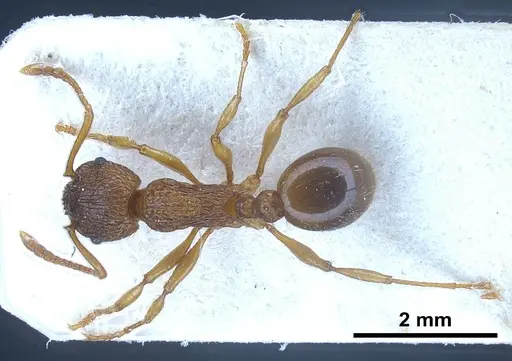
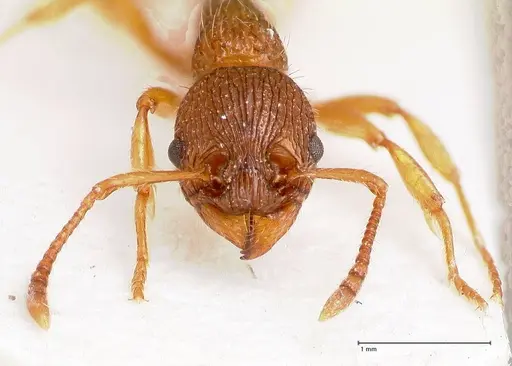
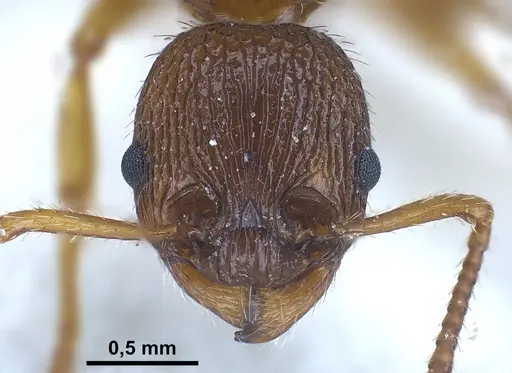
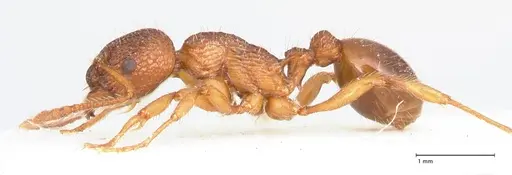
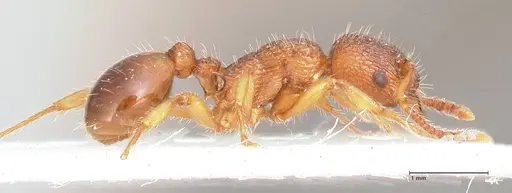
Myrmica caucasicola is a reddish-brown ant species belonging to the Myrmica schencki group, native to the Caucasus region. Workers measure around 4-6mm and feature the characteristic red coloration typical of Myrmica ants, with relatively long body hairs. This species closely resembles Myrmica schencki but can be distinguished by its wider frons and notably smaller lobe at the scape bend. Males have distinctive very long erect hairs on their tibiae and tarsi, a feature shared with the similar Myrmica ravasinii. The species was originally described as a subspecies of M. schencki in 1934 before being elevated to full species status in 1994 [1].
This ant inhabits dry mountain forests at elevations between 700-1600 meters, making it a temperate species adapted to cooler, mountainous conditions. The Caucasus region experiences distinct seasons, so these ants have evolved to require a winter hibernation period. They are ground-nesting ants that prefer well-drained soils in forested areas [1][2].
Quick Summary
- Difficulty: Medium
- Origin & Habitat: Caucasus region, Armenia, Azerbaijan, Georgia, and Turkey. Inhabits dry mountain forests at altitudes of 700-1600 meters [1][2][3].
- Colony Type: Monogyne, single queen colonies. This follows the typical Myrmica pattern of one functional queen per colony [1].
- Colony: Monogyne
- Founding: Claustral
- Size & Growth:
- Queen: Approximately 6-7mm based on genus typical size [1].
- Worker: Approximately 4-6mm [1].
- Colony: Unknown for this specific species, but Myrmica colonies typically reach several hundred to a few thousand workers [1].
- Growth: Moderate, typical for temperate Myrmica species [1].
- Development: Estimated 6-10 weeks based on typical Myrmica development at optimal temperatures [1]. (Development is temperature-dependent, cooler temperatures will slow development significantly)
- Antkeeping:
- Temperature: Keep nest area at 20-24°C during active season. Provide a temperature gradient so ants can self-regulate. Room temperature in the low 20s°C is typically suitable for this temperate species [1].
- Humidity: Moderate humidity requirements. Keep nest substrate lightly moist but not waterlogged. These ants prefer well-drained conditions matching their dry mountain forest habitat [1].
- Diapause: Yes, requires winter hibernation. Keep colony at 5-10°C for 3-4 months during winter (roughly October to March in the Northern Hemisphere). This is essential for colony health and reproduction [1].
- Nesting: Ground-nesting species that prefers soil nests in forested areas. In captivity, standard test tubes, Y-tong nests, or plaster nests work well. Provide a moisture gradient within the nest [1].
- Behavior: Workers are moderately active and typically non-aggressive toward keepers. Like most Myrmica species, they have a functional stinger but rarely use it unless directly threatened. They are foragers that collect protein (insects) and sugar sources (honeydew, sugar water). Workers are medium-sized and can climb well, but escape prevention is standard, they are not particularly strong climbers compared to some genera. They show typical Myrmica behavior of maintaining clear trails to food sources [1].
- Common Issues: hibernation failure, colonies that don't receive proper winter rest often decline and stop producing brood, humidity mismanagement, too wet causes fungal problems, too dry causes brood death, overheating, keep below 25°C, they are adapted to cooler mountain conditions, slow growth can frustrate beginners, Myrmica develop more slowly than tropical species, wild-caught colonies may contain parasites that can devastate captive colonies
Nest Preferences and Housing
Myrmica caucasicola is a ground-nesting species that naturally excavates nests in soil within dry mountain forests. In captivity, they adapt well to various nest types including test tubes, Y-tong (acrylic) nests, and plaster nests. The key is providing a moisture gradient, a humid chamber for brood and a drier area for the queen. For test tube setups, use a standard water reservoir setup with cotton separation. The colony will need space to expand as it grows, so consider providing additional tubes or a larger formicarium as the colony reaches several hundred workers. These ants do not require elaborate naturalistic setups, but they do appreciate some substrate depth if using a naturalistic terrarium [1].
Feeding and Diet
Like other Myrmica species, Myrmica caucasicola is omnivorous with a preference for protein-rich foods. In captivity, offer small insects such as fruit flies, small crickets, mealworms, or other appropriately sized arthropods. They will also readily accept sugar water, honey, or diluted honey as an energy source. Feed protein roughly twice weekly, and keep a sugar source available at all times. Remove uneaten prey after 24-48 hours to prevent mold. In the wild, they likely consume honeydew from aphids and other small invertebrates found in their forest habitat. Fresh killed insects are generally more readily accepted than live ones, especially for smaller colonies [1].
Temperature and Seasonal Care
This is a temperate species requiring distinct seasonal care. During the active season (spring through fall), maintain nest temperatures between 20-24°C. They can tolerate brief periods outside this range but prolonged exposure to temperatures above 25°C should be avoided. As autumn approaches and daylight decreases, begin reducing temperatures gradually to prepare for hibernation. Winter hibernation is essential, keep the colony at 5-10°C (a refrigerator works well) for approximately 3-4 months. During hibernation, the colony will be largely inactive. Do not feed during hibernation but ensure the water reservoir in test tube setups does not dry out. Resume normal temperatures in spring to trigger renewed activity and brood production [1].
Behavior and Temperament
Myrmica caucasicola workers are moderately docile and primarily focused on foraging and brood care. They maintain clear pheromone trails to food sources and will quickly recruit nestmates when a good food source is discovered. While they possess a stinger, they rarely sting unless physically restrained or the nest is severely disturbed. Their sting is not medically significant for healthy adults but can cause brief discomfort. Workers are medium-sized and capable climbers, though standard escape prevention measures (fluon on rim edges, tight-fitting lids) should still be used. The colony will establish a clear division of labor with workers specializing in foraging, brood care, and nest maintenance. Queens remain primarily in the nest once founding is complete [1].
Frequently Asked Questions
How long does it take for Myrmica caucasicola to raise their first workers?
From egg to first worker (nanitic), expect approximately 6-10 weeks at optimal temperatures around 22°C. This is typical for Myrmica species and can take longer if temperatures are cooler. The queen will remain sealed in her founding chamber until the first workers emerge [1].
Do Myrmica caucasicola ants need hibernation?
Yes, absolutely. As a temperate species from the Caucasus mountain region, they require a winter rest period of 3-4 months at 5-10°C. Without proper hibernation, colonies will weaken and stop producing new brood. This is essential for their health and reproductive cycle [1].
What do Myrmica caucasicola ants eat?
They are omnivorous but prefer protein. Feed small insects like fruit flies, small crickets, or mealworms twice weekly. Also provide a constant sugar source such as sugar water, honey, or diluted honey. Remove uneaten food after 24-48 hours to prevent mold [1].
Can I keep multiple Myrmica caucasicola queens together?
No, this species is monogyne, they form single-queen colonies. Unlike some Myrmica species that can be polygynous, M. caucasicola typically has only one functional queen per colony. Combining unrelated queens will likely result in fighting [1].
Are Myrmica caucasicola ants good for beginners?
They are moderate difficulty. While not as challenging as some exotic species, they do require proper hibernation setup and patience during the slower growth phases. Beginners should be prepared for the 3-4 month winter dormancy period and the relatively slow development compared to tropical ants [1].
What temperature should I keep Myrmica caucasicola at?
Keep the nest at 20-24°C during the active season. They prefer cooler conditions than many tropical ants and should be kept below 25°C. A temperature gradient allowing self-regulation is ideal. Room temperature in the low-to-mid 20s°C is typically suitable [1].
How big do Myrmica caucasicola colonies get?
While exact maximum size is unknown for this specific species, Myrmica colonies typically reach several hundred to a few thousand workers. Growth is moderate, expect the colony to take several years to reach its maximum size [1].
Do Myrmica caucasicola ants sting?
Yes, they possess a stinger but rarely use it. The sting is not medically significant for healthy adults and causes only brief discomfort. They are not aggressive toward keepers and will typically flee rather than sting when disturbed [1].
When should I move my colony to a formicarium?
For Myrmica caucasicola, it's best to keep them in a test tube setup until the colony reaches at least 20-30 workers. They can remain in test tubes for quite some time as Myrmica prefer snugger spaces than some genera. Only move to a larger formicarium when the test tube becomes crowded or the water reservoir needs frequent refilling [1].
Why is my Myrmica caucasicola colony not growing?
Common causes include: temperatures too low (below 18°C slows development significantly), improper humidity (too dry or too wet), lack of proper hibernation, or insufficient protein in diet. Also ensure the queen is still alive and laying eggs. If the colony is otherwise healthy, remember that Myrmica growth is naturally slower than tropical species [1].
References

This caresheet is licensed under CC BY-SA 4.0 .
Literature
Loading...Loading products...