

Myrmica bactriana
- Scientific Name
- Myrmica bactriana
- Tribe
- Myrmicini
- Subfamily
- Myrmicinae
- Author
- Ruzsky, 1915
- Distribution
- Found in 1 countries
Myrmica bactriana Overview
Myrmica bactriana is an ant species of the genus Myrmica. It is primarily documented in 1 countries , including China. Detailed taxonomic data and occurrence records can be further explored via authoritative databases such as AntWeb or the Global Biodiversity Information Facility (GBIF).
Myrmica bactriana
Myrmica bactriana is a small to medium-sized ant species belonging to the Myrmica tibetana species group. Workers measure approximately 4.5-5mm and have a reddish to reddish-brown body with somewhat lighter appendages. The head is distinctly longer than broad with subparallel sides, and the scape (the first segment of the antenna) is shorter than the head width. This species is distinguished from its close relative Myrmica bactriana by its distinctly longer scape with more abundant suberect hairs. M. bactriana inhabits high-altitude grasslands and subalpine meadows in the Tibetan Plateau region at elevations between 3500-3800 meters, with documented occurrences in Tibet, Nepal, and Sichuan Province, China. The queens of this species remain undescribed in scientific literature, making captive breeding more challenging than for better-studied Myrmica species.
Quick Summary
- Difficulty: Hard
- Origin & Habitat: Tibetan Plateau region (Tibet/China, Nepal) at high altitudes 3500-3800m in grasslands and subalpine meadows [1][2][3]
- Colony Type: Colony structure unconfirmed, queens have not been described in scientific literature
- Size & Growth:
- Queen: Unknown, queens have not been scientifically described [1]
- Worker: Approximately 4.5-5mm based on cephalic size measurements (CS 920 ± 37 µm) [1]
- Colony: Unknown, no colony size data available
- Growth: Unknown
- Development: Unknown, estimate 8-12 weeks based on typical Myrmica genus patterns at optimal temperature (No direct development data exists for this species. Estimates based on related Myrmica species from similar high-altitude habitats.)
- Antkeeping:
- Temperature: Cool to cold conditions, aim for 15-22°C, reflecting their high-altitude origin. Provide a temperature gradient allowing workers to self-regulate. Avoid overheating.
- Humidity: Moderate to high humidity, they naturally inhabit damp subalpine meadows. Keep nest substrate consistently moist but not waterlogged. Provide a water tube for drinking access.
- Diapause: Yes, high-altitude species require a winter dormancy period. Provide 3-4 months of cold conditions around 5-10°C during winter.
- Nesting: Likely prefers soil or rotting wood nests based on field observations showing nesting under stones, in rotten wood, and under rotten wood in related populations [4]. Use a naturalistic setup with soil substrate or a Y-tong/plaster nest with moisture retention.
- Behavior: Workers are foragers that search for food on plants, ground surfaces, under stones, and in decaying wood [4]. They likely have a typical Myrmica temperament, moderately aggressive when disturbed, capable of stinging. Escape risk is moderate due to their small size. Workers are active during warmer months in their native habitat and would be most active in captivity during spring through fall.
- Common Issues: queen unavailability, queens have never been scientifically described, making wild-caught queen acquisition nearly impossible, no development data, without documented queen caste, establishing a colony from scratch is extremely difficult, high-altitude requirements, requires cool temperatures and proper diapause that may be challenging to provide year-round, escape prevention, small worker size means standard barriers may need reinforcement, slow colony growth, even if colonies are established, growth will likely be slow due to high-altitude life history
Natural History and Distribution
Myrmica bactriana is a high-altitude ant species native to the Tibetan Plateau region. It has been documented in Tibet (China), Nepal, and Sichuan Province at elevations ranging from approximately 1770m to over 3900m [1][2][3]. The type locality is in the upper course of the Yangtse River at 3850m elevation near Darindo, Tibet. In Nepal, specimens have been collected from Ringmo-Junbesi at 2800m, Yaral (Pangboche) at 3900m, and Tate at 2900m in the Solukhumbu district, as well as Hoxe in Sindhupalchok district at 1000-2000m [2][3]. This species inhabits grasslands and subalpine meadows, almost certainly nesting in soil. Field studies in Sichuan Province show they nest in rotten wood, under rotten wood, and under stones, while foragers are found on plants, on ground surfaces, under rotten wood, and under stones [4]. The species is sympatric with M. tibetana and M. gebaueri on the Tibetan Plateau.
Identification and Distinction
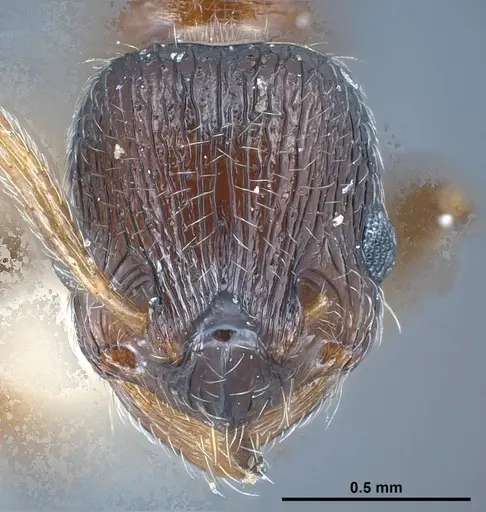
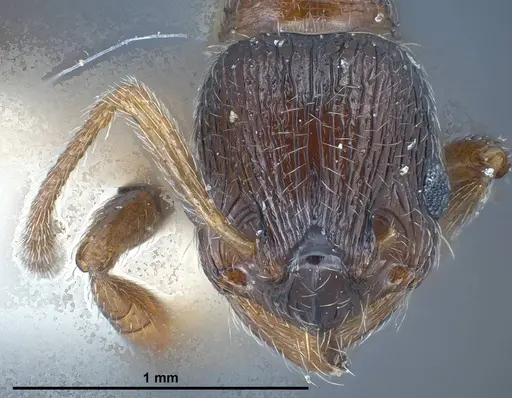
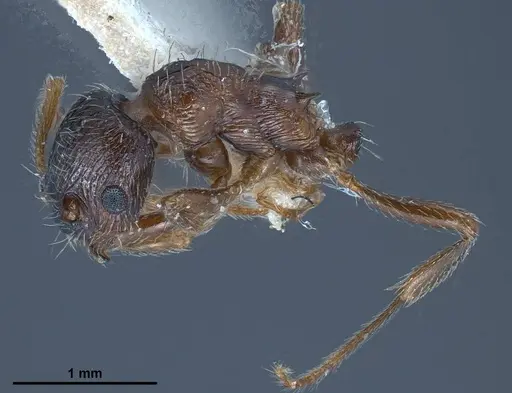
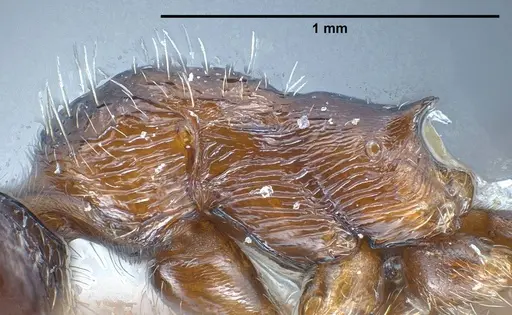
Myrmica bactriana is a member of the Myrmica smythiesiii species group and is very similar to Myrmica bactriana. The primary distinguishing feature is the scape length, M. bactriana has a distinctly longer scape (SI2 ~0.93) compared to M. ruzskyana (SI ~0.91), with more abundant suberect hairs [1]. Some researchers believe these may represent different populations of the same species rather than distinct species. Workers have a reddish to reddish-brown body with somewhat lighter appendages. The head is distinctly longer than broad with subparallel sides and a straight occipital margin. The propodeal spines are short, straight, and directed backward at about 45°. The body surface appears shiny with fine longitudinal rugosity on the frons and alitrunk.
Housing and Nesting
Based on field observations of nesting behavior in related populations, Myrmica bactriana likely prefers nests in soil, rotting wood, or under stones [4]. In captivity, a naturalistic setup with a soil substrate works well, or you can use a Y-tong (acrylic) nest or plaster nest with moisture-retaining properties. The nest should have chambers scaled appropriately for workers approximately 4.5-5mm in size. Provide a water tube or moisture source to maintain adequate humidity. Since this is a high-altitude species, avoid overheating, room temperature or slightly below is appropriate. The outworld should allow for foraging, and you can include plants, stones, or other enrichment items.
Temperature and Seasonal Care
As a high-altitude species from the Tibetan Plateau, Myrmica bactriana requires cool to cold conditions. Aim for a temperature range of 15-22°C in the nest area, with a gradient allowing workers to self-regulate their temperature preference. During the active season (spring through fall), maintain temperatures in the upper end of this range. This species requires a winter dormancy period (diapause) of 3-4 months at cold temperatures around 5-10°C. This mimics the harsh Tibetan winter and is essential for colony health and longevity. Do not attempt to keep this species active year-round without a proper dormancy period. [1]
Feeding and Diet
Like other Myrmica species, M. bactriana likely has an omnivorous diet consisting of honeydew, small insects, and other protein sources. In captivity, offer sugar water or honey as an energy source, along with small live or frozen insects (fruit flies, small mealworms, crickets) for protein. Feed protein sources 1-2 times per week, and keep sugar water available continuously. Remove uneaten prey after 24-48 hours to prevent mold. The specific dietary preferences of this species have not been studied, so observe your colony's acceptance of various foods.
Challenges in Captive Care
The primary challenge in keeping Myrmica bactriana is the complete absence of described queens in scientific literature [1]. Without documented queen morphology, it is nearly impossible to identify and collect founding queens from the wild. This makes establishing colonies from scratch extremely difficult compared to other Myrmica species. Additionally, there is no data on colony size, development timeline, or colony structure for this species. The high-altitude origin means they require cool temperatures year-round and a proper winter dormancy period. These specific requirements make this species suitable only for experienced antkeepers who can provide the precise conditions needed.
Frequently Asked Questions
Can I keep Myrmica bactriana in a test tube?
Yes, a test tube setup can work for founding colonies, but you must maintain proper humidity and provide a temperature gradient. However, since queens have never been scientifically described, obtaining a founding queen is essentially impossible.
How long does it take for Myrmica bactriana to develop from egg to worker?
This is unknown, no development data exists for this specific species. Based on typical Myrmica genus patterns from high-altitude species, estimate 8-12 weeks at optimal temperature, but this is purely speculative.
Are Myrmica bactriana ants good for beginners?
No. This species is not suitable for beginners. Queens have never been scientifically described, making colony establishment nearly impossible. Additionally, they require precise high-altitude conditions including cool temperatures and proper winter dormancy that are difficult to provide.
Do Myrmica bactriana ants sting?
Yes, Myrmica species are capable of stinging. While their sting is not dangerous to healthy humans, it can be painful. Workers will use their sting defensively when the nest is disturbed.
What temperature do Myrmica bactriana ants need?
Keep them cool, aim for 15-22°C with a temperature gradient. They come from high altitudes (3500-3800m) on the Tibetan Plateau and are adapted to cold conditions. Avoid overheating.
Do Myrmica bactriana ants need hibernation?
Yes, they require a winter dormancy period of 3-4 months at cold temperatures around 5-10°C. This mimics their natural high-altitude environment and is essential for colony health.
Can I keep multiple queens together?
Unknown, colony structure has not been studied for this species. Myrmica species are typically monogyne (single queen), but this has not been confirmed for M. bactriana due to the lack of queen descriptions.
Where does Myrmica bactriana live in the wild?
This species is found in the Tibetan Plateau region at high altitudes (3500-3800m) in grasslands and subalpine meadows. It has been documented in Tibet (China), Nepal, and Sichuan Province. They nest in soil, rotting wood, or under stones.
Why are Myrmica bactriana ants so difficult to keep?
The main challenge is that queens have never been scientifically described, so no one knows what they look like or how to identify them for collection. Additionally, there is no research data on their captive care requirements, colony size, or development timeline. Their high-altitude origin also means they need specific cool temperatures and winter dormancy that are challenging to provide.
What do Myrmica bactriana ants eat?
Like other Myrmica species, they likely eat honeydew, small insects, and other protein sources. In captivity, offer sugar water or honey for energy and small insects (fruit flies, mealworms) for protein. Feed protein 1-2 times per week with sugar water available continuously.
References

This caresheet is licensed under CC BY-SA 4.0 .
ANTWEB1008449
View on AntWeb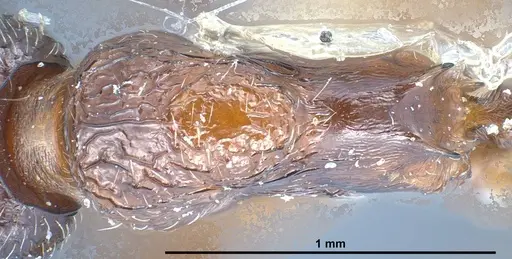
Literature
Loading...Loading products...