

Myrmecocystus intonsus
- Scientific Name
- Myrmecocystus intonsus
- Tribe
- Lasiini
- Subfamily
- Formicinae
- Author
- Snelling, 1976
- Distribution
- Found in 2 countries
Myrmecocystus intonsus Overview
Myrmecocystus intonsus is an ant species of the genus Myrmecocystus. It is primarily documented in 2 countries , including Mexico, United States of America. Detailed taxonomic data and occurrence records can be further explored via authoritative databases such as AntWeb or the Global Biodiversity Information Facility (GBIF).
Myrmecocystus intonsus
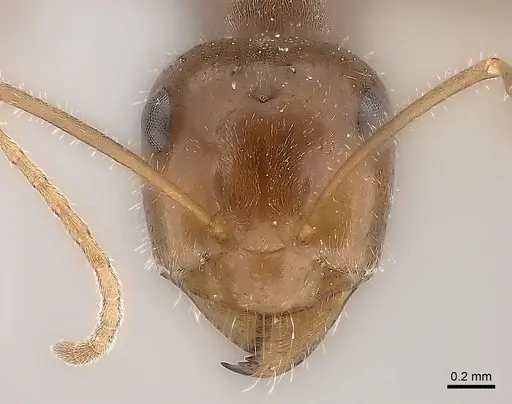
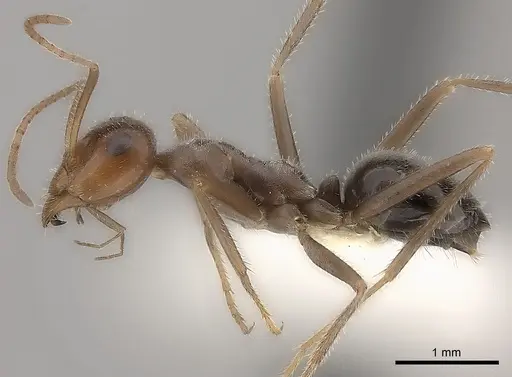
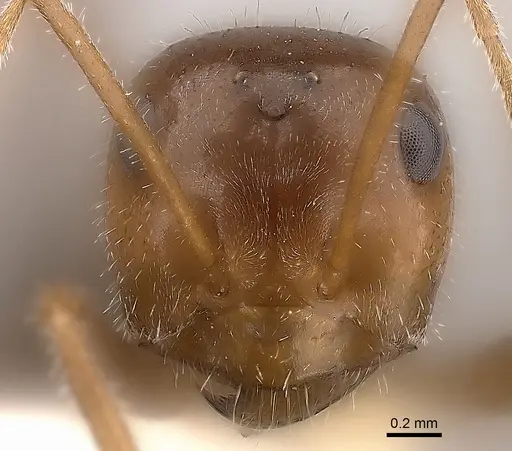
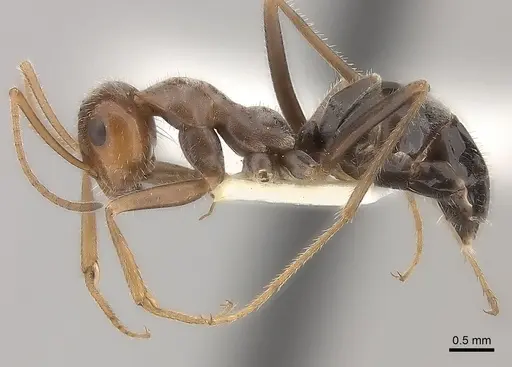
Myrmecocystus intonsus is a small, abundantly hairy honeypot ant endemic to southern Baja California Sur, Mexico. Workers measure 1.0-1.7mm in head length with a distinctive appearance featuring ten or more fully erect hairs on the malar area (the area below the eye), scape, femora, and tibiae. The head of major workers is strongly orbiculate (round), and the gaster is blackish while the head and alitrunk are dark brownish ferruginous with yellowish mandibles. This species appears to be a depauperate (reduced) derivative of Myrmecocystus placodops and is known only from worker castes, no queen has ever been described. It belongs to the melliger species group within the subgenus Endiodioctes [1].
What makes this species particularly interesting is its extreme rarity and limited distribution, it's only known from a handful of specimens collected in the arid landscapes of southern Baja California Sur. The abundant erect hairs (from which the species gets its name 'intonsus' meaning unshaved) distinguish it from related species. Workers are active foragers during the hottest part of the day, with observations at midday when temperatures exceeded 90°F, making them well-adapted to desert conditions [1].
Quick Summary
- Difficulty: Expert
- Origin & Habitat: Endemic to southern Baja California Sur, Mexico. Nests are found in sandy soil at the edges of arroyos (dry riverbeds) in dense vegetation including cardon cactus, mesquite, and palo blanco. One nest was found in an alkali playa area with mesquite and cholla cactus. Workers foraged actively during hot midday temperatures in early October [1][2][3].
- Colony Type: Unknown, only workers have been collected, no queen or colony structure has ever been documented. Based on related Myrmecocystus species, likely single-queen colonies, but this is unconfirmed.
- Size & Growth:
- Queen: Unknown, no queen has been described [1]
- Worker: HL 1.00-1.70mm, HW 0.86-1.63mm, WL 1.3-2.2mm [1]
- Colony: Unknown, no colony data exists
- Growth: Unknown, no development data exists
- Development: Unknown, no direct observations of colony development (No colony has ever been established in captivity. Development timeline cannot be estimated from available data.)
- Antkeeping:
- Temperature: Based on field observations of workers foraging at midday temperatures exceeding 90°F (32°C+), this species tolerates and likely requires warm conditions. Recommend keeping nest area at 26-30°C with a thermal gradient, but no specific optimal temperature has been determined [1].
- Humidity: Low, this is a desert species from arid Baja California. Keep nest substrate moderately dry, with a small water source available. Avoid high humidity.
- Diapause: Unknown, no data on overwintering requirements. Baja California has mild winters, so may not require true hibernation but may have reduced activity periods.
- Nesting: Natural nesting is in sandy soil, often with crateriform tumulus (volcanic-shaped mound) around entrance. In captivity, a dry, sandy substrate in a formicarium or test tube setup with minimal moisture would be appropriate. Y-tong or plaster nests with sand-filled chambers work well.
- Behavior: Workers are active foragers during the hottest part of the day, field observations show them foraging at midday when temperatures exceeded 90°F. They return to the nest with miscellaneous insect fragments, indicating they are generalist predators/scavengers. Workers were also observed collecting secretions from cholla cactus flowers. No aggression data exists, but related honeypot ants are typically not aggressive toward keepers. Escape risk is moderate, workers are small (under 2mm) but not tiny, so standard escape prevention should suffice. As desert-adapted ants, they likely have good heat tolerance but may be sensitive to cold [1].
- Common Issues: no documented captive colonies, this species has never been kept in captivity, so no established care protocols exist, no queen available, only workers have ever been collected, making captive breeding essentially impossible, extreme rarity, specimens are only known from a handful of collections in the 1960s-70s, unknown colony structure, we don't know if they're monogyne or polygyne, making colony establishment impossible, desert species may be sensitive to humidity, keeping them too wet could be fatal, no development data, even if a queen were found, no one knows how to raise the brood
Species Overview and Identification
Myrmecocystus intonsus is one of the rarest and least-known honeypot ants in the world. It was described by R.R. Snelling in 1976 based on workers collected from southern Baja California Sur, Mexico. The species name 'intonsus' means 'unshaved' in Latin, referring to the abundant erect hairs covering all body surfaces, a distinctive feature with ten or more fully erect hairs on the malar area alone. Major workers have a strongly orbiculate (perfectly round) head, which distinguishes them from related species. Workers measure 1.0-1.7mm in head length, making them relatively small within the genus. The body coloration is dark brownish ferruginous for the head and alitrunk, with yellowish mandibles and a blackish gaster. This species appears to be a reduced derivative of Myrmecocystus placodops, sharing similar head shape but differing in much smaller size and sparser pubescence on the third and fourth abdominal segments [1][4].
Distribution and Habitat
Myrmecocystus intonsus is endemic to the southern Baja California Sur peninsula in Mexico, one of the most arid regions in North America. It has only been recorded from a few locations in this region. The type series was collected from a nest in sandy soil at the edge of an arroyo in a dense stand of mixed cardon (giant cactus), mesquite, and palo blanco. Another worker was found at an alkali playa with mesquite and cholla cactus. Additional workers were observed near La Burrera and Todos Santos. All collection sites are in the southern portion of the Baja California Sur state, representing a very restricted geographic range. This makes M. intonsus one of the most geographically limited species in the genus Myrmecocystus [2][3][5][1].
Field Observations and Behavior
What we know about this species comes entirely from limited field observations. Workers were actively foraging at midday during collection events, with ambient temperatures around 70°F in March and exceeding 90°F in early October. They return to the nest carrying miscellaneous insect fragments, indicating generalist predatory or scavenging behavior. Workers were also observed visiting the flowers of a prostrate Euphorbia plant, likely collecting nectar or honeydew. One notable observation found a single worker at secretory glands on cholla cactus shortly before sunset. Nests are situated in sandy soil and are surmounted by low, regularly crateriform (volcanic-shaped) tumuli about 4.5 inches in diameter. One exceptional nest had its entrance in a clump of grass. These observations suggest this is a diurnal, heat-tolerant species adapted to foraging during the hottest parts of the day in desert conditions [1].
Why This Species Cannot Be Kept
This is perhaps the most important section for prospective antkeepers: Myrmecocystus intonsus cannot be kept in captivity because no queen has ever been discovered or described. The species is known only from a small series of worker specimens collected in the 1960s-70s. No colony has ever been observed, no queen has ever been found, and no reproductive castes (queens or males) have been documented. Without a queen, captive breeding is impossible. Even if a mated queen were to be found (which would be a significant scientific discovery), there is no established protocol for keeping this species as no one has ever successfully maintained a colony. The extreme rarity of this species, known from fewer than 200 specimens total, means that any wild collection would be both ethically questionable and scientifically valuable. For antkeepers interested in honeypot ants, consider more commonly available species like Myrmecocystus mexicanus or Myrmecocystus navajo instead [1].
Related Species and Care Speculation
While M. intonsus itself cannot be kept, understanding related species provides context. The genus Myrmecocystus (honeypot ants) is known for their remarkable ability to store liquid food in the abdomens of specialized workers called repletes. However, this behavior has not been documented in M. intonsus specifically. Related species in the melliger group typically have claustral founding (queen seals herself in and lives off stored fat), single-queen colonies, and preference for arid to semi-arid habitats. If a queen were ever discovered, care would likely mirror other Baja California honeypot ants: warm temperatures (26-32°C), low to moderate humidity, sandy nesting substrate, and feeding on sugar sources (honey water/sugar water) and protein (insects). However, these are speculative guesses based on genus-level patterns, not species-specific data. The 2024 discovery of the closely related Myrmecocystus baja from Pacific coastal dunes of Baja California shows that new Myrmecocystus species are still being found, suggesting more research is needed on this group [4][6][1].
Frequently Asked Questions
Can I keep Myrmecocystus intonsus ants?
No. This species cannot be kept because no queen has ever been discovered. Only worker ants have been collected, and no colony has ever been established in captivity. Without a queen, captive breeding is impossible.
Where does Myrmecocystus intonsus live?
This species is endemic to southern Baja California Sur, Mexico. It is one of the rarest honeypot ants, known only from a handful of specimens collected in the 1960s-70s.
What does Myrmecocystus intonsus look like?
Workers are small (1.0-1.7mm head length) with abundant erect hairs covering the body, this is how it got the name 'intonsus' meaning unshaved. Major workers have a distinctive round (orbiculate) head. The body is dark brownish ferruginous with a blackish gaster and yellowish mandibles.
How big do Myrmecocystus intonsus colonies get?
Unknown. No colony has ever been documented, so we have no data on maximum colony size. Related species typically reach several hundred to a few thousand workers.
Do Myrmecocystus intonsus ants make honeypots?
Not confirmed. While Myrmecocystus is the 'honeypot ant' genus, this behavior has not been documented specifically in M. intonsus. The species is known only from workers, and repletes (specialized workers that store liquid food) have never been observed.
What do Myrmecocystus intonsus eat?
Based on field observations, workers forage for insect fragments and were observed visiting flowers for nectar. They are likely generalist predators/scavengers like related species. Without a colony, captive feeding protocols have never been developed.
What temperature do Myrmecocystus intonsus ants need?
Field observations show workers foraging at temperatures exceeding 90°F (32°C), suggesting they are heat-tolerant desert ants. If they could be kept, warm conditions around 26-30°C would likely be appropriate, but no captive data exists.
Do Myrmecocystus intonsus queens exist?
No queen has ever been described or discovered. This is one of the most poorly known species in the genus, known only from workers collected in the 1960s-70s. The discovery of a queen would be a significant scientific event.
Are Myrmecocystus intonsus endangered?
Their conservation status has not been assessed, but their extremely limited range (only known from southern Baja California Sur) and rarity suggest they could be vulnerable. They should not be collected from the wild.
What is the closest species I can keep instead?
For honeypot ants, consider Myrmecocystus mexicanus or Myrmecocystus navajo, which are more commonly available in the antkeeping hobby. These species have established captive protocols and queens are occasionally available.
References

This caresheet is licensed under CC BY-SA 4.0 .
CASENT0217726
View on AntWeb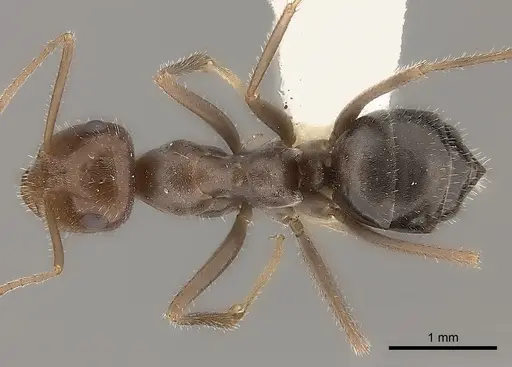
CASENT0217727
View on AntWeb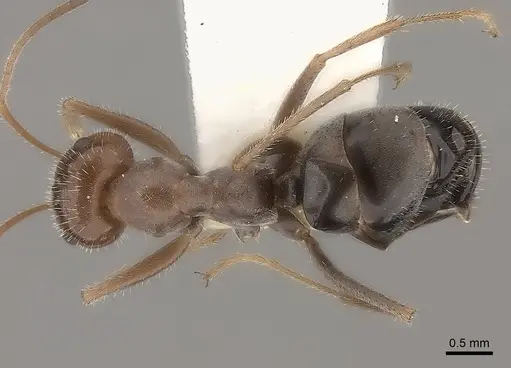
Literature
Loading...Loading products...