

Myrmecia testaceipes
- Scientific Name
- Myrmecia testaceipes
- Tribe
- Myrmeciini
- Subfamily
- Myrmeciinae
- Author
- Clark, 1943
- Distribution
- Found in 1 countries
Myrmecia testaceipes Overview
Myrmecia testaceipes is an ant species of the genus Myrmecia. It is primarily documented in 1 countries , including Australia. Detailed taxonomic data and occurrence records can be further explored via authoritative databases such as AntWeb or the Global Biodiversity Information Facility (GBIF).
Myrmecia testaceipes
Myrmecia testaceipes is a medium-sized bulldog ant native to Australia, particularly Western Australia around Albany. Workers measure around 15-20mm and feature the classic Myrmecia appearance with powerful mandibles and a potent sting. The species is identifiable by its reddish-brown legs and a postpetiole that is lighter in color than the gaster, distinguishing it from similar species like Myrmecia swalei which has blackish legs [1]. As a member of the tepperi species group, these ants are classic Australian bulldog ants known for their aggressive defense of the nest and painful sting [2].
Quick Summary
- Difficulty: Medium
- Origin & Habitat: Australia (Western Australia, particularly around Albany), found in temperate Australian habitats [1]
- Colony Type: Single-queen colonies (monogyne), typical for Myrmecia species
- Colony: Monogyne
- Founding: Claustral
- Size & Growth:
- Queen: Estimated 18-22mm based on genus patterns
- Worker: 15-20mm [1]
- Colony: Estimated several hundred workers based on genus patterns
- Growth: Moderate
- Development: Estimated 8-12 weeks based on related Myrmecia species (Development time inferred from genus-level data, actual timeline for M. testaceipes unconfirmed)
- Antkeeping:
- Temperature: Keep at 22-28°C with a thermal gradient, Australian species prefer warmth
- Humidity: Moderate humidity around 50-60%, allow substrate to dry partially between waterings
- Diapause: Yes, a winter rest period of 2-3 months at 10-15°C is recommended for temperate Australian species
- Nesting: Y-tong (AAC) nests or plaster nests work well, provide deep substrate chambers for nesting and a spacious outworld for foraging
- Behavior: Highly defensive and aggressive, will readily attack threats with their powerful sting. Workers are active foragers, hunting insects and scavenging. Excellent escape prevention is essential due to their large size and determination. They can climb smooth surfaces, so barrier methods like fluon are necessary. Their vision is excellent and they will investigate disturbances aggressively.
- Common Issues: Stings are painful and can cause allergic reactions, handle with extreme caution, Large size and aggressive temperament make them unsuitable for beginners, Escape prevention requires reliable barriers, they can climb glass and smooth surfaces, Slow colony growth requires patience, founding colonies can take months to establish, Winter diapause is essential for colony health, skipping hibernation can weaken or kill the colony
Housing and Nest Setup
Myrmecia testaceipes requires secure housing due to their large size and strong mandibles. Y-tong (AAC) nests or plaster nests with deep chambers work best, as these provide the darkness and humidity control these ants prefer. The nest should have chambers sized appropriately for the colony size, not too spacious for small colonies. A spacious outworld allows workers to hunt and forage. All connections must be secure as these determined ants will find and exploit any gap. Apply fluon or similar barrier to all openings, these ants can climb smooth vertical surfaces and will escape through tiny gaps. Provide a water tube as a hydration source. [1]
Feeding and Diet
Myrmecia testaceipes is a predatory ant that hunts insects in the wild. In captivity, offer live insects such as crickets, mealworms, and roaches. Prey should be appropriately sized, roughly half the worker size or smaller. They will also accept sugar water or honey as an energy source. Feed workers small prey items 2-3 times per week, adjusting based on colony consumption. Remove uneaten prey after 24 hours to prevent mold. A constant sugar source (honey or sugar water) should be available. Fresh water must always be accessible. [1]
Temperature and Seasonal Care
Maintain nest temperatures between 22-28°C, with a thermal gradient allowing workers to choose their preferred zone. A heating cable or mat on one side of the nest creates this gradient effectively. Place heating on top of the nest to avoid drying out the substrate too quickly. During the active season (spring through autumn), maintain warm conditions. In winter, a diapause period of 2-3 months at 10-15°C is essential for colony health, this simulates their natural temperate Australian climate. Reduce feeding during diapause and keep the nest cooler but not cold. Do not skip hibernation as it disrupts the colony's natural cycle and can cause health problems. [1]
Behavior and Temperament
Myrmecia testaceipes exhibits classic bulldog ant behavior, they are highly aggressive and will vigorously defend their nest. Workers are active hunters with excellent vision, quickly responding to vibrations and disturbances near the nest. When threatened, they will charge and deliver a painful sting. This species is not suitable for handling or close observation without proper protection. They forage actively, searching for insect prey and sugar sources. Colony activity increases with temperature, workers become more aggressive and active in warmer conditions. Their large size and powerful sting make them a species for experienced keepers only. [1]
Colony Founding
Myrmecia testaceipes queens are claustral, meaning the queen seals herself in a chamber and raises the first workers alone without foraging. She relies on stored fat reserves to survive until the first workers emerge. After mating, the queen excavates a small chamber underground and seals the entrance. She lays eggs and tends to the brood until nanitic (first) workers emerge. This process typically takes 8-12 weeks depending on temperature. The founding chamber should be provided in a dark, humid location. Disturb the queen as little as possible during this critical period. Once workers emerge, they will begin foraging and the colony enters the growth phase. [1]
Frequently Asked Questions
How long does it take for Myrmecia testaceipes to produce first workers?
Expect 8-12 weeks from egg to first worker under optimal conditions (around 25°C). This is typical for Myrmecia species, though specific development data for M. testaceipes is limited.
Do Myrmecia testaceipes ants sting?
Yes, they have a potent sting and are highly aggressive. Their sting is painful and can cause allergic reactions in sensitive individuals. Handle with extreme caution and wear protective gear when working with the colony.
Can I keep multiple Myrmecia testaceipes queens together?
No, Myrmecia testaceipes is monogyne, colonies have a single queen. Multiple unrelated queens will fight. Only keep one queen per colony.
What do I feed Myrmecia testaceipes?
Feed live insects (crickets, mealworms, small roaches) as primary food. They also accept sugar water or honey. Remove uneaten prey after 24 hours.
Do Myrmecia testaceipes need hibernation?
Yes, a winter diapause of 2-3 months at 10-15°C is recommended. This mimics their natural temperate Australian climate and is essential for colony health.
Are Myrmecia testaceipes good for beginners?
No, this species is not recommended for beginners. Their aggressive temperament, painful sting, and specific care requirements make them suitable only for experienced antkeepers.
How big do Myrmecia testaceipes colonies get?
Colonies typically reach several hundred workers. Growth is moderate, expect several months to a year to establish a solid colony.
What temperature do Myrmecia testaceipes need?
Keep the nest at 22-28°C with a thermal gradient. A heating cable on top of the nest can provide warmth. Room temperature may be sufficient in warm climates.
When should I move Myrmecia testaceipes to a formicarium?
Wait until the colony has at least 20-30 workers before moving to a formicarium. The founding setup (test tube) should be their home for the first several months.
How do I prevent Myrmecia testaceipes from escaping?
Use multiple barrier methods: fluon on all openings, secure fitting lids, and consider additional barriers like petroleum jelly on rim edges. Check connections daily and seal any gaps immediately.
References

This caresheet is licensed under CC BY-SA 4.0 .
ANTWEB1008281
View on AntWeb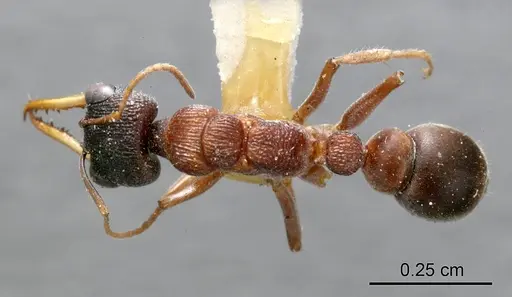
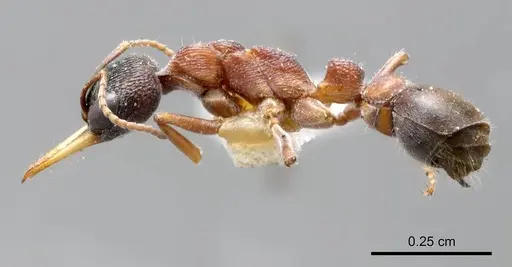
ANTWEB1008295
View on AntWeb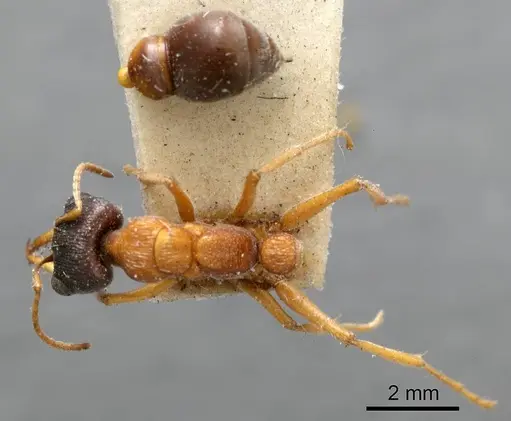
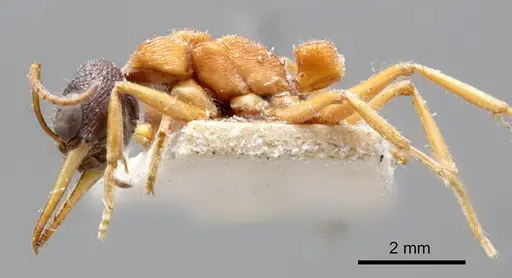
Literature
Loading...Loading products...