

Myrmecia swalei
- Scientific Name
- Myrmecia swalei
- Tribe
- Myrmeciini
- Subfamily
- Myrmeciinae
- Author
- Crawley, 1922
- Distribution
- Found in 1 countries
Myrmecia swalei Overview
Myrmecia swalei is an ant species of the genus Myrmecia. It is primarily documented in 1 countries , including Australia. Detailed taxonomic data and occurrence records can be further explored via authoritative databases such as AntWeb or the Global Biodiversity Information Facility (GBIF).
Myrmecia swalei
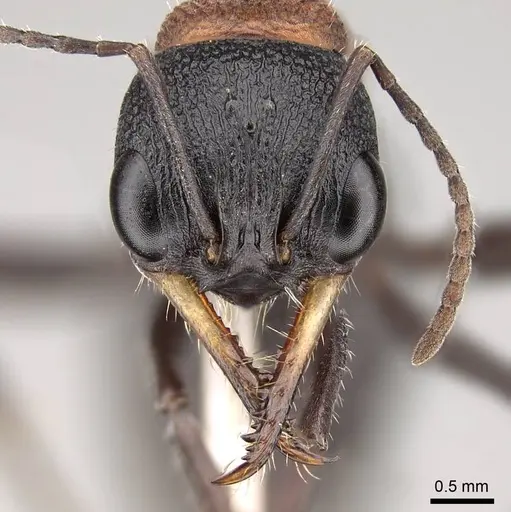
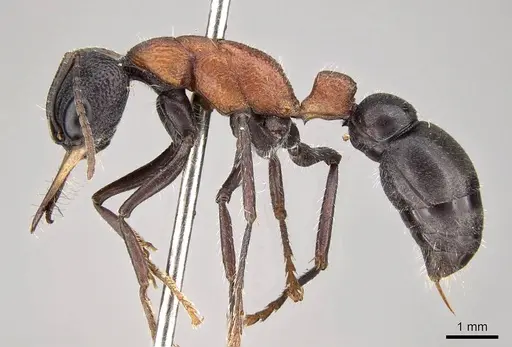
Myrmecia swalei is a medium-sized Australian bull ant found throughout coastal Western Australia from Albany east to Bremer Bay. Workers are golden-brown to reddish with a darker abdomen. This species forms very small colonies in open soil, nesting under the ground with a single, well-hidden entrance [1]. Unlike many Myrmecia species that prefer warmer conditions, M. swalei requires cooler, moister habitats and has disappeared from some restored areas where conditions became too warm and dry [2]. As part of the jumper ant group, they can deliver a painful sting.
Quick Summary
- Difficulty: Medium
- Origin & Habitat: Coastal south-west Western Australia, from Albany east to Bremer Bay. Nests in open soil in areas with cooler, moister conditions [1][2].
- Colony Type: Single-queen colonies. Forms very small colonies, likely under 100 workers based on available information [1].
- Size & Growth:
- Queen:{.size-link} size data unavailable, inferred from Myrmecia genus to be roughly 14-18mm
- Worker:{.size-link} size data unavailable, inferred from Myrmecia genus to be roughly 12-15mm
- Colony: Very small, likely under 100 workers [1]
- Growth: Moderate
- Development: estimated 8-12 weeks at warm room temperature based on Myrmecia genus patterns (Development likely slower than tropical Myrmecia due to cooler natural habitat)
- Antkeeping:
- Temperature: Keep at 20-24°C. Unlike most Myrmecia that prefer warmth, this species requires cooler conditions, do not overheat. Room temperature is often suitable.
- Humidity: Moderate to high. Keep nest substrate moist but not waterlogged. This species naturally occurs in cooler, moister coastal areas.
- Diapause: Unlikely required, Western Australia has mild winters. However, a brief cool period at 15-18°C for 4-6 weeks during winter months may benefit the colony.
- Nesting: In captivity, they do well in Y-tong (AAC) nests or plaster nests with moist substrate. Provide a moisture gradient so ants can choose their preferred humidity. A small outworld allows for foraging.
- Behavior: Typical Myrmecia behavior, workers are active foragers that search for prey on the ground. They are defensive and will sting if threatened. Workers may jump or lunge when defending the nest. Escape prevention is important as they are medium-sized ants that can climb smooth surfaces. They are diurnal, actively foraging during daylight hours like most Myrmecia.
- Common Issues: overheating is a serious risk, this species naturally lives in cooler conditions than most Myrmecia, colonies remain very small, do not expect rapid growth or large worker numbers, stings can cause severe allergic reactions in sensitive individuals, handle with caution, dry conditions cause colony decline, monitor substrate moisture carefully, wild-caught colonies may be difficult to establish due to specific habitat requirements
Nest Preferences
In the wild, Myrmecia swalei nests in open soil with a single, well-hidden entrance [1]. They prefer areas with cooler, moister conditions and have declined in restored areas where the environment became warmer and drier [2]. In captivity, provide a nest with moist substrate, a Y-tong (AAC) nest or plaster formicarium works well. Keep one side of the nest moist while leaving a drier area so workers can self-regulate. The nest should have chambers scaled to their medium size, not too cramped, not overly spacious. A small outworld attached allows workers to forage and dispose of debris.
Feeding and Diet
Myrmecia swalei is a predatory ant that hunts insects and other small invertebrates. Feed workers small live insects such as fruit flies, small crickets, mealworms, and other appropriate-sized prey. They also accept sugar sources, a small drop of honey or sugar water can be offered occasionally. Protein is essential for brood development. Feed prey 2-3 times per week, removing any uneaten insects after 24 hours. Unlike some Myrmecia that are heavily nectar-feeding, this species relies primarily on protein from hunting.
Temperature and Care
This is the most critical aspect of keeping Myrmecia swalei successfully. Unlike most Myrmecia species that thrive in warm conditions, M. swalei naturally inhabits cooler, moister coastal areas of southern Western Australia [2]. Keep the nest at 20-24°C, room temperature is often ideal. Avoid any heating unless your room drops below 18°C. Overheating is one of the most common causes of colony failure with this species. Monitor worker activity, if they seem sluggish and cluster together, the nest may be too cold, if they avoid the moist areas and cluster near the edge, it may be too warm or dry.
Behavior and Temperament
Myrmecia swalei displays typical bull ant behavior. Workers are active foragers that search for prey during daylight hours. They are defensive and will readily sting if threatened or handled roughly, this species is part of the jumper ant group known for their painful stings [3]. Workers may jump or lunge when disturbed. They are medium-sized ants that can climb smooth surfaces, so use fluon or other barriers on the outworld. Colony size remains small, so you will not see the massive worker swarms seen in some other ant species. The small colony size means fewer workers are available to defend, but those present are bold and proactive.
Growth and Development
Colony growth is slow to moderate. Based on Myrmecia genus patterns, expect 8-12 weeks from egg to first worker (nanitic) at optimal temperature. The founding queen seals herself in a claustral chamber and raises the first brood alone without foraging. First workers (nanitics) are typically smaller than mature workers. Given their natural habitat in cooler conditions, development may take longer than for tropical Myrmecia species. Colonies remain small even at maturity, do not expect more than 50-100 workers. Growth is limited by the small colony size and the cooler conditions they require.
Frequently Asked Questions
How long does it take for Myrmecia swalei to produce first workers?
Expect 8-12 weeks from egg to first worker at optimal temperature (20-24°C). Development may be slower than tropical Myrmecia due to their cooler natural habitat.
Do Myrmecia swalei ants sting?
Yes. Myrmecia swalei is part of the jumper ant group and can deliver a painful sting. They are defensive and will sting if threatened or handled. The sting can cause severe allergic reactions in sensitive individuals, handle with caution.
What temperature do Myrmecia swalei need?
Keep them at 20-24°C. This species requires cooler conditions than most Myrmecia, room temperature is often ideal. Do not use heating unless absolutely necessary. Overheating is a common cause of colony failure.
How big do Myrmecia swalei colonies get?
Colonies remain very small, likely under 100 workers at maturity. This is one of the smaller Myrmecia species in terms of colony size.
Can I keep multiple Myrmecia swalei queens together?
No. This is a single-queen (monogyne) species. Multiple unrelated queens will fight. Only keep one queen per colony.
What do Myrmecia swalei eat?
They are predatory ants that hunt insects. Feed small live prey such as fruit flies, small crickets, and mealworms 2-3 times per week. They may occasionally accept sugar sources like honey or sugar water, but protein is essential for brood development.
Do Myrmecia swalei need hibernation?
Probably not. Western Australia has mild winters, so a full hibernation is likely unnecessary. However, a brief cool period at 15-18°C for 4-6 weeks during winter months may benefit the colony.
Is Myrmecia swalei good for beginners?
No. This species has specific care requirements, particularly the need for cooler temperatures and careful humidity control. The small colony size and slower growth can also be frustrating for beginners. Consider starting with easier Myrmecia species or other ant species first.
When should I move Myrmecia swalei to a formicarium?
Wait until the colony has at least 15-20 workers and the founding queen is no longer sealed in her chamber. A Y-tong or plaster nest with moisture provision works well. Ensure the formicarium can maintain appropriate humidity levels.
Why is my Myrmecia swalei colony dying?
The most common causes are overheating (this species needs cool conditions), dry substrate, or improper feeding. Check that nest temperature stays below 24°C, substrate remains moist, and the colony has regular protein access. This species is sensitive to environmental changes and may decline if conditions are not optimal.
Report an Issue
The current care sheet is based fully on literature. See inconsistencies, or something that's incorrect? Please , it will be resolved after review from an admin. Contributing to the blogs tab also helps providing information, to make us be able to further improve the caresheets. Thank you for your support!
References

This caresheet is licensed under CC BY-SA 4.0 .
CASENT0914036
View on AntWeb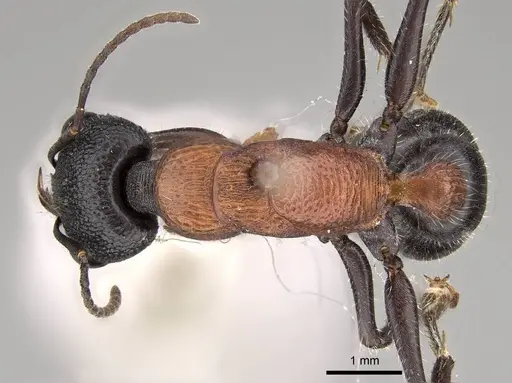
Literature
Loading...Loading products...