
Myrmecia pyriformis exhibits a clear seasonal activity window. Peak activity is concentrated in April, with the overall period spanning March to May.
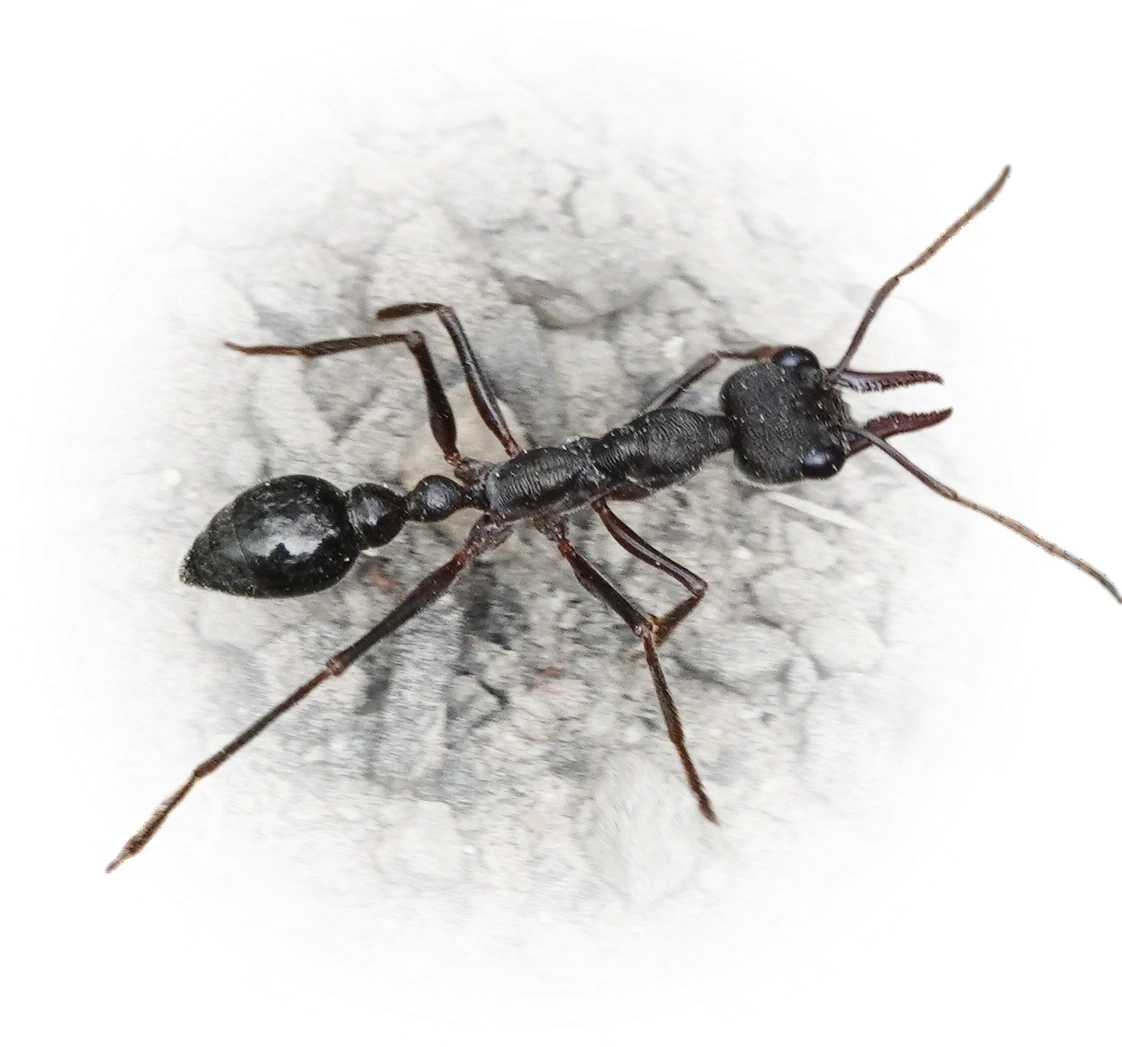
Myrmecia pyriformis
- Scientific Name
- Myrmecia pyriformis
- Tribe
- Myrmeciini
- Subfamily
- Myrmeciinae
- Author
- Smith, 1858
- Common Name
- Inch Ant
- Distribution
- Found in 1 countries
- Nuptial Flight
- from March to May, peaking in April
AI Identifiable
try →
Myrmecia pyriformis Overview
Myrmecia pyriformis (commonly known as the Inch Ant) is an ant species of the genus Myrmecia. It is primarily documented in 1 countries , including Australia. Detailed taxonomic data and occurrence records can be further explored via authoritative databases such as AntWeb or the Global Biodiversity Information Facility (GBIF).
The nuptial flight of Myrmecia pyriformis is a significant biological event, typically occurring from March to May, peaking in April. During this time, winged queens and males leave the nest to mate and establish new colonies.
Myrmecia pyriformis - "Inch Ant"
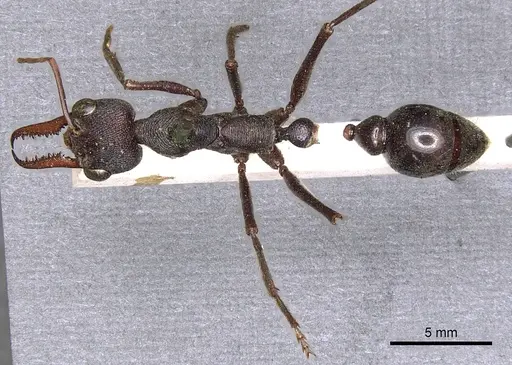
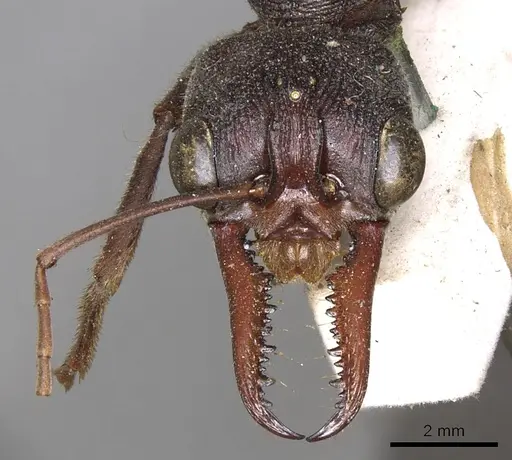
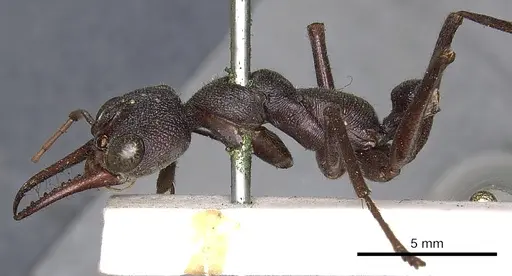
Myrmecia pyriformis is a large Australian ant belonging to the Myrmecia gulosa species group, with workers ranging from 12-26mm in body length [1][2]. These ants are strongly polymorphic, minor workers are roughly half the size of major workers, forming a continuous size gradient across the colony [1]. They have the characteristic bull ant appearance: large eyes, powerful mandibles, and a potent sting. Workers are predominantly black with reddish-orange mandibles and legs. This species is found throughout southeastern Australia, particularly in Victoria, New South Wales, and South Australia [3].
What makes M. pyriformis truly remarkable is its strictly nocturnal lifestyle with sophisticated visual navigation. Unlike most ants, these foragers restrict their activity to the dim twilight hours around sunset and sunrise, using landmark panorama and polarized skylight to find their way to specific Eucalyptus trees [4][5]. They are solitary foragers with no recruitment behavior, each ant makes an individual trip to the same food tree each night. Perhaps most unusually, colonies can survive without a morphological queen by using gamergates (mated workers that reproduce), this is the only known case in the entire subfamily Myrmeciinae [6][7].
Quick Summary
- Difficulty: Medium
- Origin & Habitat: Southeastern Australia, particularly Victoria, New South Wales, and South Australia. Inhabits open woodland habitats characterized by Acacia and Eucalyptus tree species [8]. Nests are subterranean, typically with a single circular entrance in soil [5].
- Colony Type: Facultatively queenless, colonies can have a normal dealate queen OR survive without a morphological queen through gamergates (mated workers that function as replacement reproductives). This is the only documented case of gamergates in the subfamily Myrmeciinae [6][7]. Single-queen colonies with documented worker replacement reproductives if the queen dies [9].
- Colony: Monogyne
- Founding: Semi-claustral
- Special: Gamergates
- Size & Growth:
- Queen: Estimated 25-30mm based on genus patterns and worker size range [3]
- Worker: 12-26mm, polymorphic with continuous size gradient [1][2]
- Colony: 200 to over 1400 workers documented in wild colonies [7]. Can exceed 1000 workers [10].
- Growth: Moderate, development timeline not directly studied but estimated 8-12 weeks based on related Myrmecia species
- Development: Estimated 8-12 weeks at optimal temperature based on genus patterns (Development not directly studied, timing inferred from related Myrmecia species. Queens found colonies non-claustrally, meaning they must forage during founding [3].)
- Antkeeping:
- Temperature: Keep nest area at 20-26°C. Foraging occurs at surface temperatures of 5.4-26.2°C in the wild, with most foragers leaving when temperatures are between 10-15°C [11]. Laboratory tests show CTmin of 8.2°C and CTmax of 41.6°C [11]. Provide a gentle gradient allowing workers to select their preferred temperature.
- Humidity: Moderate humidity preferred. In captivity, keep nest substrate consistently moist but not waterlogged. Australian woodland species, avoid overly damp conditions.
- Diapause: Yes, colonies seal nest entrance and hibernate during winter. In Canberra region, nests seal in early April and remain sealed until late October [7]. Provide a cool period around 10-15°C for 4-6 months.
- Nesting: Subterranean nests with single entrance. In captivity, use a deep soil-based formicarium or naturalistic setup with soil substrate. Provide chambers for brood and food storage. Escape prevention is important though large size reduces escape risk compared to tiny ants.
- Behavior: Strictly nocturnal, workers begin foraging during evening twilight and return at morning twilight [5]. They are solitary foragers with no recruitment, each ant visits the same Eucalyptus tree each night using visual landmark navigation [4]. Workers have a potent sting and will use it defensively. They are not aggressive toward humans unless provoked, but the venom can cause severe allergic reactions in susceptible individuals [12]. Foragers are visually oriented and establish idiosyncratic routes that can persist for weeks. Activity is triggered by ambient light levels, not temperature, they will forage even in cold weather if light conditions are right [11].
- Common Issues: Potent sting can cause anaphylaxis in susceptible individuals, handle with caution and have medical attention available if stung [12], Nocturnal timing means you must adjust feeding schedules to evening hours when workers are active, Winter diapause is essential, colonies that don't cool down may become stressed or fail to thrive [7], Large size requires appropriately sized prey items, they can take down substantial insects, Visual navigation means colony may be disturbed by changes to their view, avoid moving nest frequently once foragers establish routes
Queen Ant Activity Analysis 396 observations
Queen Activity by Hour 396 observations
Myrmecia pyriformis queen activity peaks around 13:00 during the late morning to early afternoon. Activity is spread across a 13-hour window (09:00–21:00). A secondary activity peak occurs around 11:00. Times may be influenced by human observation patterns.
Nocturnal Foraging Behavior
Myrmecia pyriformis is strictly nocturnal, with workers restricting their foraging to the twilight hours around sunset and sunrise [5]. This is remarkable because most ant species are either diurnal or active around the clock. Foragers leave the nest individually during a narrow window about 20 minutes after sunset, with peak departure occurring around this time [7]. Most foragers (89.8%) make only one trip per night, though some make two or even four trips if they capture prey [7].
Each forager visits the same specific tree each night, typically a Eucalyptus within 3-15 meters of the nest [4]. They navigate using visual landmarks and polarized skylight, following the same path on successive evenings, a behavior called route fidelity. If landmarks along their route change (even subtly), foragers become disoriented, slow down, and may fail to reach their food tree [13]. This makes them fascinating to watch but also means you should avoid changing the area around their nest once foraging routes are established.
In captivity, you'll need to time feedings to match their natural activity pattern, offer food in the evening hours when workers are active. They will not forage during the day under normal conditions [14].
Gamergates and Colony Reproduction
One of the most fascinating aspects of M. pyriformis is their unique colony structure. Unlike most ants, colonies can survive without a morphological queen through the presence of gamergates, mated workers that can reproduce [6]. This is the only documented case of gamergates in the entire subfamily Myrmeciinae, making this species particularly special [6].
When a queen dies or is absent, a few mated workers (typically more than one) take over reproduction duties. These gamergates have worker-like morphology but possess a spermatheca (sperm storage organ) filled with sperm from mating [6]. One documented colony collected without a queen continued producing workers for three years in the laboratory through gamergate reproduction [7].
For antkeepers, this means your colony has resilience, even if you lose the queen, the colony may continue. However, it also means colony founding is more complex. Queens are semi-claustral and must forage during founding, which makes colony establishment more challenging than claustral species. Mating flights occur during the day in late summer to early autumn (February to mid-April) [7].
Temperature and Seasonal Care
M. pyriformis demonstrates remarkable flexibility in temperature tolerance. In the wild, foragers begin activity when surface temperatures range from 5.4°C in winter to 26.2°C in summer [11]. However, the timing of foraging onset is triggered by light levels, not temperature, even in cold weather, they'll forage at twilight if temperatures are above their critical thermal minimum of about 8°C [11].
For captive care, keep the nest area at 20-26°C. This matches their preferred foraging temperature range. A heating cable on one side of the nest can create a gradient, but ensure there's a cool area too. Laboratory tests show their critical thermal maximum is around 41.6°C, so avoid overheating [11].
Winter diapause is essential. In their native Canberra region, colonies seal their nest entrance in early April and remain sealed until late October, roughly 6-7 months of hibernation [7]. Provide a cool period around 10-15°C during winter. Without this dormancy period, colonies may become stressed. Watch for workers becoming sluggish as temperatures drop below 15°C, this is normal and indicates they're entering rest period.
Feeding and Diet
In the wild, M. pyriformis foragers collect three main food types: liquid food (tree sap and homopteran honeydew) from Eucalyptus trees, and insect prey when larvae are present in the nest [7]. Their diet is opportunistic, summer prey includes flies, termites, beetles, moths, earwigs, and other ants (particularly Camponotus species). Winter diet shifts more toward liquid food since prey is scarce [7].
For captive colonies, offer a varied diet: protein sources (live insects like crickets, mealworms, or roaches) 2-3 times per week, and sugar sources (honey water or sugar water) continuously. The large size of these ants means they can take down substantial prey, even small cockroaches and earthworms [7]. Remove uneaten prey within 24 hours to prevent mold.
Foraging occurs at night, so offer food in the evening hours. Workers imbibe liquid food while abroad and share it via trophallaxis (mouth-to-mouth feeding) once back in the nest [7]. This means sugar water is particularly valuable for maintaining colony health. A water tube should always be available.
Visual Navigation and Colony Setup
M. pyriformis has evolved extraordinary visual adaptations for nocturnal navigation. They have the largest photoreceptor diameters among Myrmecia workers (5.9 μm compared to 2.5 μm in diurnal males), and their compound eyes contain over 3500 facets, roughly 27 times more optically sensitive than their diurnal relatives [15]. Their eyes can constrict their pupils during the day and open wide at night to maximize light capture [14].
This has practical implications for captivity. These ants rely heavily on visual landmarks, so avoid frequently moving the nest or changing the layout of the outworld. Once foragers establish their routes, consistency is key. Provide some ambient light in the evening when they're active, but avoid bright direct light during their foraging hours.
Their nests are subterranean with a single entrance [5]. In captivity, use a formicarium with soil or a naturalistic setup. The entrance should be appropriately sized (3-5 cm diameter in summer), they adjust entrance size based on forager numbers [7].
Safety and Sting Management
M. pyriformis possesses a potent sting, and this species is part of the Myrmecia gulosa species group that accounts for the majority of ant sting anaphylaxis cases in Australia [12]. Of 22 M. forficata-positive serum samples tested,14 were also positive to M. pyriformis venom, indicating significant allergen cross-reactivity [12].
For antkeepers, this means exercise caution. While these ants are not aggressive toward humans unless threatened, they will sting if provoked or if they feel their colony is in danger. The sting is painful and can cause severe allergic reactions in susceptible individuals, in rare cases, anaphylaxis requiring medical attention.
To minimize sting risk: avoid handling directly, use long-forceps for colony maintenance, and work quietly around the colony. If stung, monitor for signs of allergic reaction (difficulty breathing, swelling beyond the sting site, dizziness). Keep antihistamines or an EpiPen accessible if you know you have venom allergies. The good news is that with proper precautions, stings are rare, these ants prefer to retreat rather than engage when given the choice.
Frequently Asked Questions
Can I keep Myrmecia pyriformis in a test tube?
Test tubes are not ideal for established colonies due to their large size (12-26mm workers) and need for soil nesting. A deep soil-based formicarium or naturalistic setup with soil substrate is more appropriate. Test tubes work only for very small founding colonies, but even then, these semi-claustral queens need space to forage. For established colonies, provide a nest chamber at least 10-15cm deep with moist soil.
How long until first workers in Myrmecia pyriformis?
The exact development timeline is not directly documented, but based on related Myrmecia species, expect 8-12 weeks from egg to first worker at optimal temperature (around 24°C). Queens are semi-claustral and must forage during founding, which can make early colony development slower than claustral species. Patience is key, these are moderate growers compared to some tropical species.
Are Myrmecia pyriformis good for beginners?
They are intermediate difficulty, not recommended for complete beginners but manageable for those with some antkeeping experience. Challenges include: semi-claustral founding (queen must forage), nocturnal timing (feeding schedule adjustment), winter diapause requirement, and potent sting. However, they are rewarding due to their fascinating behavior and unique colony structure with gamergates.
When do Myrmecia pyriformis need hibernation?
They require a winter dormancy period. In their native Australia (Canberra region), colonies seal their nests from early April through late October, roughly 6-7 months. Provide a cool period around 10-15°C during winter. This is essential for colony health, without proper diapause, colonies may become stressed. Reduce feeding and keep them in a cool location during this period.
Can I keep multiple queens together?
Myrmecia pyriformis is not polygyne, colonies typically have one queen or function without one through gamergates. Combining unrelated foundresses is not recommended and has not been documented. If you acquire a colony, assume single-queen structure. The interesting twist is that if the queen dies, gamergates (mated workers) can take over reproduction, this is unique among Myrmeciinae.
What do Myrmecia pyriformis eat?
They are opportunistic predators and nectar feeders. Offer live insects (crickets, mealworms, roaches) 2-3 times per week as protein, and honey water or sugar water continuously. They can take down surprisingly large prey due to their size (up to 26mm). In the wild, they also forage for tree sap and honeydew, sugar water mimics this. Remove uneaten prey within 24 hours.
How big do Myrmecia pyriformis colonies get?
Wild colonies reach 200 to over 1400 workers, with some exceeding 1000 workers [7][10]. One documented colony persisted for at least 10 years in the wild [7]. With proper care, captive colonies can grow substantial. They are long-lived, gamergates have been recorded surviving 3 years in the laboratory [7].
Why are my Myrmecia pyriformis not foraging during the day?
This is normal, they are strictly nocturnal. Workers begin activity during evening twilight and return during morning twilight [5]. They will not forage during the day under natural conditions. Offer food in the evening hours. If you need to observe activity, do so in dim light during dusk or dawn. Their activity is triggered by ambient light levels, not temperature.
When should I move Myrmecia pyriformis to a formicarium?
Move from test tube to formicarium once the colony reaches 20-30 workers and the test tube setup shows condensation buildup or the queen appears restless. Use a naturalistic or soil-based setup since they are subterranean nesters. Ensure the outworld has appropriate climbing surfaces and hiding spots. Avoid moving once foragers have established routes, consistency is important for these visually navigating ants.
References

This caresheet is licensed under CC BY-SA 4.0 .
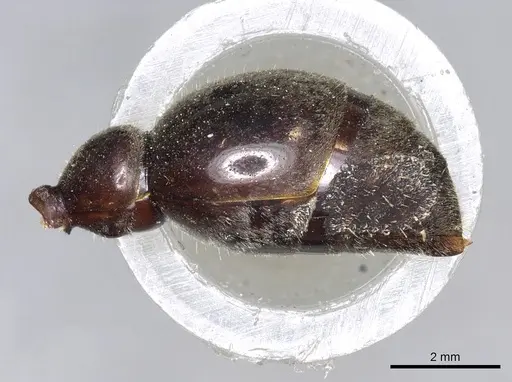
CASENT0217501
View on AntWeb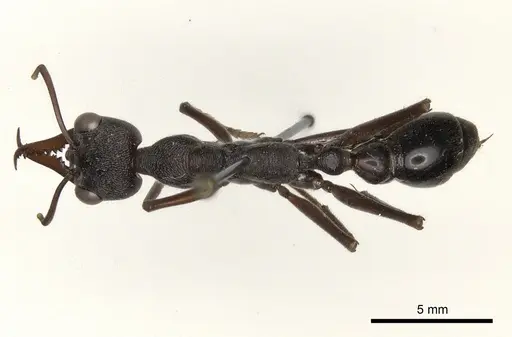
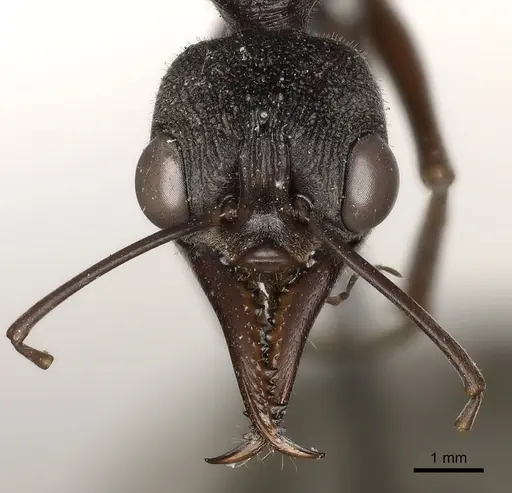
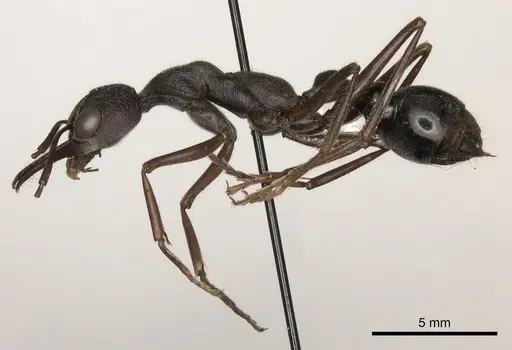
CASENT0902797
View on AntWeb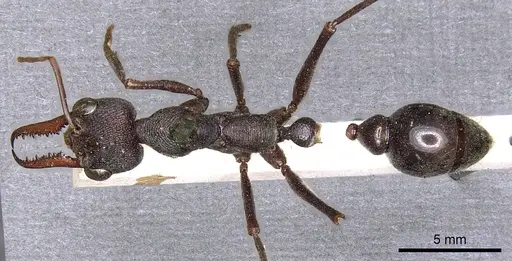
Literature
Loading...Loading products...