

Myrmecia fuscipes
- Scientific Name
- Myrmecia fuscipes
- Tribe
- Myrmeciini
- Subfamily
- Myrmeciinae
- Author
- Clark, 1951
- Distribution
- Found in 1 countries
Myrmecia fuscipes Overview
Myrmecia fuscipes is an ant species of the genus Myrmecia. It is primarily documented in 1 countries , including Australia. Detailed taxonomic data and occurrence records can be further explored via authoritative databases such as AntWeb or the Global Biodiversity Information Facility (GBIF).
Myrmecia fuscipes
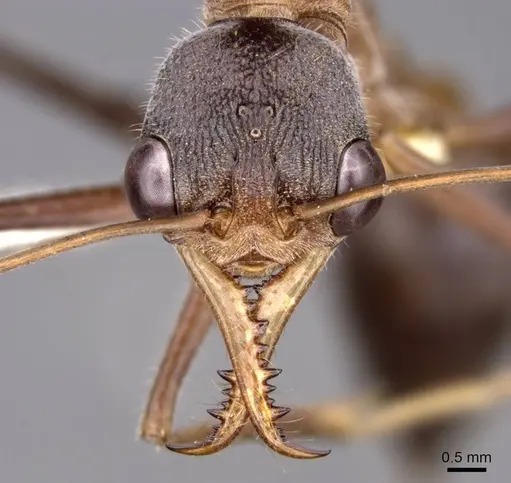
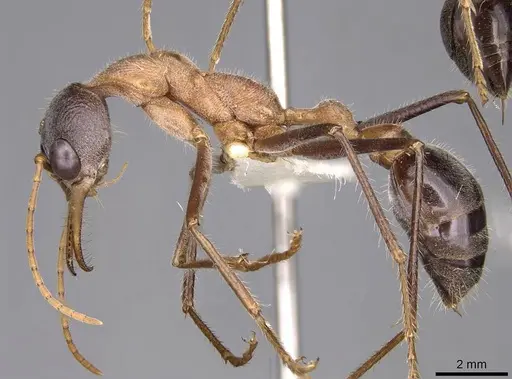
Myrmecia fuscipes is a large to very large bulldog ant species native to Australia, particularly South Australia around Port Lincoln. Workers measure around 15-20mm, making them impressive and intimidating ants. They have a distinctive appearance with a dark head (almost as dark as their black abdomen/gaster), a lighter brown or yellowish mesosoma, petiole and postpetiole, and notably dark legs that are always darker than their mesosoma, this leg coloration helps distinguish them from similar species like M. desertorum, M. gratiosa, M. nigriceps and M. vindex which have yellower legs [1]. These ants are visual predators, meaning they hunt by sight rather than chemical trails, making them active and aggressive foragers. As part of the gulosa species group and the 'vindex' subgroup, they represent a visually striking and behaviorally complex ant species.
Quick Summary
- Difficulty: Medium
- Origin & Habitat: Australia (South Australia, Port Lincoln region). They inhabit arid to semi-arid regions and are adapted to Australian conditions [2].
- Colony Type: Likely monogyne (single queen colonies) based on typical Myrmecia patterns. The genus Myrmecia typically forms single-queen colonies with ergatoid (wingless) replacement reproductives possible if the queen dies.
- Colony: Monogyne
- Founding: Claustral
- Size & Growth:
- Queen: Approximately 20-25mm, queens are large and robust
- Worker: 15-20mm, workers are large and powerful [2]
- Colony: Colonies typically reach several hundred to around 1000 workers based on typical Myrmecia colony sizes
- Growth: Moderate, Myrmecia species grow at a moderate pace, with founding colonies taking several months to produce first workers
- Development: Approximately 2-3 months (8-12 weeks) at optimal temperature based on typical Myrmecia development (Development is temperature-dependent, warmer conditions accelerate growth while cooler temperatures slow it down)
- Antkeeping:
- Temperature: Keep nest area at 24-28°C with a slight gradient. Myrmecia species are from temperate to subtropical Australia and tolerate a range from roughly 22-30°C. Provide a thermal gradient so ants can self-regulate.
- Humidity: Moderate humidity around 50-60%. These are not rainforest ants, they come from drier Australian habitats. Keep substrate moderately moist but allow drying periods between waterings. Provide a water tube as a primary moisture source.
- Diapause: Yes, Australian Myrmecia species require a winter rest period. Reduce temperature to 15-18°C for 2-3 months during winter (Australian winter, roughly May-August in Northern Hemisphere). Do not feed during diapause.
- Nesting: Myrmecia fuscipes nests in soil, often under stones or in decaying wood in nature. In captivity, they do well in Y-tong (AAC) nests or large formicariums with compact chambers. Provide deep substrate (at least 5-10cm) for nesting chambers. Avoid overly humid conditions that can cause mold.
- Behavior: Myrmecia fuscipes is a formidable and aggressive species, even a solitary forager demonstrates impressive defensive capabilities. They are visual predators, hunting by sight rather than chemical trails, which makes them active daytime foragers. Workers are fast-moving and will readily defend the nest. They have a potent sting and should be handled with extreme caution. Escape prevention is important but these large ants cannot squeeze through typical barrier gaps, focus on secure lids rather than fine mesh. They are not colony climbers and standard barriers work well. Workers will hunt small invertebrates and readily accept protein foods.
- Common Issues: aggressive defense means stings are likely if provoked, keep distance and use proper handling techniques, slow founding phase can frustrate beginners, colonies may take months before producing first workers, winter diapause is essential but many keepers lose colonies by not reducing temperature properly, large colony size requires significant space, plan for eventual upgrade to larger enclosures, visual hunting means they need open foraging areas, crowded formicariums frustrate their hunting behavior
Housing and Nest Setup
Myrmecia fuscipes requires spacious housing due to their large size and active foraging behavior. A Y-tong (AAC) nest with large chambers works well, or you can use a naturalistic setup with deep soil (at least 10cm) and appropriate hiding structures. These ants are not arboreal, they nest in soil and under stones in the wild, so provide a horizontal or slightly inclined nest orientation. The outworld should be spacious with minimal vertical obstacles since they hunt by sight and need clear paths for patrolling. Use a secure water test tube as a moisture source, they will drink directly from the meniscus. Avoid overly moist or humid conditions that promote mold growth. A simple setup with a nest area connected to a larger foraging area is ideal. Ensure all connections are wide enough for their large bodies to pass through easily.
Feeding and Diet
Myrmecia fuscipes is a visual predator, they actively hunt and capture prey rather than scavenging. Offer small live insects such as fruit flies, small crickets, mealworms, and other appropriately-sized invertebrates. They will readily take down prey much larger than themselves thanks to their powerful mandibles. Protein should make up the majority of their diet. They may accept sugar sources like honey or sugar water, but protein-rich foods are more important for their health and brood development. Feed every 2-3 days, adjusting based on colony size and consumption. Remove uneaten prey after 24-48 hours to prevent mold. A constant water source is essential. Unlike some ants, they are not particularly interested in seeds or plant matter, focus on animal protein.
Temperature and Seasonal Care
Maintain temperatures between 24-28°C in the nest area, with the foraging area potentially slightly cooler. Myrmecia species are native to temperate Australia and can tolerate temperatures outside this range, but optimal development occurs in the warm range. A heating cable on one side of the nest creates a beneficial gradient. During winter (roughly November to March in Australia, or May-August in the Northern Hemisphere), gradually reduce temperature to 15-18°C for a diapause period. This rest period is essential for colony health and triggers reproductive behavior in spring. Do not feed during diapause but maintain a water source. Sudden temperature drops can be harmful, reduce temperature gradually over 1-2 weeks. Resume normal feeding and temperatures when you see increased activity in spring.
Behavior and Handling
Myrmecia fuscipes is one of the more aggressive Australian ant species. Workers are fast, alert, and will aggressively defend their nest. They have excellent vision and will track movement across the foraging area. Their sting is potent and painful, these ants should be considered dangerous and handled with extreme caution. Never provoke or corner them. When working with the colony, use gentle smoke or air puffing rather than blowing on them, as breath can trigger attack responses. They are not climbers on smooth surfaces but can scale rough surfaces. Standard barrier gel or fluon on container rims provides adequate escape prevention for these large ants. They are diurnal and most active during daylight hours, reflecting their visual hunting strategy.
Frequently Asked Questions
Are Myrmecia fuscipes ants good for beginners?
No, Myrmecia fuscipes is not recommended for beginners. They are large, aggressive, have a painful sting, and require specific temperature and seasonal care. Their visual hunting behavior and specific dietary needs make them more challenging than common pet species. Consider starting with easier species like Lasius niger or Camponotus species first.
How long does it take for Myrmecia fuscipes to produce first workers?
Expect 2-3 months (8-12 weeks) from egg to first worker at optimal temperature (around 26°C). The claustral queen seals herself in and raises the first brood alone. Development is slower than many tropical species, reflecting their temperate Australian origin. Patience is essential during the founding phase.
What do Myrmecia fuscipes eat?
They are visual predators that hunt live insects. Feed small live invertebrates like fruit flies, small crickets, mealworms, and other appropriately-sized prey. They may accept sugar water or honey occasionally, but protein from live prey is essential. Feed every 2-3 days and remove uneaten prey promptly.
Can I keep multiple Myrmecia fuscipes queens together?
No, Myrmecia species are typically monogyne (single queen). Combining unrelated queens will likely result in fighting and death. Only attempt pleometrosis (multiple queen founding) with careful monitoring if you have multiple newly caught queens, but success is rare and risky. A single established queen colony is the standard approach.
Do Myrmecia fuscipes need hibernation?
Yes, they require a winter diapause period. Reduce temperatures to 15-18°C for 2-3 months during winter. This is essential for colony health and triggers spring reproductive behavior. Do not feed during diapause but maintain water access. Gradually reduce and restore temperatures over 1-2 week periods.
When should I move Myrmecia fuscipes to a formicarium?
Wait until the colony has at least 20-30 workers before moving to a formicarium. Test tube colonies can be maintained for quite some time, but larger colonies need more space. When moving, connect the test tube to the formicarium and let them move at their own pace, do not force them.
How big do Myrmecia fuscipes colonies get?
Mature colonies typically reach several hundred to around 1000 workers. This is moderate compared to some Myrmecia species that can reach several thousand. They are impressive colonies but not among the largest in the genus.
Why is my Myrmecia fuscipes colony dying?
Common causes include: incorrect temperature (too cold or too hot), improper humidity (too dry or causing mold), lack of protein food, stress from too much disturbance, or failure to provide proper diapause. Check each parameter and adjust. Also ensure the queen is still alive and laying eggs.
References

This caresheet is licensed under CC BY-SA 4.0 .
CASENT0914022
View on AntWeb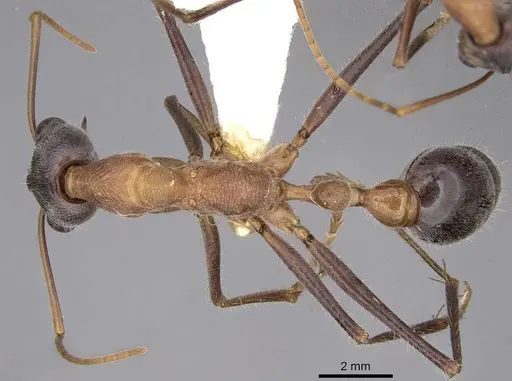
Literature
Loading...Loading products...