

Mycetagroicus cerradensis
- Scientific Name
- Mycetagroicus cerradensis
- Tribe
- Attini
- Subfamily
- Myrmicinae
- Author
- Brandão & Mayhé-Nunes, 2001
- Distribution
- Found in 1 countries
Mycetagroicus cerradensis Overview
Mycetagroicus cerradensis is an ant species of the genus Mycetagroicus. It is primarily documented in 1 countries , including Brazil. Detailed taxonomic data and occurrence records can be further explored via authoritative databases such as AntWeb or the Global Biodiversity Information Facility (GBIF).
Mycetagroicus cerradensis
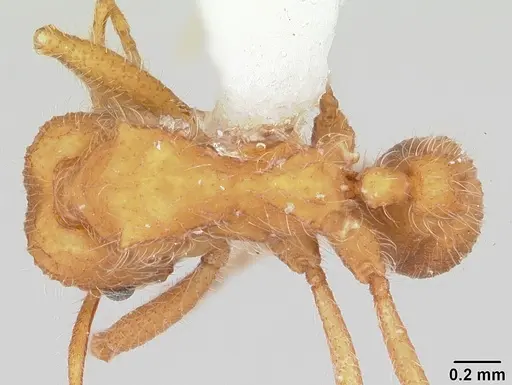
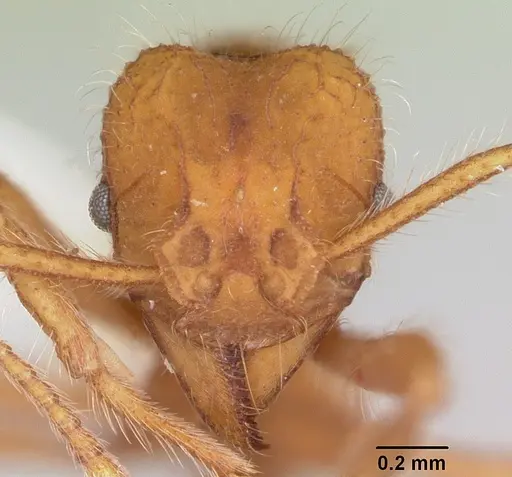
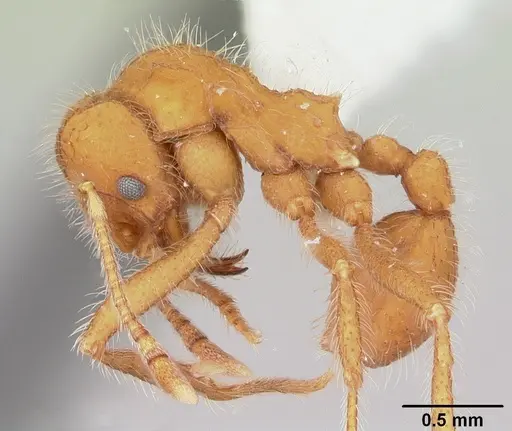
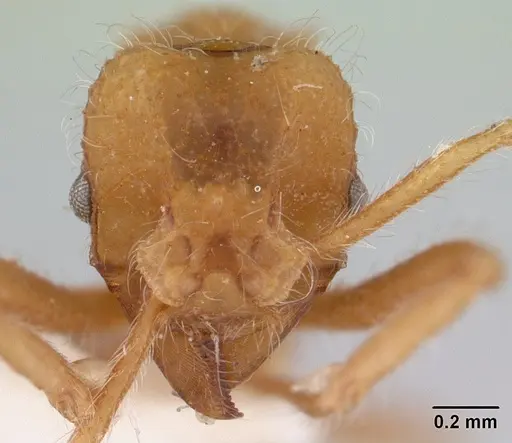
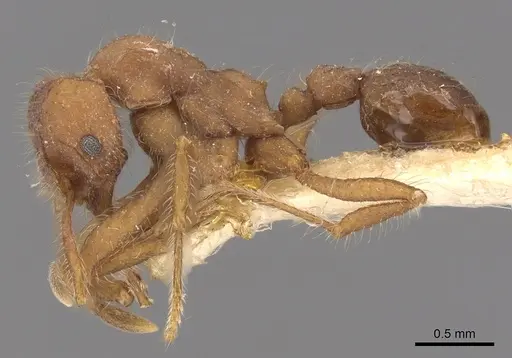
Mycetagroicus cerradensis is a small fungus-growing ant from the Brazilian Cerrado, with workers measuring just 3.4 mm in total length [1]. These ants are evolutionary celebrities, they represent the sister lineage to all higher attine ants (like leaf-cutters), yet they practice lower attine agriculture by cultivating a primitive fungus without the specialized nutrient-rich structures called gongylidia [2][3]. In the wild, they construct remarkably deep nests, with fungus chambers located up to 3.7 meters beneath the surface, making them one of the deepest-nesting attine species documented [2].
Their nests consist of a single entrance surrounded by a small soil mound, leading to vertical tunnels just 3-4 mm wide that descend through multiple soil-filled chambers before reaching the garden chambers far below [2]. Colonies are monogynous (single-queen) and reach approximately 600-800 workers [2]. Unlike leaf-cutters, these ants forage for minute plant fragments and tiny grass seeds rather than cutting fresh leaves [1].
Quick Summary
- Difficulty: Expert
- Origin & Habitat: Brazilian Cerrado savanna (savanna-like formation), specifically in transition zones between cerradão and cerrado sensu stricto, and campo cerrado vegetation [2][4]. Native to Minas Gerais, São Paulo, Goiás, and Mato Grosso do Sul states [1].
- Colony Type: Monogyne, single-queen colonies with documented populations of 600-800 workers [2].
- Colony: Monogyne
- Size & Growth:
- Queen: Unknown (not described in available research).
- Worker: 3.36 mm total length [1].
- Colony: Approximately 600-800 individuals [2].
- Growth: Moderate, fungus-dependent growth limits speed.
- Development: Likely 6-10 weeks based on typical lower attine fungus-growing ant development patterns, though not directly measured for this species. (Lab colonies can produce additional workers over several months when properly maintained [2].)
- Antkeeping:
- Temperature: Maintain around 22-25°C based on the mean annual temperature of 22°C in their native Cerrado habitat [2]. Provide a gentle heat gradient if possible.
- Humidity: Moderate humidity with well-drained substrate. The Cerrado has distinct wet and dry seasons, keep nest material damp but never waterlogged, similar to red latosol soil conditions [2].
- Diapause: Unknown, unlikely to require true hibernation given subtropical habitat, but may slow during cooler months.
- Nesting: Requires exceptionally deep nesting space, vertical tunnels descending 1-4 meters with chambers for fungus gardens. Standard formicaria are inadequate, custom deep setups or naturalistic terrariums with deep substrate necessary [2].
- Behavior: Non-aggressive between nestmates, workers from different chambers of the same nest show no aggression when combined [2]. Foraging behavior involves collecting minute plant fragments and grass seeds rather than active hunting or leaf-cutting [1]. Workers are small and fast, requiring excellent escape prevention.
- Common Issues: fungus garden collapse without proper substrate and humidity maintenance., insufficient nest depth, standard shallow formicaria will not accommodate their natural nesting biology., contamination of fungus garden by Trichoderma or other unwanted fungi [2]., escape prevention is critical, at only 3.4 mm, workers can squeeze through tiny gaps., obtaining the correct fungal cultivar, they require lower attine Clade 2 fungus, not leaf-cutter fungus [2].
Deep Nesting Biology and Captive Housing
Mycetagroicus cerradensis constructs some of the deepest nests known among fungus-growing ants. Excavated nests revealed fungus chambers located at 3.5 to 3.7 meters below the surface, connected to the entrance by vertical tunnels only 3-4 mm in diameter [2]. Above the garden chambers, the ants create multiple soil-filled chambers at depths of 1.5 to 2.6 meters, possibly for ventilation or waste storage [2].
This presents a unique challenge for captive keeping. Standard horizontal formicaria or shallow plaster nests are completely unsuitable. You will need to provide significant vertical depth, ideally 1 meter or more of substrate, to allow for natural tunneling behavior. A tall terrarium or tube setup with deep, well-structured soil (similar to red latosols found in their habitat) is essential [2]. The entrance in nature consists of a single hole surrounded by a small mound of excavated soil pellets, often with a circular crater about 5 cm across [2]. In captivity, provide a deep substrate layer with a starter tunnel to encourage downward excavation toward the fungus chamber location.
Fungus Cultivation and Diet
Unlike leaf-cutter ants that cultivate higher attine fungi with specialized nutrient-rich gongylidia, Mycetagroicus cerradensis practices lower attine agriculture. Their fungus gardens display small whitish nodules that are actually swollen hyphae, not true gongylidia, placing their cultivar in Clade 2 of lower attine (G3) fungi [2]. This fungus is closely related to those cultivated by Mycetophylax faunulus, Myrmicocrypta cf. buenzlii, and Mycocepurus smithii [2].
The garden appears sessile (not in carton structures) and fills the chambers completely, with small rootlets passing through the soil and contacting the garden [2]. In captivity, you must provide the correct fungal cultivar, you cannot substitute leaf-cutter fungus. The ants forage for minute plant fragments, very small grass seeds, and other unspecified plant material to feed their fungus [1]. Offer dried grass clippings, small seeds, and bits of dried leaves. The fungus garden requires high humidity but good air exchange to prevent contamination by Trichoderma or other parasitic fungi [2].
Notably, Escovopsis, the specialized fungal parasite that attacks many attine gardens, was not detected in wild colonies, though other filamentous fungi were present [2].
Temperature and Seasonal Care
Native to the Brazilian Cerrado, these ants experience a subtropical climate with a distinct dry winter (May through September) and rainy summer (October through April) [2]. The mean annual temperature at study sites is 22°C, with mean annual precipitation of 1650 mm [2].
Maintain your colony at approximately 22-25°C year-round. You can create a gentle thermal gradient by placing a heating cable at the top of the nest setup, allowing the ants to thermoregulate by moving deeper into the cooler soil or closer to the surface as needed. Avoid overheating, the deep soil provides natural temperature buffering in the wild. While the region has seasonal rainfall patterns, you should maintain consistent moderate humidity in the nest year-round rather than attempting to simulate dry seasons, as the fungus garden requires constant moisture to survive.
Colony Structure and Development
Colonies are strictly monogyne, containing only a single queen even when multiple garden chambers are present [2]. Excavated nests contained approximately 302 workers at the time of collection, with lab-reared fragments growing to 350+ workers, suggesting natural colony sizes of 600-800 individuals [2].
The queen was found between the two garden chambers in the excavated nest, suggesting she moves between garden sections or stays in connecting areas [2]. When the queen died in February 2009 in laboratory conditions, the colony continued with 350 workers preserved, indicating possible worker longevity but no replacement queen system [2]. Males remain undescribed for this species, and nuptial flight timing is unknown [2].
Growth rate depends entirely on fungus garden health. Based on patterns from related lower attine species, expect egg-to-worker development of approximately 6-10 weeks at optimal temperatures, though this is not directly documented for M. cerradensis. The first workers (nanitics) will be small and will immediately begin foraging for plant material to expand the garden.
Associated Organisms and Nest Commensals
Nitidulid beetles were found living inside the nest chambers and tunnels of excavated colonies [2]. These beetles are common commensals in attine ant nests, often feeding on fungal debris or waste. While their exact relationship with M. cerradensis is not detailed, they do not appear to harm the colony. In captivity, you may notice small beetles or mites in the nest, most are harmless decomposers, but watch for signs of parasitic infestation or fungal contamination that could indicate hygiene issues.
Frequently Asked Questions
Can I keep Mycetagroicus cerradensis without fungus?
No. Like all attine ants, Mycetagroicus cerradensis is an obligate fungus-grower. The colony cannot survive without a healthy fungal garden. They cultivate a specific lower attine fungus (Clade 2) that lacks the gongylidia seen in leaf-cutter gardens [2].
How deep should the nest be for Mycetagroicus cerradensis?
In nature, their fungus chambers are located 3.5 to 3.7 meters underground [2]. In captivity, provide as much vertical depth as possible, minimum 1 meter of substrate, though this is extremely challenging to achieve. Standard shallow formicaria will not work for this species.
What do Mycetagroicus cerradensis eat?
They do not eat the plant material directly. Instead, they forage for minute plant fragments, tiny grass seeds, and other plant debris to feed their fungal garden [1]. The ants then consume the fungus itself. You should offer dried grass clippings, small seeds, and bits of plant material rather than protein sources like insects.
Can I use leaf-cutter fungus for Mycetagroicus cerradensis?
No. They require a lower attine fungus from Clade 2,specifically related to fungi cultivated by Mycetophylax faunulus and Mycocepurus smithii [2]. Leaf-cutter fungus (higher attine) has different nutritional structures (gongylidia) and requirements.
How big do Mycetagroicus cerradensis colonies get?
Wild colonies reach approximately 600-800 workers [2]. They are monogyne (single queen) colonies, so they will not grow as large as some polygyne attine species.
Are Mycetagroicus cerradensis good for beginners?
No. This is an expert-level species due to their specialized fungus cultivation requirements, need for extreme nest depth, and rarity in the hobby. They require specific fungal cultivars and deep substrate that is difficult to provide in standard ant-keeping setups.
Do Mycetagroicus cerradensis need hibernation?
Probably not. They come from the Brazilian Cerrado, which has a subtropical climate with a dry season but not true winter [2]. Maintain them at consistent temperatures year-round (around 22-25°C) rather than providing a cold diapause.
How long until Mycetagroicus cerradensis gets their first workers?
Exact timelines are unconfirmed, but based on related lower attine fungus-growing ants, expect approximately 6-10 weeks from egg to worker at optimal temperatures (22-25°C).
Can I keep multiple Mycetagroicus cerradensis queens together?
Not recommended. They are monogyne (single-queen) species, and combining multiple queens would likely result in fighting and colony failure [2].
Why are my Mycetagroicus cerradensis dying?
Common causes include fungus garden collapse (due to wrong substrate, contamination, or improper humidity), insufficient nest depth causing stress, or escape of workers through tiny gaps. Ensure you are providing appropriate plant material for the fungus and maintaining stable temperature and humidity [2].
References

This caresheet is licensed under CC BY-SA 4.0 .



Literature
Loading...Loading products...