

Monomorium tynsorum
- Scientific Name
- Monomorium tynsorum
- Tribe
- Solenopsidini
- Subfamily
- Myrmicinae
- Author
- Bolton, 1987
- Distribution
- Found in 1 countries
Monomorium tynsorum Overview
Monomorium tynsorum is an ant species of the genus Monomorium. It is primarily documented in 1 countries , including Cameroon. Detailed taxonomic data and occurrence records can be further explored via authoritative databases such as AntWeb or the Global Biodiversity Information Facility (GBIF).
Monomorium tynsorum
Monomorium tynsorum is a tiny yellow ant species native to the Afrotropical region, specifically documented in Angola and Gabon [1]. Workers measure just 2.1-2.3mm, making them one of the smaller ant species kept in captivity. They belong to the Monomorium monomorium species group, specifically the altinode complex, which contains several closely related yellow species. The type specimen was collected from the body of a dead bird in Luanda, Angola, an unusual but not uncommon method for capturing ground-nesting ants that may have been foraging on the carcass. This species remains poorly studied in captivity, with limited information available on its specific care requirements.
Quick Summary
- Difficulty: Unknown, likely Easy to Medium based on genus patterns
- Origin & Habitat: Afrotropical region, documented in Angola (Luanda) and Gabon (Pongara National Park) [1]. Natural habitat preferences are not well documented, but related Monomorium species typically nest in soil, under stones, or in decaying wood in tropical and subtropical environments.
- Colony Type: Colony structure is unconfirmed. Based on genus patterns, likely single-queen (monogyne) colonies, though this has not been directly documented for this species.
- Size & Growth:
- Queen: Undocumented, no queen description available. Estimated 4-6mm based on genus patterns for similar-sized species.
- Worker: 2.1-2.3mm
- Colony: Unknown, likely under 500 workers based on typical small Monomorium colony sizes.
- Growth: Unknown, likely moderate to fast based on genus patterns for small Myrmicinae.
- Development: Estimated 5-8 weeks at optimal temperature (around 24-26°C) based on related Monomorium species. (Direct development data unavailable for this species. Estimate based on genus-level patterns for small tropical ants.)
- Antkeeping:
- Temperature: Likely 22-28°C based on Afrotropical distribution. Start around 24-26°C and observe colony activity. Related species thrive in warm, stable conditions.
- Humidity: Moderate to high, aim for 60-80% humidity. Keep nest substrate slightly moist but not waterlogged. Small ants dry out quickly, so consistent moisture is important.
- Diapause: Unlikely, as a tropical species from Angola/Gabon, they probably do not require a diapause period. However, some reduced activity during cooler periods may occur.
- Nesting: Based on genus patterns, they likely prefer soil-based nests with access to moisture. A test tube setup with moist cotton works well for founding colonies. For established colonies, a Y-tong or plaster nest with small chambers scaled to their tiny size is appropriate.
- Behavior: Behavior is not well documented for this species. Based on genus patterns, they are likely relatively docile, non-aggressive ants that forage individually for small prey and honeydew. Their tiny size (2.1mm workers) means escape prevention is critical, they can squeeze through extremely small gaps. Use fine mesh barriers and ensure all connections are sealed.
- Common Issues: tiny size makes escape prevention critical, they can squeeze through gaps smaller than 1mm, limited information means care is based on genus patterns rather than species-specific research, wild-caught colonies may have parasites or diseases that are difficult to detect, small colony size means they are sensitive to disturbance during founding, overheating or drying out can kill colonies quickly due to their small size
Appearance and Identification
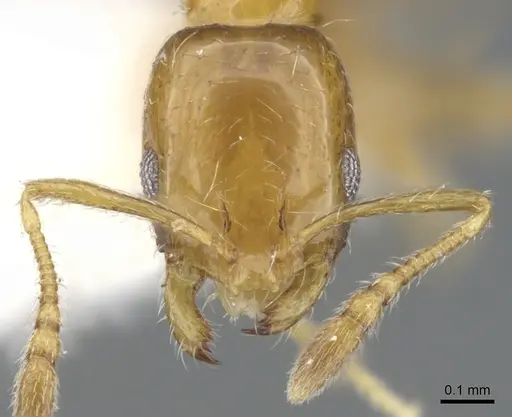
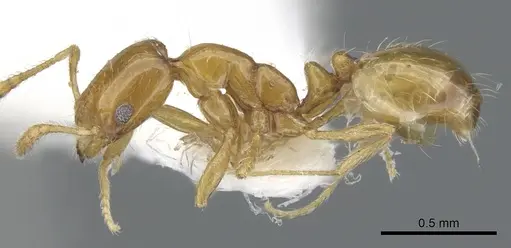
Monomorium tynsorum workers are tiny at just 2.1-2.3mm in length. They are yellow in color, matching other species in the altinode complex. The species was described by Bolton in 1987 based on specimens collected in Angola. Key identification features include strongly developed clypeal carinae (ridges on the face) that diverge toward the front and end in small projecting denticles. The eyes are relatively large for their size, with about 7 ommatidia in the longest row. The propodeal spiracle is of moderate size, not reduced to a pinhole. All dorsal surfaces have standing hairs, with 7-8 pairs on the promesonotum (the middle body section). The petiole node is high and narrowly rounded at the top. These are among the smaller ants you might keep, comparable in size to some of the tiniest Pheidole or Solenopsis species.
Distribution and Habitat
This species is known from the Afrotropical region, specifically documented in Angola (the type locality around Luanda) and Gabon (Pongara National Park) [1]. The original type specimens were collected from the body of a dead bird, which is an unusual but not uncommon collecting method for ants that may have been foraging on the carcass. The natural nesting habitat is not specifically documented, but members of the Monomorium genus typically nest in soil, under stones, or in decaying wood in tropical environments. In captivity, they will adapt to standard ant-keeping setups that provide appropriate moisture and temperature. The Gabon records suggest they may be more widespread in Central African forests than the limited Angola records indicate.
Housing and Nest Setup
For a newly caught queen, a standard test tube setup works well. Fill a test tube about one-third with water, plug with cotton, and place the queen inside. Keep it dark and undisturbed for the founding period. Because these ants are extremely small (2.1mm workers), ensure your setup has no gaps larger than 1mm, they can escape through remarkably small openings. For established colonies, a Y-tong (acrylic) nest or plaster nest with small, tight chambers works well. The chambers should be appropriately scaled to their tiny size, avoid large, open spaces that may cause them to feel exposed. Maintain consistent moisture in the nest area, as small ants are prone to drying out. A humidity gradient allows them to choose their preferred zone.
Feeding and Diet
Based on genus patterns, Monomorium tynsorum likely has a typical Myrmicinae diet: they probably consume small insects, honeydew, and nectar. In captivity, offer small protein sources such as fruit flies, pinhead crickets, or small mealworms. They will likely accept sugar water or honey as an energy source. Feed small amounts initially and observe what they consume. Remove uneaten prey after 24-48 hours to prevent mold. For a founding colony, a tiny drop of honey or sugar water can help sustain the queen until workers emerge. Once workers are established, offer protein every few days and keep a sugar source available constantly.
Temperature and Seasonal Care
As a tropical species from Angola and Gabon, Monomorium tynsorum likely prefers warm conditions. Aim for temperatures around 24-26°C, which is typical for many tropical ant species. They can likely tolerate slightly higher temperatures (up to 28-30°C) but avoid overheating. A heating cable on one side of the nest can create a temperature gradient, allowing the colony to regulate its own exposure. Since they come from a tropical climate, they likely do not require a winter diapause. However, they may show reduced activity during cooler periods. Room temperature (around 22-24°C) is likely acceptable if your home stays in this range. Avoid temperatures below 20°C for extended periods.
Colony Development
Direct development data for this species is not available, but based on related Monomorium species and their small size, you can expect the first workers (nanitics) to emerge in approximately 5-8 weeks under optimal conditions (around 24-26°C). The queen will remain claustral during founding, sealing herself in a chamber and raising the first brood on her own body reserves. Initial colonies will be slow to grow, but once established, colony growth is typically moderate. The maximum colony size is unknown but is likely under 500 workers based on typical small Monomorium patterns. Be patient during the founding phase, disturbing the queen can cause her to eat her brood or abandon the nest.
Frequently Asked Questions
How long does it take for Monomorium tynsorum to produce first workers?
Direct data is unavailable, but based on related species, expect 5-8 weeks from egg to first worker at optimal temperature (around 24-26°C). The exact timeline depends on temperature and feeding.
What do Monomorium tynsorum ants eat?
Based on genus patterns, they likely accept small insects (fruit flies, pinhead crickets), honey, and sugar water. Offer protein every few days and keep a sugar source available.
Are Monomorium tynsorum ants aggressive?
Based on genus patterns, they are likely docile and non-aggressive. Their tiny size means they pose no threat to humans and are not effective defenders.
What temperature do Monomorium tynsorum ants need?
Aim for 24-26°C based on their Afrotropical distribution. Room temperature (22-24°C) is likely acceptable. Avoid temperatures below 20°C.
How big do Monomorium tynsorum colonies get?
Colony size is not documented, but based on typical small Monomorium species, they likely reach under 500 workers. They are not large colony formers.
Can I keep multiple Monomorium tynsorum queens together?
Colony structure is unconfirmed for this species. Combining unrelated queens is not recommended as it has not been documented and could result in fighting.
Do Monomorium tynsorum ants need hibernation?
As a tropical species from Angola and Gabon, they likely do not require a diapause. Some reduced activity during cooler periods may occur naturally.
Why are my Monomorium tynsorum ants dying?
Common causes include: drying out (small ants are sensitive to low humidity), overheating, escape through tiny gaps, or stress during the founding phase. Ensure proper humidity, appropriate temperature, and excellent escape prevention.
Is Monomorium tynsorum a good species for beginners?
This species is not well-documented in the antkeeping hobby, so it may be challenging due to limited species-specific care information. However, based on genus patterns, they are likely manageable if basic small-ant care principles are followed.
References

This caresheet is licensed under CC BY-SA 4.0 .
CASENT0902249
View on AntWeb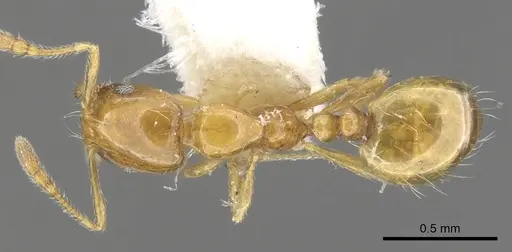
Literature
Loading...Loading products...