

Monomorium talbotae
- Scientific Name
- Monomorium talbotae
- Tribe
- Solenopsidini
- Subfamily
- Myrmicinae
- Author
- DuBois, 1981
- Distribution
- Found in 1 countries
Monomorium talbotae Overview
Monomorium talbotae is an ant species of the genus Monomorium. It is primarily documented in 1 countries , including United States of America. Detailed taxonomic data and occurrence records can be further explored via authoritative databases such as AntWeb or the Global Biodiversity Information Facility (GBIF).
Monomorium talbotae
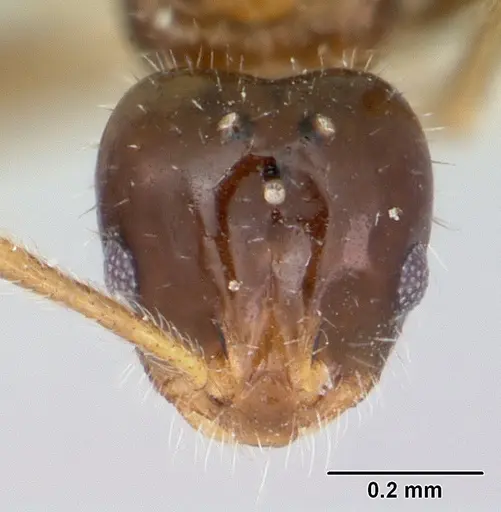
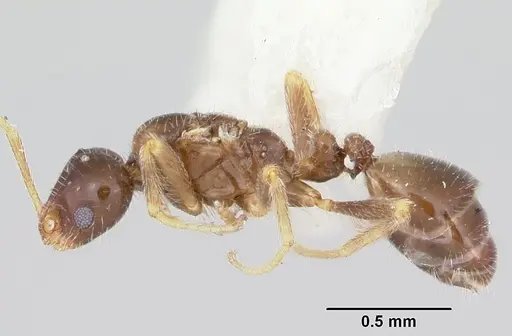
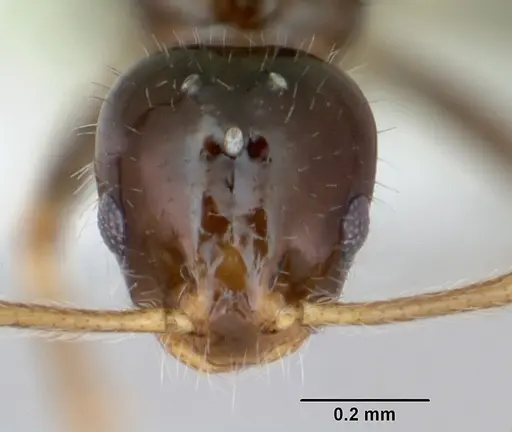
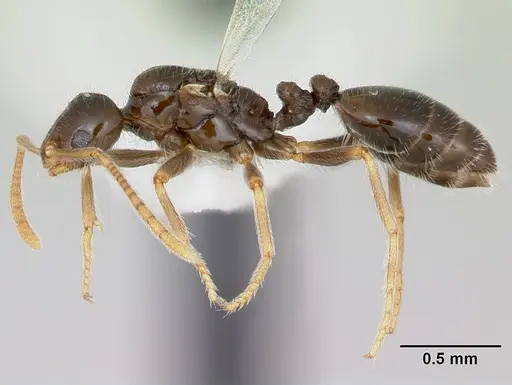
Monomorium talbotae is an extraordinarily rare workerless social parasite ant from the eastern United States. These tiny ants measure just 0.63-0.81mm in queens, making them significantly smaller than their host species (Monomorium carbonarium, also known as the little black ant). They have smooth, shining integument and pale brown coloration throughout. The species was first discovered by Mary Talbot in 1966 at the E.S. George Reserve in Livingston County, Michigan, living within colonies of M. minimum [1][2].
This is one of the most unusual ants you could consider keeping because it has no worker caste whatsoever. As an inquiline social parasite, M. talbotae queens live permanently inside host ant colonies, depending entirely on the host workers for food and care. Multiple parasite queens can coexist in a single host colony, suggesting a functionally polygynous arrangement. The species has been found in only a handful of locations across Michigan and one specimen from Colorado [2].
Quick Summary
- Difficulty: Expert/Not Recommended
- Origin & Habitat: Eastern United States (Michigan, possibly Colorado). Found in dry, grassy fields with patches of bare sandy soil, moss, and lichen. The type locality in Michigan was a high, dry field with sparse vegetation including Poa compressa grass and various forbs like Lespedeza capitata and Solidago species [3].
- Colony Type: Workerless inquiline social parasite. Lives permanently within host colonies (Monomorium carbonarium). Multiple parasite queens can coexist in a single host colony, functionally polygynous. No worker caste exists, the species is entirely dependent on host workers for survival [1][2].
- Colony: Polygyne
- Queen: Socially parasitic
- Size & Growth:
- Queen: 0.63-0.81mm (significantly smaller than host species) [2]
- Worker: None, workerless species [2]
- Colony: Unknown in absolute terms, the parasite colony exists within host colonies which typically contain fewer than 100 workers [2]
- Growth: N/A, no workers to raise brood
- Development: N/A, workerless species. Queens do not produce workers, they rely on host workers to maintain the mixed colony [2] (This species produces only alate (reproductive) queens and males. No worker caste exists.)
- Antkeeping:
- Temperature: Unknown for this species specifically. Host species M. minimum tolerates moderate temperatures, aim for room temperature around 20-24°C as a starting point [3].
- Humidity: Unknown. The Michigan habitat was described as dry field with patches of bare soil. Avoid overly damp conditions.
- Diapause: Unknown, likely follows host colony seasonal patterns. The host species M. minimum likely enters diapause in winter.
- Nesting: This species cannot be kept in a traditional sense. Parasite queens must live within a functioning host colony (M. minimum). There is no established captive housing method for this species.
- Behavior: Extremely docile by necessity, these ants have no means of defending themselves without workers. They are entirely dependent on host colony acceptance for survival. Queens are accepted into host colonies, with evidence suggesting the parasite may be host-queen tolerant (one observed colony contained both the host queen and multiple parasite queens) [2]. Escape risk is minimal given their tiny size and complete dependence on host workers. Males and alate queens are produced seasonally, with nuptial flights occurring in late June to mid-July in Michigan [1].
- Common Issues: This species cannot be kept in captivity, it requires a living host colony of Monomorium carbonarium to survive, and no method exists for maintaining mixed colonies., The species has no worker caste. Queens cannot feed themselves, tend brood, or maintain the nest without host workers., Ethical concerns: collecting this species from the wild would require destroying the rare host colonies it depends on., Only a handful of wild colonies have ever been documented. The species is extremely rare and potentially threatened., Even if you could obtain a host colony, successfully introducing parasite queens and maintaining the relationship is entirely unproven.
Why This Species Cannot Be Kept
Monomorium talbotae is one of the few ant species that simply cannot be maintained in captivity through conventional means. This is not a matter of difficulty or specialized equipment, it is a fundamental biological constraint. As a workerless inquiline social parasite, this species has no worker caste. The queens cannot feed themselves, cannot tend to any brood they might produce, and cannot maintain or defend a nest. They exist entirely as parasites within colonies of their host species, Monomorium carbonarium (also called the little black ant). The host workers do all the work, foraging, nursing brood, maintaining the nest, and even feeding the parasite queens [2]. Without a living host colony, M. talbotae queens would simply starve or die of exposure.
Even if you could obtain a colony of M. minimum (which is itself a small, modest ant), there is no established method for successfully introducing parasite queens and maintaining a mixed colony. The biology of how the parasite integrates into the host colony, how the host accepts the intruders, and what triggers the production of parasite alates are not well understood. No antkeeper has documented success maintaining this species long-term. Additionally, collecting M. talbotae from the wild would require destroying the rare host colonies it depends on, which raises serious ethical concerns about potentially harming already critically small populations [1].
The Biology of Workerless Inquiline Ants
Monomorium talbotae belongs to a rare category of ants called workerless inquiline social parasites. These ants have essentially evolved away from the typical ant lifestyle of having a worker caste that forages, builds nests, and cares for brood. Instead, they have become permanently dependent on host ant colonies. The parasite queens invade a host colony, are accepted by the host workers (through mechanisms that are not fully understood), and then live off the resources the host workers gather [2].
What makes M. talbotae particularly unusual is that multiple parasite queens can coexist within a single host colony. One documented colony contained six dealate (wingless, mated) parasite queens along with 56 winged queens and 10 males, all living alongside the host colony [2]. This suggests the species is functionally polygynous, meaning multiple reproductive queens can share a single nest. Interestingly, one of the three documented host colonies actually contained its own host queen, suggesting M. talbotae may be tolerant of the host queen's presence, unlike some social parasites that kill the host queen to take over the colony [2].
The species produces only alate (reproductive) queens and males. These are the only castes that exist. When its time to reproduce, the alates leave the host colony and conduct nuptial flights, the only time they leave the nest. After mating, new queens must find and invade another host colony to establish themselves as parasites.
Distribution and Rarity
Monomorium talbotae is one of the rarest ants in North America. It has been documented from only a handful of locations. The type series was collected from the E.S. George Reserve in Livingston County, Michigan, in 1966,where Mary Talbot found three mixed colonies living within M. minimum nests [1][2]. For decades, this was the only known population.
In 2004,a single specimen was collected near Buena Vista, Colorado, by entomologist Stefan Cover, representing a significant range extension and the first record outside Michigan [2]. The Colorado specimen was found at an elevation of 2621 meters (8600 feet) in an open grassy slope with scattered pinyon and ponderosa pines, a very different habitat from the Michigan sites. This specimen was a female found among host workers, suggesting the species may have a broader, if sparse, distribution across eastern North America.
The extreme rarity makes field collection both difficult and ethically problematic. Given that only a handful of wild colonies have ever been documented, any collection could potentially impact already tiny populations.
Related Species and the Monomorium Minimum Group
Monomorium talbotae belongs to the Monomorium carbonarium species group, which contains several other North American inquiline parasites. Its closest relatives include Monomorium inquilinum and Monomorium pergandei, which are also workerless social parasites living in host ant colonies [3]. The host species for M. talbotae is Monomorium carbonarium (also classified as M. carbonarium in some sources), a small black ant common across eastern North America.
The genus Monomorium is known for its diversity of social parasitic species, with multiple independent evolutions of the inquiline lifestyle. Many Monomorium species in the minimum group have reduced morphological features, smaller size, simplified mandibles (often reduced to just 2 teeth), and reduced palps, all adaptations to their parasitic lifestyle [2]. These morphological reductions make sense: without workers to perform colony tasks, the queens no longer need the robust mouthparts and sensory structures that would be necessary for foraging or nest-building.
Understanding the host species is crucial for anyone studying M. talbotae. Monomorimum minimum is a small (1.5-2mm), modest ant that nests in soil, often under stones or in rotting wood. They are generalist foragers that eat small insects, honeydew, and various organic matter. If you were to attempt any research on M. talbotae, you would need to first understand the biology and behavior of M. minimum.
Frequently Asked Questions
Can I keep Monomorium talbotae as a pet ant?
No. This species cannot be kept in captivity. As a workerless inquiline social parasite, it has no worker caste and cannot survive without a living host colony of Monomorium carbonarium. There is no established method for maintaining mixed parasite-host colonies, and even if there were, the extreme rarity of this species makes wild collection unethical and impractical. This is not a species for antkeeping, it is a biological curiosity that exists only in the wild.
Why doesn't Monomorium talbotae have workers?
This is an inquiline social parasite, a species that has evolved to live permanently within host ant colonies. Over evolutionary time, the worker caste was lost because the parasite queens no longer needed workers to maintain a nest. Instead, they exploit the host workers to do all the work. This is a rare lifestyle found in only a handful of ant genera. The queens are entirely dependent on host workers for food, shelter, and care of their brood.
What do I feed Monomorium talbotae?
Nothing, you cannot keep this species. In the wild, parasite queens are fed by host workers through trophallaxis (mouth-to-mouth food sharing). The host workers forage for the entire mixed colony and then regurgitate food to feed the parasite queens. Without host workers, there is no way to feed or maintain these ants.
Where can I find Monomorium talbotae?
This species is extremely rare and has been found in only a handful of locations. The only documented populations are in Michigan (Livingston County, E.S. George Reserve) and possibly one specimen from Colorado. Even in these locations, only three mixed colonies have ever been documented. The species should not be collected from the wild due to its extreme rarity and the ethical concern of destroying the host colonies it depends on.
What is the host species for Monomorium talbotae?
Monomorium talbotae lives as a social parasite in colonies of Monomorium carbonarium (also known as the little black ant). This is the only documented host species. The parasite queens integrate into the host colony and are fed and cared for by the host workers. One documented host colony even contained its own host queen alongside multiple parasite queens, suggesting M. talbotae may be tolerant of the host queen's presence.
How big do Monomorium talbotae colonies get?
The colony size is essentially the size of the host colony, since there are no parasite workers. The few documented host colonies containing M. talbotae were small, one Colorado colony had fewer than 100 ants total (30 alate parasite females and 21 host workers). The Michigan colonies were similarly modest. The parasite queens themselves are tiny, measuring only 0.63-0.81mm, significantly smaller than their host species.
When do Monomorium talbotae alates take flight?
Based on the Michigan collections, nuptial flights occur in late June through mid-July. The first collection on June 30 contained 56 winged females and 9 males, mostly in upper chambers of the nest as if ready to leave. By July 13,most alates had already departed, with only 6 dealate females,1 winged female, and 5 males remaining. This suggests the flight season is very brief, likely just a few weeks in summer.
Is Monomorium talbotae endangered?
The IUCN status is Vulnerable (VU), reflecting its extreme rarity and limited distribution. Only a handful of wild colonies have ever been documented, all in Michigan with a possible single record from Colorado. The species faces significant conservation concerns simply due to its very small population size and restricted range.
What's the difference between Monomorium talbotae and other Monomorium parasites?
M. talbotae is one of several workerless inquiline species in the M. minimum species group. It can be distinguished from relatives like M. inquilinum and M. pergandei by its small size and the fact that its metanotum does not reach the level of the propodeum and scutellum. All are workerless parasites, but M. talbotae appears to be unique in its apparent tolerance of the host queen (one documented colony had both host and parasite queens).
References

This caresheet is licensed under CC BY-SA 4.0 .
CASENT0103531
View on AntWeb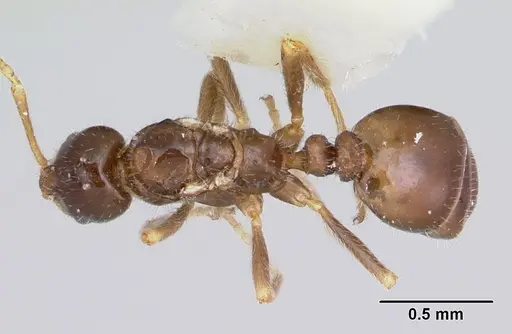
CASENT0173041
View on AntWeb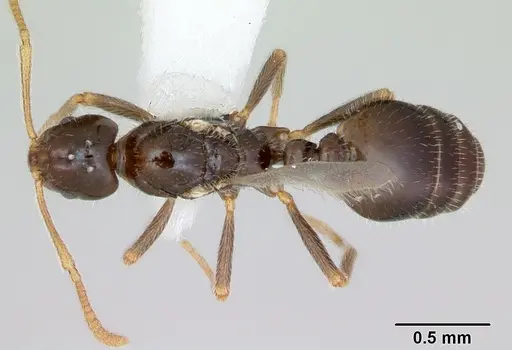
Literature
Loading...Loading products...