

Monomorium stictonotum
- Scientific Name
- Monomorium stictonotum
- Tribe
- Solenopsidini
- Subfamily
- Myrmicinae
- Author
- Heterick, 2001
- Distribution
- Found in 1 countries
Monomorium stictonotum Overview
Monomorium stictonotum is an ant species of the genus Monomorium. It is primarily documented in 1 countries , including Australia. Detailed taxonomic data and occurrence records can be further explored via authoritative databases such as AntWeb or the Global Biodiversity Information Facility (GBIF).
Monomorium stictonotum
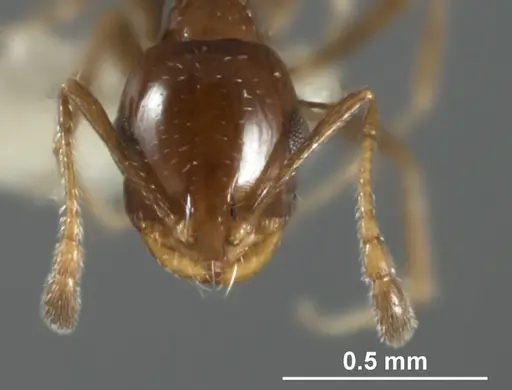
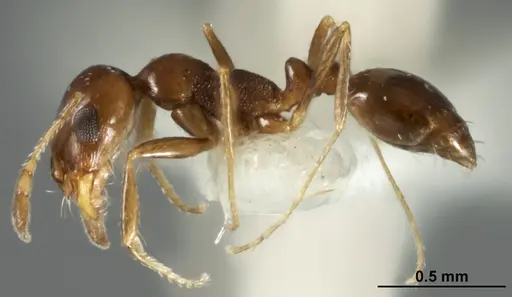
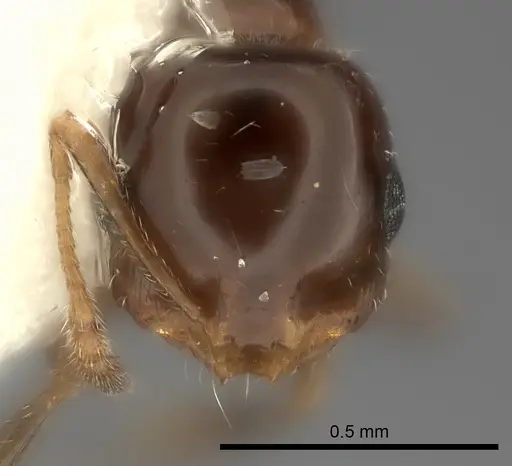
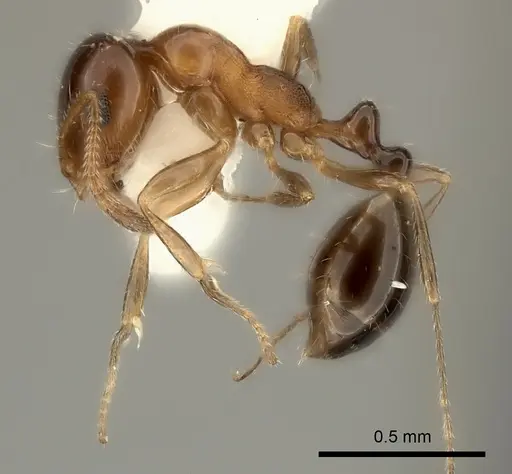
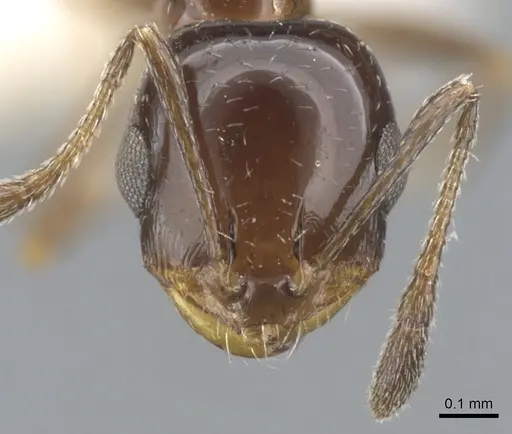
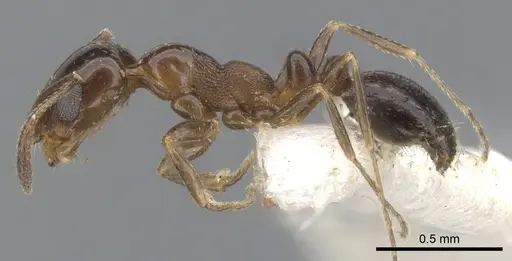
Monomorium stictonotum is a tiny Australian ant species measuring just 1.1-1.4mm in total length. Workers are pale brown to chocolate colored with yellow mandibles, and have distinctive large, kidney-shaped eyes. This species belongs to the Monomorium group and is found throughout the arid and semi-arid regions of South Australia and Western Australia, where it inhabits mallee, heathland, shrubland, and sand dune environments [1]. The species is closely related to Monomorium aithoderum and M. nanum, and can be distinguished mainly by eye conformation. Only the worker caste has been positively identified for this species [1].
This is a small, inconspicuous ant that makes up much of the Monomorium biomass in drier areas of southern Australia. As a desert-dwelling species, it has adapted to harsh, dry conditions with high temperature tolerance. The colony sizes are likely small to moderate, typical of desert Monomorium species.
Quick Summary
- Difficulty: Medium
- Origin & Habitat: Arid and semi-arid Australia, found in mallee, heathland, shrubland, and sand dunes across South Australia and Western Australia [1]
- Colony Type: Likely monogyne (single queen) based on typical Monomorium patterns. Colony structure is not directly documented for this species.
- Colony: Monogyne
- Founding: Claustral
- Size & Growth:
- Queen: Not documented, queens have not been described for this species
- Worker: 1.1-1.4mm total length (HML 1.11-1.40) [1]
- Colony: Likely small to moderate (under 500 workers) based on typical desert Monomorium patterns
- Growth: Unknown, likely moderate based on genus patterns
- Development: Estimated 5-8 weeks at optimal temperature based on related Monomorium species (Direct development timeline not studied for this species. Estimates based on genus-level patterns for small desert ants.)
- Antkeeping:
- Temperature: Keep at 26-30°C, reflecting their arid Australian origin. A heating cable on one side of the nest creates a suitable gradient. They tolerate high temperatures well.
- Humidity: Low to moderate, these are desert ants adapted to dry conditions. Keep nest substrate relatively dry with occasional misting. Avoid damp, stagnant conditions.
- Diapause: Likely reduced activity during Australian winter (June-August) but not a true hibernation. Keep at room temperature (15-20°C) during this period if colony shows reduced activity.
- Nesting: Use a dry nest setup, Y-tong, acrylic, or plaster nests work well. These ants prefer tight, narrow chambers scaled to their tiny size. Avoid humid, naturalistic setups.
- Behavior: Workers are small and fast-moving. They likely forage individually for small prey and honeydew. Their tiny size means excellent escape prevention is essential, they can squeeze through very small gaps. Non-aggressive toward humans and unlikely to sting effectively due to their minute size.
- Common Issues: escape prevention is critical, their tiny size allows them to squeeze through standard barrier gaps, overheating risk, while they tolerate heat, direct heating can dry out the nest too quickly, colonies may be slow to establish due to small colony size and limited workers, wild-caught colonies may have parasites that are difficult to detect, difficulty identifying queens means founding colonies may be hard to obtain
Housing and Nest Setup
Monomorium stictonotum is a tiny ant that requires appropriately scaled housing. Use nests with small, tight chambers, standard acrylic formicariums or Y-tong nests work well. The chambers should be narrow with passages sized to their 1-2mm body width. Test tube setups can work for founding colonies but monitor for drying. These desert ants prefer dry conditions, so avoid naturalistic setups with soil that retain moisture. Place the nest in a warm area of your ant setup, around 26-30°C. Escape prevention is critical, these tiny ants can squeeze through gaps that larger species cannot. Use fine mesh barriers and ensure all lid seams are tight. [1]
Feeding and Diet
Like most Monomorium species, these ants are omnivorous and will accept both protein and sugar sources. Offer sugar water, honey, or diluted nectar regularly as an energy source. For protein, provide small live prey appropriate to their tiny size, fruit flies, pinhead crickets, small mealworms, or other micro-arthropods work well. They are likely predators in the wild, hunting small insects and scavenging. Feed protein sources 2-3 times per week, and keep sugar water available at all times. Remove uneaten prey after 24-48 hours to prevent mold. Their small size means even tiny food items are substantial meals.
Temperature and Heating
As an Australian desert species, Monomorium stictonotum thrives in warm conditions. Maintain nest temperatures between 26-30°C for optimal colony activity and brood development. Use a heating cable or heating mat placed on one side of the nest to create a temperature gradient, allowing workers to regulate their own exposure. Avoid placing heat sources directly under water reservoirs, as this causes excessive condensation. Room temperature (20-24°C) is acceptable but will result in slower colony growth. During the Australian winter months (June-August), you may reduce temperatures slightly to 20-24°C if the colony shows reduced activity, but true hibernation is not required. [1]
Humidity and Water
These are arid-adapted ants that prefer dry conditions. Keep humidity low to moderate, the nest substrate should be relatively dry, not damp. Provide a water tube or moisture chamber in the outworld but do not saturate the nest material. Mist the outworld occasionally for drinking water rather than keeping the nest constantly humid. The key is balance: enough water for the ants to drink and maintain basic humidity, but not so much that the nest becomes damp and mold-prone. Monitor for condensation inside the nest, excessive moisture is more dangerous than dryness for this species. [1]
Colony Establishment
Establishing Monomorium stictonotum colonies can be challenging because queens have not been positively identified for this species, making wild-caught queens difficult to obtain. Most keepers will need to rely on colony fragments or workers only. If you obtain a queen, she will likely be claustral, sealing herself in a chamber and raising the first brood alone on stored fat reserves. Founding colonies should be kept in a warm, quiet location with minimal disturbance. The initial colony growth will be slow as the queen (if present) raises her first nanitic workers. Once established, colonies grow gradually through the addition of new workers.
Behavior and Temperament
Monomorium stictonotum workers are small, fast, and active. They likely forage individually or in small groups rather than forming large raiding parties. Their tiny size makes them appear nervous and jittery compared to larger ant species. They are not aggressive toward humans and present no sting threat due to their minute size. The main behavioral concern is escape, their small size means they are excellent escape artists. Always use multiple escape barriers (fluon on rim, fine mesh on ventilation) and check connections regularly. They are best suited for keepers who enjoy observing small, active ants and don't need large, dramatic colonies.
Frequently Asked Questions
How long does it take for Monomorium stictonotum to produce first workers?
The exact timeline is unconfirmed for this species, but based on related Monomorium species, expect 5-8 weeks from egg to first worker at optimal temperature (26-30°C). Founding colonies may take longer as the queen raises her first brood alone.
What do Monomorium stictonotum ants eat?
They are omnivorous. Offer sugar water or honey as a constant energy source, and protein sources like fruit flies, small mealworms, or other tiny insects 2-3 times per week. Remove uneaten prey after 24-48 hours.
Can I keep Monomorium stictonotum in a test tube?
Yes, test tubes work well for founding colonies. Ensure the water reservoir is appropriately sized and monitor for drying. Transfer to a proper nest once the colony reaches 20-30 workers.
Do Monomorium stictonotum ants sting?
Their tiny size (1.1-1.4mm) means they are unable to sting humans effectively. They are completely harmless to keepers.
What temperature do Monomorium stictonotum need?
Keep nest temperatures between 26-30°C. A heating cable on one side of the nest creates a suitable gradient. They tolerate heat well but avoid direct overheating that dries the nest.
Are Monomorium stictonotum good for beginners?
They are rated medium difficulty. Their tiny size requires excellent escape prevention, which can be challenging for complete beginners. However, they are hardy once established and don't require complex care. Best for keepers with some antkeeping experience.
How big do Monomorium stictonotum colonies get?
Colony size is not directly documented, but based on typical desert Monomorium patterns, expect small to moderate colonies of likely under 500 workers.
Do Monomorium stictonotum need hibernation?
They do not require true hibernation. During Australian winter (June-August), you can reduce temperatures slightly to 20-24°C if the colony shows reduced activity, but this is optional.
Why are my Monomorium stictonotum escaping?
Their tiny size makes them excellent escape artists. Use multiple barriers: apply fluon to rim edges, use fine mesh (0.5mm or smaller) on ventilation holes, and check all lid seams regularly. Even tiny gaps that larger ants cannot pass will allow these to escape.
When should I move my colony to a formicarium?
Transfer from a test tube to a proper nest once the colony reaches 20-30 workers or when the test tube shows signs of drying/mold. Use a nest with small, appropriately scaled chambers.
References

This caresheet is licensed under CC BY-SA 4.0 .
ANIC32-015689-1
View on AntWeb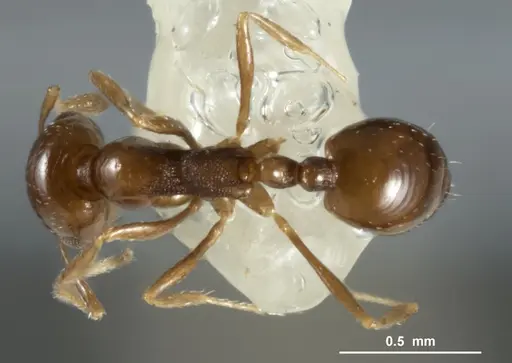
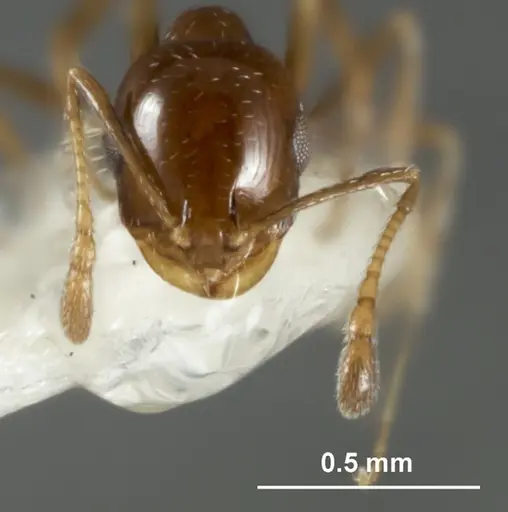
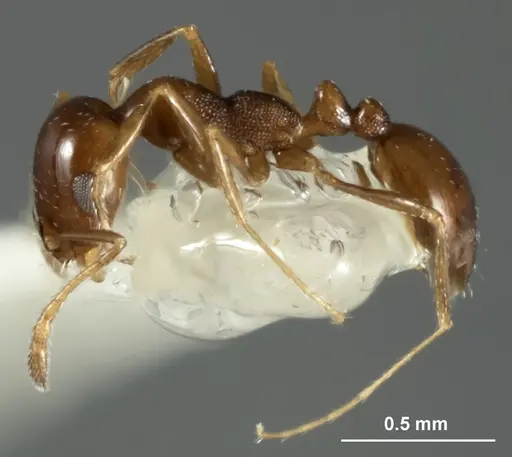
ANIC32-015689-2
View on AntWeb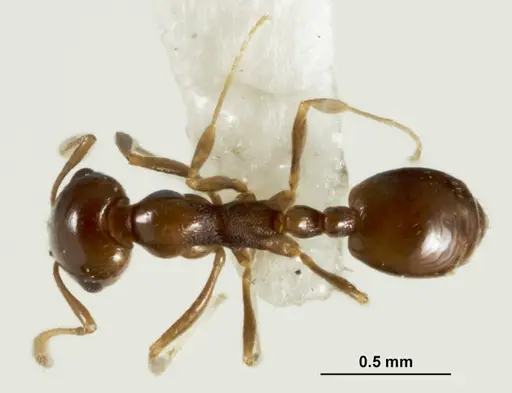
CASENT0217890
View on AntWeb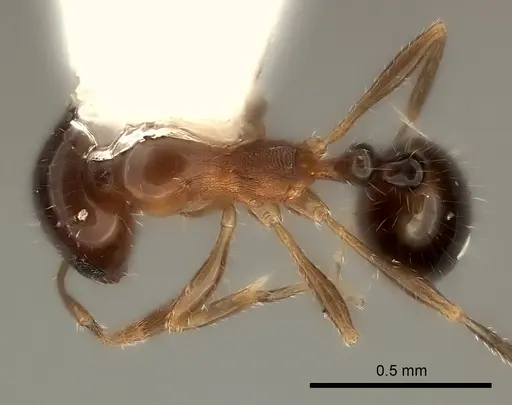
CASENT0902324
View on AntWeb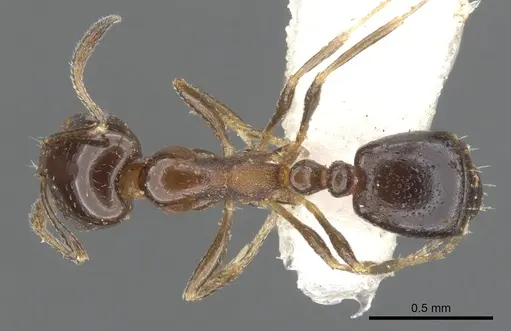
Literature
Loading...Loading products...