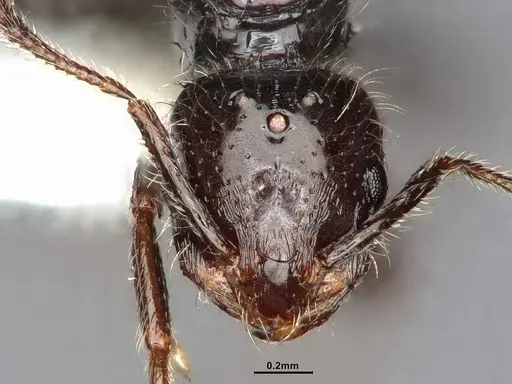
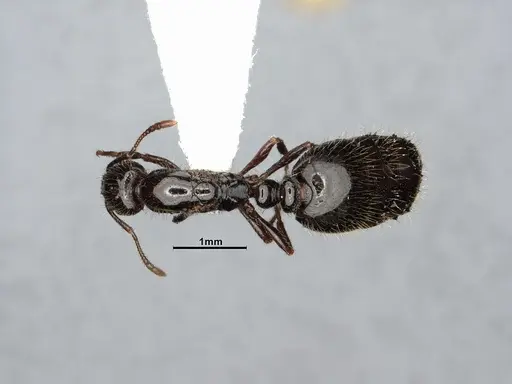
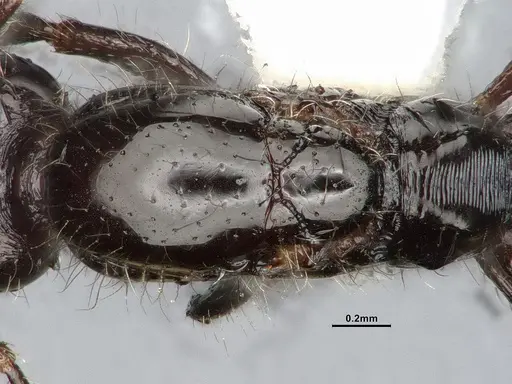
Monomorium minimum - "Little Black Ant"
Monomorium minimum, commonly known as the Little Black Ant, is a tiny, shiny black ant species found throughout North America. Workers are typically 1-2 mm in length, while queens are larger, ranging from 3.5-5 mm. These ants are monomorphic, meaning there's only one worker caste, and they are known for forming moderately to large-sized colonies that can contain thousands of workers and multiple queens. They are highly adaptable scavengers and predators, often found foraging in scent-marked trails. Despite their small size, they play a vital role in their ecosystems and are well-adapted to both natural and urban environments.
- Difficulty: Easy
- Origin & Habitat: North America in Highly adaptable, found in diverse environments including arid grasslands, shrubs, pinyon-juniper forests, ponderosa pine-riparian sites, and urban areas. They often nest in soil, under rocks, logs, and wood, or in wall voids and masonry in buildings..
- Colony Type: Polygyne (multiple queens), claustral (queens seal themselves in after nuptial flight to establish new nests and lay eggs) founding.
- Size & Growth:
- Queen: 3.5-5.0mm
- Worker: 1.0-2.0mm
- Colony: Medium (thousands), with colonies typically reaching a few thousand workers per queen.. Fast, capable of reaching 200-400 workers within a year and growing quickly to over 1000 with proper feeding and heating. growth.
- Antkeeping:
- Temperature: Optimal temperature for faster growth is 27-30°C. They can survive in temperatures ranging from 5-35°C, and room temperature is generally fine, but additional heat promotes faster development and egg-laying..
- Humidity: Preferred humidity levels range from 35-70%, achievable with a standard test tube setup..
- Diapause: Not required. Not specified at Not specified.
- Nesting: M. minimum will nest in a variety of setups including test tubes, and artificial nests like those made of acrylic or 3D-printed designs that prevent escapes. In the wild, they prefer shallow nests in sandy soils, under rocks, wood, or within structures..
- Behavior: Low (towards handler, but can be aggressive scavengers and predators towards other insects) aggressiveness.
- Common Issues: Containment issues due to small size, Humidity fluctuations, Queen stress (especially during founding stage), Colony stalling if not kept warm enough.
Keeping Monomorium minimum can be quite rewarding for ant keepers, though their minuscule size presents a containment challenge. These tiny foragers are known for their ability to slip through even the smallest gaps. It’s highly recommended to use setups with tight fittings and perhaps apply a barrier like Fluon on the outworld walls to prevent escapes. Despite their escape artist tendencies, their robust nature and fascinating polygynous colonies make them a popular choice for those willing to implement robust containment strategies.
One unique aspect of Monomorium minimum is their rapid colony growth, especially when provided with consistent warmth. A colony can quickly expand from just a few workers to several thousands in under a year, particularly if temperatures are maintained in the optimal range of 27-30°C. This fast growth, coupled with their multiple queens, means you’ll soon have a bustling community, making them an engaging species to observe as they develop and forage.
When it comes to feeding, Little Black Ants are incredibly unfussy omnivores. They readily accept a wide range of carbohydrates such as honey, sugar water, and ant nectars. For protein, it's best to offer pre-killed insects like fruit flies, mealworms, or small crickets, as their tiny workers might struggle to take down live prey. This flexibility in diet simplifies their care and means you won't have to worry much about picky eaters in your colony.
While some populations of Monomorium minimum, particularly those from colder climates, can undergo diapause, it is generally not a requirement for this species in captivity. In fact, colonies sourced from consistently warm regions may not have the ability to hibernate at all, and forcing them into diapause could be detrimental. If you're unsure of your colony's origin, it's often safer to skip hibernation and maintain them at stable, warmer temperatures year-round, allowing for continuous growth.
Interestingly, Monomorium minimum colonies can exhibit inbreeding, allowing for the continuous production of new queens within the nest. This is a fascinating adaptation that helps sustain the colony's vitality, especially given that individual queen lifespans can be relatively short, sometimes around a year in a laboratory setting. This internal queen production means your colony has a built-in mechanism for long-term survival and expansion, adding another layer of intrigue to their care.