

Monomorium boltoni
- Scientific Name
- Monomorium boltoni
- Tribe
- Solenopsidini
- Subfamily
- Myrmicinae
- Author
- Espadaler & Agosti, 1987
- Distribution
- Found in 1 countries
Monomorium boltoni Overview
Monomorium boltoni is an ant species of the genus Monomorium. It is primarily documented in 1 countries , including Cabo Verde. Detailed taxonomic data and occurrence records can be further explored via authoritative databases such as AntWeb or the Global Biodiversity Information Facility (GBIF).
Monomorium boltoni
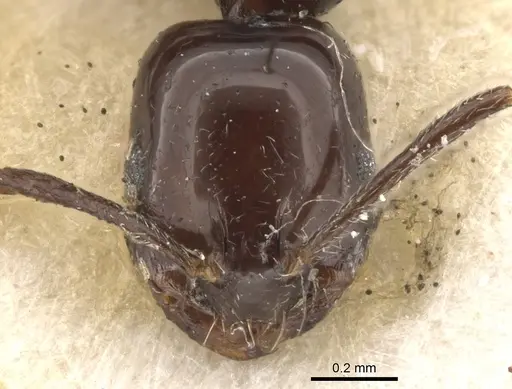
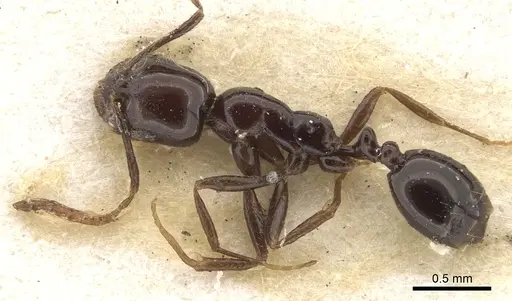
Monomorium boltoni is a tiny, dark ant species endemic to a single mountain peak on São Nicolau Island in Cape Verde. Workers are small and dark brown to black, measuring just 2-3mm. This species is remarkable for being one of the rarest ants in the world, it is known only from a tiny refuge near the summit of Monte Gordo, the highest point on the island, where it survives in just one small pocket of habitat [1]. The species was described in 1987 and is unique among Monomorium for having only ergatoid queens (wingless queens that develop from workers) rather than the typical winged queens seen in most ant species [2]. This makes their reproductive biology unusual compared to most ants.
Quick Summary
- Difficulty: Unknown, likely Expert
- Origin & Habitat: Endemic to Monte Gordo, the highest mountain of São Nicolau Island, Cape Verde. Found only near the mountain's peak in a small pocket of habitat where it survives among rocky terrain at high elevation [1].
- Colony Type: Single-queen colonies with ergatoid (wingless) replacement reproductives only, this species lacks typical winged queens [2].
- Colony: Monogyne
- Size & Growth:
- Queen: Unknown, ergatoid queens are smaller than typical winged queens, likely 3-4mm
- Worker: Approximately 2-3mm (estimated based on genus typical size)
- Colony: Unknown, likely small colonies given restricted habitat and ergatoid reproduction
- Growth: Unknown
- Development: Unknown, estimated 4-8 weeks based on typical Monomorium development (Development timeline has not been directly studied. Estimates based on related Monomorium species suggest 4-8 weeks at warm temperatures.)
- Antkeeping:
- Temperature: Keep warm, around 24-28°C. Being from a tropical island, they prefer consistently warm conditions. A heating cable on one side of the nest can provide a gentle gradient.
- Humidity: Moderate humidity, Cape Verde has a semi-arid climate but Monte Gordo's peak likely has slightly more moisture. Keep nest substrate lightly moist with a dry area available.
- Diapause: Unknown, being from a tropical island, they may not require true hibernation but may have reduced activity during cooler periods.
- Nesting: In nature they likely nest in small cavities under stones or in rocky soil at high elevation. In captivity, a small test tube setup or Y-tong nest with tight chambers works well. Their tiny size means chambers should be appropriately scaled.
- Behavior: This species is poorly documented in captivity. Based on genus behavior, they are likely relatively docile and not aggressive. Workers are tiny and may be shy. Escape prevention is critical due to their very small size, use fine mesh barriers and ensure all openings are sealed. They likely forage for small prey and honeydew.
- Common Issues: this species is extremely rare in the wild and may not be available to hobbyists at all, escape prevention is critical due to their tiny 2-3mm size, virtually no captive breeding information exists, this is not a species for beginners, wild populations are threatened by invasive ants and habitat loss, ergatoid reproduction means no nuptial flights, colonies reproduce differently than typical ants
Distribution and Conservation Status
Monomorium boltoni is one of the most restricted ant species in the world, known only from a tiny area near the summit of Monte Gordo on São Nicolau Island in Cape Verde [1]. This mountain is the highest point on the island, and the ant survives in just one small pocket of habitat, found within 100 meters of the peak [1]. The species faces severe existential threat from the invasive big-headed ant (Pheidole megacephala), which has been spreading up the mountain and could overrun the ant's last refuge [1]. This makes M. boltoni a conservation priority, and it is highly unlikely to be available for the antkeeping hobby given its critically endangered status in the wild.
Unique Reproductive Biology
This species is remarkable for having only ergatoid queens, wingless queens that develop from worker larvae rather than typical winged queens that disperse during nuptial flights [2]. This is unusual in the ant world and means the colonies reproduce differently than most ant species. Instead of new queens dispersing to found colonies elsewhere, ergatoid queens typically remain in or near the parent nest and may become replacement reproductives if the primary queen dies. This reproductive system is sometimes called 'queen dimorphism' in the genus Monomorium, though M. boltoni appears to have only the ergatoid form [2]. For antkeepers, this means you would not observe nuptial flights, colony reproduction happens through the emergence of ergatoid reproductives within established colonies.
Housing and Nest Setup
Given their tiny size (approximately 2-3mm workers), housing must be appropriately scaled with very small chambers and narrow passages. A small test tube setup works well for founding colonies, while established colonies can be moved to a Y-tong (acrylic) nest with appropriately sized chambers. Escape prevention is absolutely critical, these tiny ants can squeeze through the smallest gaps. Use fine mesh (at least 0.5mm or finer) on any ventilation holes, ensure all lids fit tightly, and consider using Fluon or another barrier coating on the outer edges of the outworld. Provide a small water tube and offer food on a shallow dish to minimize drowning risk.
Feeding
Like other Monomorium species, M. boltoni is likely omnivorous, accepting small protein sources and sugar. Offer small live prey appropriate to their size, such as fruit flies, pinhead crickets, or tiny insects. They will likely accept sugar water, honey, or diluted honey as an energy source. Feed small amounts a few times per week, removing any uneaten prey after 24 hours to prevent mold. Due to their tiny size, even very small prey items represent a significant meal.
Temperature and Seasonal Care
Being from tropical Cape Verde, this species prefers consistently warm temperatures in the range of 24-28°C. A heating cable placed on one side of the nest can create a temperature gradient, allowing the ants to regulate their own exposure to warmth. Monitor colony behavior, if workers cluster near the heat source, the nest may be too cool, if they avoid the heated area, it may be too warm. Since they come from an island location near the equator, they likely do not require a true hibernation period, though activity may slow during cooler months.
Frequently Asked Questions
Is Monomorium boltoni available for antkeepers?
This species is extremely rare and critically endangered in the wild, found only on a single mountain peak in Cape Verde. It is highly unlikely to be available in the antkeeping hobby, and collecting it would be ecologically irresponsible given its endangered status.
How do Monomorium boltoni colonies reproduce?
Unlike most ants that have winged queens for nuptial flights, this species has only ergatoid (wingless) queens that develop from workers. Colony reproduction happens internally through the emergence of these ergatoid reproductives rather than through dispersal flights.
What do Monomorium boltoni ants eat?
Like other Monomorium species, they are omnivorous. Offer small live prey (fruit flies, tiny insects), and sugar sources (honey water, diluted honey). Feed small amounts a few times per week.
What temperature do Monomorium boltoni need?
Keep them warm, around 24-28°C. Being from tropical Cape Verde, they prefer consistently warm conditions. A heating cable on part of the nest can provide warmth and a gradient.
Are Monomorium boltoni good for beginners?
No. This is not a species for beginners, it is one of the rarest ants in the world with virtually no captive breeding information available. Additionally, their tiny size makes them challenging to house and care for properly.
How big do Monomorium boltoni colonies get?
The maximum colony size is unknown. Given their restricted habitat and ergatoid reproduction system, colonies are likely relatively small, possibly under 100 workers.
What is the egg to worker timeline for Monomorium boltoni?
The exact development timeline has not been studied. Based on related Monomorium species, expect approximately 4-8 weeks from egg to worker at warm temperatures (around 25°C).
Do Monomorium boltoni need hibernation?
Being from a tropical island near the equator, they likely do not require true hibernation. However, they may have reduced activity during cooler periods.
Why is Monomorium boltoni important?
This species is critically important from a conservation perspective, it is one of the most restricted ant species in the world, found only in a tiny area on one mountain in Cape Verde. It faces existential threat from invasive ants and represents a unique evolutionary lineage with its ergatoid-only queen system.
References

This caresheet is licensed under CC BY-SA 4.0 .
CASENT0902218
View on AntWeb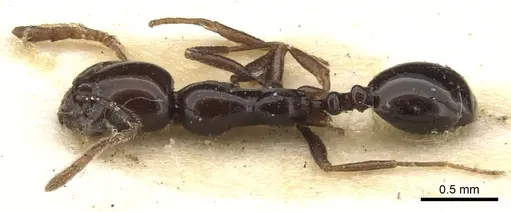
Literature
Loading...Loading products...