

Monomorium mediocre
- Scientific Name
- Monomorium mediocre
- Tribe
- Solenopsidini
- Subfamily
- Myrmicinae
- Author
- Santschi, 1920
- Distribution
- Found in 2 countries
Monomorium mediocre Overview
Monomorium mediocre is an ant species of the genus Monomorium. It is primarily documented in 2 countries , including Namibia, South Africa. Detailed taxonomic data and occurrence records can be further explored via authoritative databases such as AntWeb or the Global Biodiversity Information Facility (GBIF).
Monomorium mediocre
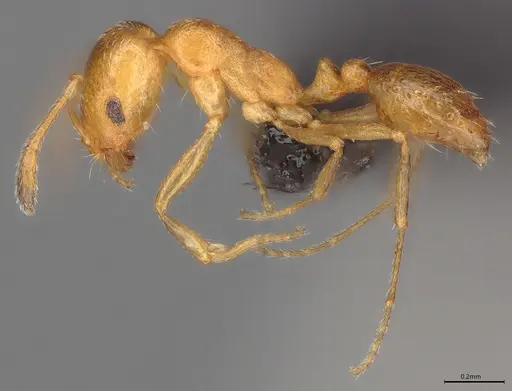
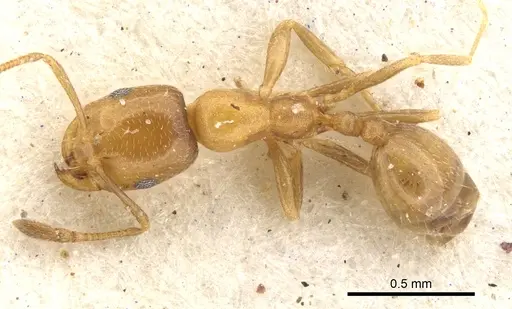
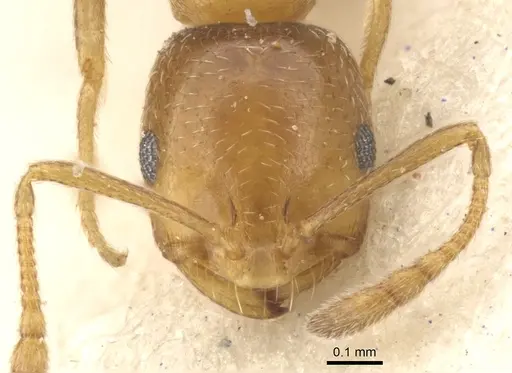
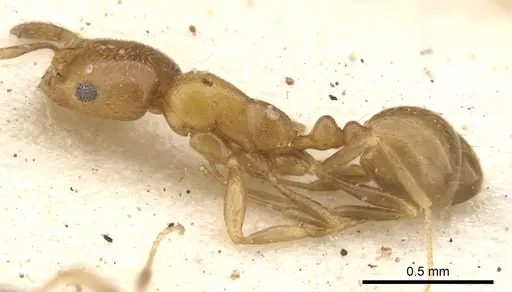
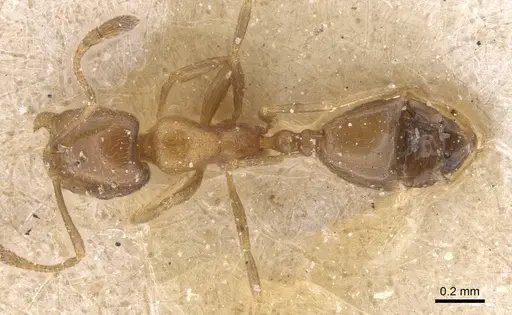
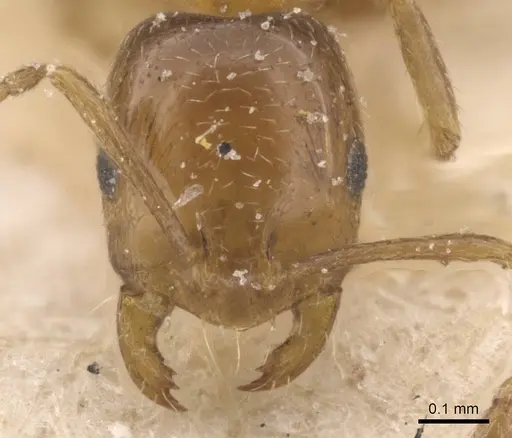
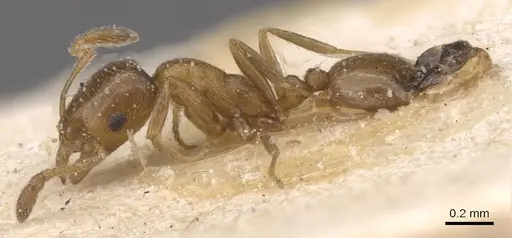
Monomorium mediocre is a tiny yellow to light brown ant belonging to the Monomorium salomonis species group. Workers measure just 1.9-2.0mm, making them one of the smaller ant species kept in captivity. The species was first described by Santschi in 1920 from specimens collected in Kimberley, South Africa, and is now known from Namibia, South Africa, and Zimbabwe [1]. This ant has very reduced sculpture and pilosity (fine hairs), giving it a smooth, almost glossy appearance. The eyes are relatively large for its size, positioned at midlength of the head sides. The gaster often appears darker than the rest of the body. What makes this species particularly interesting is its presence in saltpan habitats, an extremely harsh, dry environment, suggesting it has adapted to survive in challenging conditions [2].
Quick Summary
- Difficulty: Unknown, this species has never been kept in captivity and virtually nothing is known about its biology
- Origin & Habitat: Southern Africa (Namibia, South Africa, Zimbabwe). Found in saltpan habitats, flat, salty, often dry areas in desert regions, as well as ground stratum in savannah [2].
- Colony Type: Unknown, colony structure has not been documented. Most Monorium species are single-queen (monogyne), but this has not been confirmed for M. mediocre.
- Size & Growth:
- Queen: Undescribed, no queen measurements available [1]
- Worker: 1.9-2.0mm [1]
- Colony: Unknown, no colony size data available
- Growth: Unknown
- Development: Unknown, no development data exists (This species has never been studied in captivity, so development timeline is entirely unconfirmed. Based on its tiny size and related Monomorium species, expect relatively fast development (4-8 weeks at optimal temperature), but this is purely speculative.)
- Antkeeping:
- Temperature: Likely tolerates a wide range given its desert/saltpan origin. Start around 22-26°C and observe colony activity. Related species do well at room temperature (20-24°C).
- Humidity: Low to moderate, saltpan habitats are dry. Keep nest substrate relatively dry with occasional misting. Allow areas to fully dry between waterings.
- Diapause: Unknown, likely adapted to seasonal patterns in southern Africa. Monitor for natural slowing of activity in winter months.
- Nesting: Natural nesting is unconfirmed, but related Monomorium species nest in soil, under stones, or in small cavities. A small test tube setup or mini Y-tong nest works well for their tiny size. Provide tight chambers as they are very small.
- Behavior: The research shows this species is behaviorally dominant in its habitat, it monopolized 33.3% of baits in field studies with a 50% dominance score [2]. This suggests they are competitive and aggressive foragers. Workers are tiny but active. Escape prevention is critical due to their very small size, they can squeeze through standard barriers. No sting is documented, but their small size means any sting would be negligible to humans.
- Common Issues: completely unknown captive requirements, this species has never been kept in captivity, escape risk is extremely high due to tiny 2mm size, no information on founding behavior or colony establishment, field-collected colonies may carry unknown parasites, aggressive foraging may lead to escape attempts if barriers are inadequate
Why This Species Is Rare in Captivity
Monomorium mediocre is one of the least-studied ant species in the hobby. It was described in 1920 from South African specimens, and aside from a redescription by Bolton in 1987 and a 2015 ecological study in Namibia, virtually no research exists on its biology [1][2]. This means there are no established care protocols, no captive colony records, and no documented successful breeding in artificial setups. For antkeepers, this represents both a challenge and an opportunity, you would be pioneering husbandry for a species that has never been kept before. This requires significant experience with ant keeping and a willingness to experiment with conditions.
Habitat and Natural History
In the wild, M. mediocre has been documented in Namibian saltpan habitats, extremely harsh environments with high salinity, intense heat, and limited moisture [2]. It was found in the ground stratum, meaning it nests at or near ground level, likely in soil or under stones. The species is also known from savannah environments in South Africa and Zimbabwe. Its presence in saltpan habitats suggests it is adapted to dry conditions and can tolerate temperature extremes. The behavioral dominance data (50% dominance score, monopolizing 33% of baits) indicates these ants are aggressive competitors that actively defend food resources [2].
Related Species and Inferred Care
Since direct care information doesn't exist for M. mediocre, we can look to related Monomorium species for guidance. The genus Monomorium contains many small yellow ants that are commonly kept, including M. pharaonis (the Pharaoh ant) and M. minimum (the little black ant). These species typically prefer warm, relatively dry conditions and nest in small cavities. They are generalist foragers that will collect sugars and protein. However, M. mediocre's saltpan origin suggests it may prefer even drier conditions than typical house-infesting species. Start with moderate temperature (22-26°C) and lower humidity than most Myrmicinae, then adjust based on colony behavior. [1]
Housing Recommendations
Given the tiny 2mm size of these ants, housing requires careful consideration. Standard test tubes work but must have excellent escape prevention, these ants can squeeze through gaps that larger species cannot. A small Y-tong (AAC) nest with tight-fitting barriers and fine mesh is recommended. The nest chambers should be appropriately scaled, tiny passages and small chambers rather than the large chambers used for bigger ants. Provide a small outworld for foraging. Due to their small size and unknown requirements, starting with a simple test tube setup and observing behavior before moving to a formicarium is advisable. Always use fluon or other barrier methods on housing edges.
Feeding and Diet
Feeding requirements are unconfirmed, but based on related Monomorium species, they likely accept a standard ant diet. Offer sugar water or honey regularly, and protein sources such as small insects (fruit flies, pinhead crickets, mealworms). The behavioral dominance data suggests they are active foragers that will compete for food [2]. Given their tiny size, prey items should be appropriately small. Start with standard offerings and observe what they accept. Remove uneaten food promptly to prevent mold.
Important Considerations Before Keeping This Species
Before attempting to keep Monomorium mediocre, understand that you would be pioneering captive husbandry for a completely unstudied species. There are no care guides, no established protocols, and no experienced keepers to consult. You will need to document your own observations and be prepared for experimentation. Field collection in southern Africa would be required to obtain founding colonies, as this species is not available from commercial breeders. Additionally, ensure you understand the legal requirements for collecting and keeping ants from your region. This species is best suited for experienced antkeepers who enjoy the challenge of establishing care for new species. [1]
Frequently Asked Questions
Is Monomorium mediocre available for purchase?
No, this species is not commercially available. It has never been kept in captivity and would need to be field-collected from southern Africa (Namibia, South Africa, or Zimbabwe) by someone with appropriate collecting permits.
How long do Monomorium mediocre workers live?
Worker lifespan has not been documented for this species. Related small Monomorium species typically have workers that live several months to a year.
Can I keep multiple queens together?
Colony structure is unknown. Most Monomorium species are single-queen (monogyne), but this has not been confirmed for M. mediocre. Without data, combining unrelated queens is not recommended.
What temperature should I keep Monomorium mediocre at?
Optimal temperature is unconfirmed. Based on their saltpan habitat in Namibia, start with a warm range of 22-26°C and observe colony behavior. Related species do well at standard room temperature.
How big do Monomorium mediocre colonies get?
Maximum colony size is unknown. No colony size data exists in scientific literature. Related Monomorium species typically reach hundreds to a few thousand workers.
Is Monomorium mediocre a good species for beginners?
No. This species is not recommended for beginners precisely because nothing is known about its captive care. Keeping an unstudied species requires significant experience with ant husbandry and a willingness to experiment.
What do Monomorium mediocre eat?
Diet is unconfirmed. Based on related species, they likely accept sugar sources (honey, sugar water) and small protein (insects). The behavioral dominance data shows they actively monopolize food baits in the wild [2].
How do I start a Monomorium mediocre colony?
You would need to field-collect a founding queen from southern Africa. Mating season is unknown. Queens would need to be claustral (seal themselves in) like most Monomorium, but this is inferred rather than confirmed.
Does Monomorium mediocre need hibernation?
Diapause requirements are unknown. The species occurs in southern Africa where winters are mild. Monitor for natural slowing of activity and consider a cool period (15-18°C) for a few months if the colony shows seasonal patterns.
References

This caresheet is licensed under CC BY-SA 4.0 .
Literature
Loading...Loading products...