

Monomorium elghazalyi
- Scientific Name
- Monomorium elghazalyi
- Tribe
- Solenopsidini
- Subfamily
- Myrmicinae
- Author
- Sharaf & Aldawood, 2017
- Distribution
- Found in 1 countries
Monomorium elghazalyi Overview
Monomorium elghazalyi is an ant species of the genus Monomorium. It is primarily documented in 1 countries , including Yemen. Detailed taxonomic data and occurrence records can be further explored via authoritative databases such as AntWeb or the Global Biodiversity Information Facility (GBIF).
Monomorium elghazalyi
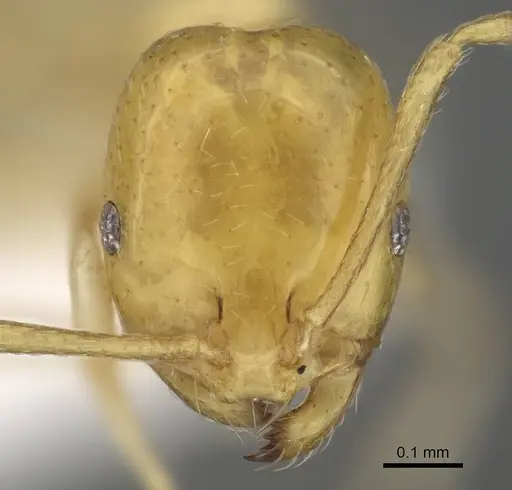
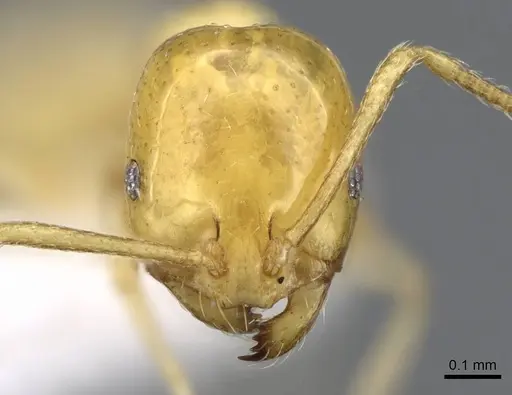
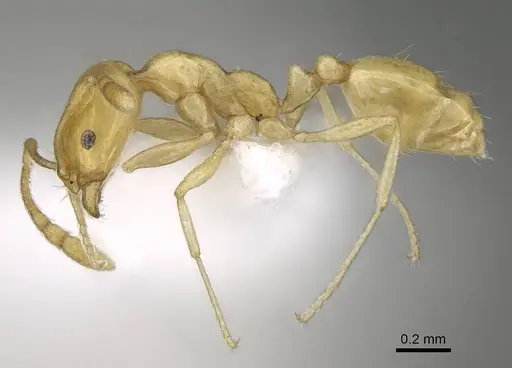
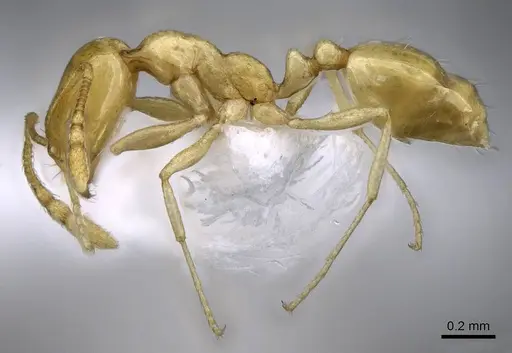
Monomorium elghazalyi is a tiny yellow ant endemic to Socotra Island in Yemen. Workers measure just 1.8-2.2mm, making them one of the smaller ant species kept in captivity. They belong to the Monomorium salomonis-group and are notable as the first unicolorous (entirely yellow) species of this group known from the Arabian Peninsula [1]. The species was only described in 2017,making it one of the newer ants in the hobby. Their body is smooth and glossy with very small eyes containing only 6 ommatidia in the longest row. In the wild, they nest in moist soil under rocks near date palm trees and forage in very dry soil rich in decaying organic matter [1]. This species is named after Mohammed Elghazaly (1917-1996), an Egyptian Islamic writer.
Quick Summary
- Difficulty: Medium
- Origin & Habitat: Socotra Archipelago, Yemen, an island in the Indian Ocean with a subtropical climate. They nest in moist soil under rocks next to date palm trees and forage in dry, organic-rich soil [1]. Likely endemic to Socotra [1].
- Colony Type: Colony structure is unconfirmed. Based on typical Monomorium patterns, likely single-queen colonies.
- Size & Growth:
- Queen: Not yet described in scientific literature, estimated 4-5mm based on genus patterns
- Worker: 1.76-2.20mm [1]
- Colony: Unknown, likely under 500 workers based on typical Monomorium size and the small worker measurements
- Growth: Unknown, likely moderate based on small colony sizes in related species
- Development: Unknown, estimated 6-8 weeks based on related Monomorium species at warm temperatures (No direct development data exists for this species. Estimates based on genus-level patterns for small Myrmicinae in warm climates.)
- Antkeeping:
- Temperature: Keep warm, around 24-28°C. Socotra has a subtropical climate with year-round warmth. A heating cable on one side of the nest creates a temperature gradient [1].
- Humidity: Provide moderate humidity with a moist area for the nest and drier foraging areas. In the wild, they nest in moist soil under rocks but forage in very dry areas [1]. Keep the nest substrate damp but not waterlogged.
- Diapause: Unknown, Socotra has minimal seasonal temperature variation. They may not require a true diapause but could benefit from a slight cool period (18-20°C) during winter months.
- Nesting: Use a test tube setup or small formicarium with tight chambers scaled to their tiny size. They prefer moist soil substrates, a hybrid nest (test tube + outworld) works well for founding colonies. Avoid large, open spaces.
- Behavior: These are tiny, docile ants that are unlikely to sting humans due to their small size. They are not aggressive and typically flee from disturbance. Workers are active foragers that search for small food items. Their very small size (under 2.2mm) means escape prevention is critical, they can squeeze through standard mesh barriers. Use fine mesh or fluon barriers to prevent escapes.
- Common Issues: tiny size means escapes are likely without fine mesh barriers, no published care information exists, keepers must experiment with conditions, colony size remains small, don't expect rapid population growth, founding colonies are fragile and require stable humidity, limited availability since the species was only described in 2017
Housing and Setup
Monomorium elghazalyi requires housing scaled to their tiny size. Workers measure only 1.8-2.2mm, so standard test tube setups work well for founding colonies. Use test tubes with cotton and a water reservoir, the tube should be small enough that the colony feels secure. For established colonies, a small formicarium with tight chambers and narrow connections works better than large, open spaces. These ants are not escape artists in the traditional sense, but their tiny size allows them to squeeze through gaps that larger ants cannot. Apply fluon to the edges of any outworld or use fine mesh (at least 0.5mm or smaller) on all ventilation holes. A hybrid setup combining a test tube for the nest chamber and a small outworld for foraging is ideal for starting colonies. The nest area should have moist substrate while the outworld remains dry. [1]
Feeding and Diet
In the wild, these ants have been found foraging in soil rich in decaying goat faeces under date palm trees, suggesting they are scavengers that exploit small organic particles [1]. In captivity, offer small protein sources like fruit flies, pinhead crickets, or small mealworms. Due to their tiny size, prey items should be appropriately scaled, flightless fruit flies are an excellent choice. They likely accept sugar sources, though this is unconfirmed. Offer a small drop of honey or sugar water alongside protein foods. Feed small amounts 2-3 times per week, removing uneaten prey after 24 hours to prevent mold. The key is offering appropriately-sized food, these ants cannot tackle large prey items.
Temperature and Humidity
Socotra Island has a subtropical climate with warm temperatures year-round. Keep your colony at 24-28°C for optimal activity and development. A heating cable placed on one side of the nest creates a gradient that allows ants to self-regulate their temperature. For humidity, provide a moist nest area, the substrate should feel damp but not soggy. In the wild, they nest in moist soil under rocks but forage in very dry areas [1]. This suggests they benefit from a humidity gradient within their setup. The outworld can be kept relatively dry while the nest chamber maintains moisture. Monitor for condensation, some moisture is good but excessive water can drown small colonies.
Colony Establishment
Since this species was only described in 2017,captive breeding information is extremely limited. Queens have not yet been described scientifically, so wild-caught founding colonies are the primary source for keepers. When acquiring a founding colony, transfer it to a test tube setup with moist cotton as the nest substrate. Place the setup in a dark, quiet location and avoid disturbing the colony for the first few weeks. The queen (if present) will seal herself in a chamber and lay eggs. Do not feed during the founding stage, the claustral queen (if this species follows typical Monomorium patterns) will have sufficient fat reserves to raise her first workers. Once the first workers emerge, you can begin offering tiny food items. Growth will likely be slow initially as the colony establishes itself. [1]
Seasonal Care
Socotra Island experiences minimal seasonal temperature variation, with temperatures ranging from 20-28°C throughout the year. This species may not require a traditional hibernation or diapause period. However, during winter months in temperate climates, you may reduce temperatures slightly to 20-22°C to match natural seasonal cues. Do not cool them dramatically, a slight reduction is sufficient if desired. Some keepers report that reducing temperatures during winter helps trigger spring activity in tropical species. Monitor your colony's behavior, if they remain active year-round at room temperature, no cooling is necessary. Avoid temperatures below 18°C as this could stress the colony.
Frequently Asked Questions
How long does it take for Monomorium elghazalyi to produce first workers?
The egg-to-worker timeline is unconfirmed for this species. Based on related Monomorium species in warm conditions, expect 6-8 weeks from egg to first worker. Small colonies grow slowly, so patience is essential during the founding stage.
Can I keep Monomorium elghazalyi in a test tube?
Yes, test tubes work well for this species due to their tiny size. Use a small test tube with a water reservoir and moist cotton. The tight space helps the colony feel secure. Transfer to a small formicarium once the colony reaches 20-30 workers.
What do Monomorium elghazalyi eat?
Based on their wild habitat (foraging in decaying organic matter), they likely scavenge small organic particles. In captivity, offer small protein sources like flightless fruit flies, tiny mealworms, or small cricket pieces. They may accept sugar water or honey as well.
Are Monomorium elghazalyi good for beginners?
This species is rated as Medium difficulty. While their small size presents some challenges (escape prevention, appropriately-sized food), they are docile and do not require complex care. However, the lack of published care information means keepers must be prepared to experiment.
How big do Monomorium elghazalyi colonies get?
Colony size is unconfirmed, but based on their tiny worker size (1.8-2.2mm) and typical Monomorium patterns, colonies likely reach a few hundred workers at maximum. Do not expect large, rapid-growing colonies.
Do Monomorium elghazalyi need hibernation?
Hibernation requirements are unknown. Socotra has a subtropical climate with minimal seasonal variation. They likely do not require a true diapause but may benefit from a slight temperature reduction (to around 20°C) during winter if you choose to simulate seasons.
Why are my Monomorium elghazalyi escaping?
Their tiny size (under 2.2mm) allows them to squeeze through gaps that larger ants cannot. Use fine mesh (0.5mm or smaller) on all ventilation and apply fluon barrier gel to the edges of any connections. Check all seams and connections for gaps.
Where is Monomorium elghazalyi native to?
Monomorium elghazalyi is endemic to Socotra Island in Yemen. It was only described in 2017 and is likely found nowhere else in the world. The Socotra Archipelago is a group of islands in the Indian Ocean.
When was Monomorium elghazalyi discovered?
This species was described in 2017 by Sharaf and Aldawood as part of the ant fauna survey of the Socotra Archipelago. It is one of the newer species in the ant-keeping hobby.
References

This caresheet is licensed under CC BY-SA 4.0 .
CASENT0746626
View on AntWeb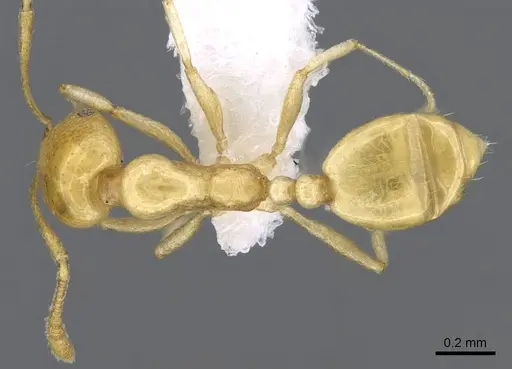
Literature
Loading...Loading products...