

Monomorium disetigerum
- Scientific Name
- Monomorium disetigerum
- Tribe
- Solenopsidini
- Subfamily
- Myrmicinae
- Author
- Heterick, 2001
- Distribution
- Found in 1 countries
Monomorium disetigerum Overview
Monomorium disetigerum is an ant species of the genus Monomorium. It is primarily documented in 1 countries , including Australia. Detailed taxonomic data and occurrence records can be further explored via authoritative databases such as AntWeb or the Global Biodiversity Information Facility (GBIF).
Monomorium disetigerum
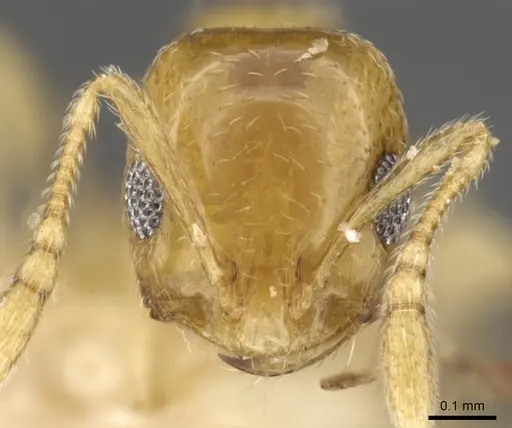
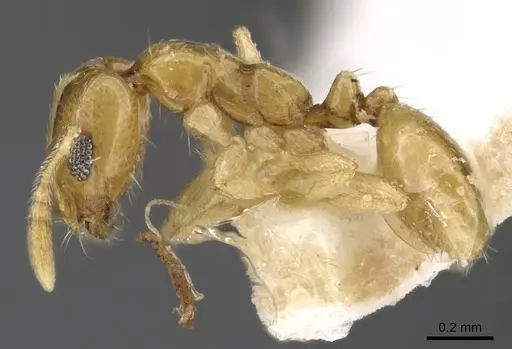
Monomorium disetigerum is a tiny yellow ant native to Australia, measuring just 1.01-1.34mm for workers and around 2.18mm for queens [1]. This species belongs to the Monomorium group and is distinguished by its characteristic pair of erect promesonotal setae and long setae on the petiolar node [1]. The ant is light to tawny yellow in color, with legs lighter than the body [1]. What makes this species particularly interesting is its nocturnal activity pattern, it forages on tree trunks and low vegetation in early evening hours, which is unusual for most ants [1]. In northern Australia (north of the Tropic of Capricorn), this species rivals the very similar Monomorium laeve in abundance, making it one of the most common ants in those regions [1].
Quick Summary
- Difficulty: Medium
- Origin & Habitat: Monomorium disetigerum is found throughout Australia, particularly in the northern regions. It is most common in the Pilbara Bioregion of Western Australia where it was the most frequently encountered ant species in surveys, found in 224 quadrats [2]. The species also appears on Barrow Island and the Tiwi Islands [3]. It inhabits dry to arid regions and is known to nest in areas with reduced propodeal sculpture, typically under stones or in soil [4].
- Colony Type: Colony structure is not extensively documented in scientific literature. Based on the genus Monomorium patterns, these ants likely form single-queen colonies (monogyne), though some related species can be polygynous. Further research needed to confirm exact colony structure.
- Founding: Claustral
- Size & Growth:
- Queen: 2.18mm [1]
- Worker: 1.01-1.34mm [1]
- Colony: Unknown, likely moderate-sized colonies based on related species
- Growth: Moderate, inferred from genus patterns
- Development: 6-10 weeks estimated based on related Monomorium species (Direct development data not available for this species. Estimates based on genus-level data for small Myrmicinae ants in similar conditions.)
- Antkeeping:
- Temperature: Keep at 22-26°C. Being an Australian species from primarily tropical to arid regions, they prefer warm conditions. A heating cable on one side of the nest can create a gradient
- Humidity: Moderate humidity around 50-60%. These ants come from drier Australian regions, so avoid overly damp conditions. Keep substrate moderately moist but allow some drying between waterings
- Diapause: Likely required. Australian ants from temperate/tropical regions often benefit from a reduced activity period during winter months, though specifics are unconfirmed
- Nesting: Small chambers work best given their tiny size. A Y-tong (AAC) nest or test tube setup with small diameter passages is ideal. They naturally nest under stones and in soil, so a naturalistic setup with fine substrate also works [4]
- Behavior: Monomorium disetigerum is nocturnally active, meaning they will be most active in the evening and night hours, this is unusual and noteworthy for antkeepers [1]. Workers are small but active foragers. They have distinctive erect setae giving them a slightly fuzzy appearance [4]. Due to their very small size, escape prevention is critical, they can squeeze through tiny gaps. They are not aggressive and likely have a mild sting, though being so small, it would be barely perceptible to humans. They are likely generalist feeders, accepting both sugar and protein sources.
- Common Issues: escape prevention is critical due to their very small 1-1.3mm size, use fine mesh and tight-fitting lids, nocturnal activity means you may rarely see them during daylight hours, this is normal, not a problem, slow colony growth can frustrate beginners, these are tiny ants with naturally moderate growth rates, humidity control is important, coming from drier Australian regions, too much moisture can be harmful, wild-caught colonies may have parasites that can devastate captive colonies
Housing and Nest Setup
Given their tiny size (workers only 1.01-1.34mm), Monomorium disetigerum requires carefully scaled housing. A Y-tong (AAC) nest with narrow chambers or a small test tube setup works well. The passages should be tight enough that workers feel secure but wide enough for easy movement, typically 2-3mm diameter passages suit these small ants. Because they are nocturnal, you may not see much activity during daylight hours, so placing the nest in a location with natural light cycles helps maintain their natural rhythm. Escape prevention is absolutely critical, these tiny ants can squeeze through gaps that larger species cannot. Use tight-fitting lids, apply Fluon to barrier zones, and ensure all connections are sealed. A small outworld area for foraging completes the setup. [1][4]
Feeding and Diet
Monomorium disetigerum is likely a generalist feeder like most Monomorium species. Offer sugar water or honey as a constant energy source, these tiny ants will readily accept sweet liquids. For protein, provide small prey items such as fruit flies, small mealworms, or other appropriately sized insects. Being nocturnal foragers, they will likely search for food in the evening hours, so timing feedings accordingly can increase observed activity. Remove uneaten prey after 24-48 hours to prevent mold. A varied diet helps maintain colony health. Given their small size, prey items should be appropriately scaled, even small fruit flies are substantial meals for these ants.
Temperature and Heating
As an Australian species from primarily tropical to arid regions, Monomorium disetigerum prefers warm conditions. Maintain nest temperatures between 22-26°C for optimal colony activity and brood development. A small heating cable placed on one side of the nest can create a gentle temperature gradient, allowing ants to self-regulate by moving to warmer or cooler areas. Avoid direct heat that could dry out the nest too quickly. Room temperature may suffice in warmer climates, but most keepers find a slight boost beneficial. Monitor with a thermometer placed near the nest. Being from northern Australia, they are adapted to consistent warmth rather than dramatic temperature swings.
Humidity and Water
Monomorium disetigerum comes from drier Australian regions, so moderate humidity is key. Aim for around 50-60% relative humidity in the nest area, damp but not wet. The substrate should be allowed to partially dry between waterings rather than staying constantly moist. A water tube or small reservoir in the outworld provides drinking water. Watch for condensation buildup in test tube setups as this can indicate excessive moisture. These ants are more tolerant of drier conditions than many tropical species, so when in doubt, err on the drier side. Signs of too much humidity include lethargy, fungal growth, or workers avoiding the nest area. [1]
Behavior and Activity Patterns
The most distinctive behavioral trait of Monomorium disetigerum is its nocturnal activity pattern, these ants forage primarily in early evening hours, which is unusual among ants [1]. You may see minimal activity during daylight even in a healthy colony. Workers forage on tree trunks and low vegetation in the wild, so they are active climbers. In captivity, they will explore the outworld in search of food, particularly during evening hours. They are not aggressive and likely have minimal defensive capabilities given their tiny size. Colonies are relatively peaceful and do not exhibit territorial aggression toward other colonies of the same species. Their small size and nocturnal habits make them fascinating but less visible pets compared to more diurnal species.
Frequently Asked Questions
How long does it take for Monomorium disetigerum to produce first workers?
Based on related Monomorium species, expect first workers (nanitics) approximately 6-10 weeks after the queen lays eggs. This timeline depends on temperature, warmer conditions within their range (22-26°C) speed development, while cooler temperatures slow it down.
Are Monomorium disetigerum good for beginners?
This species is rated as Medium difficulty. While their small size and nocturnal habits present some challenges, they are generally hardy once established. The main difficulties are escape prevention (critical with their tiny 1mm size) and their less visible activity patterns. Experienced antkeepers should have success, but complete beginners may struggle with the escape risk.
Can I keep multiple queens together?
The colony structure of this species is not well-documented. Based on related Monomorium patterns, they likely form single-queen colonies. Combining unrelated queens is not recommended as it has not been studied and could result in aggression.
Why don't I see my Monomorium disetigerum during the day?
This is completely normal, Monomorium disetigerum is nocturnal, meaning they are most active in early evening and night hours [1]. This is a distinctive trait of the species. Your colony is healthy even if you rarely see activity during daylight.
What size colony do Monomorium disetigerum colonies reach?
Colony size is not extensively documented, but based on related species and their abundance in the wild, colonies likely reach several hundred workers. They are not among the largest Monomorium species.
Do Monomorium disetigerum need hibernation?
Being from northern Australia (tropical to arid regions), they likely do not require true hibernation but may benefit from a reduced activity period during cooler months. A period of slightly cooler temperatures (18-20°C) for 2-3 months may be beneficial but is not strictly required.
What do Monomorium disetigerum eat?
They are generalist feeders. Offer sugar water or honey as a constant energy source, and protein sources like small fruit flies, pinhead crickets, or small mealworms. Remove uneaten prey after 24-48 hours.
When should I move my colony to a formicarium?
Wait until the colony has at least 20-30 workers before considering a formicarium. Test tube setups work well for founding colonies and early growth. The transition to a larger nest can happen once the colony is established and growing steadily.
How do I prevent escapes with these tiny ants?
Escape prevention is absolutely critical due to their very small 1-1.3mm size. Use fine mesh (at least 0.5mm or smaller), apply Fluon to barrier zones, ensure all lids fit tightly, and check all connections and seams regularly. Even tiny gaps that larger ants cannot pass through will allow these to escape.
References

This caresheet is licensed under CC BY-SA 4.0 .
ANTWEB1008675
View on AntWeb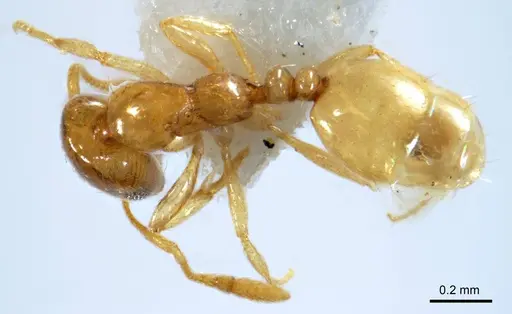
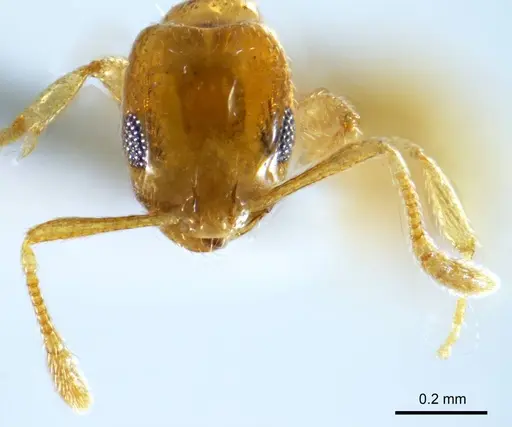
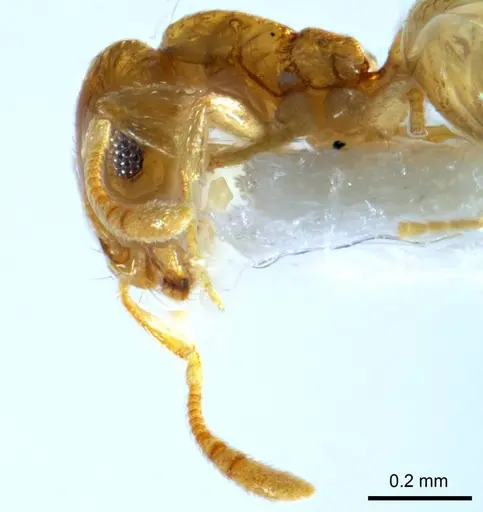
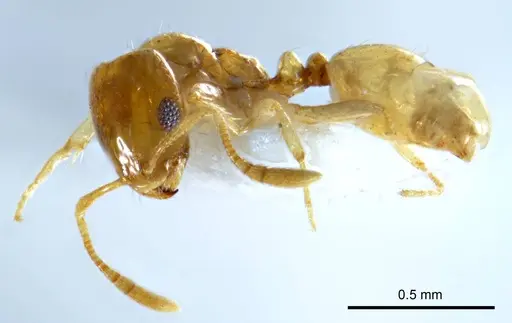
CASENT0902302
View on AntWeb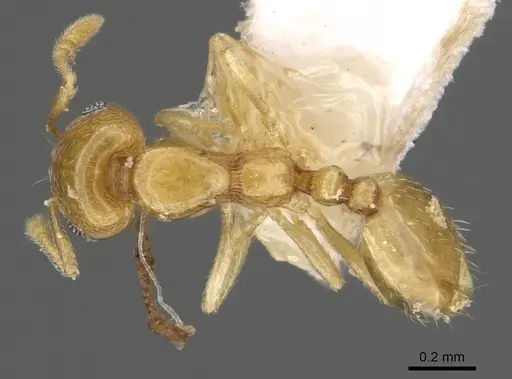
Literature
Loading...Loading products...