

Monomorium chnodes
- Scientific Name
- Monomorium chnodes
- Tribe
- Solenopsidini
- Subfamily
- Myrmicinae
- Author
- Heterick, 2006
- Distribution
- Found in 1 countries
Monomorium chnodes Overview
Monomorium chnodes is an ant species of the genus Monomorium. It is primarily documented in 1 countries , including Madagascar. Detailed taxonomic data and occurrence records can be further explored via authoritative databases such as AntWeb or the Global Biodiversity Information Facility (GBIF).
Monomorium chnodes
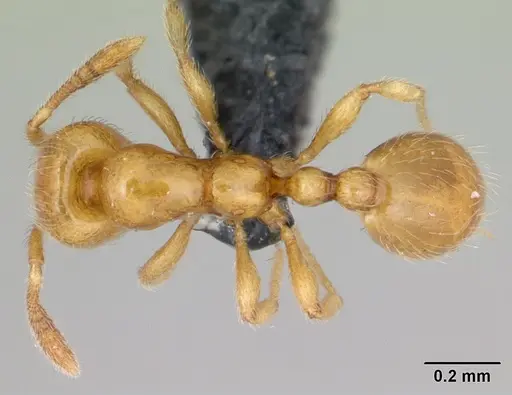
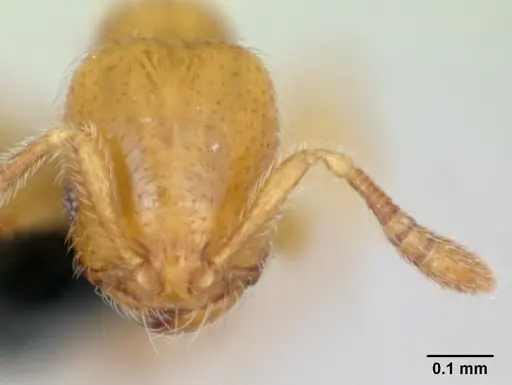
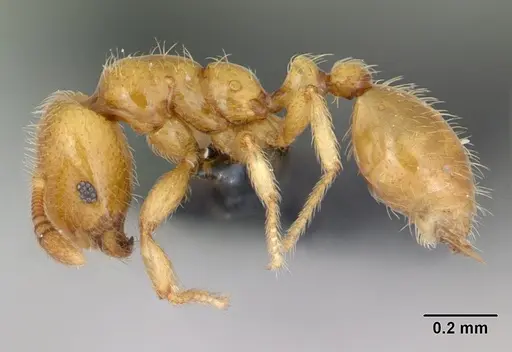
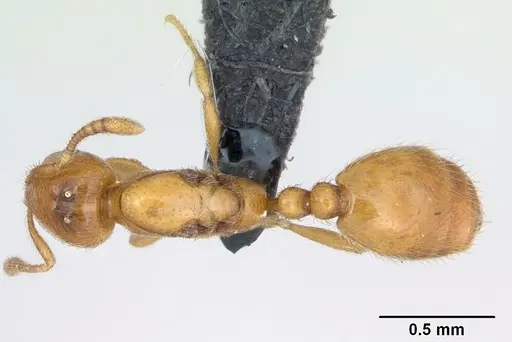
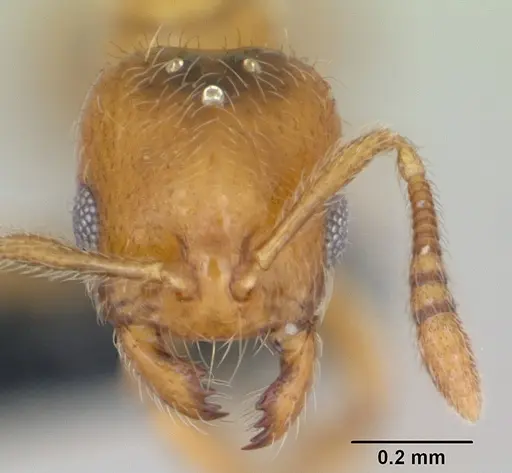
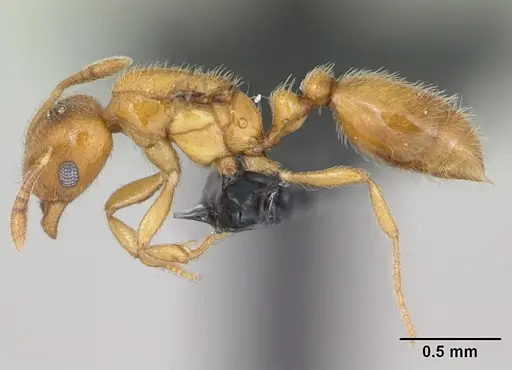
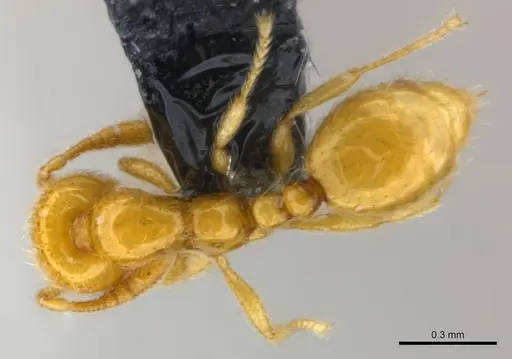
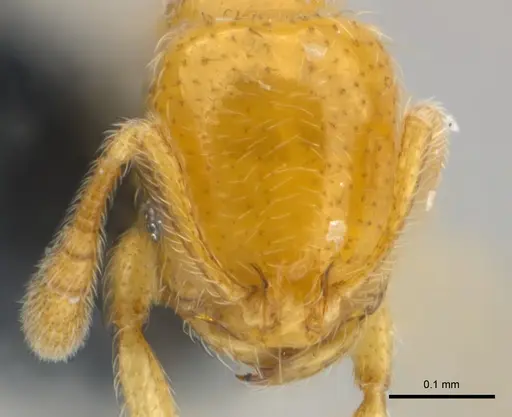
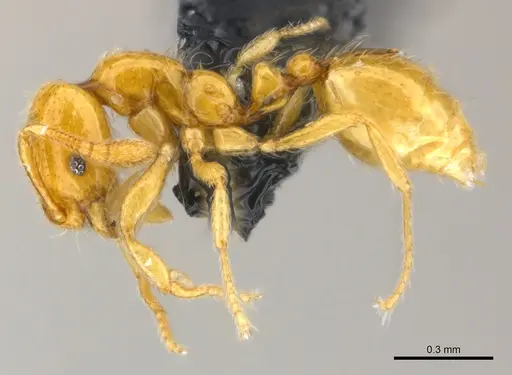
Monomorium chnodes is a tiny yellow ant endemic to Madagascar, belonging to the Monomorium monomorium species group. Workers measure just 1.05-1.19mm in total length, making them one of the smaller ant species you'll encounter. They have a distinctive appearance with a rectangular head, large propodeal spiracle, and body covered in abundant downy setae (fine hairs). The mandibles have 4-5 teeth, and they possess 12 antennal segments with a 3-segmented club. Queens are similarly small at 1.46-1.58mm and bright yellow in color. This species was only described in 2006 and remains poorly studied in the scientific literature. They appear to have an association with the plant family Melastomataceae, though this relationship needs further research. In the wild, they inhabit montane rainforest at around 600m elevation, living in sifted litter, rotten logs, and the soil [1][2].
Quick Summary
- Difficulty: Unknown, this species has never been kept in captivity and has no documented husbandry history
- Origin & Habitat: Endemic to Madagascar, specifically the Ambinanitelo region in Toamasina Province. They live in montane rainforest at approximately 600m elevation, found in sifted leaf litter, rotten logs, and pitfall traps [1][2].
- Colony Type: Unknown, colony structure has not been documented. Most Monomorium species are single-queen (monogyne) colonies, but this has not been confirmed for M. chnodes.
- Size & Growth:
- Queen: 1.46-1.58mm (HML) [2]
- Worker: 1.05-1.19mm (HML) [2]
- Colony: Unknown, no colony size data exists
- Growth: Unknown, no development data exists for this species
- Development: Unknown, no direct measurements exist. Based on typical Monomorium patterns, estimate 4-8 weeks at warm temperatures. (This is a completely unstudied species with no captive husbandry records. Any timeline would be a rough estimate based on related species.)
- Antkeeping:
- Temperature: Unknown, no thermal data exists. Based on Madagascar montane rainforest habitat (moderate elevations, likely cooler than lowland), start around 20-24°C and observe colony behavior.
- Humidity: Unknown, no humidity data exists. Based on montane rainforest origin, likely prefers humid conditions (60-80%). Keep substrate consistently moist but not waterlogged.
- Diapause: Unknown, no seasonal data exists for this species. Madagascar has mild temperatures year-round, but montane areas may experience cooler periods.
- Nesting: No captive nesting data exists. In the wild, they are found in sifted litter and rotten logs, a naturalistic setup with moist substrate or a small test tube setup would be appropriate starting points.
- Behavior: Behavior has not been documented. As a tiny Monomorium species, they are likely generalist foragers similar to related species. Their small size means excellent escape prevention is essential, they can squeeze through remarkably small gaps. No information exists on aggression levels or sting capability, though most small Monomorium are non-aggressive and cannot sting humans.
- Common Issues: completely unknown captive requirements, this species has never been kept in captivity, no available information on founding behavior or development timeline, escape prevention is critical due to their tiny size, no data on acceptable food sources or feeding schedules, no information on overwintering or seasonal care requirements
Discovery and Taxonomy
Monomorium chnodes was first described by Brian Heterick in 2006 based on specimens collected during biodiversity surveys in Madagascar. The species name 'chnodes' comes from Greek, meaning 'downy', referring to the abundant fine hairs covering their body and head. It belongs to the Monomorium monomorium species group, specifically the flavimembra complex. Despite resembling some populations of Monomorium termitobium, molecular data places M. chnodes close to M. platynodis, and both share a very short clypeus that descends at almost 90 degrees to the mandibles. The type locality is Mont Akirindro,7.6km NNW of Ambinanitelo in Toamasina Province, at an elevation of approximately 600 meters [1][2].
Natural Habitat
This species is known only from montane rainforest in the Ambinanitelo region of eastern Madagascar. They have been collected from sifted leaf litter, inside rotting logs, and in pitfall traps, suggesting they are ground-nesting or nesting in decaying wood. The association with Melastomataceae plants noted in the original description could indicate they nest in or around these plants, but this relationship has not been studied in detail. The elevation of around 600m suggests they prefer humid, shaded conditions typical of Madagascar's eastern rainforest regions. Their extremely restricted distribution (only known from this single region) makes them a rare species both in the wild and potentially in captivity [1][2][3].
Why This Species Is Special
Monomorium chnodes represents a completely blank slate for antkeeping. Unlike many commonly kept species with years of captive husbandry experience, this species has never been documented in captivity. This makes it both challenging and potentially rewarding for advanced keepers interested in pioneering husbandry for understudied species. Their tiny size (under 1.2mm for workers) also presents unique challenges, they would require fine mesh barriers and very small enclosures. The fact that they come from Madagascar, an island with incredibly diverse and often endemic fauna, adds to their appeal. However, potential keepers should note that no established protocols exist, and success would require significant experimentation [1][2].
Housing Recommendations
Since no captive data exists, housing recommendations must be based on related species and natural history. A small test tube setup or a tiny naturalistic terrarium would be appropriate starting points. Given their origin in montane rainforest, they likely need high humidity, consider a setup that retains moisture well. The fact they are found in rotting logs suggests they might do well in a small piece of humid wood or a substrate-filled container. Because of their extremely small size, escape prevention is absolutely critical, standard ant keeping barriers may not work, and fine mesh (at least 0.5mm or smaller) would be essential. A small formicarium with appropriately scaled chambers would be necessary, standard chambers designed for larger ants would be far too big [1][2].
Feeding and Diet
No information exists on the diet of Monomorium chnodes in captivity or in the wild. As a member of the Solenopsidini tribe, they likely have a typical ant diet of small insects and honeydew, but this is speculative. Related Monomorium species are generalist omnivores that will accept small insects, sugar water, and honey. For this species, start with tiny live prey appropriate to their size (fruit flies, springtails, or other micro-arthropods) and sugar water. Given their tiny size, standard ant foods would need to be cut down to appropriate portions. Do not expect them to tackle large prey items, their mandibular teeth are small and suited for very small food items [1][2].
Temperature and Seasonal Care
No thermal data exists for this species. The montane rainforest habitat suggests moderate temperatures, not the hot conditions of lowland Madagascar. A starting point of 20-24°C would be appropriate, and you should observe colony behavior to adjust. If workers are clustered together and less active, they may prefer slightly warmer conditions. If they avoid heated areas, reduce temperature. Since no hibernation data exists, do not assume they need a winter dormancy, Madagascar has relatively mild year-round temperatures. Maintain stable conditions rather than attempting to simulate seasonal changes until more is learned. A small heat gradient allowing the ants to choose their preferred temperature would be valuable for learning their requirements [1][2].
Frequently Asked Questions
Can I keep Monomorium chnodes in a test tube?
A test tube setup would likely work well for founding colonies, given their tiny size. Ensure the cotton is packed tightly, these small ants can squeeze through gaps that larger species cannot. Use fine mesh over any air holes.
How long does it take for Monomorium chnodes to produce first workers?
This is completely unknown, no development data exists for this species. Based on typical Monomorium patterns, estimate 4-8 weeks at warm temperatures (around 24°C), but this is a rough guess.
Are Monomorium chnodes good for beginners?
No. This species has never been documented in captivity and has no established husbandry protocols. It would be an expert-level species suitable only for experienced keepers interested in pioneering captive breeding of understudied species.
What do Monomorium chnodes eat?
No diet data exists. Based on related species, they likely accept tiny live prey (springtails, fruit flies) and sugar sources. Start with micro-prey and sugar water, and experiment to see what they accept.
What temperature do Monomorium chnodes need?
No thermal data exists. Based on montane rainforest origin, start around 20-24°C and observe colony behavior. Provide a temperature gradient so ants can choose their preferred zone.
How big do Monomorium chnodes colonies get?
Unknown, no colony size data exists. Most Monomorium colonies reach dozens to a few hundred workers. Given their tiny size and restricted range, expect smaller colonies than many common species.
Can I keep multiple queens together?
Unknown, colony structure has not been documented. Most Monomorium are single-queen colonies, but this has not been confirmed for M. chnodes. Do not attempt combining unrelated queens without data.
Do Monomorium chnodes need hibernation?
Unknown, no seasonal data exists. Madagascar has mild temperatures year-round, so they may not require a distinct hibernation period. Maintain stable conditions until more is learned.
Where is Monomorium chnodes found in the wild?
They are endemic to the Ambinanitelo region in Toamasina Province, eastern Madagascar, at approximately 600m elevation in montane rainforest. Their distribution is extremely restricted.
References

This caresheet is licensed under CC BY-SA 4.0 .
Literature
Loading...Loading products...