

Monomorium carinatum
- Scientific Name
- Monomorium carinatum
- Tribe
- Solenopsidini
- Subfamily
- Myrmicinae
- Author
- Heterick, 2001
- Distribution
- Found in 1 countries
Monomorium carinatum Overview
Monomorium carinatum is an ant species of the genus Monomorium. It is primarily documented in 1 countries , including Australia. Detailed taxonomic data and occurrence records can be further explored via authoritative databases such as AntWeb or the Global Biodiversity Information Facility (GBIF).
Monomorium carinatum
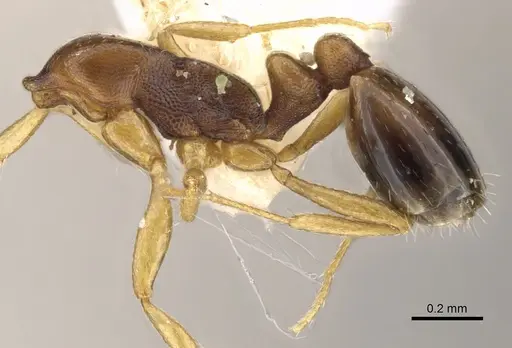
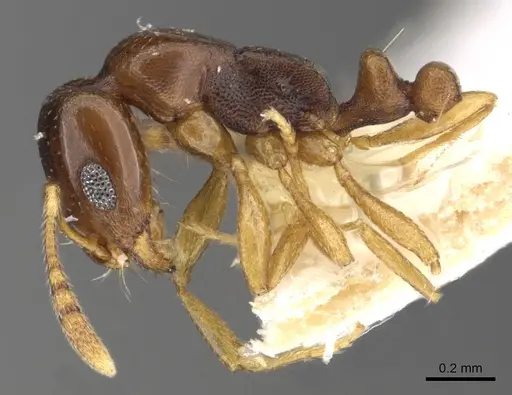
Monomorium carinatum is a small Australian ant species described by Heterick in 2001. Workers measure approximately 1.25-1.56mm in total length, with a distinctive brown to russet coloration that darkens toward the rear of the body. The species gets its name from the Latin 'carinatum' meaning 'keeled, ' referring to the pronounced sculpturing on the mesosoma and petiole. These ants belong to the Monomorium sydneyense complex and closely resemble northern populations of that species, though they can be identified by their laterally compressed propodeum and relatively larger eyes. Found throughout the Northern Territory and Western Australia, this species inhabits arid to tropical regions of Australia and is one of the many diverse Monomorium species in the Australasian region. A notable trait is their nocturnal foraging behavior, workers have been observed actively searching for food at night near Newman, Western Australia, which is unusual as many ant species are primarily diurnal.
Quick Summary
- Difficulty: Unknown, limited data available
- Origin & Habitat: Northern Territory and Western Australia. Inhabits arid to tropical regions with conspicuously sculptured mesosoma and petiole [1].
- Colony Type: Colony structure is unconfirmed. No data on queen number or colony organization available.
- Size & Growth:
- Queen: Unknown, not described in available literature
- Worker: 1.25-1.56mm total length (HML), head 0.48-0.55mm, width 0.36-0.46mm [2]
- Colony: Unknown, no colony size data available
- Growth: Unknown, no development data available
- Development: Unknown, no direct development data for this species (Development timeline has not been studied. Related Monomorium species typically develop in 4-8 weeks at optimal temperatures, but this is an estimate for similar species rather than confirmed data for M. carinatum.)
- Antkeeping:
- Temperature: Based on their arid Australian habitat, they likely prefer warm conditions. Related Monomorium species do well at 22-28°C. Start in the mid-range and observe colony activity.
- Humidity: Given their arid to tropical distribution, moderate humidity around 50-70% is appropriate. Ensure the nest substrate doesn't dry out completely but avoid waterlogging.
- Diapause: Unknown, no specific data on overwintering requirements. Western Australia experiences cooler winters, so a reduced activity period during winter months may be beneficial.
- Nesting: No specific nesting data available. Based on related species, they likely nest in soil or under stones in natural habitats. Standard test tube setups or Y-tong nests work well for small Monomorium species.
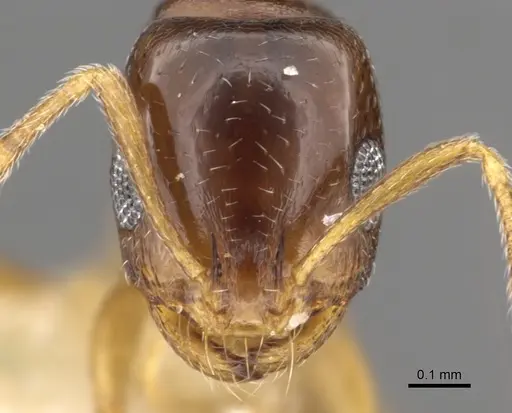
- Behavior: These ants are nocturnal, workers forage at night, which is an important consideration for feeding schedules. They are small ants with notably large eyes relative to their head size, which may be an adaptation to their nighttime foraging lifestyle. Escape prevention is important due to their small size. No specific aggression data is available, but most Monomorium species are not particularly aggressive toward keepers.
- Common Issues: small size makes escape prevention critical, use fine mesh barriers, no development data available makes timing predictions difficult, nocturnal foraging means food should be available during evening/night hours, limited species-specific care information requires careful observation, colony structure unknown makes it difficult to advise on queen management
Appearance and Identification
Monomorium carinatum workers are small ants measuring approximately 1.25-1.56mm in total body length. They have a distinctive brown to russet coloration, with the posterior of the promesonotum, propodeum, anterior sector of the petiole, and the tip of the abdomen often appearing darker. The legs are typically amber or uniformly fulvous in color. One of their most distinctive features is the pronounced sculpturing on the mesosoma and petiole, this 'keeled' appearance is what gave the species its name. They have relatively large eyes compared to other Monomorium species, positioned at the midline of the head capsule. The propodeum (the section behind the waist) is laterally compressed, and the promesonotum appears flattened when viewed from above. These morphological features help distinguish them from the similar M. sydneyense species. [2]
Distribution and Natural Habitat
This species is found exclusively in Australia, specifically in the Northern Territory and Western Australia. The type specimens were collected from locations including 5km northeast of Barrow Creek and 11km north of Tennants Creek in the Northern Territory, with additional records from the Newman area of Western Australia. The distribution falls within the Australasian region, and the species is part of the diverse Australian Monomorium fauna. Based on regional patterns, they inhabit arid to tropical habitats typical of northern Australia. The species shows mesosoma and petiole that are conspicuously sculptured, which is characteristic of ants in drier habitats, this sculpturing may help with water retention or structural strength in harsh environments. [2][1]
Foraging Behavior
A notable trait of Monomorium carinatum is their nocturnal foraging behavior. Unlike many ant species that search for food during the day, these workers have been observed actively foraging at night near Newman, Western Australia. This is an important consideration for antkeepers, as it means they may be most active and receptive to food during evening and nighttime hours. The relatively large eyes this species possesses may be an adaptation to low-light conditions, supporting this nocturnal lifestyle. When keeping this species, you should consider offering food during evening hours rather than during the day when they may be less active. This differs from many common pet ant species that are primarily diurnal. [2]
Housing and Nesting
While specific nesting data for M. carinatum is not available, related Monomorium species typically nest in soil or under stones in natural habitats. For captive care, standard setups used for small Myrmicinae ants work well. Test tube setups are suitable for founding colonies, while Y-tong (acrylic) nests or plaster nests work well for established colonies. Because of their small size, ensure that any setup has tight-fitting lids and appropriate barriers to prevent escapes. The nest should maintain moderate humidity, aim for substrate that feels damp but not waterlogged. A small water reservoir in test tube setups works well for maintaining humidity. Given their nocturnal nature and small size, provide some darkness or dim conditions during their active periods.
Feeding and Diet
The specific diet of Monomorium carinatum has not been documented, but like other Monomorium species, they likely are omnivorous with a preference for small insects and sugary substances. In captivity, you can offer small protein sources such as fruit flies, pinhead crickets, or small mealworms. Sugar water, honey, or commercial ant jelly can provide carbohydrates. Since they are nocturnal foragers, try offering food in the evening hours when they are more likely to be active. Start with small amounts and observe what they accept. Remove uneaten food after 24-48 hours to prevent mold issues. As with all small ant species, portion sizes should be small relative to colony size.
Temperature and Seasonal Care
Monomorium carinatum originates from the Northern Territory and Western Australia, regions that experience warm to hot temperatures for much of the year. Based on this, they likely prefer warmer conditions, aim for temperatures in the range of 22-28°C. Related Monomorium species from similar habitats do well in this temperature range. During winter months in cooler climates, you may need to provide gentle heating, though they may naturally reduce activity during cooler periods. The specific overwintering requirements (diapause) are not documented for this species. If your colony shows reduced activity during winter, this may be natural and you should not force heating. Observe your colony's behavior and adjust temperatures accordingly, if workers are clustering near a heat source, increase temperature slightly, if they avoid heated areas, reduce temperature.
Frequently Asked Questions
How long does it take for Monomorium carinatum to produce first workers?
The development timeline for this species has not been studied, so exact times are unknown. Based on related Monomorium species, you can expect approximately 4-8 weeks from egg to worker at optimal temperatures. However, this is an estimate rather than confirmed data for M. carinatum specifically.
What do Monomorium carinatum ants eat?
Their specific diet has not been documented, but like other Monomorium species, they likely accept small insects and sugary foods. Offer small protein sources like fruit flies or tiny crickets, along with sugar water or honey. Since they are nocturnal, try offering food in the evening.
Are Monomorium carinatum ants aggressive?
Aggression levels have not been documented for this species. Based on general Monomorium behavior, they are not typically aggressive toward keepers. However, they may defend their nest if threatened.
What temperature should I keep Monomorium carinatum at?
Based on their Australian habitat, aim for 22-28°C. Start in the middle of this range and adjust based on your colony's activity levels. Related species from similar habitats do well in these warm conditions.
Can I keep multiple queens together?
The colony structure of this species is unconfirmed. No data exists on whether they are single-queen (monogyne) or multi-queen (polygyne) colonies. It is not recommended to combine unrelated queens of this species since this has not been studied.
Why are my Monomorium carinatum ants dying?
Without species-specific data, common issues include: temperature too cold or too hot, incorrect humidity (too dry or waterlogged), insufficient food, or escape-related losses. Since this is a poorly-studied species, careful observation and adjustment of conditions is essential.
When are Monomorium carinatum most active?
This species is nocturnal, workers forage at night. You are likely to see most activity during evening and nighttime hours. This is unusual among pet ant species and may require adjusting your feeding schedule to offer food when they are active.
Are Monomorium carinatum good for beginners?
This species has limited available care information, making it challenging for beginners. If you are experienced with small Myrmicinae ants and comfortable with uncertainty in care requirements, it can be an interesting species to keep. However, for beginners, species with more documented care guides are recommended.
What size colony do Monomorium carinatum colonies reach?
Colony size data is not available for this species. The maximum colony size is unknown, though related Monomorium species typically reach several hundred to a few thousand workers.
References

This caresheet is licensed under CC BY-SA 4.0 .
CASENT0902296
View on AntWeb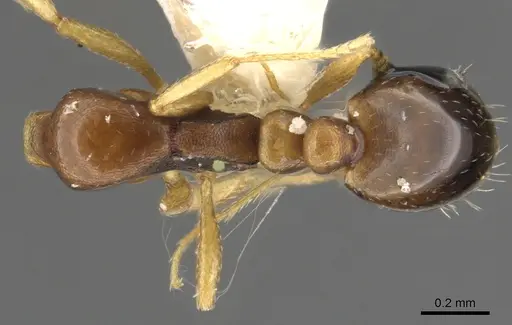
CASENT0902297
View on AntWeb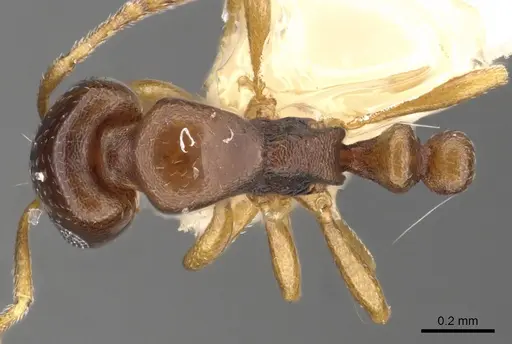
Literature
Loading...Loading products...