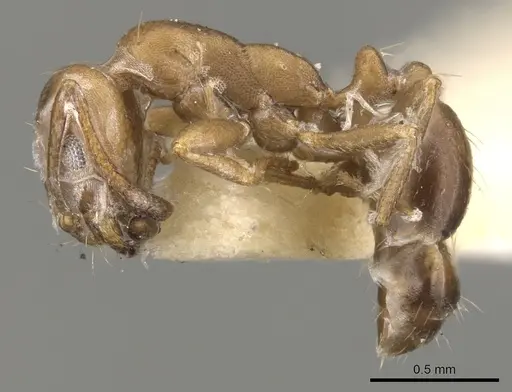
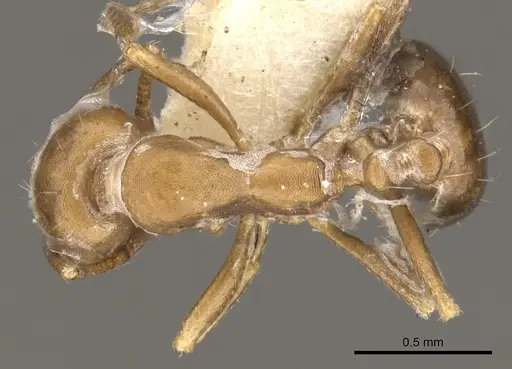
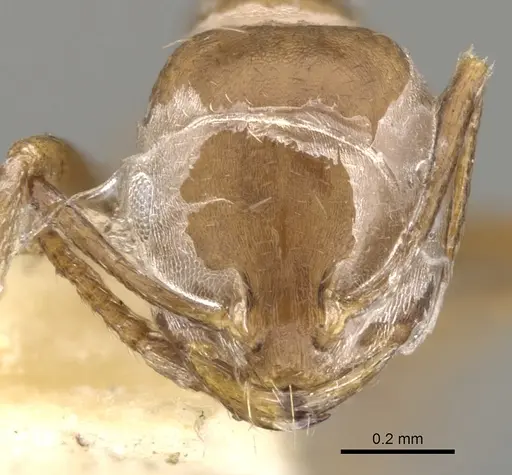
Monomorium buxtoni - "Buxton's Monomorium Ant"
Monomorium buxtoni is a small ant species belonging to the genus Monomorium, which is known for its diverse morphology and global distribution. These ants are typically a medium reddish-brown color, with a robust appearance compared to some of their close relatives. They possess distinguishing features such as 1-2 pairs of long hairs on the pronotum, two pairs each on the petiole and postpetiole, and several hairs on the gaster and ventral head. Their eyes are somewhat smaller, and their antennal scapes are longer. While specific behavioral details for M. buxtoni are not extensively documented, other Monomorium species are often generalized feeders or granivores, with some being lestobiotic or parasitic.
- Difficulty: Medium
- Origin & Habitat: Middle East (Iran, Iraq, Kuwait) and Arabian Peninsula (Saudi Arabia, United Arab Emirates). in Details on the specific environmental preferences for M. buxtoni are limited. However, the genus Monomorium typically nests in rotting wood, under rocks, or in the soil, and predominantly inhabits tropical, subtropical, and warm temperate regions..
- Colony Type: Polygynous (multiple queens), claustral founding.
- Size & Growth:
- Queen: Not specified
- Worker: 0.59-0.61mm
- Colony: Medium (thousands). Other Monomorium species can have colonies reaching thousands of workers.. Medium. While specific data for M. buxtoni is limited, other Monomorium species like M. minimum are known for fast colony growth. growth.
- Antkeeping:
- Temperature: Ideal temperatures are likely in the range of 24-28°C, reflecting their natural habitat in warm regions. Consistent warmth aids brood development. For related Monomorium species, temperatures between 18-30°C are generally suitable..
- Humidity: A humidity gradient is recommended, with higher humidity (around 70-80%) for the brood chambers and lower humidity (50-60%) in the foraging area. Some Monomorium species prefer high humidity for brood and medium for workers..
- Diapause: Not required. Not specified at Not specified.
- Nesting: These ants can thrive in various artificial nest setups, including acrylic, 3D printed, or Ytong/grout nests. Given their small size, secure escape prevention is crucial..
- Behavior: Medium (towards food sources and other ants). While not typically aggressive towards handlers unless provoked, their small size and potential for large numbers can make them seem formidable. Some Monomorium species are known to sting, and some carry pathogenic bacteria, though information specific to M. buxtoni's sting is limited. aggressiveness.
- Common Issues: Escape artists, Humidity fluctuations, Overfeeding leading to waste.
When keeping Monomorium buxtoni, escape prevention should be your top priority. These tiny ants are notorious for finding even the smallest gaps, so a reliable barrier like Fluon, talcum powder, or olive oil is absolutely essential. Don't underestimate their ability to squeeze through what seems like an impossible opening; a small crack can quickly lead to a full colony breakout. Regular checks of your outworld and nest setup are paramount to ensuring these agile ants remain securely contained within their formicarium.
Feeding these miniature marvels requires a balanced diet to support their rapid colony growth. Offer a mix of liquid sugars, such as sugar water or honey, for energy, and small feeder insects like fruit flies, mealworms, or roaches for protein. It’s important to soak liquid foods in cotton or a feeding dish to prevent drowning, as their small size makes them susceptible. Observing their foraging habits will help you understand their preferences and ensure they receive adequate nutrition for optimal development.
Colony development can be quite fast with Monomorium species, and while specific data for M. buxtoni is limited, related species show impressive growth rates, reaching thousands of workers. Providing a consistent heat source can significantly accelerate their brood development. Given their polygynous nature, these colonies can expand rapidly, potentially even producing new queens within the nest, leading to what seems like an endlessly growing population. This makes them a fascinating, albeit demanding, species for experienced antkeepers.
While Monomorium buxtoni is not as well-studied as some other species in the genus, understanding the general traits of Monomorium ants can offer valuable insights. Many species in this genus are known for their adaptability and ability to thrive in various environments. They are often opportunistic scavengers, which means they'll readily accept a wide range of food sources offered in captivity. This flexibility in diet can make them relatively straightforward to feed once their initial preferences are understood.
These ants, particularly various Monomorium species, have been observed to alternate their nutritional preferences over time, switching between carbohydrates and proteins based on the colony's needs. This 'satiation' and 'alternation' response ensures a varied and balanced diet for the colony. Therefore, it's beneficial to offer a rotation of food types rather than sticking to just one, allowing your colony to self-regulate its intake and maintain peak health.