

Meranoplus rothneyi
- Scientific Name
- Meranoplus rothneyi
- Tribe
- Crematogastrini
- Subfamily
- Myrmicinae
- Author
- Forel, 1902
- Distribution
- Found in 1 countries
Meranoplus rothneyi Overview
Meranoplus rothneyi is an ant species of the genus Meranoplus. It is primarily documented in 1 countries , including India. Detailed taxonomic data and occurrence records can be further explored via authoritative databases such as AntWeb or the Global Biodiversity Information Facility (GBIF).
Meranoplus rothneyi
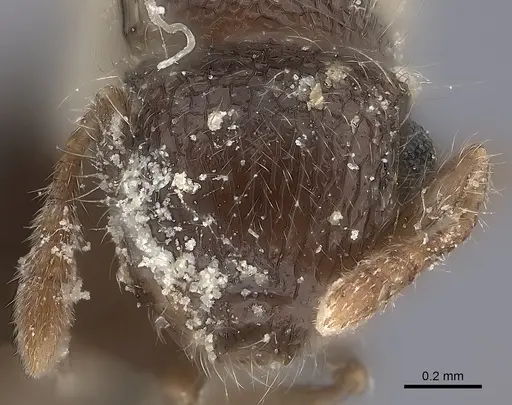
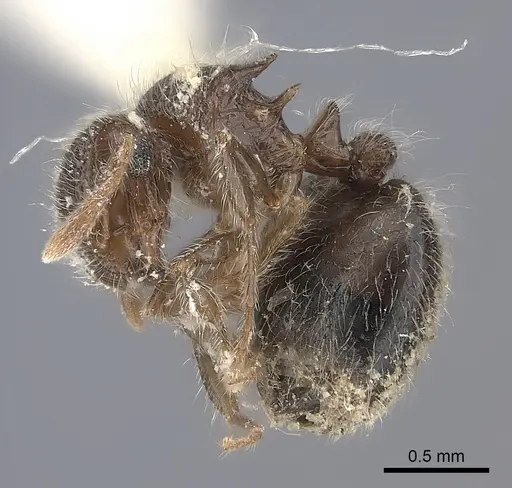
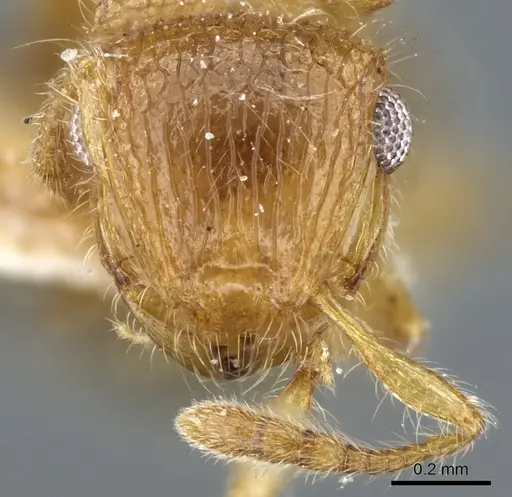
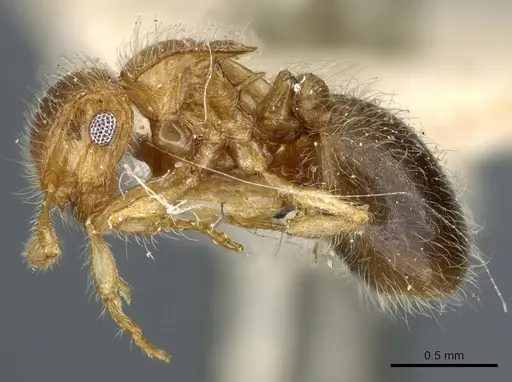
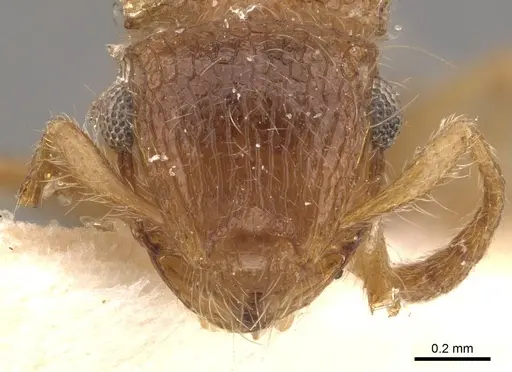
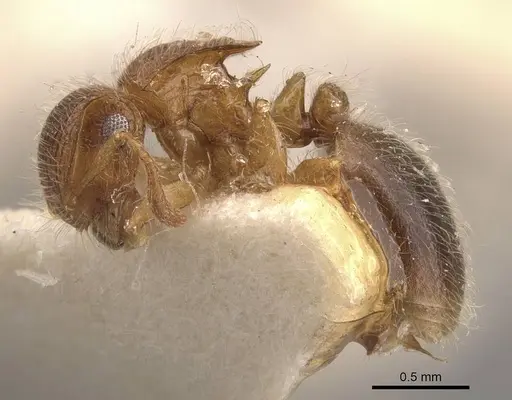
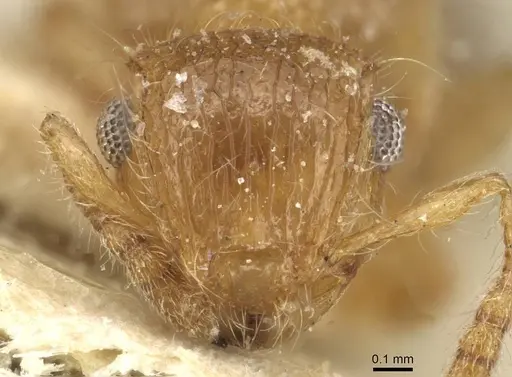
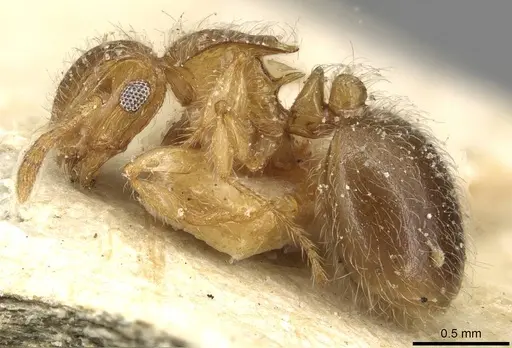
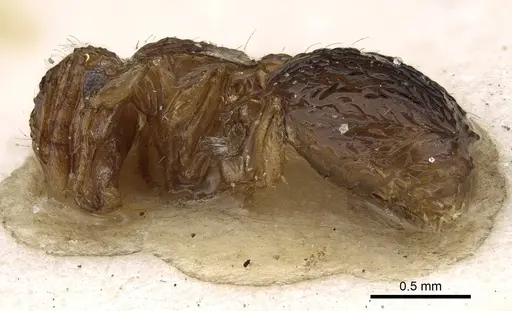
Meranoplus rothneyi is a small myrmicine ant native to the Indian Subcontinent, found across Bhutan, India, Nepal, and Sri Lanka. Workers measure 2.8-3.2mm and are easily recognized by their distinctive promesonotal shield, which bears only a single pair of stout, posteriorly-directed spines on the rear corners, a key identifying feature that separates them from related species like the widespread M. bicolor [1]. Their body coloration ranges from bright rusty ferrugineous in newly emerged workers to darker brown, sometimes with the gaster darker than the rest of the body. The head is trapezoid-shaped with prominent antennal scrobes, and the dorsal surfaces are covered in both short dense hairs and longer outstanding hairs. This species has been recorded from sea level up to 3500m elevation in Nepal, indicating adaptability to varied altitudes [2].
Quick Summary
- Difficulty: Medium
- Origin & Habitat: Native to the Indian Subcontinent (Bhutan, India, Nepal, Sri Lanka). Found in wet forest reserves in Sri Lanka and various habitats across India from sea level to 3500m elevation in Nepal [3][2][4].
- Colony Type: Colony structure is unconfirmed. No published data exists on whether this species is single-queen (monogyne) or multi-queen (polygyne).
- Size & Growth:
- Queen: Unknown, no specific measurements available for queens. Likely similar to related Meranoplus species at 5-7mm.
- Worker: 2.8-3.2mm [1]. Some sources report 2.5-2.8mm [5].
- Colony: Unknown, no colony size data published.
- Growth: Unknown, no development data available.
- Development: Unknown, no direct measurements. Based on typical Meranoplus and Myrmicinae patterns, estimate 6-10 weeks at warm temperatures. (Development timeline has not been directly studied. This is an estimate based on genus-level patterns.)
- Antkeeping:
- Temperature: Likely prefers warm conditions given its tropical/subtropical distribution. Start around 24-28°C and observe colony activity. Related species from similar habitats do well in the mid-to-high 20s Celsius.
- Humidity: Appears to prefer moist habitats, collected from wet forest reserves in Sri Lanka and humid regions across the Indian Subcontinent. Keep nest substrate moderately moist but not waterlogged. Provide a moisture gradient so ants can choose their preferred humidity.
- Diapause: Unknown, no published data on overwintering requirements. The wide elevation range (sea level to 3500m) suggests some populations may experience cooler temperatures. Observe colony behavior in winter and consider a cool period (15-18°C) if they become less active.
- Nesting: Nesting preferences are unconfirmed. Based on related species and habitat data, they likely nest in soil, under stones, or in rotting wood. A naturalistic setup with moist substrate or a Y-tong/plaster nest works well as a starting point.
- Behavior: Temperament and detailed behavior are unstudied. The genus Meranoplus is generally not aggressive, these are relatively docile ants that focus on foraging rather than defending territory. Workers are small (under 4mm) so escape prevention is important, use fine mesh and tight-fitting barriers. They are likely generalist foragers based on typical Myrmicinae behavior.
- Common Issues: very limited biological data means care is largely guesswork based on genus patterns, no information on founding behavior makes it difficult to establish colonies from scratch, escape prevention is critical due to small worker size, no confirmed diet information, may be picky eaters, unknown whether they need a winter rest period
Identification and Distinguishing Features
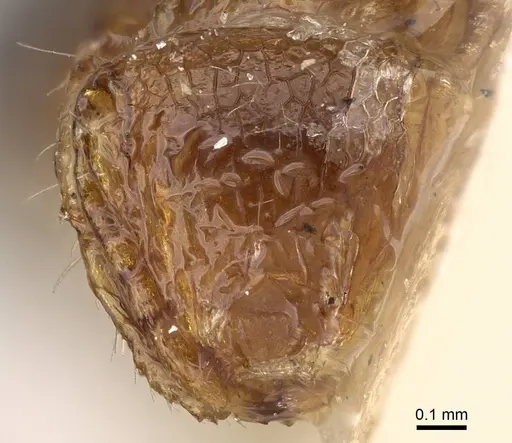
Meranoplus rothneyi is a distinctive small ant that can be recognized by several key features. The promesonotal shield (the fused front part of the thorax) has only a single pair of stout, posteriorly-directed spines at the rear corners, this is the most reliable identifying characteristic [1]. The head is trapezoid-shaped when viewed from above, narrowing evenly toward the clypeus (the mouth area). The antennal scrobes (grooves for holding the antennae) are smooth and well-developed. Workers measure 2.8-3.2mm in total length, making them small but not tiny. Coloration varies from bright ferrugineous (rusty orange-brown) in what appears to be callow (newly emerged) workers to darker brown in mature workers, sometimes with the gaster (the rear body segment) being darker than the rest [1]. This species is closely related to the more widespread M. bicolor, but the spine arrangement and other morphological details separate them clearly.
Distribution and Habitat
Meranoplus rothneyi is found across the Indian Subcontinent, with confirmed records from Bhutan, much of India (including Kerala, Assam, Meghalaya, Tripura, Arunachal Pradesh, Manipur, Mizoram, Sikkim, Tamil Nadu, and West Bengal), Nepal, and Sri Lanka [4][2][1]. The distribution is interesting because there appears to be a gap in the middle of the range, specimens from the southern populations (Kerala) differ slightly from northern populations (northeast India, Nepal, Bhutan), which has led researchers to suspect there might be more than one species involved [1]. In Sri Lanka, this species has been recorded in the periphery of lowland wet forest reserves [3], while in Nepal it has been collected at elevations from 2250m up to 3500m in the Arun Valley [2]. This wide altitudinal range suggests the species can adapt to various conditions, though it seems to prefer generally humid environments.
Housing and Nesting
Since specific nesting data for M. rothneyi is lacking, we must infer from habitat information and related species. The Sri Lankan specimens were collected from wet forest areas, suggesting they prefer humid conditions [3]. A naturalistic setup with moist substrate works well as a starting point, you can use a mix of soil and sand that holds moisture well. Alternatively, a Y-tong (acrylic) nest or plaster nest provides good humidity control. Because workers are only 2.8-3.2mm, ensure chambers and passages are appropriately scaled, avoid large open spaces. The nest should have a water reservoir or moisture source to maintain humidity. Provide an outworld (foraging area) connected to the nest via tubing. Given their small size, use fine mesh on any openings to prevent escapes.
Feeding and Diet
The diet of Meranoplus rothneyi has not been specifically studied. As a Myrmicinae ant, they likely have a generalist diet similar to most ants in this subfamily, probably foraging for nectar, honeydew, and small insects. Start by offering sugar water or honey as an energy source, and protein in the form of small insects like fruit flies, pinhead crickets, or mealworm pieces. Given their small size, prey items should be appropriately sized. Observe whether they accept the foods you offer and adjust accordingly. Remove uneaten prey after 24-48 hours to prevent mold. Since this species comes from humid tropical and subtropical environments, they may have higher moisture needs, consider providing a water source in the outworld as well.
Temperature and Seasonal Care
Temperature requirements are not documented for this species, but their distribution across tropical and subtropical regions of the Indian Subcontinent suggests they prefer warm conditions. Start around 24-28°C and monitor colony behavior, if workers are very active and foraging frequently, the temperature is likely good. If they seem sluggish, gradually increase temperature slightly. The wide elevation range (sea level to 3500m) means some populations may tolerate cooler conditions, so observe your specific colony's preferences. Regarding winter care, there is no data on whether they require a diapause (winter rest period). If your colony becomes less active during cooler months, you can reduce temperatures to around 15-18°C for a few months, but this is not confirmed as necessary. Always provide a temperature gradient so ants can regulate their own body temperature by moving between warmer and cooler areas. [2]
Colony Establishment and Growth
Establishing Meranoplus rothneyi colonies presents challenges because founding behavior has not been documented. Most Meranoplus species are believed to be claustral, the queen seals herself in a chamber and lives on stored body fat until her first workers emerge, but this is not confirmed for M. rothneyi. If you obtain a founding queen, provide her with a small test tube setup with moist cotton and minimal disturbance. Place it in a warm, dark location and wait several weeks before checking. Once workers emerge, you can begin offering small amounts of food. Growth rate is unknown, but based on typical Myrmicinae development, expect 6-10 weeks from egg to first worker at optimal temperatures. Colonies likely remain small, related Meranoplus species typically have colonies of only dozens to a few hundred workers, not the massive colonies seen in some genera.
Frequently Asked Questions
How long does it take for Meranoplus rothneyi to produce first workers?
The exact development timeline is unknown, this species has not been studied in detail. Based on typical Meranoplus and Myrmicinae patterns, expect approximately 6-10 weeks from egg to first worker at warm temperatures (around 24-28°C). This is an estimate, not a confirmed timeframe.
What do Meranoplus rothneyi ants eat?
Specific diet information is unavailable for this species. As Myrmicinae ants, they likely accept sugar sources (honey, sugar water) and protein (small insects). Start with these basic offerings and observe what they prefer. Remove uneaten food after 24-48 hours.
Are Meranoplus rothneyi good for beginners?
This species is not ideal for complete beginners because very little species-specific care information exists. You will need to adapt care based on observations and genus-level knowledge. If you have experience with other Myrmicinae species like Meranoplus bicolor or similar small ants, you may do well. Expect some trial and error.
Do Meranoplus rothneyi ants sting?
Meranoplus species have a stinger, but given the small size of workers (2.8-3.2mm), the stinger is unlikely to penetrate human skin effectively. They are generally docile and not aggressive toward keepers.
What temperature should I keep Meranoplus rothneyi at?
Temperature requirements are not specifically documented. Based on their tropical/subtropical distribution across the Indian Subcontinent, start around 24-28°C. Provide a temperature gradient so ants can choose their preferred warmth. Adjust based on your colony's activity level.
Can I keep multiple Meranoplus rothneyi queens together?
Colony structure (monogyne vs polygyne) is unconfirmed for this species. There is no data on whether multiple queens can be kept together or whether they will fight. Do not attempt combining unrelated foundress queens without specific evidence that this is safe.
How big do Meranoplus rothneyi colonies get?
Colony size data is not published. Based on related Meranoplus species, colonies likely remain relatively small, probably under a few hundred workers at maximum. They are not known for supercolony formation.
Do Meranoplus rothneyi need hibernation?
Diapause requirements are unknown. The wide elevation range (sea level to 3500m) suggests some populations may experience cooler winters. Observe your colony, if they become less active in winter, you can provide a cool period around 15-18°C, but this is not confirmed as necessary.
What is the best nest type for Meranoplus rothneyi?
Nesting preferences are unconfirmed. Based on habitat data (wet forest in Sri Lanka), a naturalistic setup with moist substrate or a Y-tong/plaster nest with good humidity retention would be appropriate. Ensure chambers are scaled to their small worker size (2.8-3.2mm).
Why are my Meranoplus rothneyi dying?
Without specific data, common issues likely include: temperature stress (too hot or too cold), humidity problems (too dry or waterlogged), escape due to small size, or inadequate food. Review each of these parameters and adjust. Wild-caught colonies may also carry parasites or diseases.
References

This caresheet is licensed under CC BY-SA 4.0 .
CASENT0217859
View on AntWeb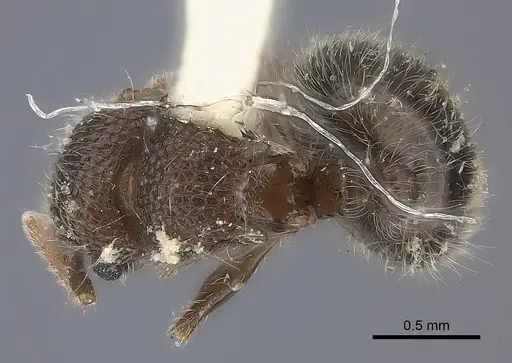
CASENT0904683
View on AntWeb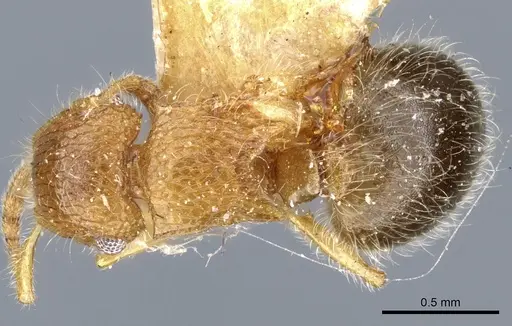
CASENT0908936
View on AntWeb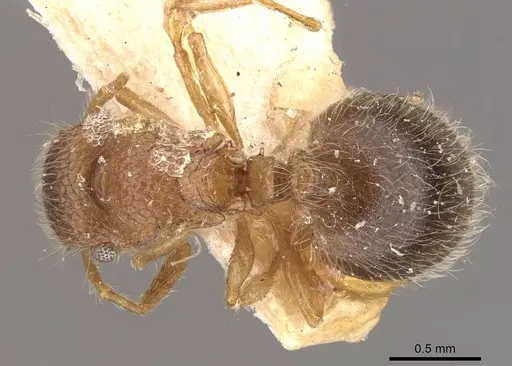
CASENT0915542
View on AntWeb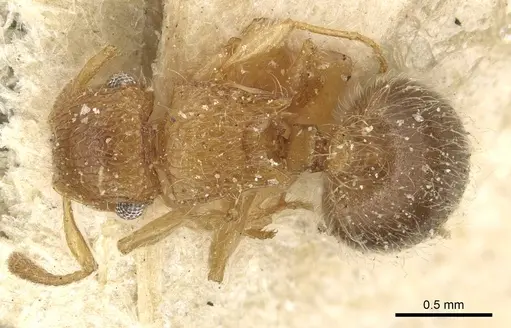
CASENT0922232
View on AntWeb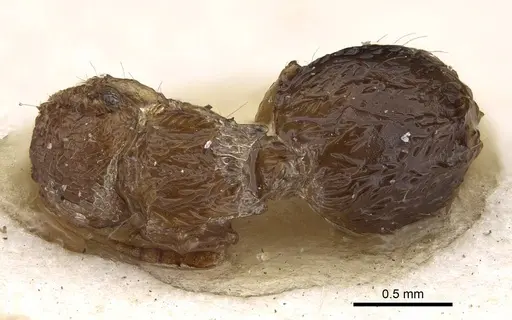
Literature
Loading...Loading products...