

Melophorus parvimolaris
- Scientific Name
- Melophorus parvimolaris
- Tribe
- Melophorini
- Subfamily
- Formicinae
- Author
- Heterick <i>et al.</i>, 2017
- Distribution
- Found in 1 countries
Melophorus parvimolaris Overview
Melophorus parvimolaris is an ant species of the genus Melophorus. It is primarily documented in 1 countries , including Australia. Detailed taxonomic data and occurrence records can be further explored via authoritative databases such as AntWeb or the Global Biodiversity Information Facility (GBIF).
Melophorus parvimolaris
Melophorus parvimolaris is a small, dull brown ant native to arid and semi-arid regions of Northern Territory and Western Australia in Australia [1]. This species belongs to the Melophorus biroi species group and wheeleri complex, characterized by their distinctive long, whitish, appressed setae that cover the body and form a weak pubescence on the gaster [1]. The cuticle has a matt to weakly shiny appearance with shagreenate or microreticulate sculpture. Minor workers have five mandibular teeth, while major workers have a short, massive, elbowed mandible. The most notable behavior observed is their granivorous diet, these ants have been seen collecting small, wind-blown seeds, making them one of the few ant species that primarily eat seeds rather than hunting insects [1].
Quick Summary
- Difficulty: Medium
- Origin & Habitat: Arid and semi-arid regions of Northern Territory and Western Australia, likely also in South Australia in suitable habitat [1]. This species lives in dry, desert-like conditions typical of inland Australia.
- Colony Type: Likely single-queen (monogyne) colonies based on typical Melophorus genus patterns. Colony size is unknown but likely moderate for the genus.
- Colony: Monogyne
- Founding: Claustral
- Size & Growth:
- Queen: Undocumented, estimated 6-8mm based on genus patterns
- Worker: Minor workers: 0.61-1.23mm head length, Major workers: up to 1.52mm head width with HW ≈1.45mm [1]
- Colony: Unknown, estimated several hundred workers based on related species
- Growth: Moderate, estimated based on genus patterns for seed-eating ants
- Development: Unconfirmed, estimated 8-12 weeks based on related Melophorus species at optimal temperature (Development timeline has not been directly studied for this species. Estimates based on typical Melophorus genus patterns.)
- Antkeeping:
- Temperature: Keep at 24-30°C, these are warm-adapted desert ants from arid Australia. A heating cable on one side of the nest creates a temperature gradient [1].
- Humidity: Low to moderate, arid species. Keep nest substrate relatively dry with occasional moisture spots. Avoid damp conditions that could cause mold in their desert-style setup.
- Diapause: Likely minimal or no true diapause, these ants come from tropical/arid regions without harsh winters. Some reduction in activity during cooler months may occur.
- Nesting: Y-tong (AAC) nests work well for this species. The small size means narrow chambers are appropriate. Naturalistic setups with sand or soil mix replicate their natural arid habitat. Test tubes can be used for founding colonies.
- Behavior: Generally peaceful and non-aggressive. As granivorous ants, they spend significant time foraging for seeds rather than hunting prey. Their small size means escape prevention is important, use fine mesh barriers and tight-fitting lids. Workers are active foragers that collect seeds and may also tend to aphids for honeydew. Major workers have powerful mandibles but are not particularly aggressive.
- Common Issues: seed collection, ensure appropriate small seeds are available as primary food source, escape prevention is critical due to small worker size, humidity management, too much moisture can kill these desert-adapted ants, slow founding, claustral queens may take longer to produce first workers without supplemental feeding, limited availability, this is not a common species in the antkeeping hobby
Appearance and Identification
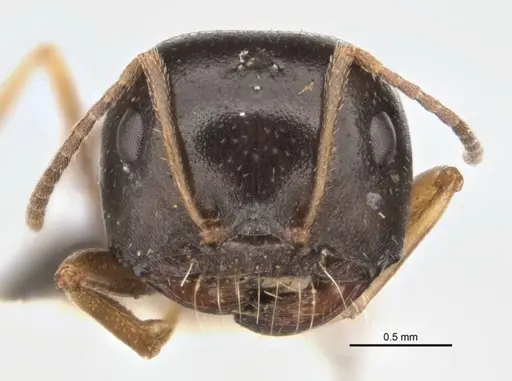
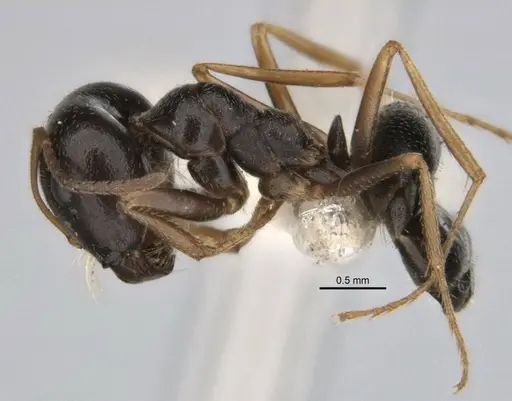
Melophorus parvimolaris is a small, dull brown ant that can be recognized by several distinctive features. The body is covered in long, whitish, appressed setae that overlap each other and create a subtle fuzzy appearance, especially on the gaster (abdomen). The cuticle has a matt or weakly shiny texture with a distinctive shagreenate or microreticulate sculpture that gives it a slightly roughened look under magnification. Minor workers have five mandibular teeth and relatively small eyes positioned toward the front of the head. Major workers have a short, massive, elbowed mandible directed backward and a small head width of approximately 1.45mm. This species is very similar to Melophorus xouthos, but that species is bicolored with tawny orange and black and has bluish iridescent legs, while M. parvimolaris is uniformly brown [1].
Natural History and Diet
This species is notable for being largely granivorous, meaning it primarily eats seeds. This is unusual among ants, as most species are predatory or omnivorous. On two separate occasions just north of Kumarina in Western Australia, researchers observed minor workers collecting small, wind-blown seeds, confirming their seed-eating behavior [1]. This diet makes them unique in the antkeeping hobby, as you'll want to focus on providing appropriate seed sources rather than primarily insects. In captivity, they likely also accept some small insects and may utilize honeydew fromaphids, but seeds should form the core of their diet. Their desert habitat means they are adapted to surviving on relatively sparse food sources.
Housing and Nest Setup
For this arid-adapted species, keep housing conditions on the dry side. A Y-tong (AAC) nest with narrow chambers scaled to their small size works well. You can also use test tubes for founding colonies, then transition to a more elaborate setup as the colony grows. Because they come from arid regions, avoid overly damp conditions, these ants are prone to mold problems in humid setups. A naturalistic enclosure with a sand or sandy-soil mix can replicate their natural habitat and provide enrichment. Ensure excellent escape prevention, their small size means they can squeeze through surprisingly small gaps. Use fine mesh barriers and check all connections regularly. [1]
Feeding Guidelines
As primarily granivorous ants, your Melophorus parvimolaris colony will need access to appropriate seeds. Offer small, soft seeds that workers can easily carry and process. Commercial ant seeds (often marketed as harvester ant food) work well. You can also offer tiny flower seeds or grass seeds. Beyond seeds, they will likely accept small insects like fruit flies, pinhead crickets, or small mealworms as supplemental protein. A small dish of sugar water or honey can provide additional carbohydrates, though seeds should be the primary food source. Feed every 2-3 days and remove any uneaten food to prevent mold. [1]
Temperature and Climate
These desert ants require warm conditions to thrive. Keep the nest area at 24-30°C, with warmer temperatures preferred. You can use a heating cable placed on top of the nest (never underneath where it could dry out the water reservoir) to maintain appropriate temperatures. Create a slight temperature gradient so workers can choose their preferred warmth level. Because they come from arid Australian regions, they do not need high humidity, a relatively dry setup mimics their natural conditions. Room temperature may be too cool in some climates, so monitor with a thermometer and supplement with heating if needed. [1]
Frequently Asked Questions
What do Melophorus parvimolaris ants eat?
These ants are primarily granivorous, meaning they eat seeds. Offer small, soft seeds as their main food source. They will also accept small insects and may take sugar water or honey as supplements. Seeds should make up the majority of their diet [1].
How long does it take for Melophorus parvimolaris to produce first workers?
The exact development timeline is unconfirmed for this species. Based on related Melophorus species, expect approximately 8-12 weeks from egg to first worker at optimal warm temperatures (around 26-28°C). Patience is key during the founding stage.
Are Melophorus parvimolaris good for beginners?
This species is rated as Medium difficulty. While not the hardest ant to keep, their specific dietary needs (seed-focused diet) and arid habitat requirements make them better suited for keepers who have some experience with ant husbandry. Their small size also requires attention to escape prevention.
What temperature do Melophorus parvimolaris need?
Keep them warm at 24-30°C. These are desert ants from arid Australia that thrive in warm conditions. A heating cable on the nest can help maintain appropriate temperatures, especially in cooler climates.
How big do Melophorus parvimolaris colonies get?
The maximum colony size is unknown but is estimated at several hundred workers based on related species in the genus. They are not known for forming supercolonies.
Do Melophorus parvimolaris need hibernation?
Likely no true hibernation is needed. These ants come from arid tropical/subtropical regions of Australia without harsh winters. Some reduction in activity during cooler months may occur, but a full diapause is not necessary.
What type of nest is best for Melophorus parvimolaris?
Y-tong (AAC) nests work well for this species. Their small size means narrow chambers are appropriate. Test tubes work fine for founding colonies. Avoid overly damp setups, these desert ants prefer relatively dry conditions.
Can I keep multiple Melophorus parvimolaris queens together?
This is not recommended. While colony structure is not fully documented, combining unrelated foundress queens has not been studied for this species and queens would likely fight. Start with a single queen colony.
Where is Melophorus parvimolaris found in the wild?
This species is native to arid and semi-arid regions of Northern Territory and Western Australia, with likely presence also in South Australia in suitable habitat [1].
References

This caresheet is licensed under CC BY-SA 4.0 .
ANIC32-900134
View on AntWeb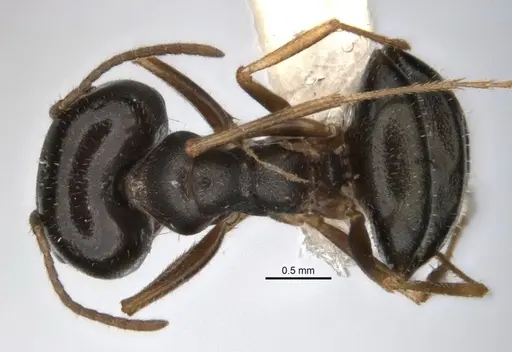
Literature
Loading...Loading products...